
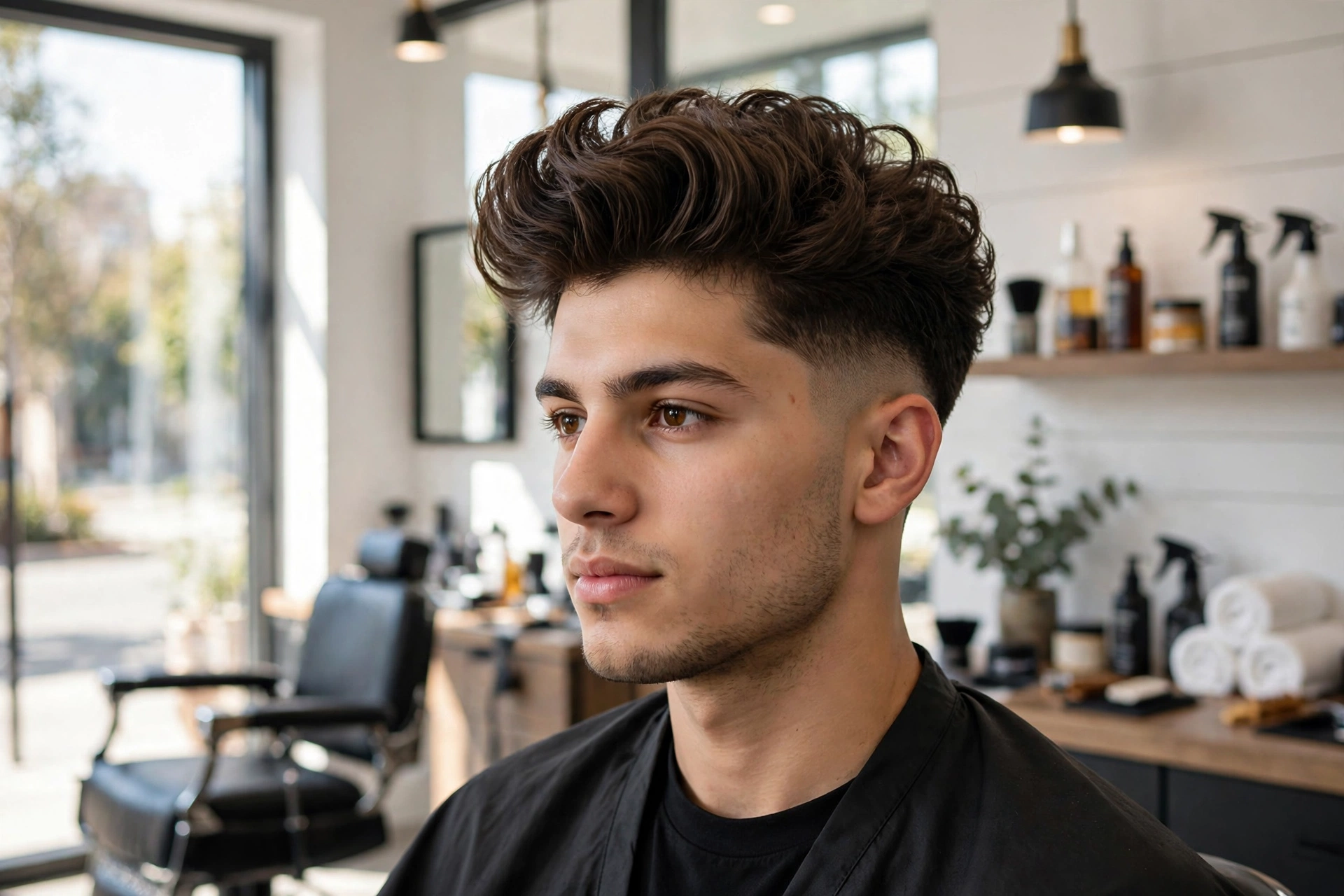
A low taper fade with a blowout is one of the most popular men’s cuts in the US right now, and it is easy to see why. The sides stay short, clean, and low-key, while the top gets real height and movement. It looks polished without looking stiff, and it works for the office, a night out, and everything in between. The cut only does half the job. Without the blow-dry routine, it is just a longer top with tapered sides. With it, you get that light, full, swept-back shape that defines the style. This guide covers the cut to ask for, the exact morning routine, and how to keep it looking sharp between visits.
What Is a Low Taper Fade With a Blowout?
A blowout is not a cut. It is a styling method. Your barber cuts a low taper fade on the sides and back, meaning the hair gets gradually shorter toward the ears and neckline, but the fade stays low and subtle. The top is left longer, usually 3 to 5 inches, so there is enough length to lift. Then you blow-dry the top upward and slightly back. That lift is the whole point. The contrast between the flat, clean taper and the full top is what makes the style read as intentional rather than just grown out. This style suits straight, wavy, and thick hair best. Curly hair can work too, but the result will look more textured and less smooth. Very fine hair can still get lift, but it needs a lighter product and a shorter top so the volume does not collapse by lunch.
What to Ask Your Barber For
Bring a photo. Blowout tops vary a lot, and a photo removes the guesswork. Then be specific about these four things: 1. The taper height. Say “low taper” and point to just above the ear. If your barber starts too high, you lose the soft, classic balance of this cut. If you are unsure about guard numbers, read up on guard numbers before your visit so you can talk lengths with confidence. 2. The top length. Ask for 3 to 5 inches on top, longer at the front if you want a swept-back finish. Shorter than 3 inches will not hold much volume. 3. The texture. Ask for light texture through the top, not heavy thinning. Too much thinning makes fine hair look wispy. 4. The neckline. A tapered neckline keeps the back soft and natural. A blocked neckline looks sharper but grows out with a harder line. A typical cut at a US barbershop runs about $30 to $60, with higher prices in big cities. A tip of 20 percent is standard for good service.
Tools and Products You Need
You do not need a pro kit, but you do need the right basics: a hair dryer with a concentrator nozzle, a round brush about 1.5 to 2 inches wide, a volumizing mousse or styling foam, a matte paste, cream, or light pomade for the finish, heat protectant spray, and a vent brush for the rough-dry stage if you want to speed things up. Keep product off the tapered sides. Product on short faded hair clumps it and hides the blend your barber worked to create. Avoid heavy gel, which pulls volume down.
The 7-Minute Blowout Routine
Once you have done this a few times, the whole routine takes about seven minutes.
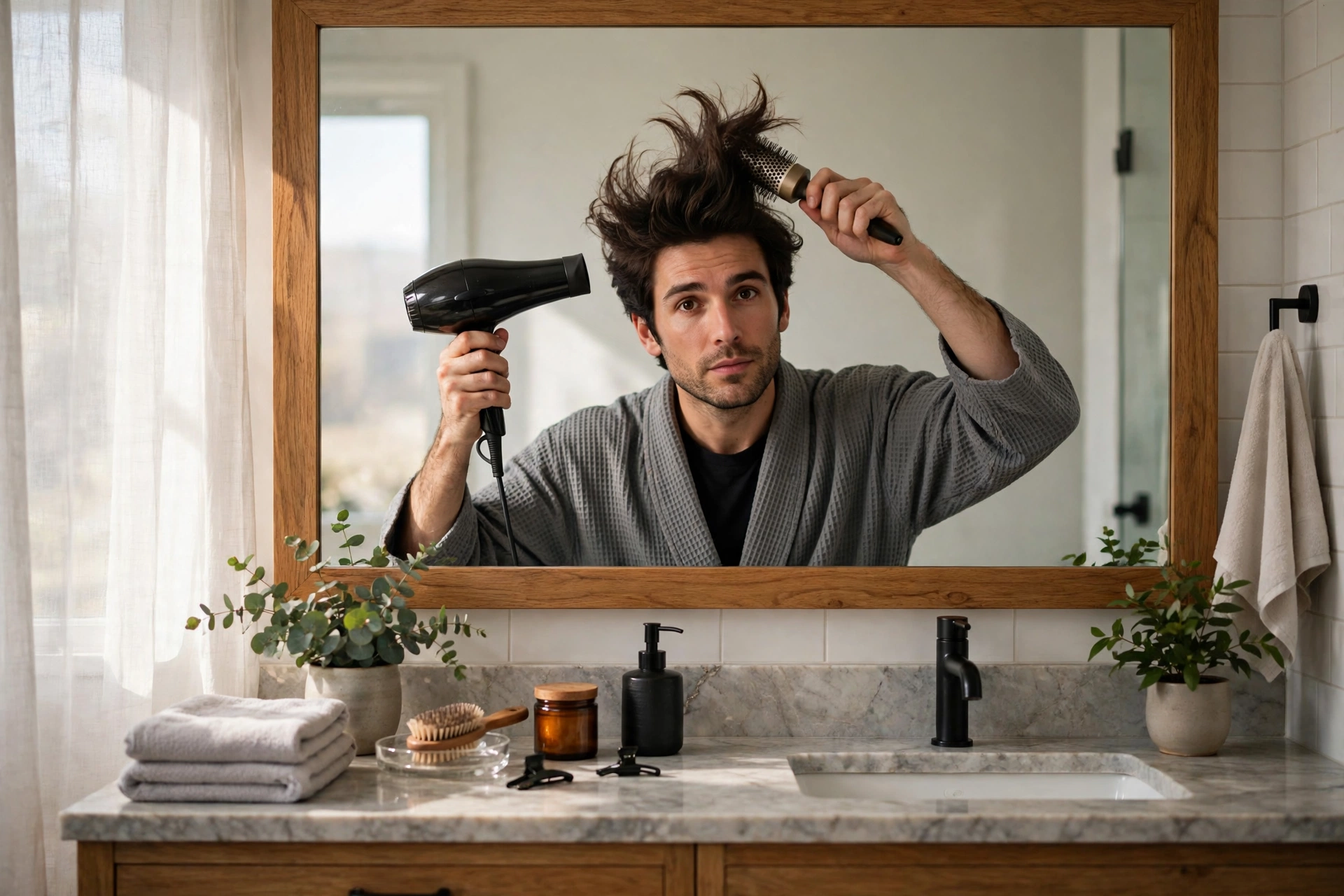
Step 1: Start with damp hair.
Wash, then towel-dry until your hair stops dripping but still feels cool and damp. Soaking wet hair takes too long to dry and falls flat. Completely dry hair will not reshape well.
Step 2: Apply your base product.
Work a golf-ball amount of volumizing mousse through the top only, from roots to ends. For wavy hair, a sea salt spray can add grip. For curly hair, use a light curl cream instead of mousse so you keep definition.
Step 3: Rough-dry to about 70 percent.
With no brush, dry your hair while lifting it with your fingers. Aim the dryer upward from underneath. This builds base volume. Skipping this step is the most common mistake: a round brush on soaking wet hair pulls and stretches the hair.
Step 4: Shape with the round brush.
Take sections about as wide as your brush. Place the brush at the roots, lift up, and roll it back as you follow with the dryer. Direct the front sections up and back. For the crown, lift straight up. Keep the nozzle pointed along the hair shaft, not straight at it, to keep the cuticle smooth.
Step 5: Smooth the sides down.
Switch to a lower heat setting. Brush the tapered sides down and back. Drying downward trains the short hair to lie flat, which sharpens the contrast with the volume on top.
Step 6: Set with cool air.
Finish with 30 seconds of cool air over the whole top. Cool air locks in the shape that warm air created. Then add a pea-sized amount of matte paste, warmed between your palms, and push it through the top with your fingers. Finish with a light mist of flexible-hold hairspray from about 10 inches away if your hair tends to fall flat.
Keeping the Taper Clean
Volume gets the attention, but the taper is what keeps the cut looking fresh. When the taper grows out, the whole style looks heavy. Most guys need a cleanup every 2 to 3 weeks, and how often you should get a low taper fade touched up depends on how fast your hair grows and how sharp you like the edges.
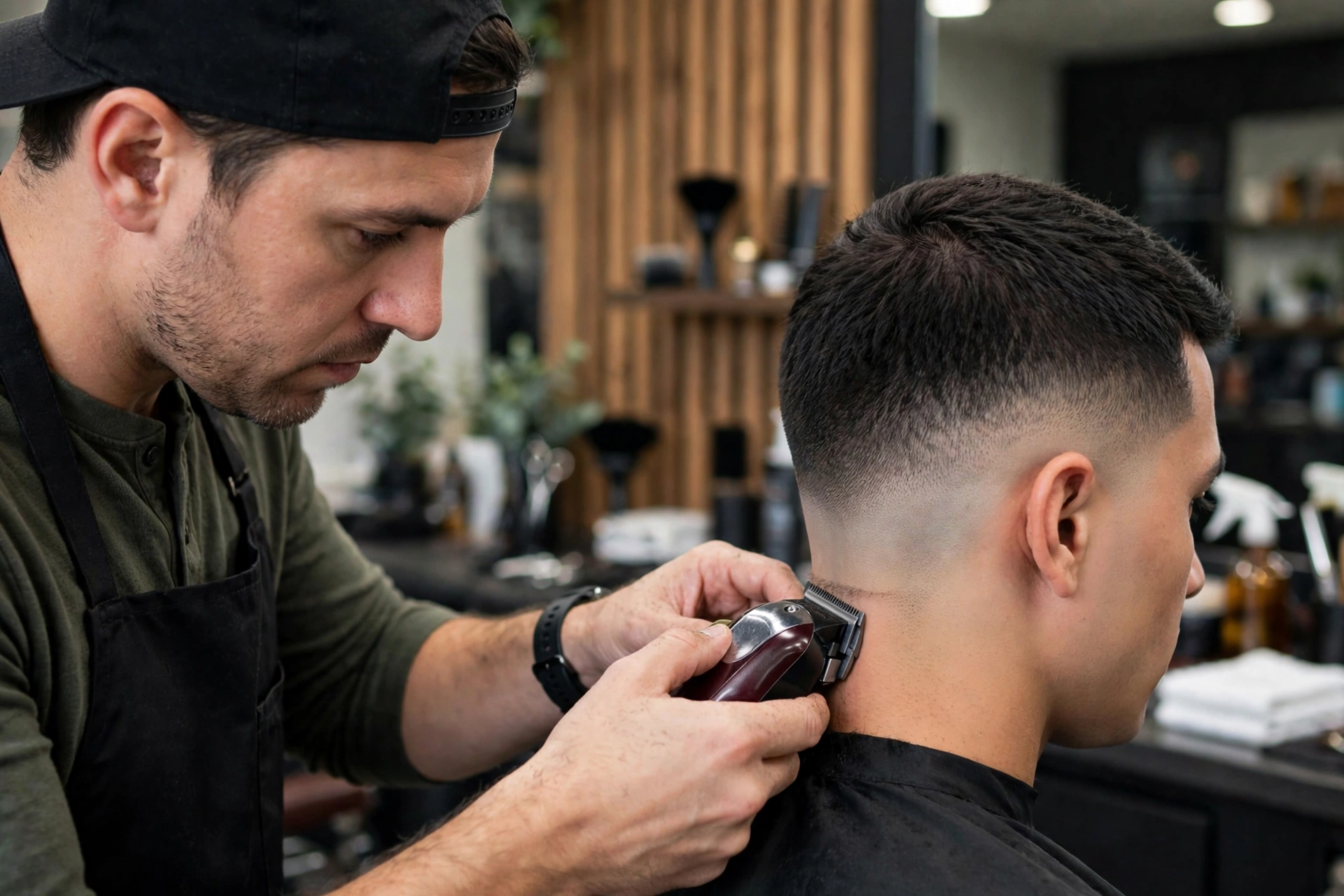
Between visits, you can tidy the very bottom of the neckline with a trimmer, but do not try to re-blend the fade yourself. One wrong pass can push the taper too high, and that takes weeks to grow back. If your hair is on the longer side, this style pairs naturally with long hair on top styling ideas, since the blowout method is the same: lift at the roots, shape back, and keep the sides flat. If you want something more relaxed on lazy days, you can skip the brush and finger-dry the top into a messy top instead. The cut still works; it just reads more casual.
Common Mistakes to Avoid
Too much product: heavy pomade or gel on top collapses a blowout fast. Start with less than you think you need. Drying downward on top: that flattens everything. Always lift from underneath. Skipping heat protectant: daily heat without protection leads to dry, split ends, which kill volume over time. No concentrator nozzle: without it, the air scatters and you get frizz instead of smooth lift. Waiting too long between cuts: a blowout on an overgrown taper looks top-heavy. Book the next visit before you leave the shop.
Who Should Skip This Style?
If you have very tight curls and want a smooth, straight finish every day, a blowout will take a lot of time and heat. A textured style may suit you better. If you swim daily or work outdoors in high humidity, expect the volume to drop faster. In that case, ask your barber for a slightly shorter top and use a stronger-hold cream.
FAQ
How long does a blowout last? On most hair types, a good blowout holds for a full day. Fine hair may drop by afternoon; a light dusting of texture powder at the roots can revive it without a full re-dry. Can I blow out my hair every day? Yes, if you use heat protectant and keep the dryer on medium heat. Give your hair one or two no-heat days a week if it starts feeling dry. Do I need a special dryer? No. Any dryer with a concentrator nozzle and a cool-shot button works. A diffuser helps curly hair but is not needed for straight or wavy hair. Is a blowout the same as a blowout taper? Mostly, yes. “Blowout taper” is the full cut name: tapered sides plus a blow-dried top. “Blowout” alone usually means just the styling method.
Final Verdict
A low taper fade with a blowout is a strong choice if you want a modern cut that still looks clean and professional. The cut is simple to ask for, the routine is fast once you learn it, and the payoff is real: height, movement, and a sharp contrast with the taper. Learn the lift, keep the product light, and book your touch-ups on time, and this style will carry itself.