
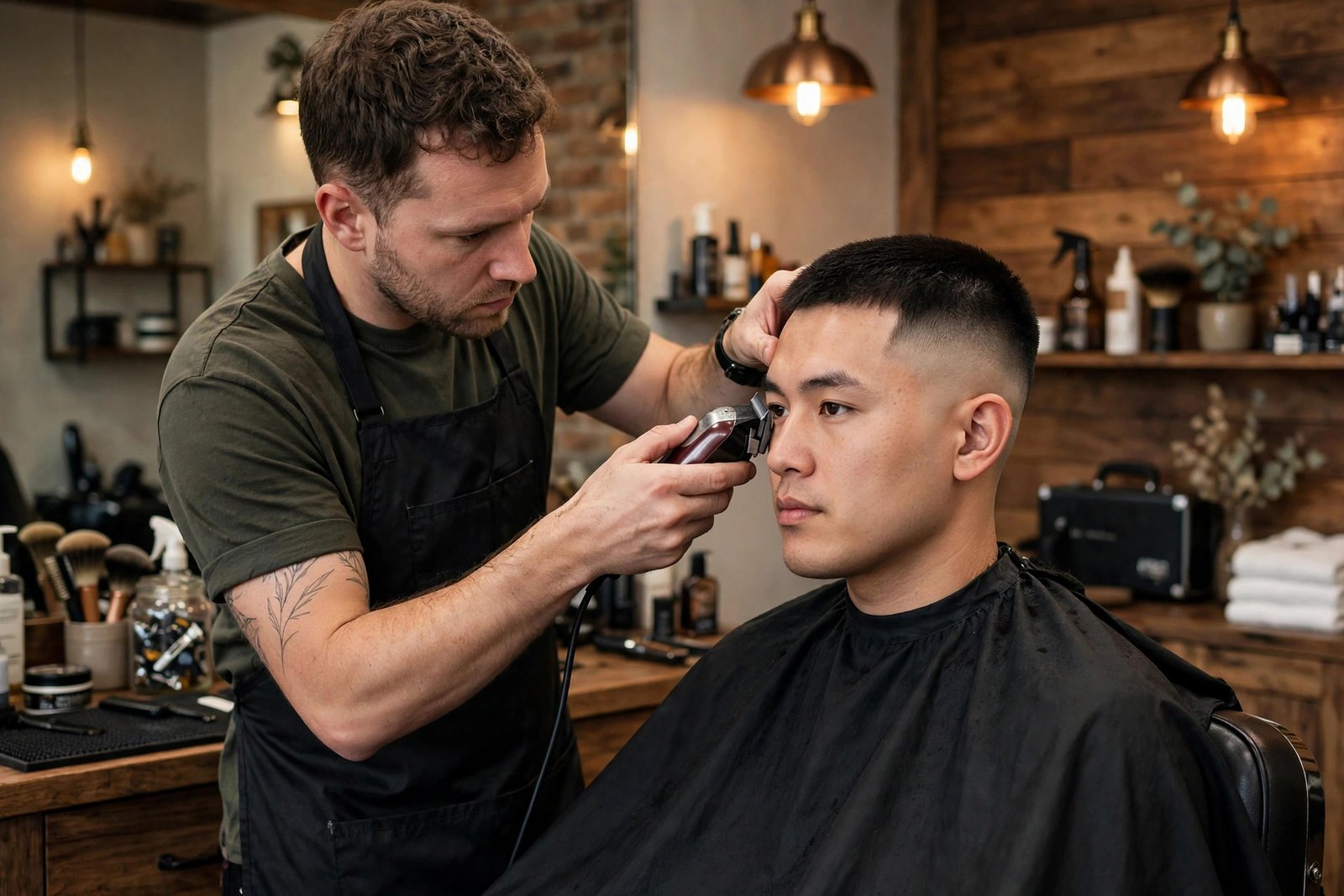
Why Guard Numbers Matter for a Low Taper Fade
Clipper guards are the numbered plastic attachments that control how much hair your clippers leave behind. The number tells your barber exactly how short to go — and for a low taper fade, the difference between a #0 and a #2 is the difference between a sharp, skin-close edge and a soft, barely-there blend.
Understanding these numbers helps you in two ways: you can describe exactly what you want at the barbershop, and you can spot problems (like a taper that looks “too high” or “too harsh”) before you leave the chair.
The Quick Guard Number Chart
Guard numbers are standard across most US clipper brands (Wahl, Andis, Oster). The higher the number, the longer the hair left behind:
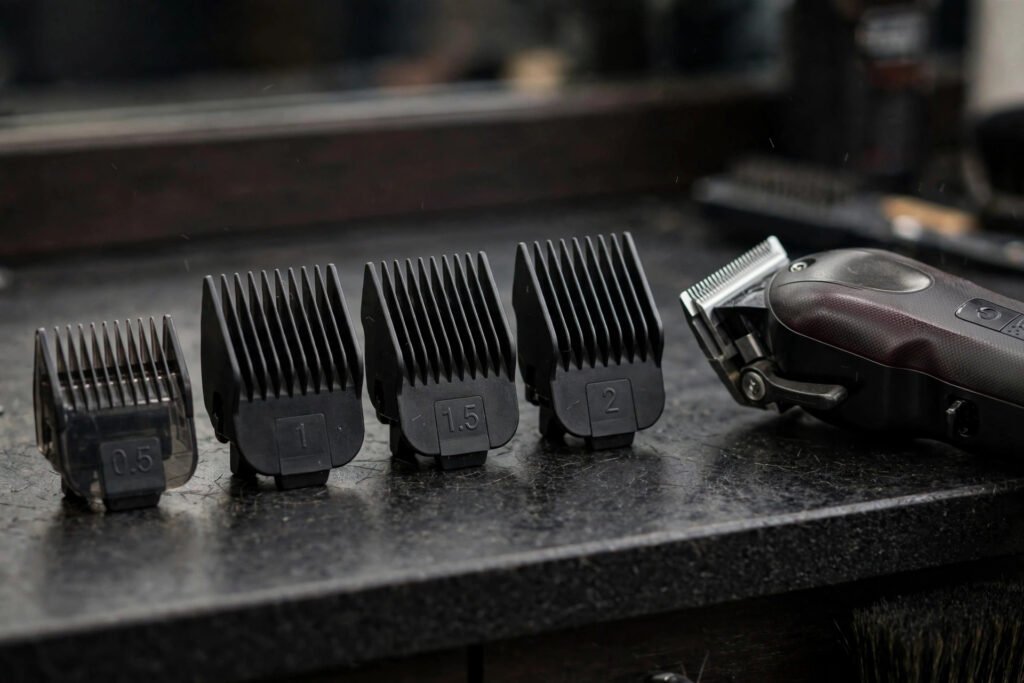
- No guard (blade only / #0): about 1.5 mm (1/16 inch) — a skin-close finish
- #0.5: about 1.5–2.4 mm — the tightest blending step above bare blade
- #1: about 3 mm (1/8 inch) — very short, light scalp shadow visible
- #1.5: about 4.5 mm (3/16 inch) — soft transition between short and medium
- #2: about 6 mm (1/4 inch) — short but fuller, minimal scalp show
Most low taper fades live entirely in the no-guard to #2 range. Anything higher than a #2 is usually about the length on top or the sides, not the taper itself.
How Barbers Use Guards in a Low Taper Fade
A low taper fade is not one guard all over — it is a sequence of guards that creates a smooth gradient. Here is how a barber typically builds it:
- Establish the baseline. The barber starts with the shortest guard (often no guard or #0.5) right at the temples, sideburns, and neckline. This creates the clean edge of the taper.
- Build the blend. Moving upward a short distance, the barber switches to a longer guard — #1, then #1.5 — to step the length up gradually.
- Connect to the hair above. A #2 (or sometimes a #3 on thicker hair) creates the soft transition into the longer hair on the sides and top, so there is no visible line.
- Refine with the taper lever. Most clippers have an adjustable lever that adds or removes about half a millimeter. Your barber uses it between guard steps to erase visible lines — this is where the “fade” part really happens.
The whole taper usually spans only an inch or two of height — that is what makes it low. For the full picture of how this differs from a regular fade, see our taper vs fade breakdown.
Which Guard Numbers Should You Ask For?
You do not need to memorize the chart — but knowing the options helps you speak your barber’s language. Here is what to say depending on the look you want:
For a soft, subtle low taper
Ask for a #1 at the lowest point, blended up through #1.5 into #2. This keeps a shadow of hair everywhere — no bare skin — and grows out gracefully. A good choice for offices and first-time fade wearers.
For a sharp, defined low taper
Ask for no guard (blade) at the baseline, blended through #0.5 and #1 into #2. You get a skin-close edge at the temples and neckline with strong contrast. It looks crisp but needs touch-ups more often — see how often to get a low taper touched up.
For thick or curly hair
Ask your barber to start conservatively — a #1 base rather than blade. Thick and curly hair compresses under the clipper and springs back longer than it looks when wet, so going too short at the baseline is the most common regret. Our complete low taper fade guide covers how hair type changes the approach.
What If the Taper Looks Wrong?
Most taper problems come down to guards, not talent:
- Visible lines between guards: the blend needs more lever work or a half-guard step — ask your barber to “soften the lines.”
- Taper sits too high: the barber carried the short guards too far up. Ask them to keep the blend “low, near the temple and neckline.”
- Too much scalp showing: the baseline guard was too short for your preference. Next time, ask for one guard number longer at the bottom.
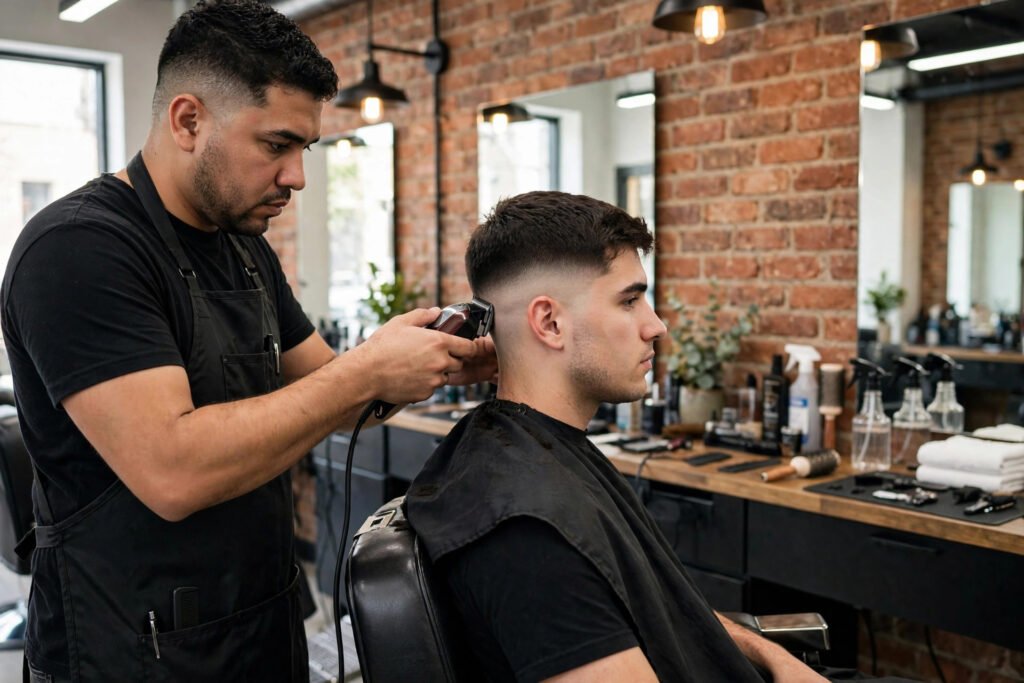
The Bottom Line
Guard numbers are simply a shared language between you and your barber. For a low taper fade, think #0 to #2: the bottom sets the sharpness, the steps create the blend, and the #2 (or #3 on thick hair) connects it all to the hair above. Walk in knowing which of the three looks above fits your style, say it plainly, and you will walk out with the taper you actually pictured.
Frequently Asked Questions
What does “no guard” mean in a haircut?
No guard means the barber cuts with the bare clipper blade, leaving about 1.5 mm of hair — a skin-close finish. It is the shortest option in a low taper fade and is used at the very baseline for the sharpest look.
Can I ask for specific guard numbers at any barbershop?
Yes. Guard numbers are standard across US clipper brands, so “start with a #1 and blend to a #2” means the same thing at almost any American barbershop. If your barber looks unsure, bring a reference photo as backup.
Do guard numbers mean the same thing on all clippers?
Mostly yes for the common brands (Wahl, Andis, Oster). Small differences exist between brands, so a #1 might be a fraction of a millimeter off — not enough to change the look. Your barber’s technique matters far more than the brand.
What guard is used for the top of a low taper fade?
The top is usually cut with scissors or a longer guard (#3 and up), not with the taper guards. The #0–#2 range only covers the tapered area around the temples, sideburns, and neckline.