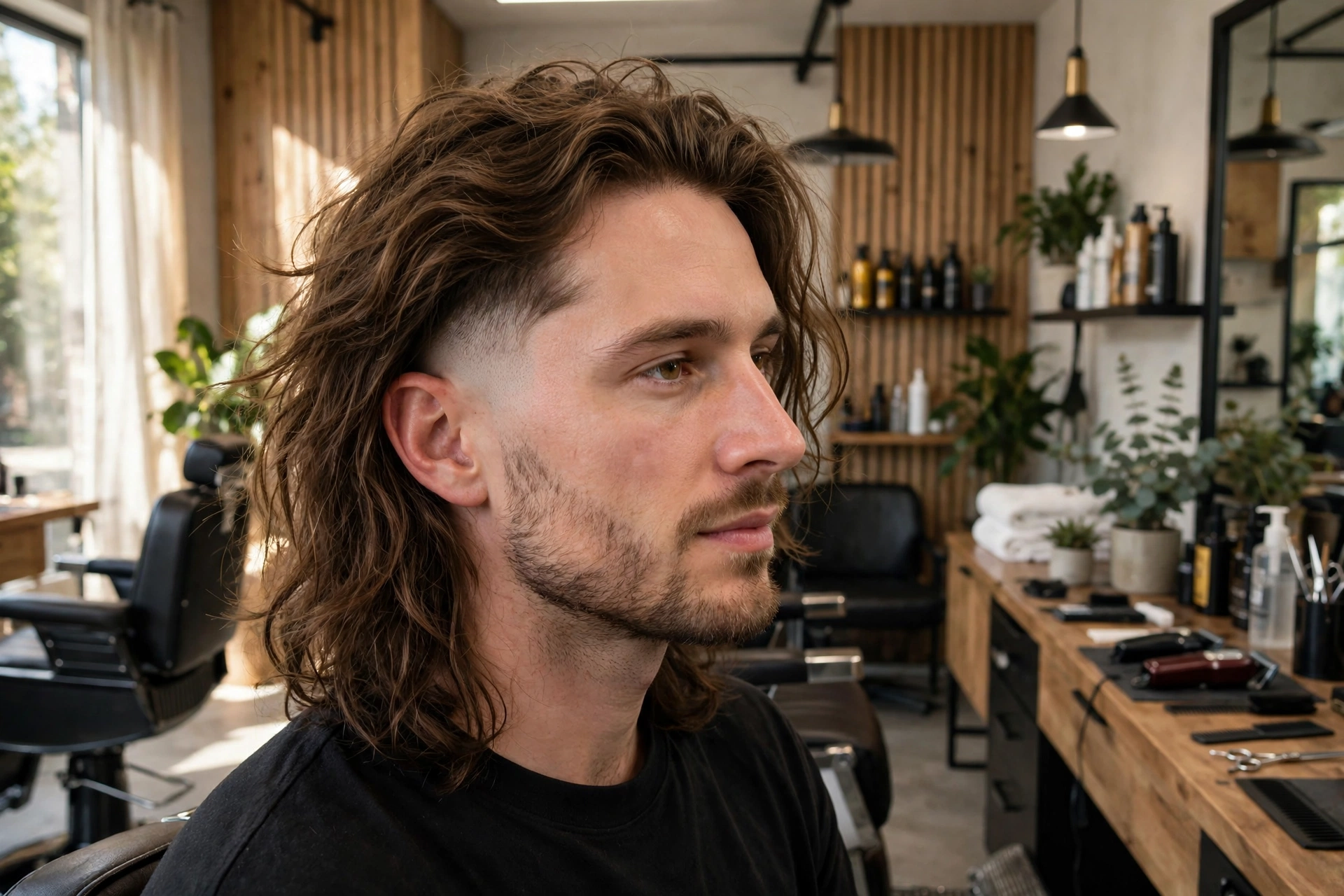
A low taper fade with long hair on top gives you the best of both worlds: clean, sharp edges around the ears and neckline, and plenty of length to style however you like. The taper stays low, so it never eats into the top. That makes this cut a smart choice if you are growing your hair out, or if you simply like long hair but want to look groomed instead of shaggy.
What the Cut Actually Looks Like
A low taper fade gradually shortens the hair around the sideburns, above the ears, and at the nape of the neck. Above that low zone, the hair keeps its natural length. On top, "long" usually means 4 inches or more, though anything past the ears counts as long in barber terms.
The contrast is the point. Short, blended sides frame the face and keep the outline neat, while the long top adds movement and personality. Because the fade sits low, the change from short to long is gentle rather than dramatic. It works in an office, at the gym, and on a night out, which is why so many guys stick with it for years.
Who It Suits Best
This cut is forgiving, but it shines on certain hair types:
- Straight hair: The clean sides balance the weight of long, straight hair, which can otherwise look flat around the ears.
- Wavy hair: Waves add natural texture on top, and the taper stops the sides from puffing out.
- Thick hair: Removing bulk around the ears and neckline makes thick hair much easier to manage.
- Fine hair: Keep the top layered rather than one heavy length, so fine hair does not fall flat.
Face shape matters less here than with a high fade, because the top can be styled to add height, width, or softness wherever you need it. If your face is long, avoid adding too much height on top. If your face is round, a little height and a side part help balance it out.
What to Tell Your Barber
A clear request prevents a bad surprise. Try this script, and adjust the length to your goal:
"I want a low taper fade on the sides and back — just around the ears and neckline, nothing high. Keep the top long, around [your length], and just clean up the split ends. No thinning on top unless it gets bulky."
Bring a reference photo if you can. Photos remove guesswork about what "long" means to each person. If you are still deciding between styles, our guide on how to ask your barber for a low taper fade walks through the exact wording, including guard numbers and neckline choices.
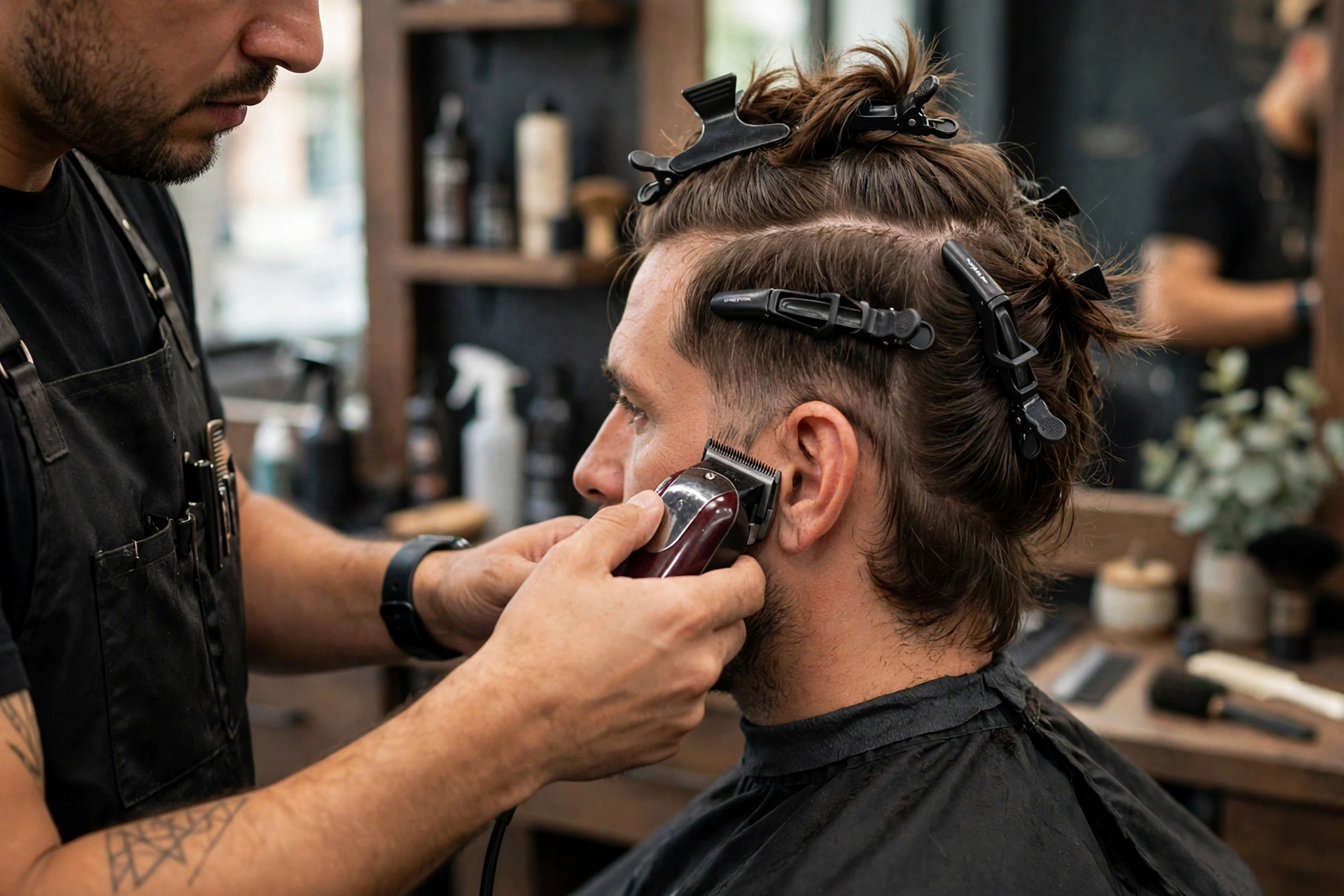
A few details worth agreeing on before the clippers start:
- How low the taper goes: It should start just above the ear and blend down to the neckline.
- The neckline: A tapered neckline looks softer and grows out better than a blocked, squared-off line.
- The top: Ask for a light trim only, and say how much length you want to keep.
- The sideburns: A taper usually blends the sideburns in; say if you want them kept longer.
Styling Options for Long Hair on Top
This is where the cut earns its keep. One haircut, many looks:
1. The Natural Flow
Let the hair fall where it wants. After washing, work a small amount of light styling cream through damp hair and let it air dry. This is the lowest-effort option and suits wavy and straight hair well.
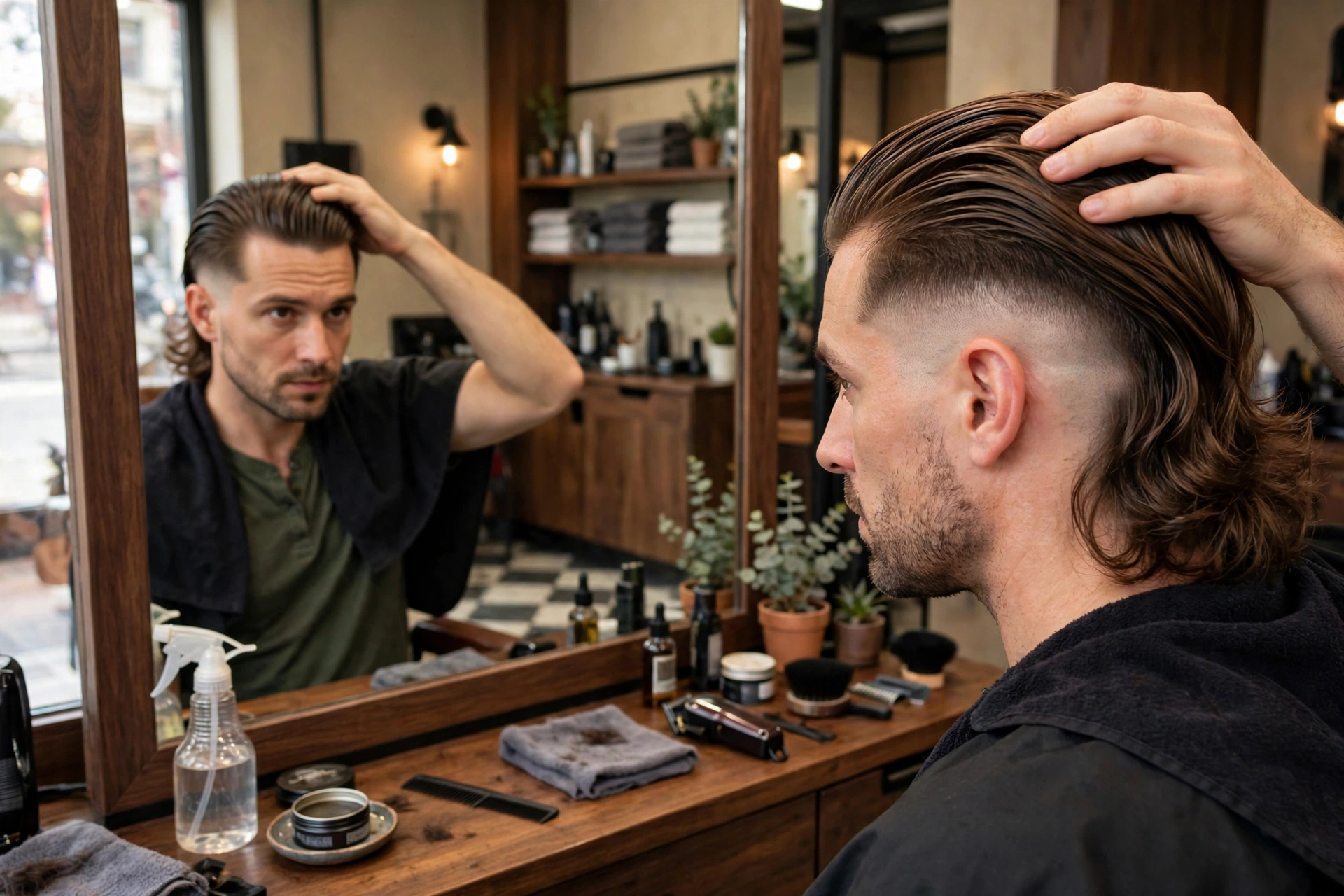
2. The Slick Back
For a polished look, comb damp hair straight back with a medium-hold pomade, then blow dry on low heat to set it. A low taper fade slick back keeps the neckline neat while the top looks smooth and controlled. It is a strong choice for work events and weddings.
3. The Middle Part
Part damp hair down the center with a comb and let both sides fall naturally. This relaxed style frames the face evenly and works best when the top is at least 5 to 6 inches long.
4. The Man Bun or Half Bun
On busy days, tie the top back. The taper keeps the sides looking intentional instead of messy, so a bun reads as a style choice rather than laziness. Use a snag-free hair tie to avoid breakage.
5. The Messy, Textured Look
Work a matte paste or clay through dry hair and tousle it with your fingers. A low taper fade with a messy top is the easiest way to get texture without a complicated routine — the contrast between the neat sides and the loose top does most of the work.
Products That Actually Help
You do not need a shelf full of products. Three cover nearly every style: a light styling cream for natural looks, a matte paste or clay for texture, and a pomade for slick backs. Start with less than you think you need — a fingertip-sized amount for shorter tops, a coin-sized amount for longer hair. Too much product makes long hair look greasy fast.
Upkeep and Maintenance
Long hair on top needs less frequent cutting than the taper itself. A good rhythm:
- Taper touch-up: Every 2 to 3 weeks to keep the edges sharp.
- Top trim: Every 6 to 8 weeks, just enough to remove split ends.
- Washing: 2 to 3 times a week is enough for most guys. Overwashing strips natural oils and makes long hair frizzy.
- Conditioning: Use conditioner every wash, focusing on the mid-lengths and ends.
Final Verdict
A low taper fade with long hair on top is one of the most flexible cuts a guy can wear. It keeps you looking groomed without giving up length, it adapts to straight, wavy, thick, and fine hair, and it offers a different style for every day of the week. Book the taper touch-up regularly, trim the top lightly, and the cut practically takes care of itself.
FAQ
How long does my hair need to be on top? About 4 inches is enough to style it in most ways. For a middle part or a bun, aim for 5 to 6 inches or more.
Will a low taper fade make my long hair look thinner? No. The taper only shortens the lower sides and neckline. The top keeps its full length and density.
How much does a low taper fade cost in the US? Prices vary by city and barbershop, but a taper cut in the US typically runs in the range of $25 to $60. Long-hair styling or a detailed finish may cost a little more.
Can I grow my hair out from a shorter cut into this style? Yes. Keep getting the taper touched up while the top grows. The awkward stage is shorter than you think because the sides always look clean.