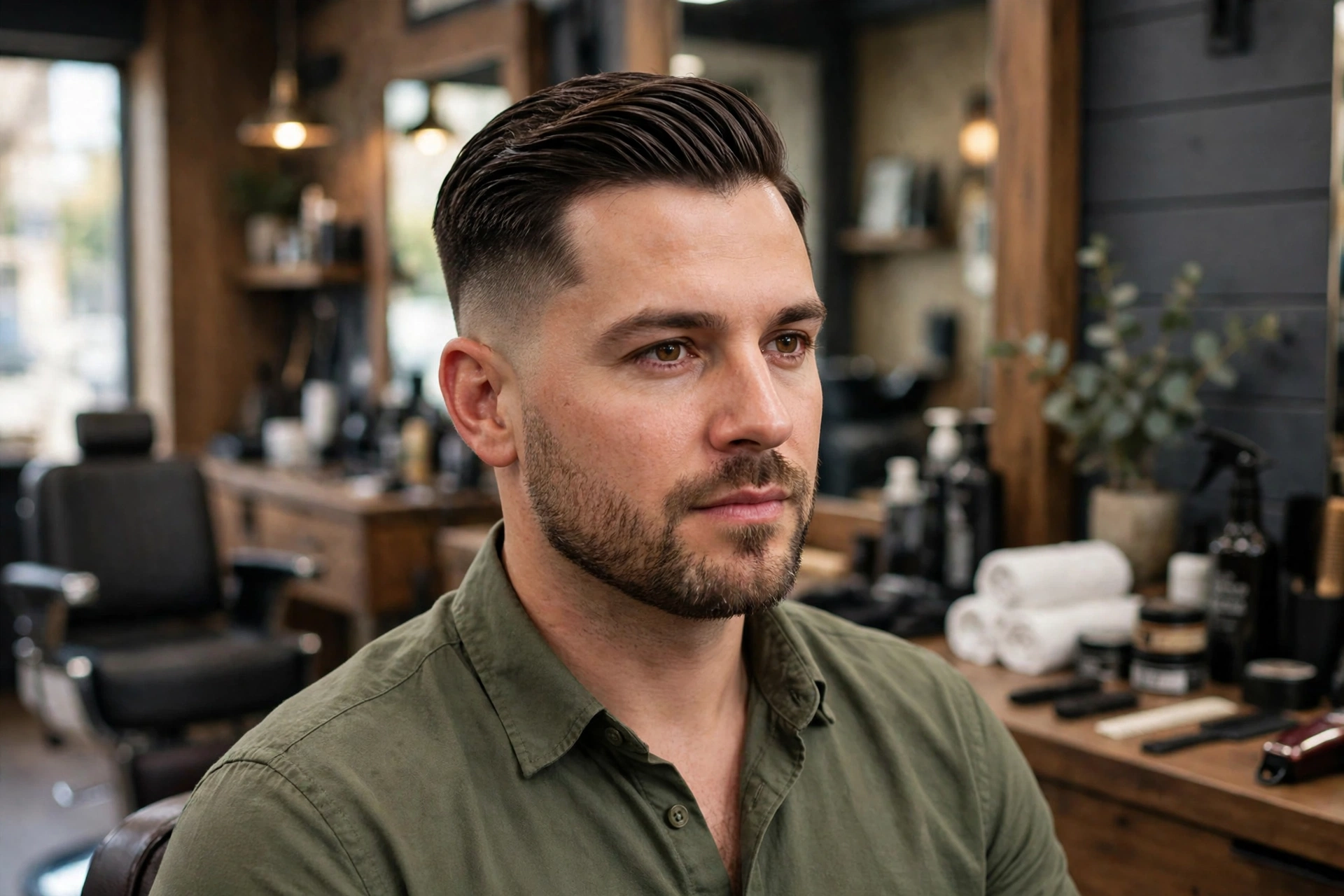
The comb over has outlasted almost every men’s hair trend, and pairing it with a low taper fade is why it still looks current. The top stays neat and swept to one side, while the taper keeps the sides clean without the harsh contrast of a skin fade. It is the rare cut that works as well in a boardroom as it does on a weekend. This guide explains the cut in plain terms, how to find your natural part, the daily styling routine, and how to keep it from looking flat or dated.
What Is a Low Taper Fade With a Comb Over?
A comb over means the longer hair on top is swept across to one side from a part. A low taper fade means the sides and back gradually shorten toward the ears and neckline, but the fade stays low, so the change is soft, not dramatic. Together, you get three things: a clear part line, a smooth sweep across the top, and a tidy finish around the ears. The top is usually 3 to 4 inches long. That length is long enough to comb over cleanly but short enough to stay in place all day. Do not confuse a comb over with a side part. A side part lies flatter and is combed straight across from the line. A comb over sweeps across and slightly back, with a little more lift at the front. Most comb overs contain a side part, but the sweep and volume make the difference.
Finding Your Natural Part
Your part is found, not chosen. Fighting your natural part makes every morning harder. 1. Start with damp hair. 2. Comb it straight back. 3. Push it forward gently and let it fall. 4. Where it splits is your natural part, usually above the arch of one eyebrow. Most men part on the left, but follow your hair, not the rule. Tell your barber which side you part on so the cut is shaped to fall that way. A soft part is just combed in and can move. A hard part is shaved in with a trimmer along the line. A hard part looks sharper but needs a refresh every 2 to 3 weeks to stay crisp, so only choose it if you will keep up with visits.
What to Ask Your Barber For
Use this full request, adjusted to your hair: “A comb over, 3 to 4 inches on top, scissor-cut, with a low taper fade on the sides, and a soft part on the left” (or right, per your natural part). Be clear about these details: Top length in inches. Saying “a little off the top” is vague. Inches are not. Taper height. Low means the fade starts just above the ear. If you want more contrast, read about low taper fade vs mid taper fade before you decide, because a mid taper changes the whole balance. Finish. Matte or shiny? Matte clay looks modern and textured. Classic pomade looks sleek and traditional. Your barber cuts a textured comb over differently than a slick one, so say which finish you want. Beard blend. If you have facial hair, ask how the taper blends into it. A clean blend is the difference between a sharp cut and a choppy one, as shown in our guide to a low taper fade with a full beard. If you are new to barber talk in general, our guide on how to ask your barber for a low taper fade covers the exact wording for taper height, guards, and necklines. A typical US barbershop price for this cut is about $30 to $60, and a 20 percent tip is standard for good service.
How to Style It
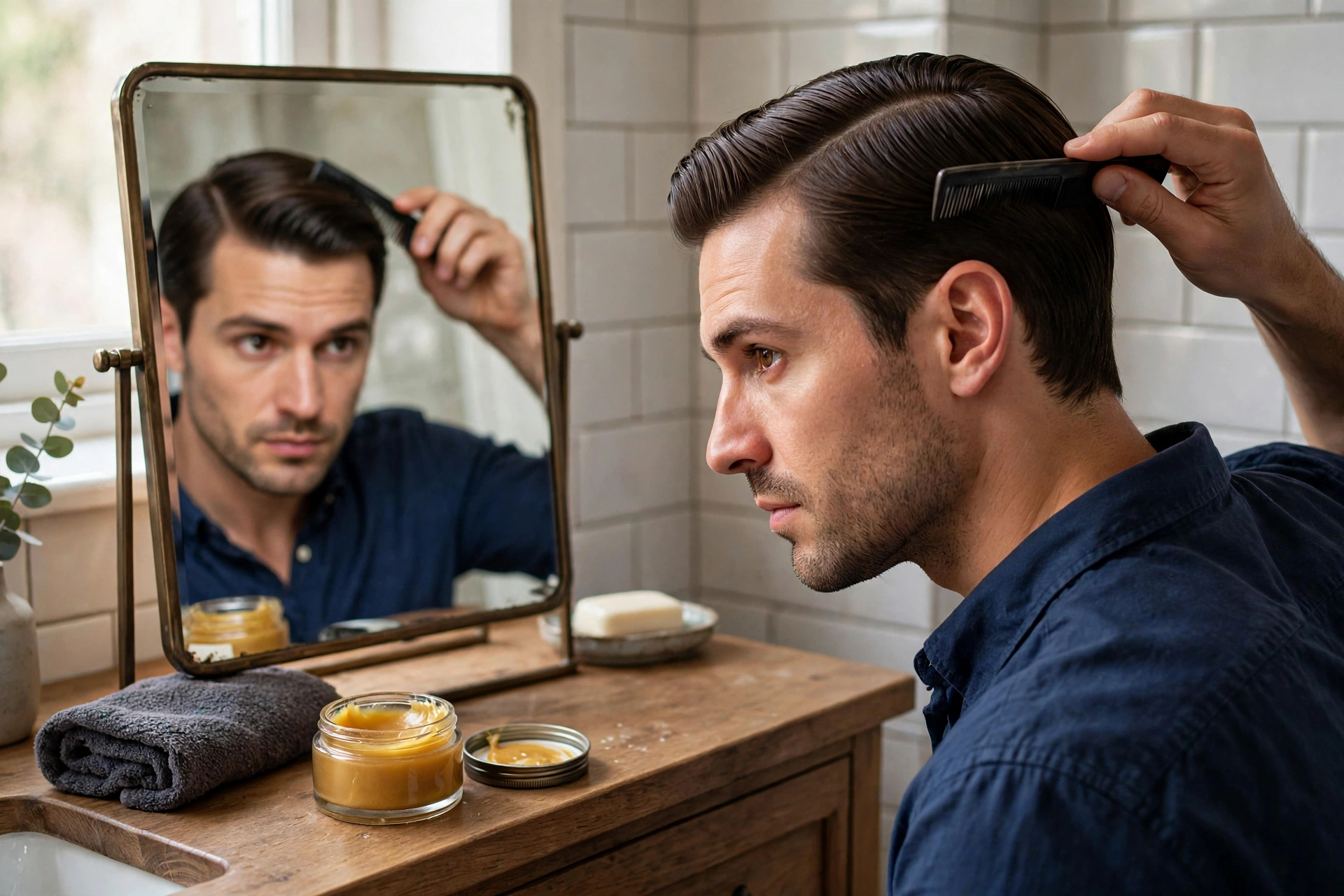
The routine takes about five minutes once you know it.
Step 1: Start damp.
Towel-dry after washing. The hair should be damp, not dripping. Product goes into damp hair, and the dryer sets the direction afterward. That order matters: product on a messy top just locks the mess in place.
Step 2: Add product.
Warm a dime-sized amount of product between your palms. For a classic finish, use a water-based pomade. For a modern matte finish, use clay or paste. Work it through the top from roots to ends, but keep it off the faded sides so the blend stays visible.
Step 3: Set the part.
With a fine-tooth comb, draw your part line from front to back. Then comb the larger side across and slightly back. Use the comb to smooth the top flat, then lift the front slightly with the comb or your fingers for a bit of height. Do not over-comb: two or three clean passes beat ten fussy ones.
Step 4: Dry into place.
If you want extra hold, blow-dry on low heat while combing in the direction of the sweep. This sets the shape so it survives wind and hats better. For a shorter top, you can skip the dryer entirely.
Step 5: Finish.
Check the transition where the top meets the faded sides. Smooth any stray hairs down with a small brush. A light mist of hairspray helps if your hair is fine or tends to fall flat, but skip it if your hair is thick and holds on its own.
Variations Worth Knowing
Classic comb over: flat, neat, pomade finish. Best for formal work and older men who want a timeless look. Textured comb over: point-cut ends, matte clay, finger-styled instead of comb-perfect. Best for younger guys and casual settings. Comb over with a hard part: a shaved line defines the part. Sharp, but higher upkeep. Comb over with volume: the front is lifted higher, closer to a quiff. Good for round faces, since the height balances width. For thick hair, use a little more product and a stronger hold. For thin hair, keep the top a bit shorter and use a matte product, which makes hair look fuller than shiny pomade does. For curly hair, a comb over still works, but expect a softer, more textured sweep rather than a flat, sleek one.
Where This Cut Works Best
This is one of the safest professional haircuts you can choose. It reads as neat and intentional in offices, at weddings, and in job interviews, without looking boring. It also ages well: unlike trend-driven cuts, a comb over does not date your photos in two years.

It is less ideal if you hate daily styling. A comb over needs at least a comb and a minute of product each morning. If you want a true wash-and-go cut, a shorter taper style will suit you better. And if you love high volume, a low taper fade slick back gives you a similar classic feel with the hair pushed straight back instead of to the side.
Upkeep and Maintenance
Get a cleanup every 3 to 4 weeks. The taper grows out first, and once the sides get bulky, the clean contrast that makes this cut work disappears. The part line also softens as the top grows, so regular trims keep the shape honest. Between visits, keep the sides tidy by brushing them down after washing. Do not try to re-cut the taper at home unless you are experienced with clippers. Wash with a normal shampoo, and use conditioner on the top length to keep it smooth enough to comb.
Common Mistakes
Too much product: heavy gel makes the top look wet and stiff, and it flattens the sweep. Combing against your natural part: this creates a cowlick fight every morning. Product on the faded sides: it clumps short hair and blurs the blend. Skipping the part: without a clear part, a comb over is just hair pushed sideways. The line is the style.
FAQ
Does a comb over work for a receding hairline? It can help. Sweeping the front slightly forward and to the side can soften a receding line, but do not try to comb long hair over a large bald area. That reads as a cover-up. A shorter, textured top is more honest and looks better. Which side should I part on? Your natural part, found by combing damp hair back and letting it fall. Most men part on the left, but your hair decides. Can I wear a comb over with wavy or curly hair? Yes. Expect more texture and less sleekness. Use a cream instead of pomade, and comb with a wide-tooth comb to avoid frizz. How is this different from a side part haircut? A side part lies flatter. A comb over sweeps across and back with more lift at the front. The difference is subtle, but your barber will know it if you say which finish you want.
Final Verdict
A low taper fade with a comb over is a classic for a reason: it is neat, versatile, and hard to get wrong once your part and top length are set. Find your natural part, ask for inches not vibes, keep the product light, and trim every few weeks. Do that, and you have a cut that looks sharp in any room.