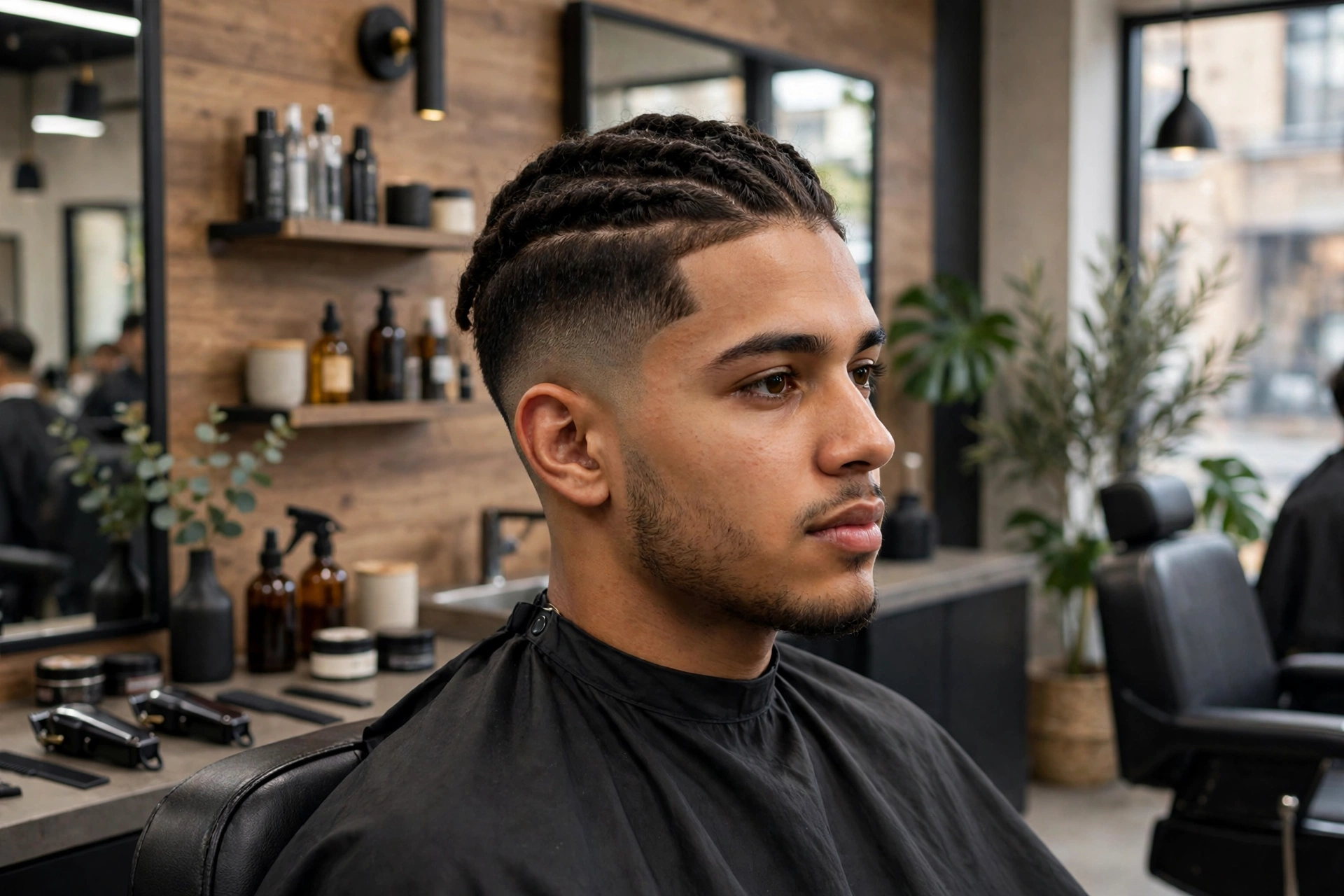
Twists are one of the easiest textured styles to wear with a low taper fade. They add pattern and movement on top, while the taper keeps the sides and neckline clean. Because twists are quicker to install than braids and softer than locs, they are a great first protective style — and the low fade makes them look finished rather than half-done.
This guide covers the two main types, two-strand twists and comb twists, how to get them with a taper, and how to keep them neat for weeks.
Two-Strand Twists vs Comb Twists: What Is the Difference?
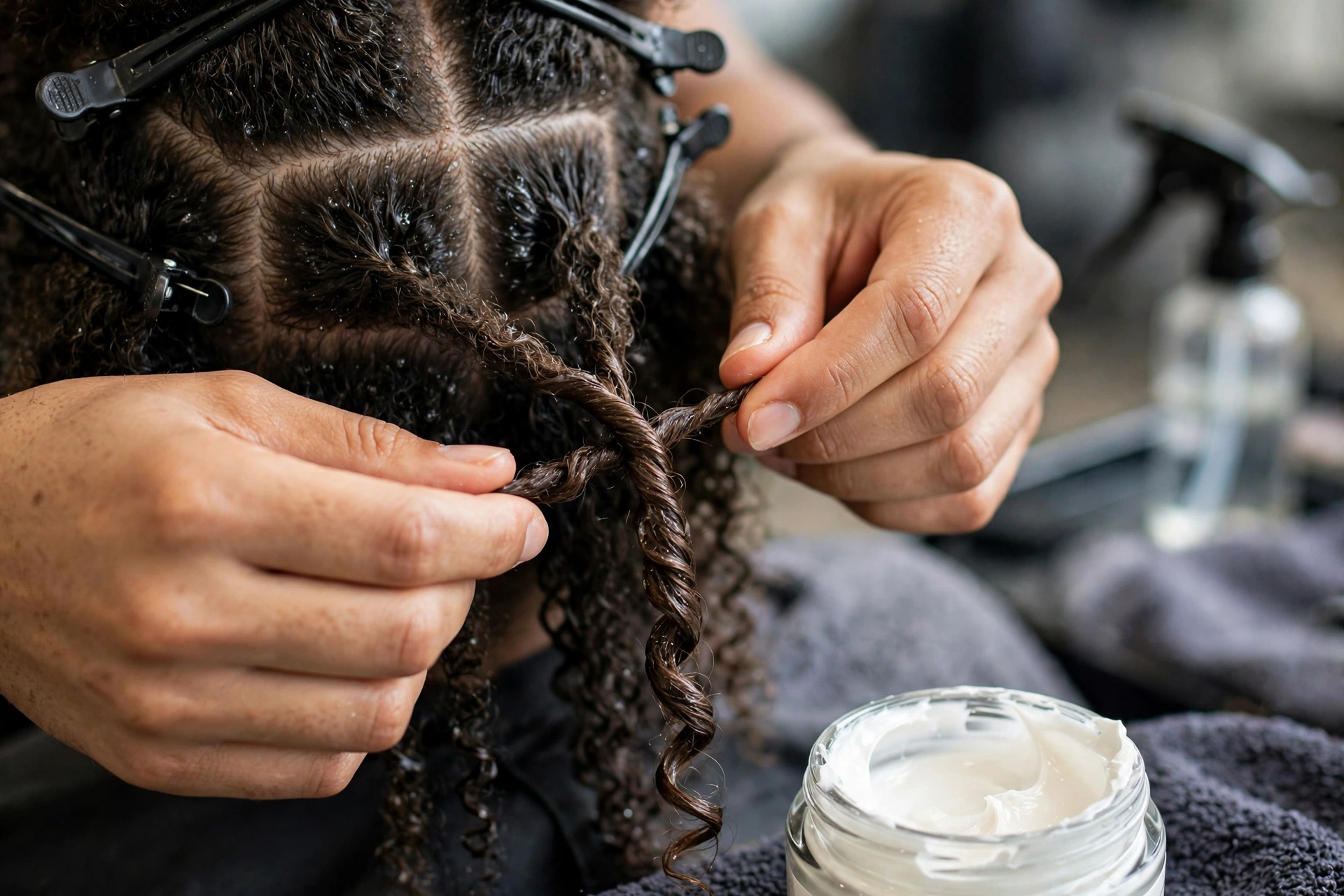
Two-strand twists are made by dividing a section of hair into two parts and wrapping them around each other from root to tip. They are soft, flexible, and easy to undo, which makes them ideal if you like to change styles often. They work on short, medium, and longer hair, and they can be worn loose, pulled back, or twisted into a bun or ponytail.
Comb twists, sometimes called comb coils, are made by twisting a small section around a fine-tooth comb or with the fingers into a tight coil. They sit closer to the scalp, look more defined, and suit shorter hair. They are the neater, more compact cousin of two-strand twists, and they pair especially well with a crisp taper and line-up.
Both types protect the hair by reducing daily manipulation. Two-strand twists give more volume and movement; comb twists give more definition and a cleaner outline. If you are choosing between twists and other textured styles, our low taper fade with braids guide explains how braids compare on install time and wear time.
How Much Length Do You Need?
For two-strand twists, about 2 to 3 inches of hair on top is a practical minimum. Shorter hair can twist, but the twists will be small and may unravel faster. Longer hair gives fuller, longer-lasting twists.
For comb twists, even 1 to 2 inches can work, because the coil grips shorter hair well. This makes comb twists a good option if you are growing your hair out and want a styled look before you have braiding length.
In both cases, the taper does not need length — it works on the short perimeter hair. That is the advantage of this combination: you do not need a full head of long hair to get a complete, polished style. For texture-specific care, our guide to a low taper fade for coily hair covers length choices and daily care for tight curl patterns.
Step-by-Step: How to Get Twists With a Low Taper
You can get twists and a taper in one appointment if your barber or stylist does both, or split them between a stylist for the twists and a barber for the taper. Either way, the order matters: twists first, taper second, so the taper can be blended cleanly around the finished twists.
1. Start clean and damp
Wash and condition, then work on damp, detangled hair. Detangle gently with a wide-tooth comb. Twisting dry, tangled hair creates uneven twists and more breakage.
2. Apply product lightly
Use a leave-in conditioner first, then a small amount of twisting cream or butter. The goal is moisture and light hold, not a heavy, sticky coating. Too much product causes buildup and makes twists look dull within days.
3. Section evenly
Part the hair into sections with a rat-tail comb. Smaller sections give tighter, more defined twists; larger sections give looser, fuller twists. Keep the sections even — uneven parts are the most visible flaw in a twist style.
4. Twist from root to tip
For two-strand twists, split each section into two equal strands and wrap one over the other all the way to the ends, keeping even tension. For comb twists, twist each small section around the comb or between your fingers until it coils neatly against the scalp. Do not twist so tightly that the scalp pulls or hurts.
5. Add the low taper last
Once the twists are set, the barber tapers the sides and neckline low, around the ears and nape, blending into the twists without cutting them. Ask for the fade to stay low — if it climbs into the twist zone, it will cut twists off at the sides and leave a gap.
6. Let the twists set
Air dry if you have time, or use a hooded dryer or diffuser on low heat. Do not pull twists into a tight style until they are fully dry, or they will frizz and lose definition.
Twist Styles That Work With a Low Taper
Short two-strand twists with a taper are the lowest-effort version. They are neat, professional enough for work, and easy to maintain. Keep the twists short on top and the taper crisp, and the style reads as intentional from every angle.
Medium twists give more styling options. Wear them loose for volume, pull them into a low ponytail, or gather them into a bun. The taper keeps the sides tidy even when the top is pulled back, which is why this length is popular for the gym and for work.
Comb twists with a line-up are the sharpest version. The tight coils, clean taper, and crisp hairline together create a very polished finish. This version needs the most frequent upkeep, because the line-up and taper soften fastest.
Twists with a beard also work well, as long as the sideburn blend is handled carefully. Ask your barber to blend the sideburn into the beard gradually rather than cutting a hard line between the taper and the beard.
If you like length on top generally, the same taper logic applies — see our guide to a low taper fade with long hair on top for styling ideas that keep length while the sides stay clean.

Upkeep: How Long Twists Last
Two-strand twists usually last 2 to 4 weeks, depending on hair type, twist size, and how much you manipulate them. Comb twists last a similar time, sometimes slightly less on very short hair because the coils can loosen faster.
Refresh the taper every 2 to 3 weeks, even if the twists are still in. A barber can clean up the perimeter without undoing the twists, as long as the twists are tied or clipped away from the clippers.
At night, protect the twists with a satin or silk bonnet, durag, or scarf, or sleep on a satin pillowcase. Cotton pillowcases create friction that frizzes twists overnight. During the day, moisturize lightly 2 to 3 times a week with a water-based leave-in spray, sealed with a light oil such as jojoba or coconut oil. Avoid heavy products that build up on the twists.
To wash while wearing twists, focus on the scalp. Use a diluted shampoo or a scalp cleanser with a nozzle bottle, massage gently, and rinse without rubbing the twists aggressively. Let them air dry fully afterward.
For broader shaping advice on textured hair, the low taper fade for Afro hair guide covers volume, shape, and edge control that apply to twist styles too.
Mistakes to Avoid
Do not twist on dry, tangled hair. It causes breakage and uneven twists that unravel early.
Do not use too much product. Buildup makes twists heavy, dull, and itchy, and it shortens their life.
Do not retwist the same twists repeatedly to extend them. Once twists are frizzy at the roots and the parts are lost, it is time to take them down, wash, and start fresh. Forcing extra weeks usually damages the hair underneath.
Do not let the taper climb higher at each touch-up. Agree on the taper height at the first visit and keep it consistent, or the twist zone will shrink over time.
FAQ
Q: How long do twists with a low taper fade last? A: Twists usually last 2 to 4 weeks. The taper needs a refresh every 2 to 3 weeks, so plan a barber visit in the middle of the twist cycle.
Q: Are two-strand twists or comb twists better with a taper? A: Two-strand twists give more volume and styling options. Comb twists give a neater, more defined finish on shorter hair. Both pair well with a low taper — pick based on your length and how neat you want the style to look.
Q: Can I get twists if my hair is short? A: Yes, especially comb twists, which work from about 1 to 2 inches. Two-strand twists are easier from about 2 to 3 inches.
Q: Will the taper damage my twists? A: No, if the barber works only on the perimeter and secures the twists away from the clippers. Tell your barber to taper last, after the twists are finished.
Final Verdict
A low taper fade with twists is a smart, low-maintenance combination: twists give texture and protection on top, the taper gives a clean frame around them. Start on damp, detangled hair, keep sections even, keep the taper low, and refresh the perimeter every few weeks. Done that way, twists look sharp from day one until you take them down.