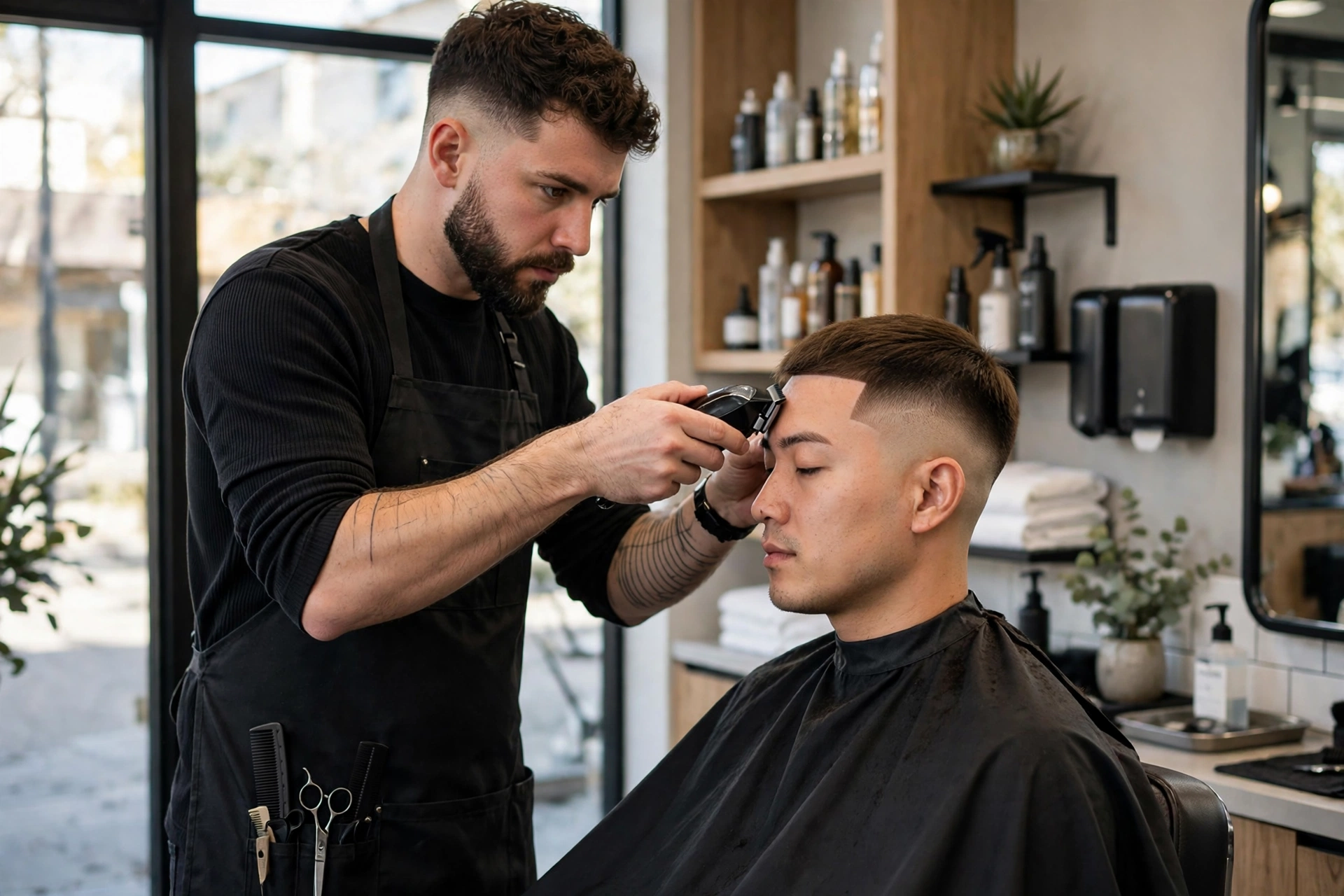
A low taper fade already looks clean. Add a line-up, and it looks sharp on purpose. The taper keeps the sides and neckline neat, while the line-up draws a crisp border around your forehead, temples, and neckline. Together, they frame your face in a way a taper alone cannot.
A line-up is also called a shape-up or an edge-up. It is not a separate haircut. It is the finishing detail a barber adds with a trimmer or a straight razor, shaping your natural hairline into clean, defined lines. Done well, it looks intentional. Done too aggressively, it can look harsh and grow out unevenly. This guide explains the difference, what to ask for, and how to keep it looking fresh.
What a Line-Up Actually Is
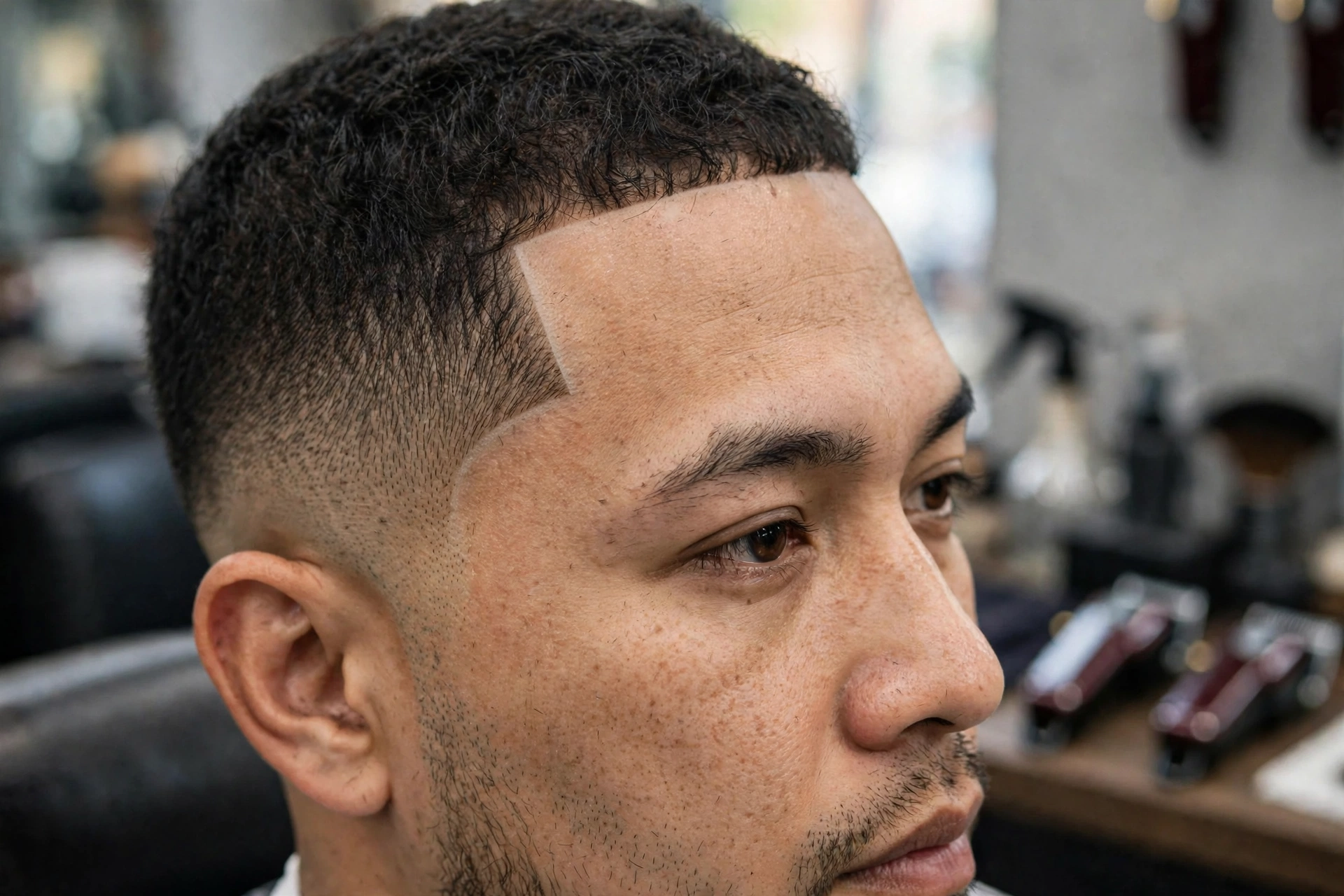
A line-up follows your natural hairline. Your barber cleans up stray hairs around the forehead, sharpens the corners at the temples, and tidies the line where the sideburns meet the face. At the back, the neckline can be tapered or lightly shaped to match.
That is the key point: a good line-up works with the hairline you already have. It should not push your hairline back or carve a brand-new shape into your forehead. A barber who respects your natural line will leave you with edges that still look like you, only cleaner.
The low taper fade pairs well with a line-up because the fade itself is subtle. The shortest hair sits low, around the ears and neckline, and blends gradually into the longer hair on top. The line-up adds definition at the front, while the taper keeps the rest of the cut soft enough for everyday wear, including the office.
Who Suits a Line-Up Best
A line-up suits most hair types, but it shows up best on short to medium hair, where the sharp front edge becomes the star of the cut. It works especially well if you like a groomed, finished look and do not mind visiting the barber more often, since sharp edges show growth fast. If you prefer a cut you can forget about for six weeks, a softer, natural hairline may suit you better.
What to Ask Your Barber
Clear words save you from a surprise in the mirror. Try this script, and adjust the top length to your own style:
“I want a low taper fade around the ears and neckline, blended into about two inches on top. Please add a line-up, but keep it natural — clean up the forehead and temples without pushing my hairline back. I would like the corners slightly rounded, not fully squared.”
If you want a bolder look, say so directly: “I want a sharp line-up with squared corners.” If you wear a beard, add one more line: “Please blend the sideburns into the beard, or keep them separate.” That single choice changes the whole outline of the cut, so do not leave it to chance.
Bring a reference photo if you can. A photo shows your barber the exact level of sharpness you mean. Point to the forehead line, the temple corners, and the neckline in the photo, and say what you like about each part. If you are unsure how to phrase a request like this, our guide on how to ask your barber for a low taper fade gives you a full script you can reuse.
Line-Up vs Natural Hairline: The Trade-Off
A natural hairline grows out gracefully. After two or three weeks, it still looks fine, just a little less tidy. A sharp line-up looks striking on day one, but it shows growth much sooner. Within a week, fine stubble can soften the line, and by week two the edge often looks fuzzy.
That is not a flaw. It is simply the cost of a crisp detail. Most men who love a line-up plan a touch-up every one to two weeks, or they learn to tidy the edges at home between full cuts. A full low taper fade usually lasts two to three weeks before it needs a barber visit, so a line-up touch-up often falls in the middle of that cycle.
Cost matters here as well. A typical barber cut in the US runs roughly $25 to $50, depending on your city and the shop, with a line-up touch-up often costing less than a full cut. Ask your shop about a quick edge-up price before you commit to a weekly routine, so the upkeep fits your budget.
Keeping the Edges Sharp Between Cuts
You can stretch a line-up at home, but only if you are careful: maintain the line your barber created, never redraw it. Use a detail trimmer, a handheld mirror, and good light, working in short passes and checking both sides for symmetry.
Do not use a razor on your own hairline unless you are experienced. One slip can move the line higher than you intended, and hairline mistakes take weeks to grow back. If you are unsure, book a quick touch-up instead. It takes only a few minutes in the chair, and it keeps the shape exactly where your barber set it.
Common Mistakes to Avoid
The most common mistake is a line-up that is too wide or too square for your face. A thin, clean line usually looks sharper and more natural.
Finally, do not skip the neckline conversation: a line-up at the front with a messy neckline at the back looks unfinished. Our guide to low taper fade guard numbers explains the clipper lengths used around the ears and neckline.
Pairing a Line-Up With Your Top Style
A line-up works with almost any top. A low taper fade with a comb over frames a neat, classic side part, while a low taper fade with a buzz cut is the lowest-effort pairing: short everywhere, sharp at the edges. If your top is curly or wavy, keep the line-up slightly softer, since tight curls at the hairline can spring up after a razor line and make the edge look uneven within days.
Final Verdict
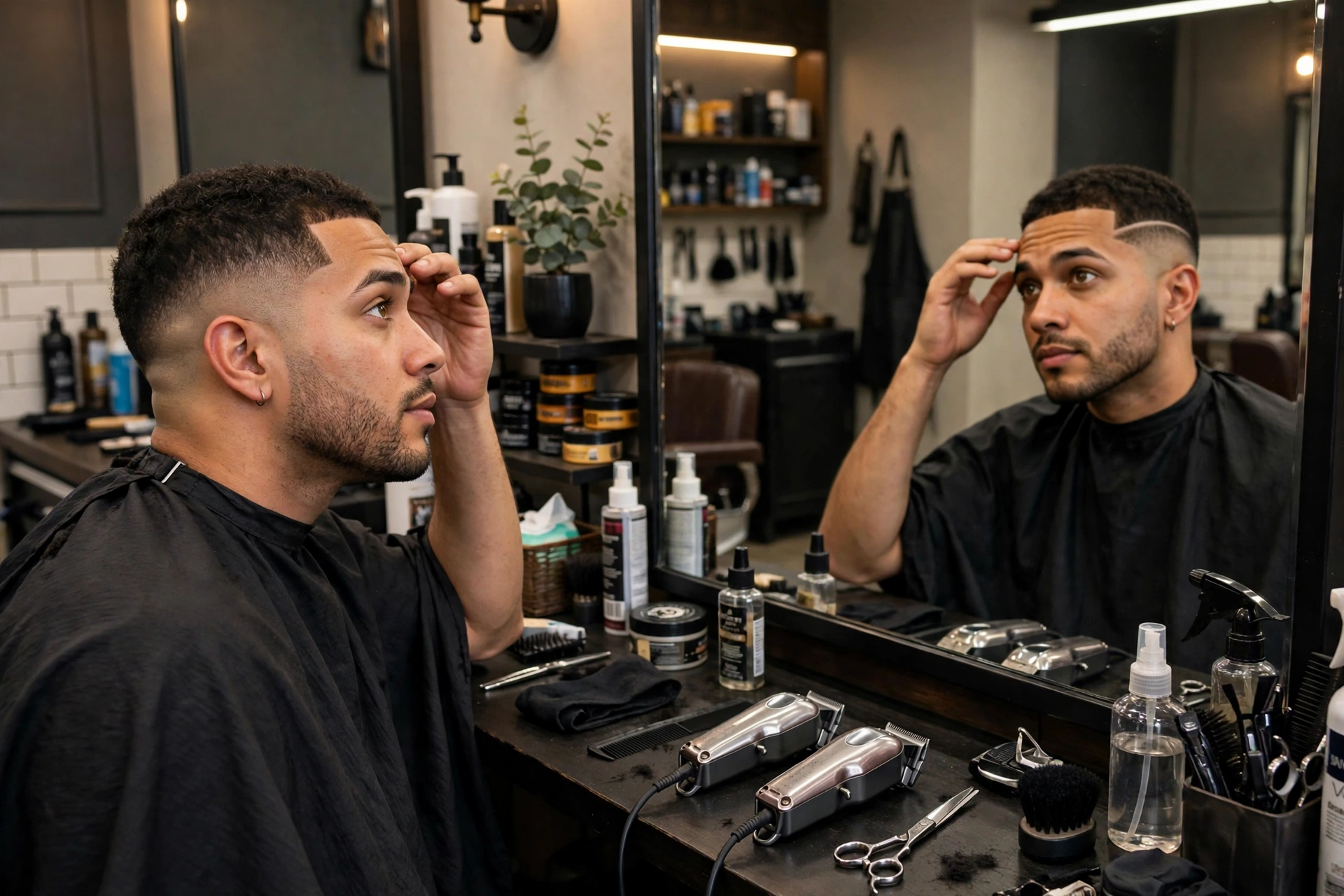
A low taper fade with a line-up is a smart choice if you want a cut that looks deliberately groomed without going extreme. The taper keeps it wearable, and the line-up gives it a clean frame. Go in with a clear script, keep the line natural rather than pushed back, and plan a touch-up every week or two if you want the sharpness to last.
FAQ
How often should I get a line-up touched up?
Most men need a touch-up every one to two weeks to keep the edges truly sharp. If you prefer a softer look, every two to three weeks, alongside your regular fade appointment, is usually enough.
Does a line-up damage your hairline?
A line-up done correctly follows your natural hairline and should not damage it. Problems come from repeatedly pushing the line back or cutting too aggressively into the temples. Ask your barber to clean up, not reshape, your hairline.
Can I get a line-up with a beard?
Yes. Tell your barber whether you want the sideburns blended into the beard or kept as a separate, clean line. Blending looks seamless, while a detached line gives more contrast.
Is a line-up good for a receding hairline?
It can be, if kept soft and slightly rounded at the corners. A very sharp, squared line-up can highlight thinning at the temples, so a natural finish usually looks better.