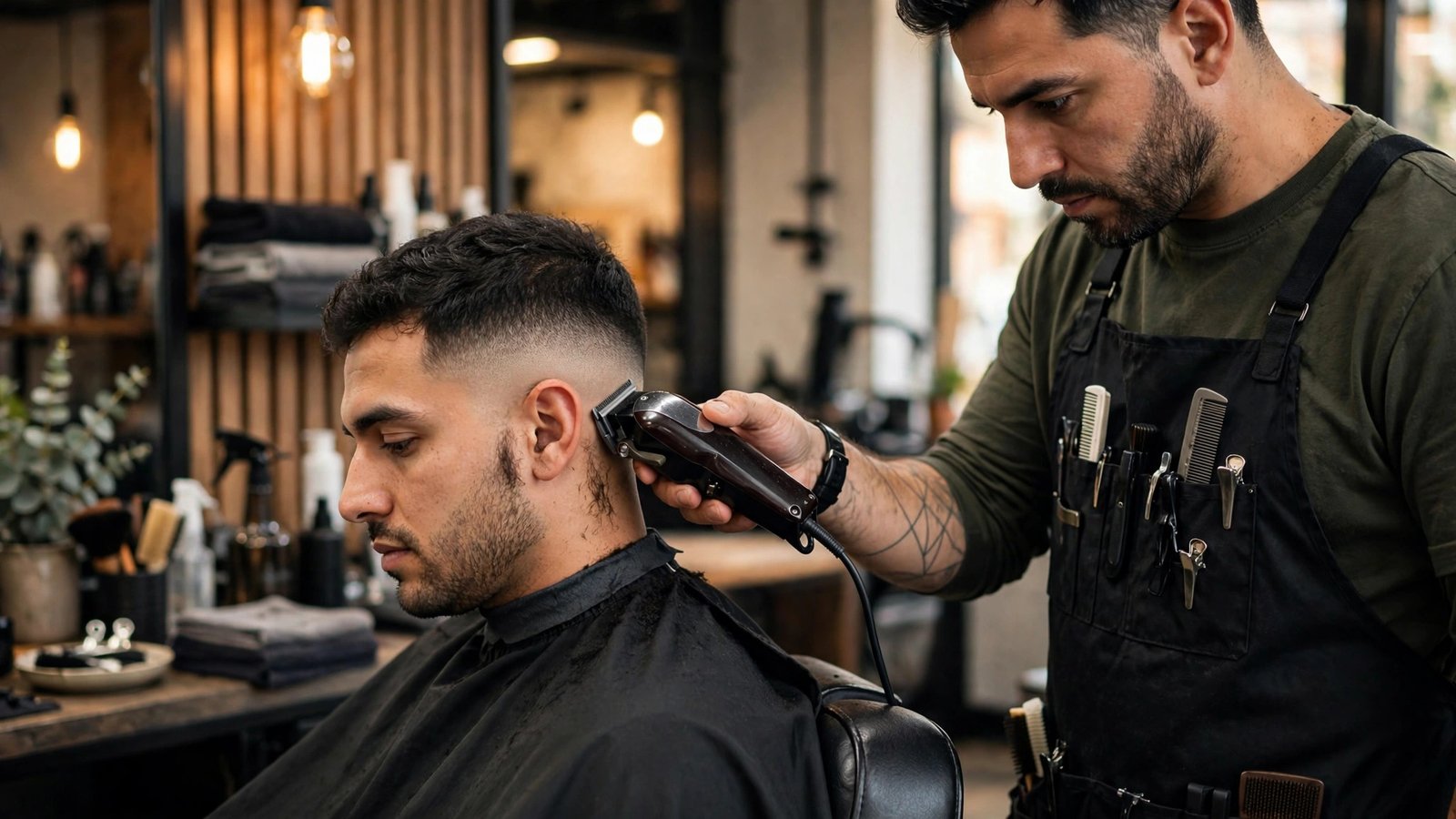
Walking out of the barbershop with a cut you did not ask for is almost never the barber’s fault. Barbers think in technical terms — guard numbers, positions, and blend points — so vague instructions like “just clean it up” leave everything to guesswork. If you want a low taper fade specifically, you need to say it in a way your barber can cut. If you are still unsure what a low taper fade actually is, start there, then come back with this script.
Why “Just Clean It Up” Fails
A low taper fade is a precise haircut. The taper sits low — starting just above the ear, around the sideburns and neckline — and blends gradually into the length on top. Say “low fade” and some barbers will take it higher up the head. Say “taper” and others will keep it very conservative. The words matter because each one points to a different place on your head and a different guard on the clipper. Being specific takes thirty seconds and is the difference between the cut you pictured and a surprise.The 4 Things Your Barber Needs to HearEvery good barber request covers four details, in this order:
The 4 Things Your Barber Needs to Hear
Every good barber request covers four details, in this order:
- Position: where the fade starts. For a low taper fade, that is just above the ear — about a finger’s width above the top of the ear.
- Depth: how short the shortest part goes. This is where guard numbers come in, covered below.
- Top length: how much hair stays on top, stated in inches.
- Finish details: neckline shape (tapered, rounded, or squared) and what to do with the sideburns.
Give all four and your barber has a complete picture. Skip any of them and you are rolling the dice.
The Exact Script (Use This Word for Word)
Sit down and say something like this:
“I’d like a low taper fade, starting just above the ear. Take the sides down to a number 1 at the shortest point, blending up through a 2 into the length on top. Leave about two inches on top with some texture. Taper the neckline naturally — no hard line — and keep the sideburns neat.”
Adjust the numbers to your taste: swap the 1 for skin if you want it bolder, or ask for a 2 at the shortest point for a softer grow-out. The structure stays the same. If you are torn between the two terms, read up on the difference between a taper and a fade before your appointment so you walk in confident.
Guard Numbers Explained
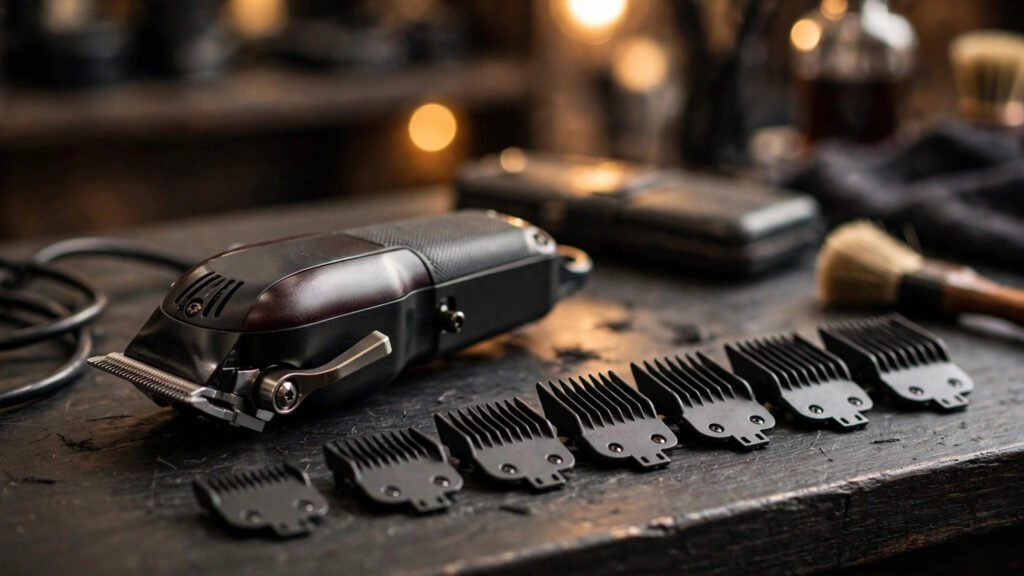
Guard numbers are simply clipper attachment sizes. Here is what the common ones mean, so you can speak your barber’s language:
- #0 (or “zero”): no guard — down to the skin. The boldest, highest-maintenance option.
- #0.5: about 1/16 of an inch. A very tight fade right near the base.
- #1: about 1/8 of an inch. The standard starting point for most low fades.
- #1.5: about 3/16 of an inch. Softens the blend, good for finer hair.
- #2: about 1/4 of an inch. Usually the highest guard used inside the low taper zone, where it melts into your natural length.
- #3 and #4: 3/8 and 1/2 inch. These sit above the fade zone on most low tapers.
A classic ask is: skin or a #1 at the neckline, blending up through a #1 and #2 to your natural length at the sides. For more on how guard sizes map to fade heights, see our low vs mid vs high fade breakdown.
Reference Photos: Show, Don’t Just Tell
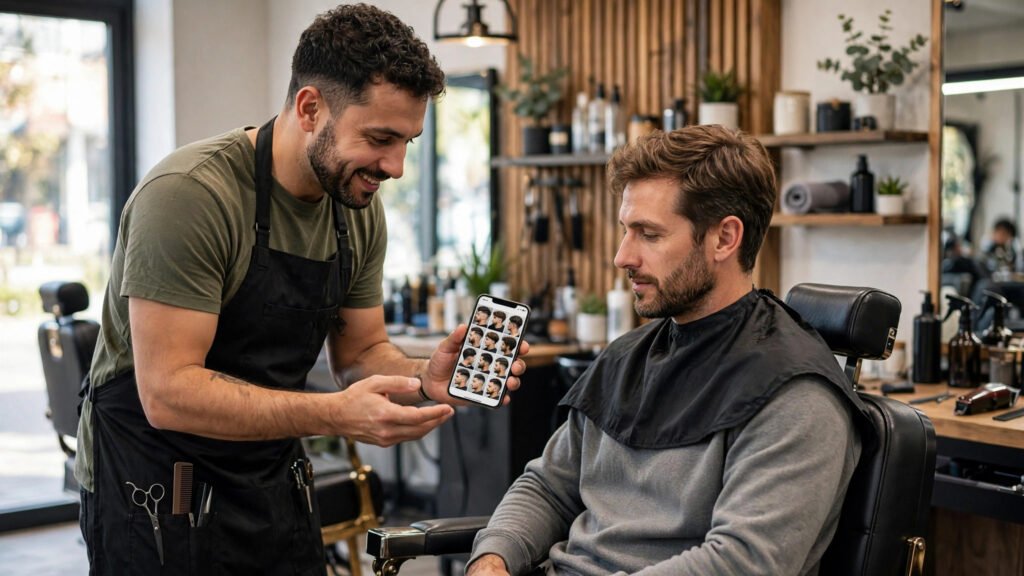
A photo is the single best tool you have. Save two or three pictures of the exact cut you want — ideally on someone with a similar hair type and head shape to yours — and show them the moment you sit down. Bring a side shot (it shows where the fade starts) and a back shot (it shows the neckline). Save them to your phone before the appointment, not while you are in the chair. Then explain what you like about each photo and what you would change: “like this, but a little longer on top.”
Confirm Before the First Cut
After you have explained everything, do a final check. A good barber will often repeat it back to you — if yours does not, prompt it yourself: “So that’s a low taper starting at a 1, blended up, two inches on top, tapered neckline — right?” That ten-second confirmation is your final insurance policy, and it is much easier than fixing a cut after the clippers have done their work.
What to Do If It’s Wrong
Say so before you leave the chair. That is the easiest moment to fix anything, and barbers expect the feedback — it is part of the job. If you only notice at home, most shops will fix a cut free of charge if you come back within 48 to 72 hours with photos in good lighting. Stay calm and specific about what needs adjusting rather than asking for a whole new cut.
Frequently Asked Questions
What guard should I ask for with a low taper fade?
Most low taper fades live between a #0 or #1 at the shortest point and a #2 where the fade meets your natural length. Ask for skin or a #1 at the base if you like sharp contrast, or a #1 to #2 blend for a softer look that grows out more gracefully. When in doubt, start conservative — your barber can always go shorter.
Should I say “taper” or “fade” to my barber?
Say “low taper fade” and you cover both bases: low tells the barber where it starts, and taper fade describes the gradual blend. If you only say “taper,” some barbers will keep it very subtle; if you only say “fade,” some will take it higher or down to skin. Using the full term removes the ambiguity.
Should the taper go down to skin?
That is personal preference. A skin taper (down to bare skin at the neckline) looks sharper but needs a touch-up every week or two to stay crisp. A #1 taper keeps a little hair at the base, looks more natural, and buys you an extra week or two between visits. Mention which one you want explicitly — never assume.
Can I get a low taper fade with longer hair on top?
Absolutely — the taper only affects the sides, back, and neckline, so the top can be as long as you like. Popular combinations include textured crops, side parts, and slicked-back styles. Browse low taper fade variations to find a top style that fits your hair type before your appointment.