Bangs change a haircut more than almost any other single choice. They frame your eyes, change the shape of your face, and can make a familiar cut feel completely new. But with so many types — curtain, blunt, wispy, side-swept, micro — it is easy to pick a style that looks great in a photo and frustrating in real life.
This guide compares the major bang types by face shape, hair type, daily upkeep, and grow-out. Use it to walk into the salon knowing exactly what to ask for, and what to avoid.
Before You Choose: Three Questions
Every good bang decision answers three questions in order. First, how much of your forehead do you want covered? Second, how much daily styling are you willing to do? Third, how do you feel about trims and grow-out?
Full coverage points to blunt bangs. Partial coverage points to curtain or bottleneck bangs. Barely-there coverage points to wispy bangs. An angled, asymmetric look points to side-swept bangs. If you answer the coverage question first, the rest of the choice gets much easier.
Curtain Bangs: The Safest First Bang
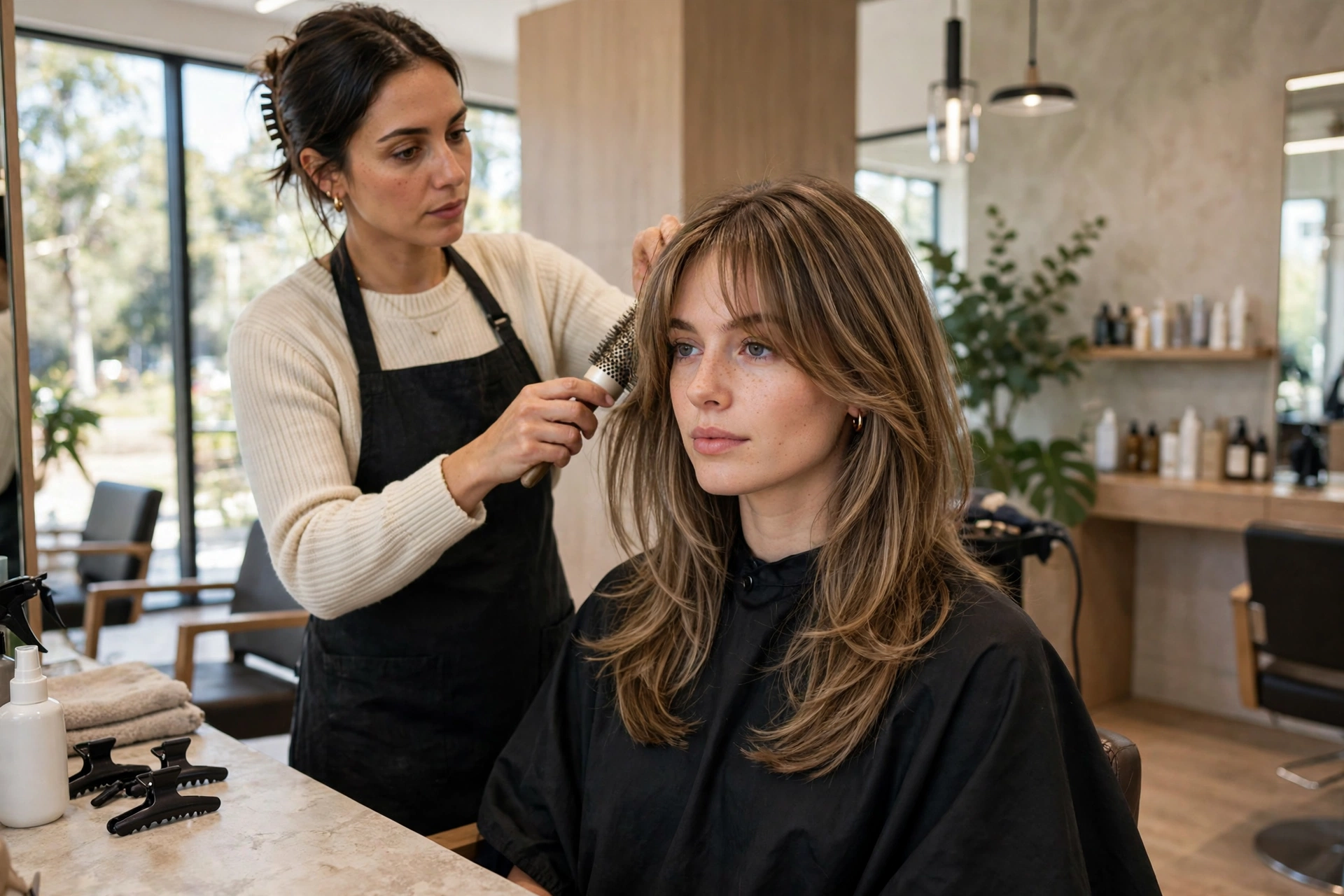
Curtain bangs are parted in the middle and sweep to each side, framing the face like curtains. They are shortest near the center of the forehead and get longer toward the cheekbones, blending into the rest of your hair.
They suit almost every face shape, especially round, oval, and heart-shaped faces, because the diagonal lines add length and softness. They work on straight, wavy, and thick hair, and they are the lowest-risk first bang: if you dislike them, they grow out into face-framing layers with almost no awkward phase.
Styling takes about two minutes. Blow dry them away from your face with a round brush, or let them air dry and finger-style them into place. Expect a trim every five to six weeks. If you already wear layers, curtain bangs blend in naturally, which is why they pair so well with layered cuts. Our guide on how to ask your stylist for layers helps you describe that blend clearly at your appointment.
Blunt Bangs: Bold, Graphic, High Maintenance
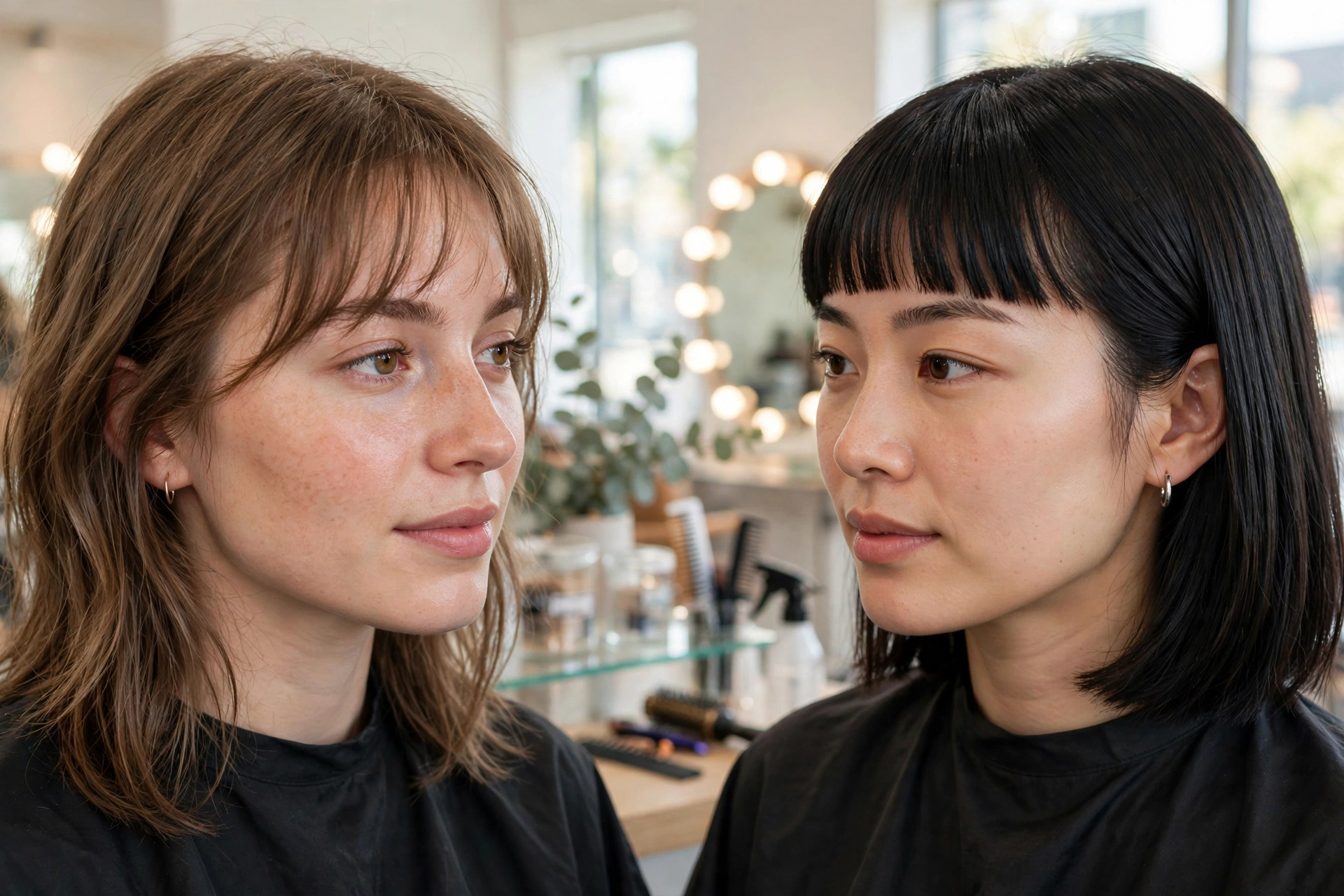
Blunt bangs are cut straight across the forehead in one clean, dense line. They make a strong statement, draw attention to your eyes, and pair beautifully with a sleek bob or long, straight hair.
They suit oval, heart, and longer face shapes best, because the horizontal line visually shortens the face. They need thick, straight hair to hold their shape. On very fine or curly hair, a blunt line can look uneven or collapse by midday.
This is the highest-maintenance bang type. Expect trims every two to three weeks to keep the edge sharp, and three to five minutes of styling each morning, usually blow drying them flat. Grow-out is also the hardest: plan on several months of clips, headbands, or a gradual transition into curtain bangs. Choose blunt bangs only if you love the look enough to maintain it.
Wispy Bangs: Soft, Light, Forgiving
Wispy bangs are the opposite of blunt bangs. They are thin, feathered at the ends, and cut at slightly varied lengths, so they sit lightly on the forehead like a veil rather than a curtain.
They suit oval, heart, and square faces, and they are a good first step if you have never had bangs before. Because so little hair is cut, you can push them to the side on days you do not feel like styling them, and they blend back into the rest of your hair easily.
Styling is minimal, often just finger-styling, but wispy bangs can go flat by midday on fine hair; a light texture spray helps, and trims every five to six weeks keep the ends from looking straggly.
Side-Swept Bangs: The Lowest-Maintenance Fringe
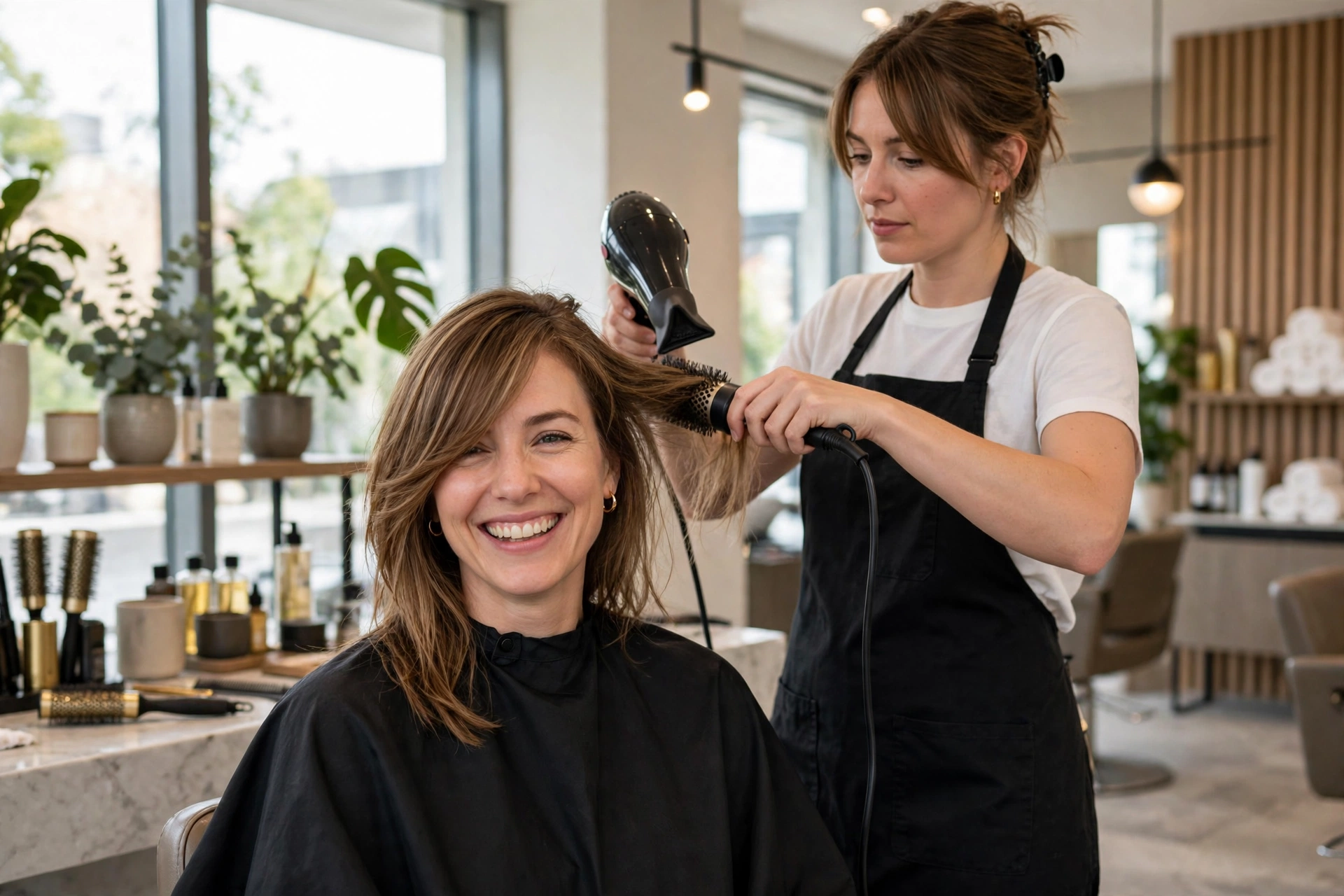
Side-swept bangs are cut on a diagonal and worn swept to one side, leaving most of the forehead open. They soften strong jawlines, suit almost every face shape, and work on nearly every hair length and texture.
They are the easiest bang to live with: about two minutes of styling, almost invisible grow-out, and you can tuck them behind your ear on busy days.
Side-swept bangs are a smart pick if you wear glasses, because they avoid the frame clash that a straight-across fringe can cause. They also work well for best haircuts for wavy hair, since the diagonal cut follows the natural movement of waves instead of fighting it.
Bottleneck and Micro Bangs: Know Before You Try
Bottleneck bangs are narrow at the center of the forehead and wider toward the temples, covering the center while framing the cheekbones. They suit oval, square, and heart-shaped faces, and read as a softer, more shaped version of curtain bangs. Micro bangs, also called baby bangs, sit well above the eyebrows. They are bold and never fall into your eyes, but they need confidence and frequent trims, and grow-out takes patience. Try them only if you are sure.
Matching Bangs to Your Face Shape
Face shape is a guide, not a rule. Oval faces can wear almost any bang type, so choose by maintenance instead. Round faces usually suit curtain, bottleneck, or side-swept bangs, whose diagonal lines add length. Square faces soften with wispy or layered bangs. Heart-shaped faces suit curtain or side-swept bangs, and longer faces suit blunt or bottleneck bangs, whose horizontal line shortens the face visually.
Matching Bangs to Your Hair Type
Hair type decides how a bang behaves day to day. Straight, thick hair holds a blunt line beautifully. Fine hair suits wispy or curtain bangs, which add perceived fullness without needing a lot of hair. Our guide to best haircuts for straight fine hair covers cuts that pair well with a light fringe.
Wavy hair suits curtain and side-swept bangs, which follow the wave pattern. Best haircuts for curly hair need a different approach: curly bangs should be cut dry, longer than you think, and with texture in mind, because curls spring up as they dry. A blunt, wet-cut fringe on curly hair is one of the most common salon regrets, so be specific about dry cutting if your hair curls.
What to Ask Your Stylist
Clear language helps here as much as it does at the barber. Name the type, the length, and the finish: “I want curtain bangs, shortest at the center of my forehead, blending into layers at my cheekbones, with soft, textured ends — not a blunt line.”
Bring two or three reference photos showing the bang type on a similar face shape and hair texture to yours, and say how often you are willing to come in for trims.
Final Verdict
If you are trying bangs for the first time, start with curtain or side-swept bangs: they are forgiving, easy to grow out, and suit most faces. If you want drama and you will commit to trims, blunt bangs deliver it. If you want softness with almost no commitment, wispy bangs are your safest experiment. Match the bang to your coverage, styling time, and trim tolerance first, and the face-shape chart second, and you will leave the salon with a fringe you actually enjoy living with.
FAQ
What are the easiest bangs to maintain?
Side-swept bangs are generally the easiest, followed by curtain bangs. Both grow out gracefully, need only a couple of minutes of styling, and can be tucked or swept aside on busy days.
Do bangs suit round faces?
Yes, especially curtain, bottleneck, and side-swept bangs. Their diagonal lines add length and soften roundness, while a heavy, straight-across blunt fringe can sometimes make a round face look shorter.
How often do bangs need trimming?
Blunt bangs need trims every two to three weeks. Curtain, wispy, and bottleneck bangs usually last five to six weeks, while side-swept bangs can often go three to four weeks or longer between trims.
Can I get bangs if I have curly hair?
Yes, but ask for a dry cut and a longer length than you think you need, since curls spring up as they dry. Curtain or textured curly bangs usually work better than a straight, blunt fringe.
1 comment on “Bangs 101: Types of Bangs and Who They Suit”