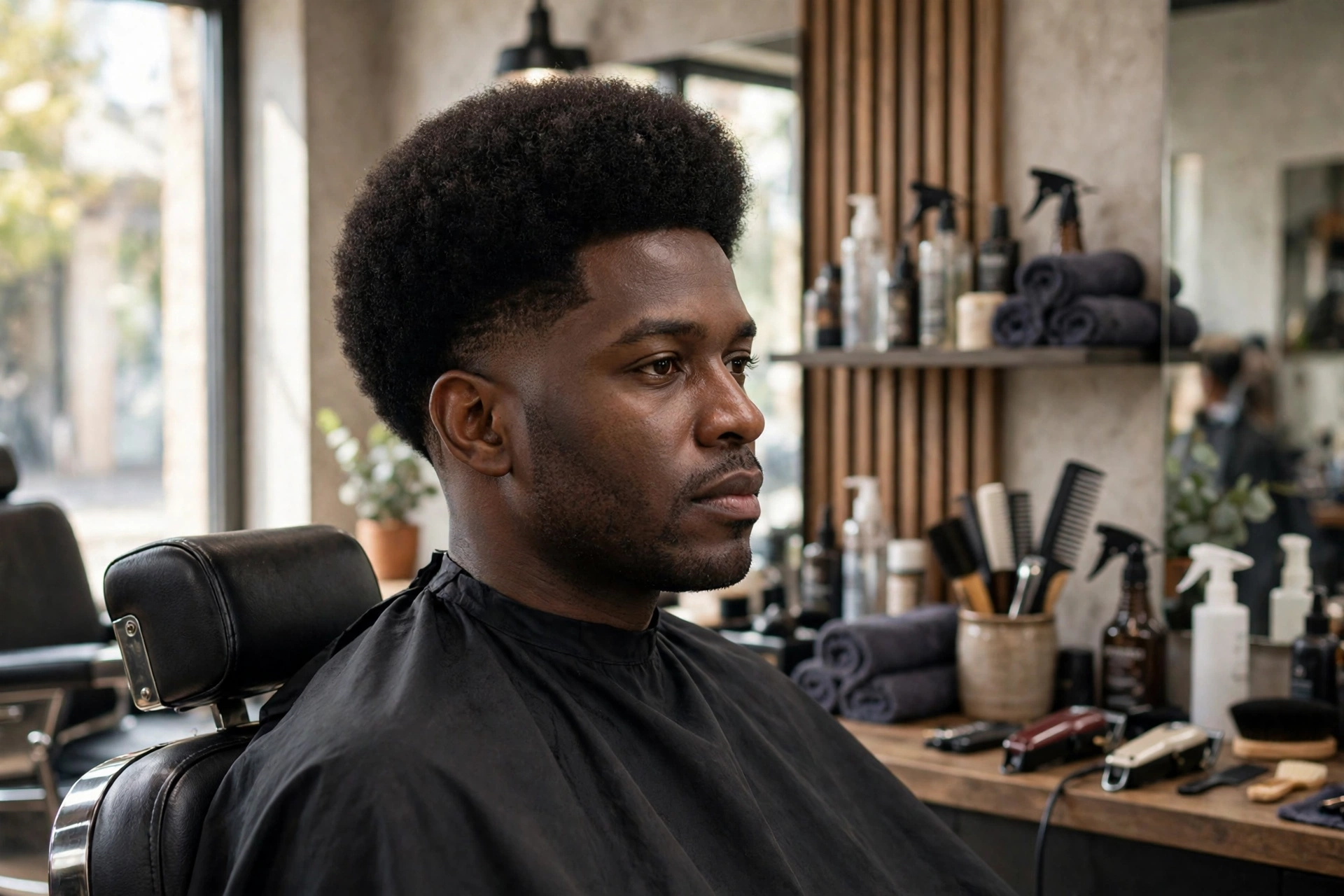
A low taper fade for Afro hair is one of the cleanest ways to give a full, natural shape a sharp finish. The top keeps its volume and texture, while the sides and neckline blend down gradually. Nothing about the cut fights your natural hair. Instead, it frames it. That balance is why the style works for the office, for school, for a night out, and for everyday wear. You get structure without giving up the fullness that makes an afro look great in the first place.
What a Low Taper Fade Does for Afro Hair
A taper shortens the hair gradually around the temples, sideburns, and neckline. A low taper starts just above the ears, so most of the afro stays untouched. The result is a rounded, sculpted shape with clean edges, not a smaller afro. This matters because Afro hair grows outward as much as it grows down. Without shaping, the sides can look heavy and shapeless within a couple of weeks. A low taper removes that bulk at the perimeter only, so the crown keeps its height and roundness. If your hair is tightly coiled, the same principle applies — keep length where it shows, and clean up only the edges. Our guide to a Low Taper Fade for Coily Hair goes deeper on curl care and length choices for coily textures.
How the Shape Works
A good afro taper is built in three zones. First, the crown. This is the volume zone. Your barber should shape it round, following your head shape, rather than cutting it flat. Ask how much height you want to keep, and be honest about how much daily picking you are willing to do. Second, the blend zone. This is the transition from the full afro to the shorter sides. A soft blend looks natural and grows out gracefully. A sharper blend looks bolder but needs more frequent touch-ups. Third, the edge zone. This includes the hairline, temples, and neckline. A clean line-up here is what makes the whole cut look fresh, even a week or two after the appointment.
What to Tell Your Barber
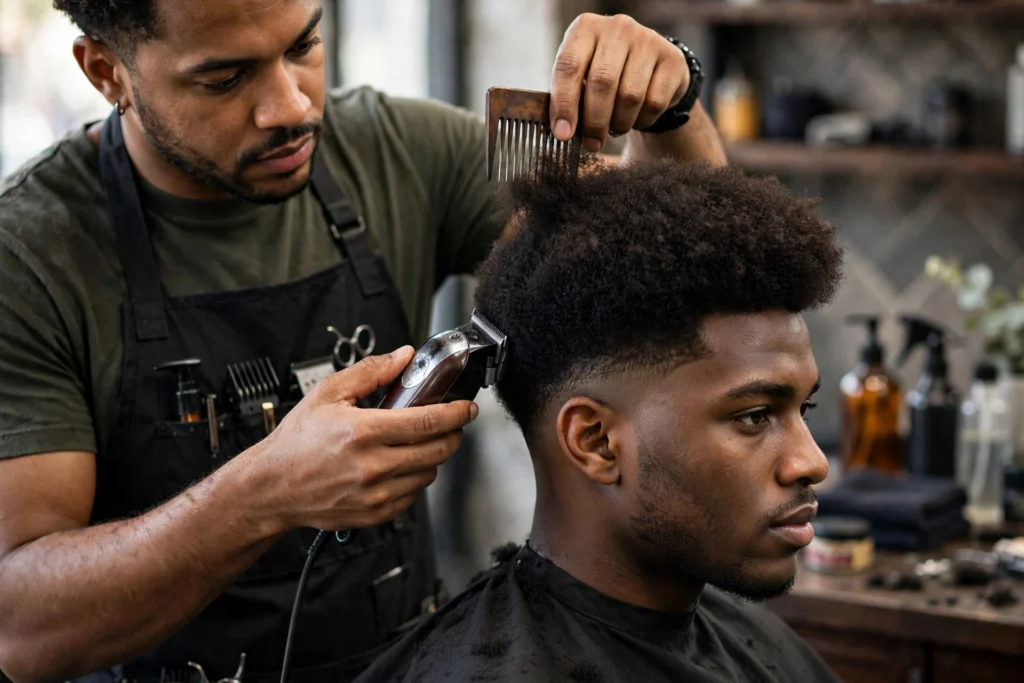
Clear words prevent a cut that is too short. Try this script: “I want a low taper fade. Keep the afro full and rounded on top. Blend the sides down low, just above the ears, and keep the neckline tapered, not blocked too high. Give me a clean line-up, but keep my natural hairline.” Bring a photo of the shape you want, not just a photo of a celebrity. Hair density and head shape change how the same cut looks. If you are unsure about guard numbers, read our explainer on guard numbers before your visit so you can talk length in numbers as well as words. For a fuller script, including what to say if your barber starts cutting too high, see our guide on how to ask your barber for a low taper fade.
Length and Shape Options
Not every afro taper has to look the same. A few choices change the whole feel of the cut: Short rounded afro — easier to maintain, with a neat, compact shape. Good if you want a clean look with little daily work. Medium afro with a soft taper — the classic balance of volume and polish. This is the safest first version of the cut. Longer afro with a low taper — maximum volume on top with tidy edges. It looks striking, but it needs regular picking and moisturizing. Afro with a line-up and tapered neckline — the sharpest finish. The crisp hairline contrasts nicely with the soft texture on top. If you wear a beard, ask your barber to blend the sideburns into the beard rather than leaving a hard break. A smooth transition keeps the whole look intentional.
Daily Care That Keeps the Shape
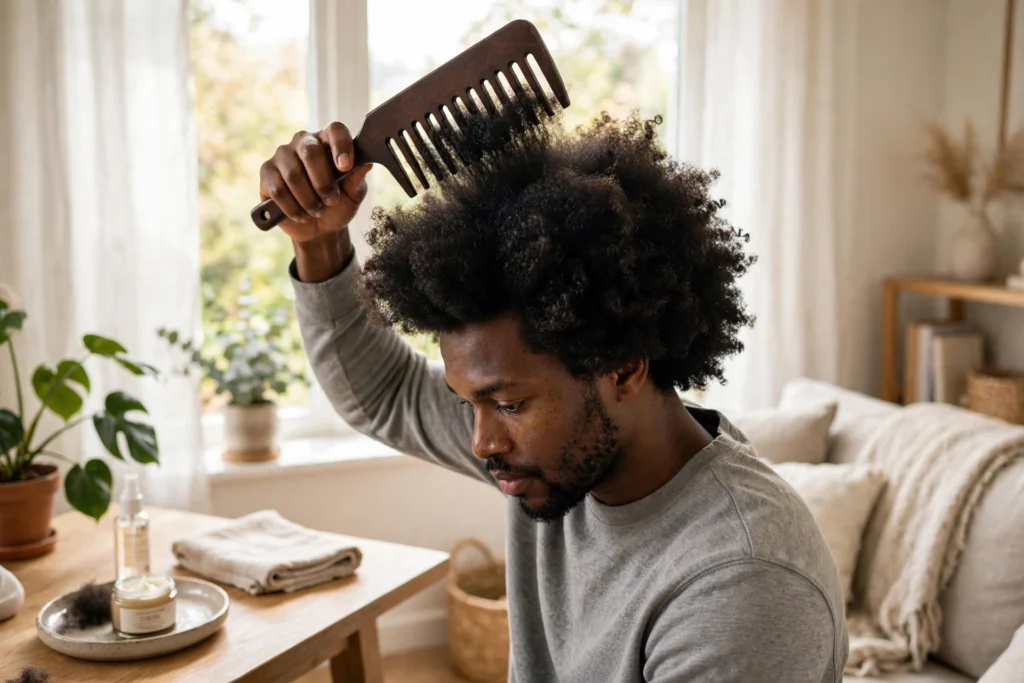
A taper only looks good if the hair on top stays healthy. Afro hair tends to be dry, so moisture is the foundation of the routine. Wash with a gentle shampoo once a week, or as often as your scalp needs, and condition every wash. While the hair is damp, apply a leave-in conditioner or light hair cream, then pick the afro out to your preferred shape. Let it dry naturally when you can — heavy heat styling dries the hair out and can flatten the shape. At night, a satin bonnet or a silk pillowcase helps reduce friction and keeps the shape from flattening while you sleep. In the morning, a quick pick and a light mist of water or leave-in spray is usually enough to restore the roundness.
How Often to Get It Touched Up
Most men need a touch-up every two to three weeks to keep the taper and line-up crisp. The afro on top can go longer between full cuts, often four to six weeks, depending on how fast your hair grows and how much shape you want to keep. If money is tight, a line-up-only visit between full cuts can stretch the life of the style. Just make sure the barber does not take the taper higher each time — that is how a low taper slowly becomes a mid fade. Read our guide on how often to get a touch-up for a fuller breakdown by hair growth speed and style.
Mistakes to Avoid
The most common mistake is taking the taper too high. Once the sides are cut above the ears, the afro loses its rounded balance and can look boxy. Start low — you can always go a little higher next time. Another mistake is skipping moisture. Dry afro hair breaks more easily and loses its soft, full look. A small amount of product, applied regularly, beats a heavy application once in a while. Finally, do not let the neckline grow wild. A fuzzy neckline makes even a fresh taper look untidy. A quick clean-up at the back keeps the whole cut looking deliberate.
Frequently Asked Questions
Does a low taper fade reduce afro volume?
No. A low taper only shortens the hair around the temples and neckline. The crown keeps its full volume, so the afro still looks full — just better shaped.
How long should the afro on top be?
That depends on your preference and hair density. A short rounded afro is easiest to maintain, while a longer afro gives more drama. Start medium if this is your first taper, then adjust at the next visit.
Will a line-up damage my hairline?
A line-up shapes the existing hairline; it does not move it back. Ask your barber to follow your natural hairline rather than pushing it back for a sharper look, and avoid repeated razor use on the same spot if your skin is sensitive.
Can I get a low taper fade with a short afro?
Yes. Even a short afro benefits from a tapered edge. The taper keeps the sides neat and gives the short top a clean, finished outline.
Final Verdict
A low taper fade is the best way to keep Afro hair looking full, shaped, and sharp at the same time. Keep the crown long, blend low, protect the hairline, and moisturize regularly. Get the taper right once, and the upkeep is simple: a touch-up every few weeks and a quick pick each morning.