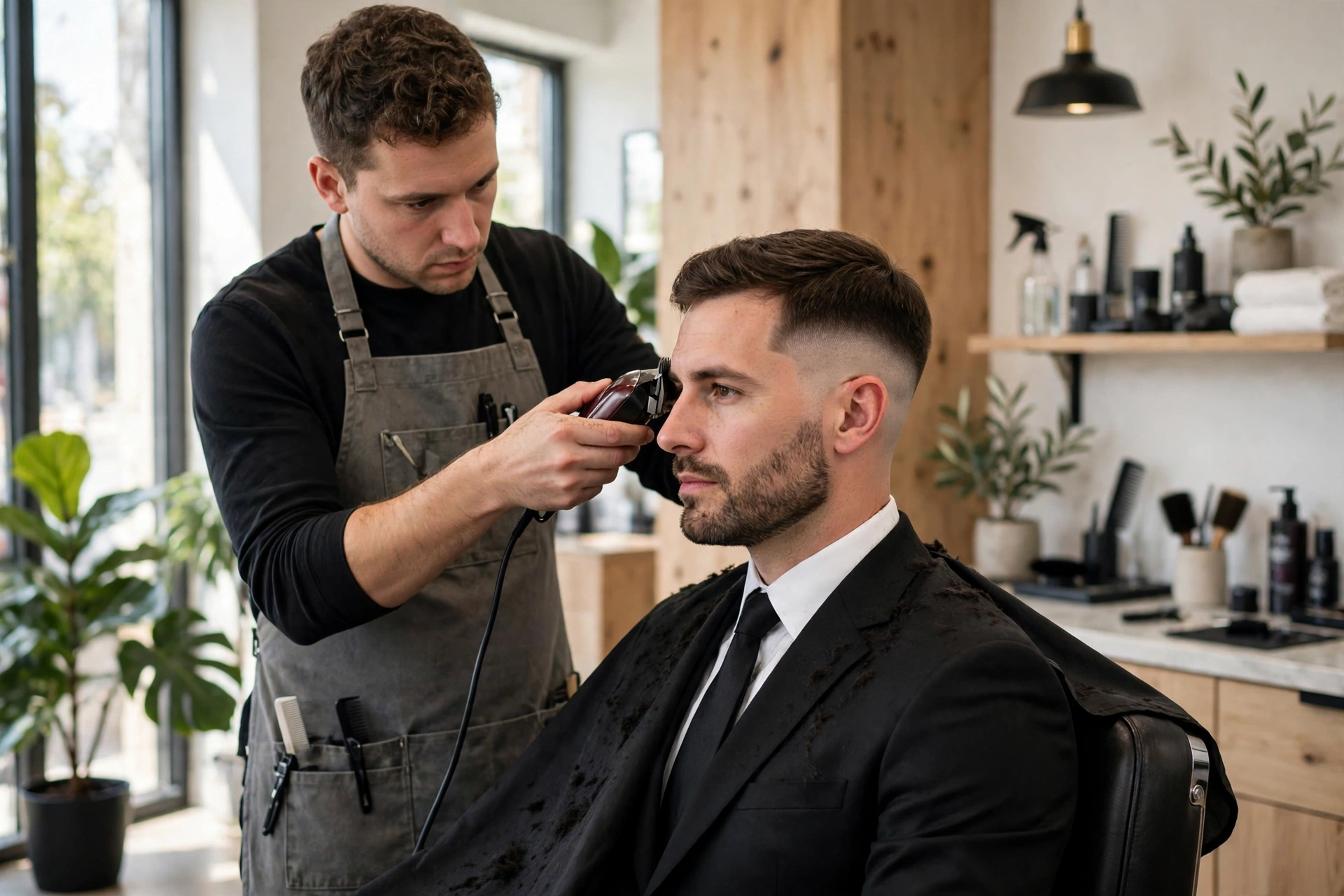
Your wedding photos will be on the wall for decades, so your haircut has to do two jobs at once: look sharp in person and hold up on camera for eight or more hours. That is exactly why so many grooms and groomsmen in the US are choosing a low taper fade for the big day.
The fade starts low, just above the ears and around the neckline, so the sides stay clean without looking aggressive. The top keeps enough length to style in several ways, from a classic side part to a textured quiff. It photographs well in every kind of light, it works with a tuxedo or a suit, and it still looks fresh at the last dance.
Why a Low Taper Fade Works So Well for Weddings
A wedding haircut is different from a normal haircut. You are not just walking out of the barbershop — you are walking into hundreds of photos, in sunlight, in shade, indoors, and on the dance floor.
The low taper fade handles that because of three things:
- Clean edges, soft blend. The sides fade gradually, so there is no hard line that can look harsh in a close-up photo. The neckline and sideburns stay tidy all day.
- Styling flexibility. With 2 to 4 inches on top, you can wear it slicked back for the ceremony and loosen it up for the reception.
- It grows out gracefully. A low taper does not show growth as fast as a skin fade, so even if your final cut is a few days before the wedding, it still looks intentional.
6 Groom Styles With a Low Taper Fade
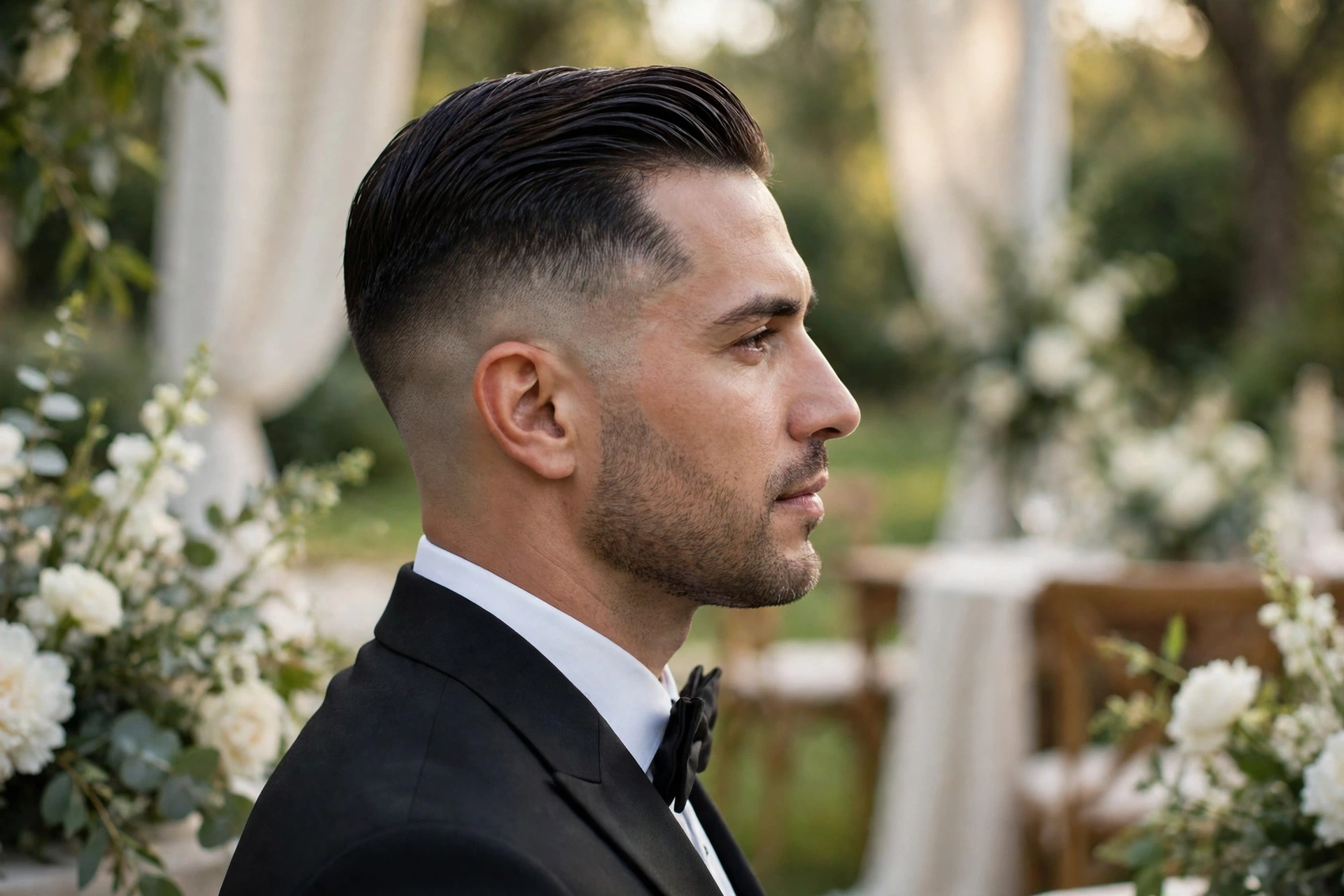
1. Slick Back With a Low Taper
Everything combed straight back, close to the head. Clean, classic, and almost impossible to get wrong. It works best with a formal suit or tuxedo and photographs well from every angle. Ask for a slick back with a low taper and a medium-hold pomade with a matte or low-shine finish — glossy gel can look greasy in flash photos.
2. Classic Side Part (Comb Over)
A defined part on one side, hair combed neatly across. This is the style most people picture when they think “well-groomed groom.” A classic comb over with a low taper pairs with almost any outfit, from a black-tie tuxedo to a lighter summer suit, and it suits nearly every face shape.
3. Textured Quiff
Volume at the front, swept up and slightly back, with texture through the top. A textured quiff with a low taper is the modern groom look: polished but not stiff. It needs a little product — a pea-sized amount of matte clay — and it holds up well through a long day if your barber cuts enough texture into the top.
4. Pompadour With a Low Taper
More height and more drama than a quiff. A pompadour with a low taper suits grooms who want a strong, confident look in photos, especially with a classic or vintage-style wedding. It takes more styling time in the morning, so practice it once before the day.
5. Textured Crop
Short on top with a slightly choppy, piecey finish. This is the relaxed modern option — great for outdoor or barn weddings, and ideal if you do not want to fuss with your hair all day. A little sea-salt spray is usually all it needs.
6. Curly Top With a Low Taper
If you have natural curls, do not fight them on your wedding day. Keep the curls on top, let the low taper clean up the sides and neckline, and use a light curl cream so the curls stay defined without going stiff. It is one of the most photogenic combinations there is.
Groom vs. Groomsmen: How to Coordinate Without Matching Exactly
The groom should look like the groom. That does not mean the groomsmen need a different haircut entirely — it means the groom’s finish should be a step sharper.
A simple plan that works:
- Agree on one fade level. Everyone gets a low taper fade, so the group looks coordinated in photos.
- Let each groomsman pick his own top. One can wear a textured crop, another a side part. Same fade, different tops — the group looks put together without looking like a uniform.
- Give the groom the sharpest finish. A cleaner lineup, a tighter blend, and a fresh edge-up on the day itself. In group photos, that small difference creates a natural focal point.
- Book the groomsmen together. A group appointment a few days before the wedding keeps everyone on the same schedule and takes one thing off your list.
When to Get the Cut: The Wedding Haircut Timeline
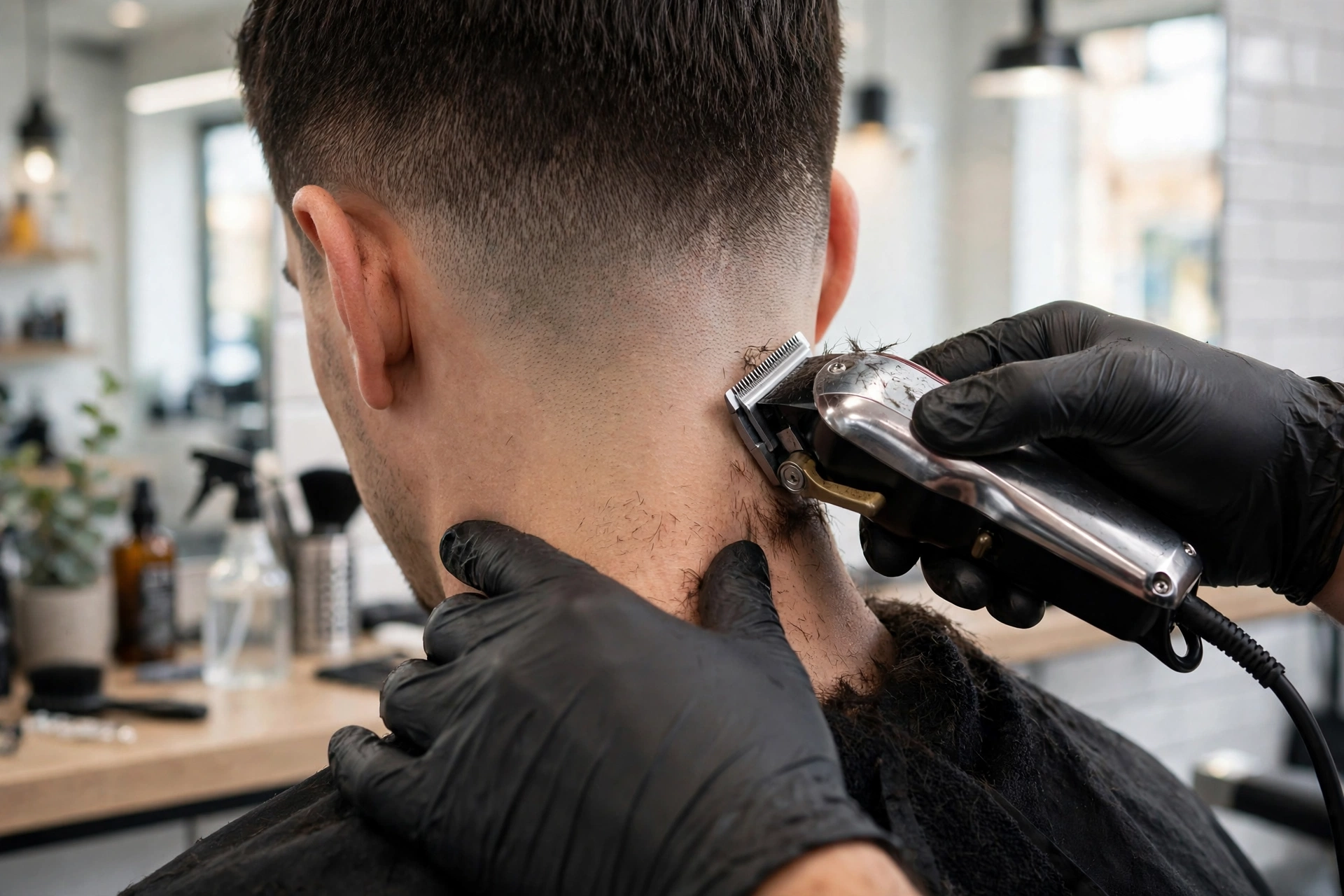
Timing matters more than most grooms expect. A fade looks its best a few days after the cut, once the hair has settled and any redness from a fresh lineup has faded.
- 3 to 4 weeks before: Get a trial cut. This is the same style you plan to wear on the day. Take photos in different lighting — daylight, indoors, with flash — and see how it actually looks on camera. Tell your barber what you liked and what you would change.
- 4 to 5 days before: Get the final cut. Not the morning of, and not the day before. Four to five days lets the fade settle, clears up any skin irritation, and still leaves the cut looking fresh.
- The morning of: A quick tidy-up only. Comb it into place, add product, and check the neckline in the mirror. If you want a same-day edge-up, book it early and keep it light — a heavy lineup on the morning can leave redness in photos.
What to Ask Your Barber
Walk in with a clear script and a reference photo. Something like this works:
“Low taper fade on the sides, starting just above the ear, blending down to a number 1 at the neckline. Keep about 3 inches on top, textured, with a side part I can wear slicked back. Clean lineup, but keep it natural — no hard lines.”
Bring one or two photos of the exact style you want, and tell your barber it is for a wedding. A good barber will cut it slightly more conservatively than usual, because a wedding cut has to look great from every angle, not just the front.
Day-Of Styling Tips
- Use less product than you think. A small amount of matte clay or pomade, worked through damp hair, holds better than a heavy glob of gel.
- Style it the way you did at the trial. The wedding morning is not the time to try a new technique.
- Pack a small comb and a travel-size product. A quick fix between the ceremony and the reception takes thirty seconds.
- Skip the hat. If the wedding is outdoors, sun and sweat will flatten any style — a light matte product holds up better than a heavy one.
How Much Does a Wedding Haircut Cost?
In the US, a typical barber cut runs about $30 to $60, depending on the city and the shop. A trial cut costs the same as a regular cut. If your barber does the groomsmen as a group, ask about a group rate — some shops offer one for four or more cuts booked together. Tip 15 to 20 percent, as usual, and a little extra if the barber fits you in on a tight wedding-week schedule.
FAQ
Should the groom and groomsmen get the same haircut?
Not exactly the same. Agree on the same fade level — a low taper fade for everyone — and let each person choose his own top style. The groom gets the sharpest finish, so he stands out in group photos.
How many days before the wedding should I get a low taper fade?
Four to five days before is ideal. The fade settles, any redness fades, and the cut still looks fresh. Get a trial cut three to four weeks earlier to test the style in photos.
Is a low taper fade formal enough for a black-tie wedding?
Yes. With a slick back or a classic side part on top, a low taper fade is one of the most formal fade styles there is. The low placement keeps it subtle, which is exactly what black tie calls for.
What if my hair is curly or wavy?
Keep the texture. A curly or wavy top with a low taper is a great wedding look — just ask your barber to cut the top with texture and use a light curl cream on the day instead of heavy gel.