
Medium-length hair is the sweet spot most women land on — and stay on. It usually falls somewhere between the chin and the collarbone, sometimes a little lower, which is long enough to tie back into a ponytail or a low bun but short enough to dry fast and style without a plan. If you are growing out a short cut, or cutting down long hair that has become a chore, medium length is the length that gives you the most options for the least effort.
What Counts as Medium Length?
Medium length generally runs from the chin to the collarbone, or just past it. Shoulder length is the heart of it: hair that grazes the shoulders when it is down and still goes up easily when you need it out of the way. Shorter than that and you are in bob territory; longer than the collarbone and you are moving into long hair, with longer drying times and heavier upkeep. The exact spot matters less than the shape — a good medium cut is built around your face shape, your hair texture, and how much time you want to spend on it each morning.
Why So Many Women Choose It
Three reasons explain why medium length is the most popular length in American salons. First, it is versatile: the same cut can be worn straight, wavy, curled, half-up, or fully up. Second, it is forgiving — it grows out gracefully, so you can stretch salon visits to eight to ten weeks instead of every six. Third, it suits almost every hair type. Fine hair looks fuller at medium length than it does long, thick hair is easier to manage when some weight is removed, and wavy or curly hair gets room to show its pattern without the triangle shape that long layers can create.
The 6 Best Medium-Length Haircuts
1. The lob (long bob).
The easiest way into medium length. It sits around the collarbone, works straight or wavy, and needs almost no styling. Ask for a lob that ends right at the collarbone with soft, barely-there layers if you want movement without losing the clean line. Our lob guide covers the full range of lengths and styling options.
2. The modern Rachel.
The 1990s cut is back, softer this time. Rounded layers start around the chin and sweep down, framing the face. It adds bounce and volume, which makes it a great choice for fine or flat hair that needs lift.
3. The shoulder-length shag.
Shorter layers around the crown and face with longer pieces through the back, often with feathered or choppy ends. It is the most low-effort option on this list — air-dry it with a little texture spray and it looks done. It suits wavy and thick hair especially well.
4. The blunt one-length cut.
No layers at all, just a crisp edge at shoulder length. It makes fine hair look thicker and gives straight hair a polished, expensive finish. The trade-off is that it needs regular trims to keep the line sharp, and it shows split ends sooner than a layered cut.
5. The butterfly cut.
Short layers around the face and crown with longer layers at the back, so the hair has bounce and movement when it moves. It is a good middle ground if you want the feeling of long hair with the manageability of medium length. Our butterfly haircut guide explains exactly what to ask your stylist for.
6. Ghost layers.
Layers cut inside the hair that remove weight and add movement while the outer edge stays one length. From the outside it looks like a simple shoulder-length cut, but it moves better and dries faster. A good pick for thick hair that feels heavy at this length.
Layers or No Layers? How to Decide
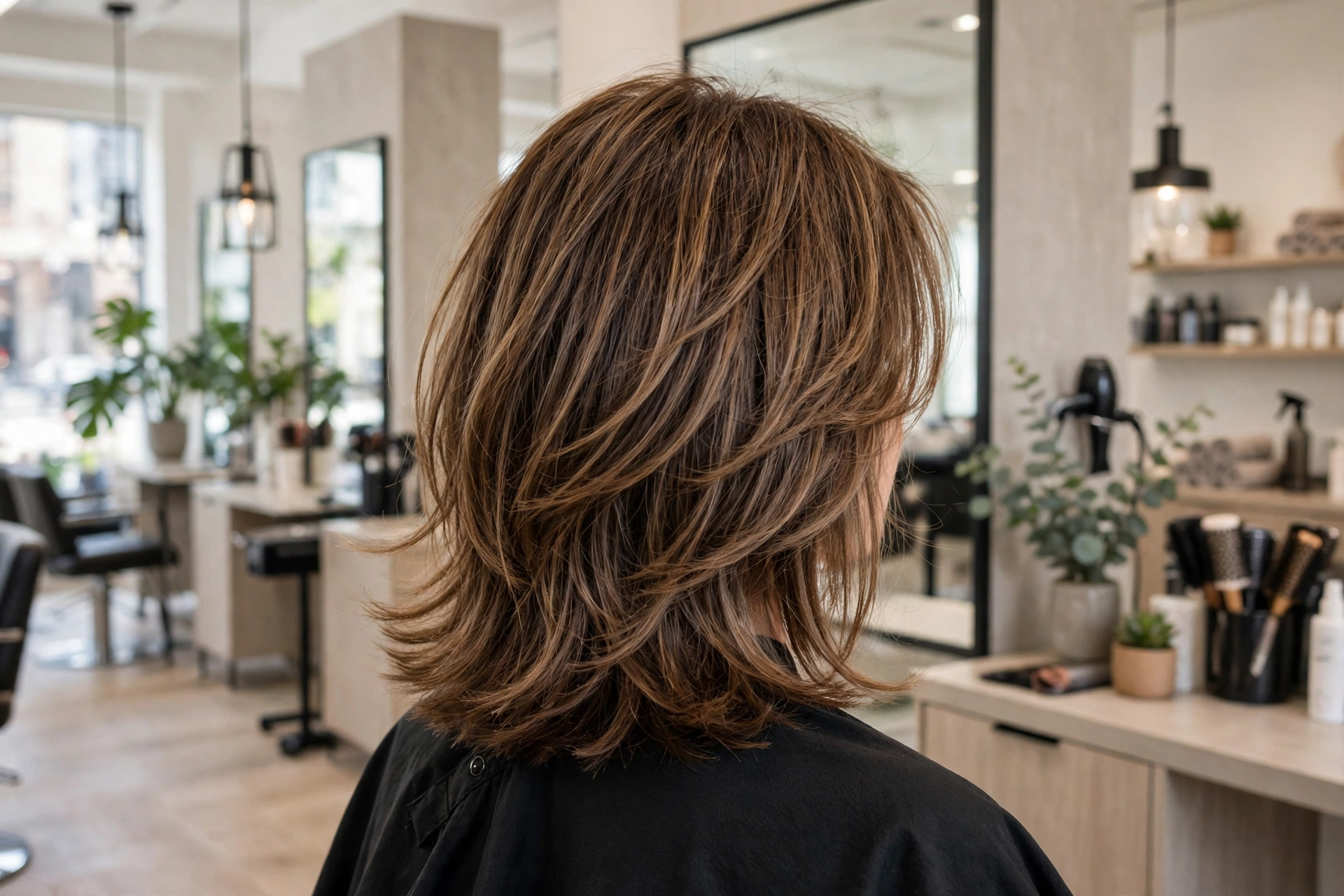
Layers are the main decision in a medium cut, and the right answer depends on your hair. Fine hair usually looks fuller with a blunt cut or very light layers — too many layers can make the ends look thin. Thick hair almost always needs layers or internal thinning to remove bulk. Wavy and curly hair benefits from long layers that let the pattern form instead of stacking up into a wide shape. If you are not sure, ask your stylist for long, blended layers: they add movement without changing the outline much, and they grow out well. Our guide on how to ask your stylist for layers has the exact words to use so you get the layers you actually want.
Medium Length by Face Shape
Medium length is forgiving, but a few tweaks make it flattering. Round faces do best with layers that start below the cheekbones and length that passes the chin — both add vertical lines that slim the face. Oval faces can wear almost any medium cut, so pick based on your hair texture instead. Square faces soften with face-framing layers and soft waves that break up the jawline. Heart-shaped faces balance out with volume at the ends rather than at the crown. Long faces look best with layers that add width around the cheeks and a side part instead of a severe center part.
Styling It Without Spending 30 Minutes
A medium cut earns its keep when it is easy. For most women, the fastest routine is: wash, towel-dry, add a leave-in conditioner or a light styling cream, and either air-dry or blow-dry with a round brush for ten minutes. A curling iron on the ends for five minutes gives a polished finish for work or an evening out. The cut should also work on second-day hair — a little dry shampoo at the roots and a low ponytail or a half-up style covers a day when you skip the wash. If a cut needs a full blowout every morning to look right, it is the wrong cut for a busy schedule. Our low-maintenance haircuts guide has more cuts that stay easy between washes.
Growing Out a Short Cut — or Cutting Down Long Hair
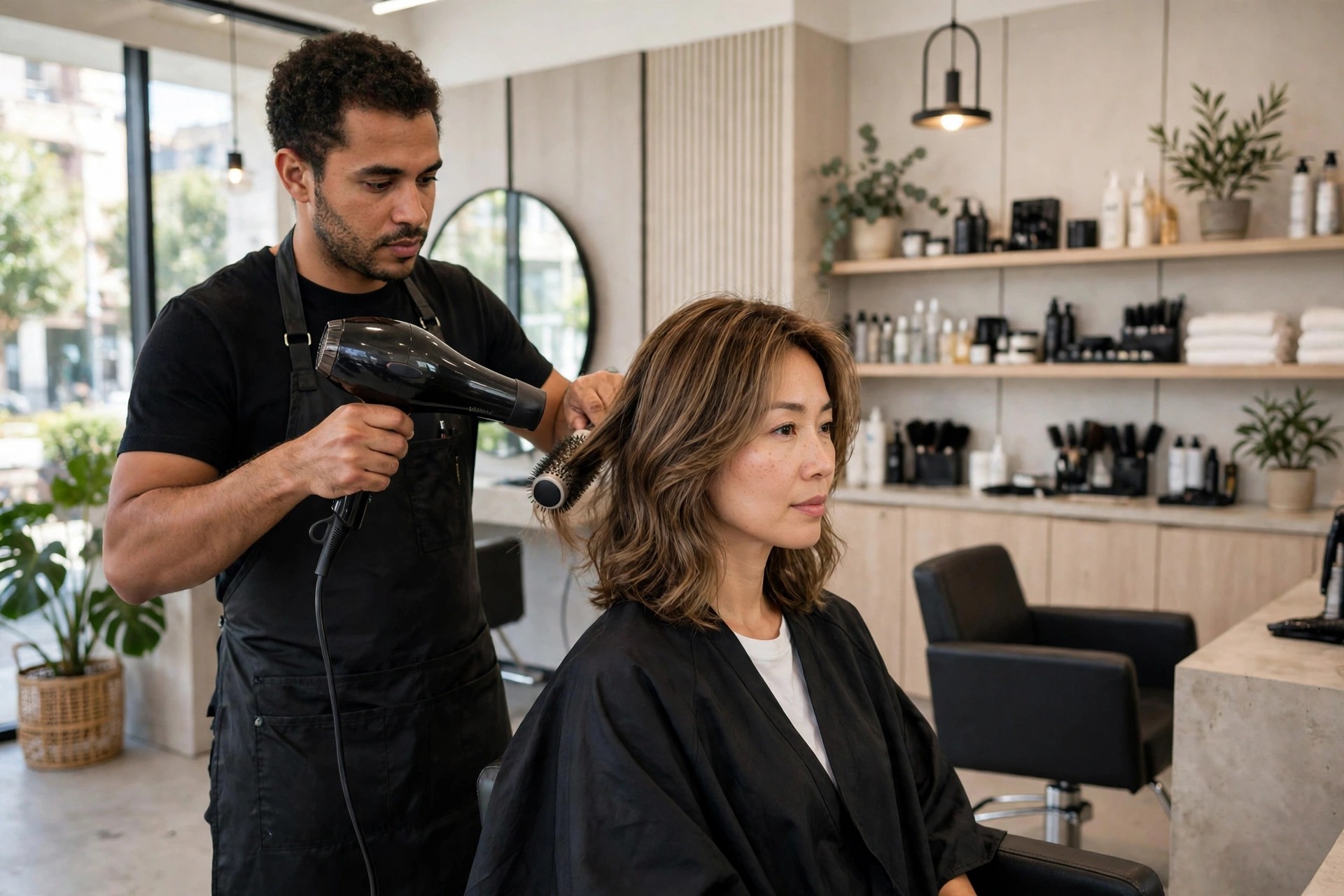
Medium length is the bridge in both directions. If you are growing out a pixie or a bob, the awkward stage hits around the ears and neck — regular dusting trims every eight weeks shape the back while the front catches up, and a medium layered cut is usually the first length where it starts to feel like a style again instead of a grow-out. If you are cutting down from long hair, go in stages: cut to collarbone length first and live with it for a few weeks before going shorter. It is much easier to take off another inch later than to regret a cut that went too far in one visit. Either way, bring photos — three pictures of cuts you like and one of a cut you do not want are more useful to a stylist than a long description.
What to Ask Your Stylist
Be specific about three things: the length, the layers, and the finish. A useful script is: “I want a medium-length cut, about collarbone length, with long layers that start below my chin. I want it to air-dry well and still go up in a ponytail.” Mention your morning routine honestly — if you have ten minutes, say so, and the stylist will cut for that reality instead of for a salon blowout. A women’s haircut in the US typically costs roughly $50 to $100 depending on the city and the salon, and a standard tip is 15 to 20 percent. Book a trim every eight to ten weeks to keep the shape.
FAQ
Is medium-length hair good for fine hair?
Yes — medium length is often better than long hair for fine hair, because long hair pulls the roots flat. A blunt lob or a cut with light layers makes fine hair look thicker and fuller.
How long does medium-length hair take to style?
Most medium cuts take five to fifteen minutes. Air-drying with a little product is the fastest option, and a quick blow-dry with a round brush gives a polished finish in about ten minutes.
Can medium-length hair go in a ponytail?
Yes, as long as it reaches at least the shoulders. That is one of the main reasons women pick this length — it stays out of the way for workouts, work, and hot days.
How often should I trim medium-length hair?
Every eight to ten weeks keeps the shape and removes split ends. Layered cuts can stretch a little longer; blunt cuts need trims more often to keep the edge clean.