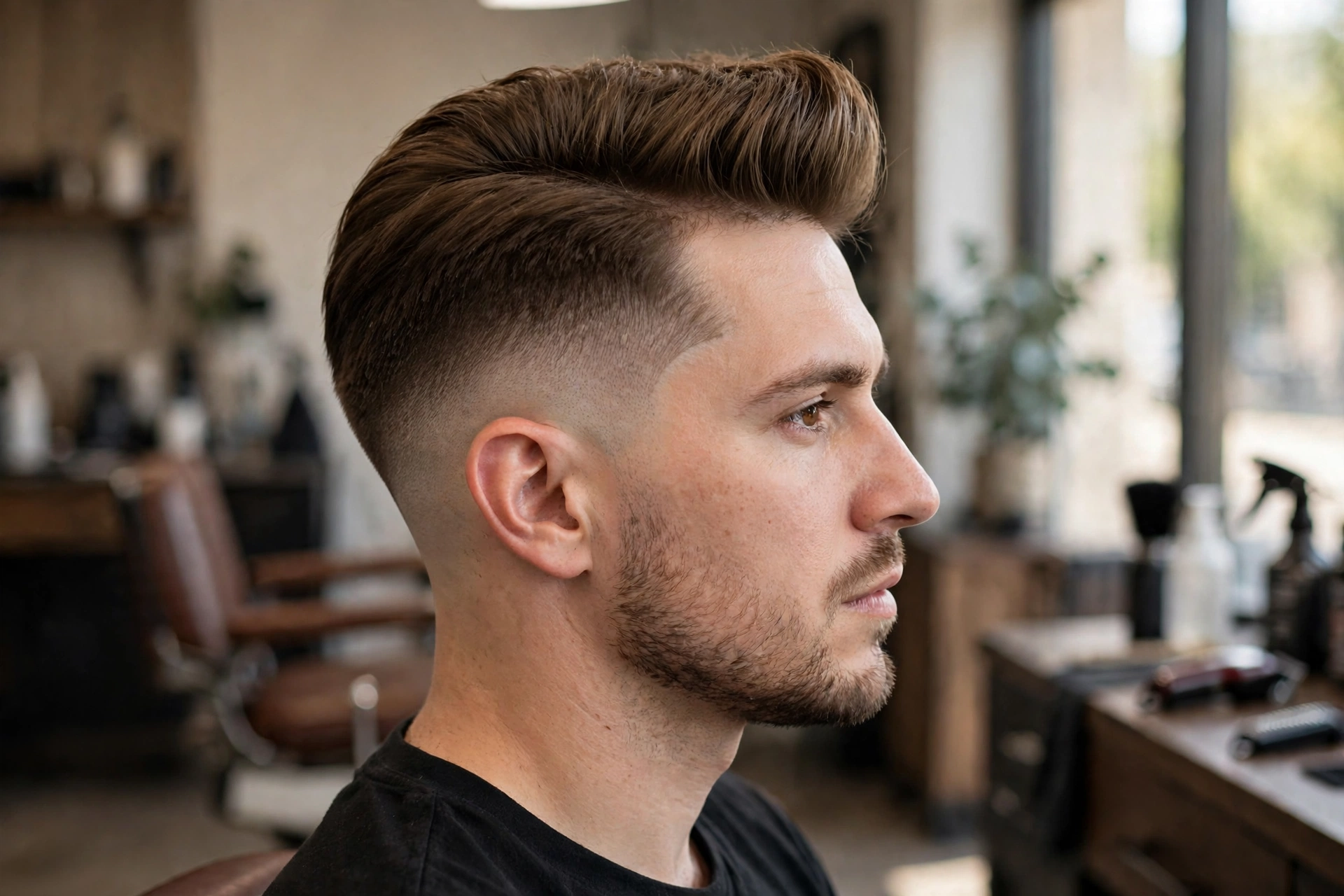
A low taper fade with a quiff gives you height on top and clean sides, without the heavy, boxy shape a longer cut can create. The quiff is the lifted front section, swept up and slightly back. The low taper keeps the sides and neckline neat, fading gradually just above the ears and around the nape. Together, they look sharp at work, good on a night out, and easy to manage on a normal weekday.
Last updated: October 27, 2026.
Key Takeaways
A quiff needs length on top, usually 2.5 to 4 inches, with the front kept longest. The low taper stays low, so the sides look clean without a harsh contrast. A blow dryer does most of the work. Without it, the lift will not last. Book a trim every 3 to 4 weeks to keep the shape and the taper fresh.
What Is a Low Taper Fade With a Quiff?
The top is the star of this cut. Your barber leaves enough length to lift the front, then cuts the back of the top a little shorter so the shape flows backward. The sides are tapered low, meaning the shortest part sits near the ears and neckline, then blends up into the longer top. There is no shaved, high contrast line unless you ask for one. This is different from a full pompadour. A pompadour is taller, rounder, and more polished. A quiff is shorter, more relaxed, and easier to wear every day. It is also different from a textured fringe, which falls forward onto the forehead. If you like height but do not want a formal, slicked-back look, the quiff is the middle ground. For a forward-falling option, see our guide to the low taper fade with a textured fringe.
Who Does It Suit Best?
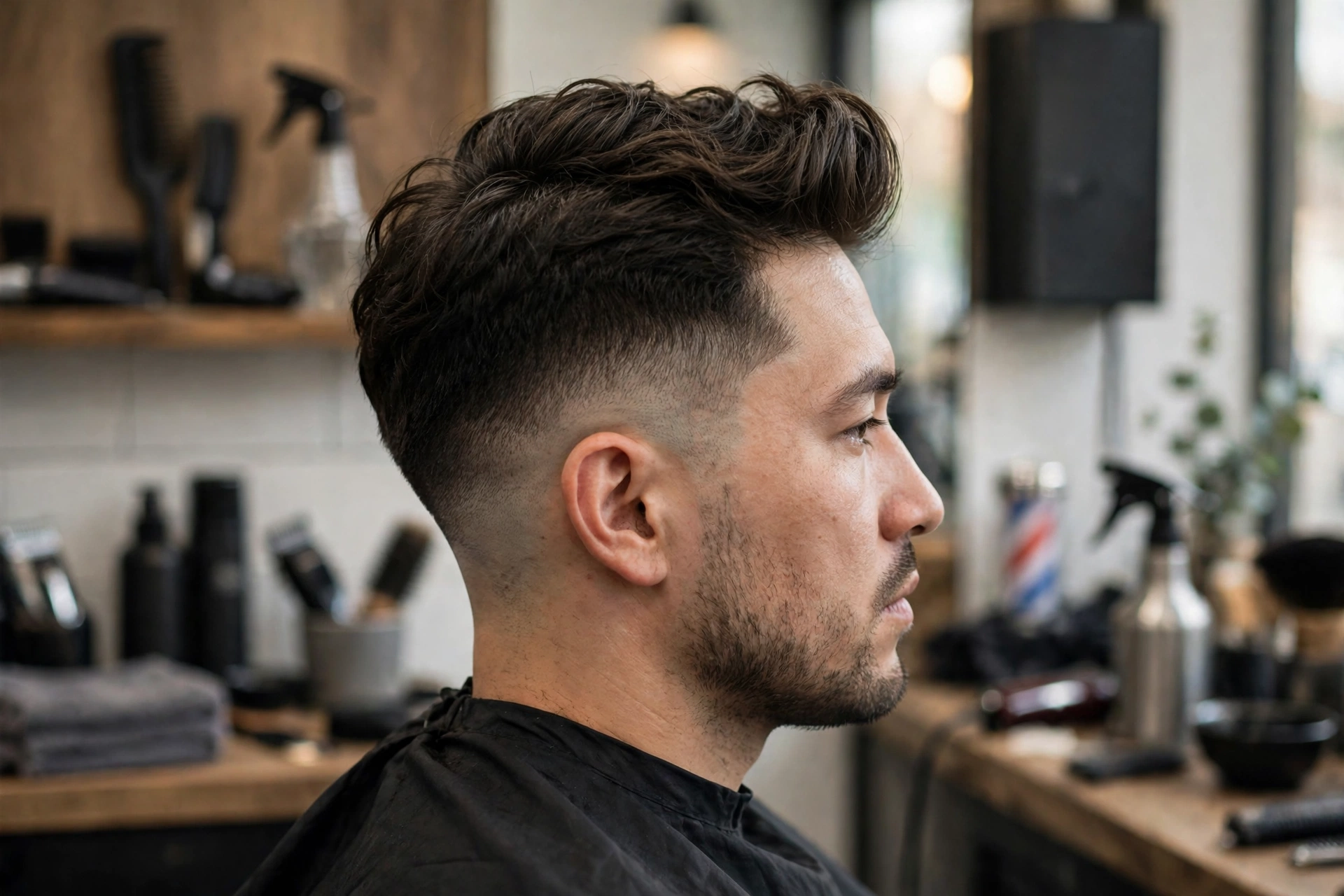
The quiff works best on straight to wavy hair with medium density, because that hair holds lift well. Thick hair can work too, but it needs texture cut into the top so it does not turn into a solid block. Very fine hair can still wear a softer quiff, but keep the height modest and use a volumizing product. For face shapes, the added height helps round faces look longer and more balanced. Oval faces can wear almost any quiff height. If you have a long face, keep the quiff lower and a little wider, so you do not add extra length on top. Square faces suit a quiff with soft, textured edges rather than a stiff, squared-off front. It also suits a lot of lifestyles. It is tidy enough for an office, relaxed enough for the weekend, and it photographs well because the front has a clear shape. If your job requires a very short, strict cut, ask your barber for a shorter, neater version rather than a tall, messy one. For straight hair specifically, see our guide to low taper fade for straight hair.
What to Ask Your Barber
Do not just say "quiff." That word means different things to different barbers, and the result can range from a small lift to a tall, retro wave. Be specific, and bring one or two photos: one from the front, one from the side. Try this script: "I want a quiff with a low taper fade. Leave about 3 inches on top, with the front kept longer for lift. Taper the sides low, and blend them into the top. I want texture on top, not a flat, solid cut." Then answer these three questions before the clippers come out:
- How high do you want the taper to start? Low means just above the ears.
- How short should the lowest point go? Ask about guard numbers if you are unsure. A #0 or #1 gives a close finish, while a #2 stays softer.
- Do you want a natural neckline or a cleaned-up, squared line? A natural taper grows out more softly.
If you want the full wording, our exact script for asking your barber for a low taper fade covers the same structure, and you can swap in "quiff" for the top style. Knowing your guard numbers also helps, so the sides do not end up shorter than you expected.
How to Style a Quiff in 5 Steps
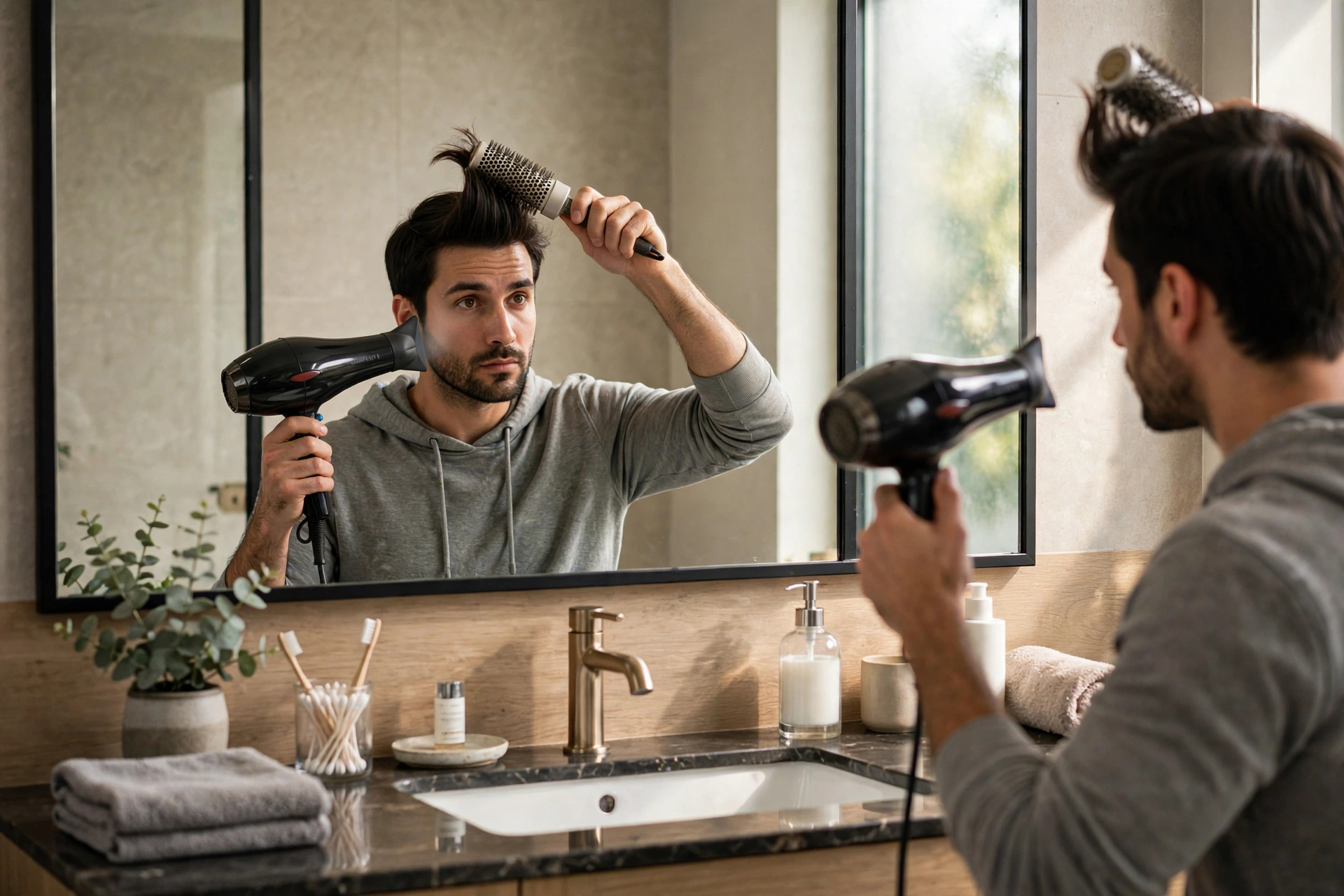
You need a blow dryer, a vent brush or round brush, and a matte clay or light paste. The whole routine takes about 5 to 10 minutes once you know it.
- Start with towel-dried, damp hair. Work a small amount of volumizing mousse or pre-styling cream through the top, from roots to ends.
- Blow-dry the front upward and slightly back. Lift at the roots with your fingers first, then use a brush to smooth the shape.
- Dry the hair fully. This is the step most men skip, and it is why quiffs fall flat by lunch. Heat sets the shape; damp roots will not hold.
- Warm a pea-sized amount of matte clay between your palms. Work it through the top, lifting the front and separating a few pieces for texture.
- Finish with a light mist of flexible-hold hairspray if you need extra hold, especially on humid days.
For a casual version, use your fingers only and leave the finish a little messy. For a neater version, comb the sides back cleanly and smooth the top with a brush. Avoid heavy gels and wet-look products. They clump the hair together, add shine you do not want, and make the quiff look flat.
Products, Upkeep, and Cost
You do not need a large collection. A volumizing mousse or pre-styler, a matte clay or paste, and a light hairspray cover almost every quiff. Fine hair does best with lightweight products. Thick hair may need a stronger clay, but use less than you think. Too much product is the most common reason a quiff looks greasy. Book a trim every 3 to 4 weeks. The taper grows out first, so the sides start to look fuzzy before the top loses its shape. A quick taper cleanup between full cuts can stretch the style if your barber offers it. In the US, a typical barber cut for this style runs about $30 to $60 in most cities, with higher prices in large metro areas. Tipping 15 to 20 percent is standard at most US barbershops. Wash every 1 to 2 days, or use dry shampoo on the second day if your hair gets oily at the roots. Over-washing can dry the hair out and make it harder to style. A light conditioner on the ends keeps the top soft without weighing the roots down.
Common Quiff Problems and Fixes
If the quiff flops by midday, the hair was probably still damp when you added product, or the roots were not dried upward. Dry fully, then add product. If it looks greasy, switch to a water-based clay and use half as much. If the shape looks uneven, the blend between the sides and the top may need work. Ask your barber to soften the corners next time, so the top flows into the taper instead of sitting on top of it. If your quiff looks too tall or too formal, ask for less length in the front or more texture. Small changes make a big difference here. A half inch less length, or a few point-cut layers, can turn a dramatic quiff into an everyday one.
Final Verdict
A low taper fade with a quiff is one of the most wearable ways to add height to a haircut. It suits straight and wavy hair best, works for round and oval faces, and stays tidy thanks to the low taper. Ask for 3 inches on top with a longer front, a low taper on the sides, and texture through the top. Style it with a blow dryer and a matte product, and you will have a cut that looks intentional without taking over your morning.
FAQ
How long does my hair need to be for a quiff?
About 2.5 to 4 inches on top, with the front kept longest. Shorter than that, and you will get a textured crop rather than a true quiff.
Can I get a quiff with a low taper fade if I have curly hair?
Yes, but keep the quiff softer and lower. Use a curl cream instead of a heavy clay, and dry with a diffuser so the curls keep their shape instead of frizzing.
How often should I get a low taper fade with a quiff trimmed?
Every 3 to 4 weeks is typical. The low taper loses its clean edge first, so book before the sides start to look fuzzy.
Is a quiff good for work?
Yes, in most offices. Keep the height moderate, the sides clean, and the finish matte rather than shiny, and it reads as polished, not flashy.