
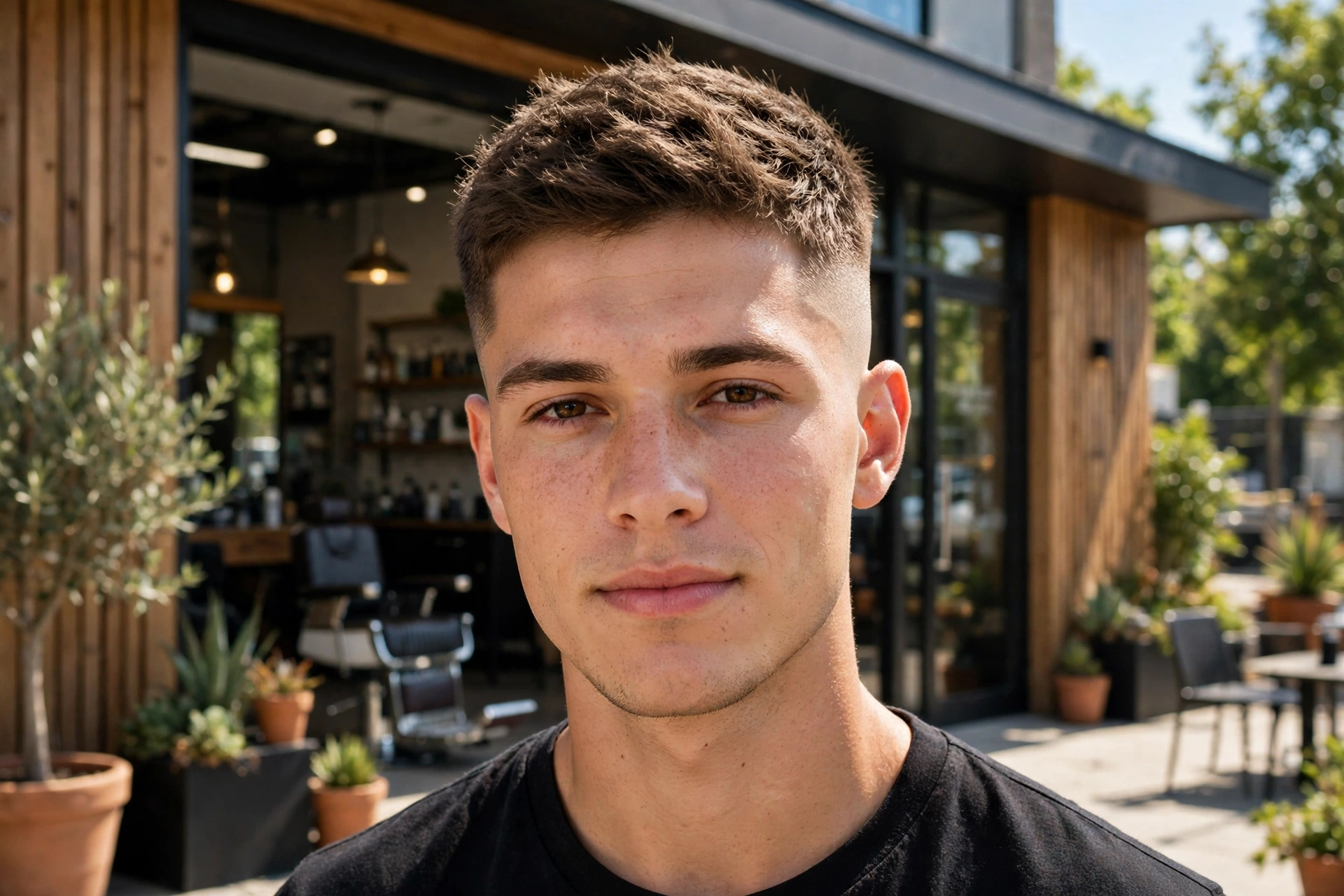
A low taper fade is one of the best haircuts you can wear in summer — if you adjust it for the season. The fade itself stays clean and cool around the ears and neckline, but heat, sweat, humidity, and sun change how the top behaves and how fast the cut grows out. A few small changes to your cut, your products, and your routine keep it looking sharp from June through August instead of turning puffy by noon.
Why Summer Is Hard on a Low Taper Fade
Summer hits a taper fade in four ways. Sweat builds up around the hairline and neckline, which can make the fade look greasy and irritate freshly cut skin. Humidity adds moisture to the air, and your hair absorbs it — straight hair goes limp, wavy and curly hair puffs up and frizzes. Sun dries out the top and can burn the scalp where the fade is shortest. And chlorine and salt water strip moisture after every swim. None of this means the cut is wrong for summer. It means the summer version of the cut is a little different from the winter version.
Ask Your Barber for a Summer Version
Tell your barber it is a summer cut before he starts. Three adjustments make the biggest difference. First, go slightly shorter on top — even half an inch less length means less hair to swell in humidity and faster drying after a swim. Second, ask for a slightly tighter taper around the ears and neckline so the shape holds up between visits. Third, if you normally keep a longer textured top, consider a shorter textured crop or a buzz cut with a low taper for the hottest months — both are among the easiest summer styles to live with. If you are not sure how to describe what you want, our guide on how to ask your barber for a low taper fade has the exact script you can use in the chair.
Sweat: Rinse More, Shampoo Less
Sweat is the biggest summer problem for a fade. After a workout, a run, or a long day outside, rinse your hair with plain lukewarm water. That alone removes most of the salt and sweat. You do not need to shampoo every time you sweat — over-shampooing dries out your scalp, which then produces more oil. A gentle shampoo two to three times a week is enough for most men, with water rinses on the other days. Pat your hair dry with a towel instead of rubbing it hard, which roughs up the fade area and creates frizz. And skip a heavy workout or a long run on the same day you get a fresh cut if you can: sweat and friction can irritate the skin around a fresh lineup for the first day or two.
Humidity: Work With Your Hair, Not Against It
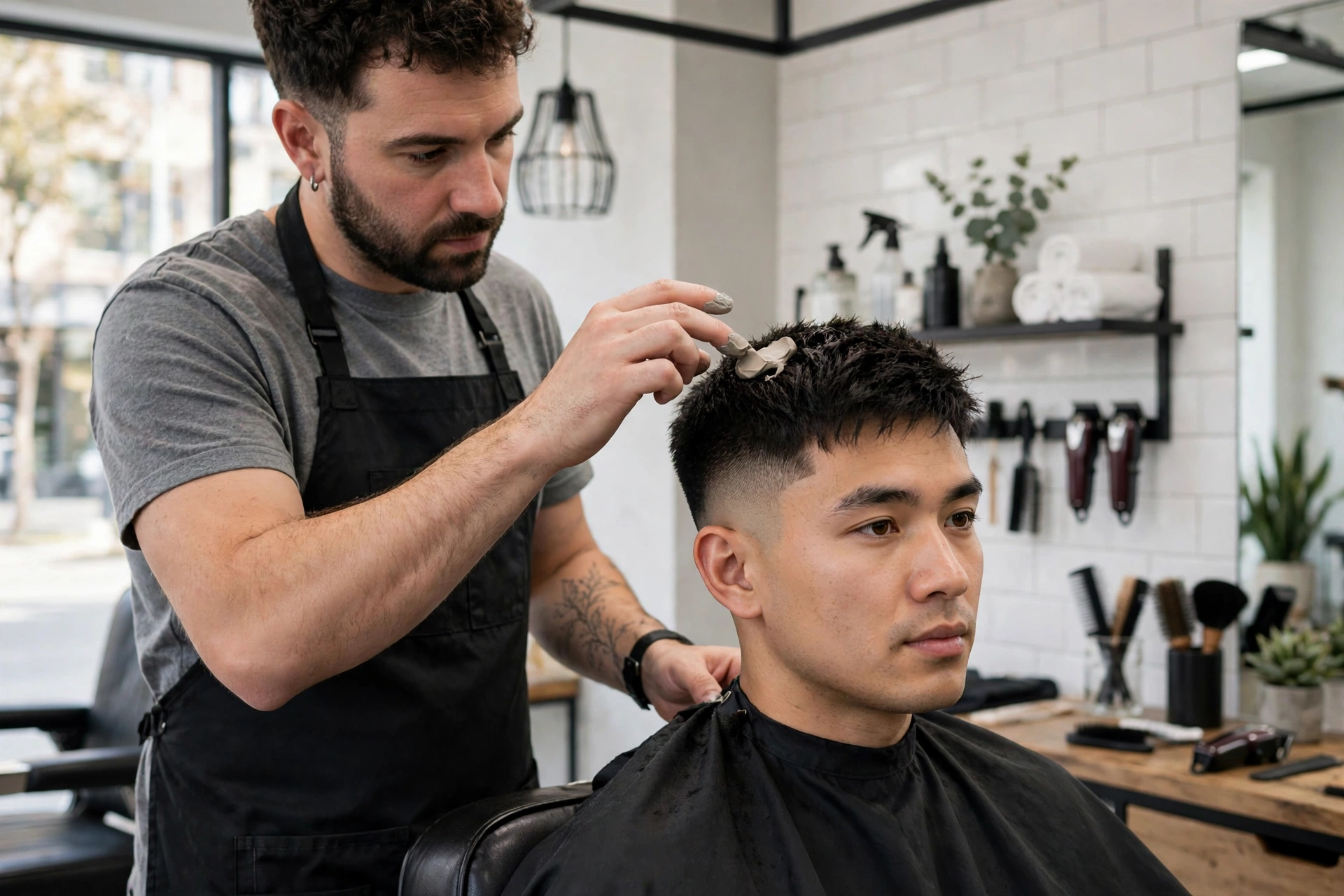
Humidity defeats heavy products. Pomades and thick waxes melt, run, and make hair look greasy by midday. Switch to lighter products for summer: a matte clay or texture paste for short textured tops, a light styling cream for side parts and comb overs, and a sea salt spray if you like a natural, tousled finish. Use less than you think you need — in humid air, overloading your hair makes it separate and flatten faster. For curly and wavy hair, humidity can actually help: it adds definition to curls if you keep the top long enough to show the pattern and use a light curl cream or leave-in conditioner instead of a strong-hold gel. A messy top with a low taper is a good summer choice for this reason — it is designed to look a little undone, so humidity cannot ruin it.
Sun: Protect the Scalp Your Fade Exposes
A fresh fade exposes skin that has spent months under hair, and it burns fast. If you are going to be outside for hours — at the beach, on a patio, at a ballgame — put a light, non-greasy sunscreen spray on the faded sides, the neck, and the ears. Reapply after swimming or heavy sweating. A cap or hat works too, but avoid wearing a tight hat right after a fresh cut: friction on the hairline can irritate the skin for the first day. One practical tip: book a skin-tight fade a couple of days before a long day in the sun, not the morning of it, so the skin has time to settle.
Swimming: Chlorine and Salt Water
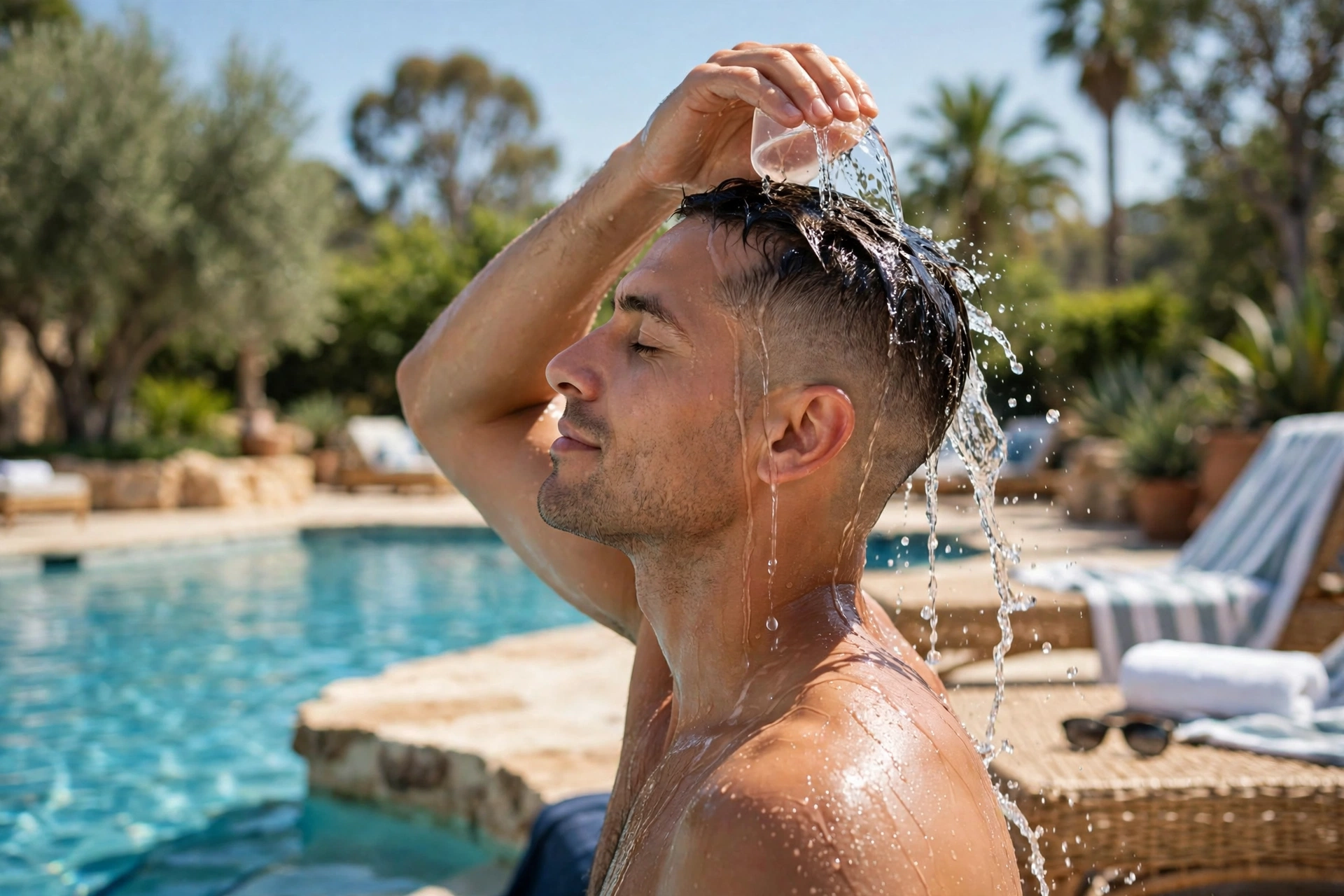
Rinse your hair with clean water right after swimming. Chlorine and salt dry hair out and leave it stiff and dull if they sit in it all day. After the rinse, work in a small amount of leave-in conditioner to replace the moisture. If you swim several times a week, a weekly deep-conditioning treatment keeps the top from turning straw-like by August. A swim cap helps, but most men skip it — the rinse-and-condition habit is the realistic version.
How Often to Trim in Summer
Short summer cuts show growth fast, and a fade loses its crisp edge sooner in hot weather. Plan on a trim every two to three weeks if you like the fade tight. A low taper grows out more gently than a skin fade, so you can stretch it a little longer if you are traveling. If you are between visits and the neckline starts to look messy, a quick cleanup of the neckline alone — many barbershops offer this for around $10 to $15 — buys you another week. Our guide on how often to get a low taper fade touched up covers the full schedule by fade type.
The Best Low Taper Fade Styles for Summer
Not every version of the cut handles heat equally well. The strongest summer choices are the buzz cut with a low taper, a short textured crop with a low taper, a short curly top with a low taper, and a classic side part with a low taper kept at about two inches on top. All four dry fast, need little product, and still look intentional. The styles to be careful with in summer are long, heavy tops that need blow-drying — they fight humidity all day and usually lose by lunch. If you love a longer top, keep it for fall and go shorter while the heat lasts.
A Simple Summer Routine
Keep it short. Wash with a gentle shampoo two to three times a week, rinse with water after sweating or swimming, use a light matte product on damp hair, and protect the faded skin with sunscreen or a hat. Book your next cut before you leave the shop so the two-to-three-week rhythm holds. That is the whole routine — summer hair care works best when it is simple enough to actually do every day.
FAQ
Does a low taper fade work in summer?
Yes — it is one of the best summer cuts for men. The short sides stay cool, and the cut grows out gently. Just go a little shorter on top and switch to lighter products.
How do I stop my low taper fade from getting frizzy in humidity?
Use less product, not more, and choose light, water-based products. Keep the top shorter, avoid blow-drying it into a shape it does not want to hold, and let your natural texture do the work.
Should I wear sunscreen on my fade?
Yes. The skin on a freshly faded neckline and around the ears burns easily. Use a light spray sunscreen and reapply after swimming or heavy sweating.
How often should I get a low taper fade cut in summer?
Every two to three weeks keeps it tight. A low taper grows out more gently than a skin fade, so three weeks is fine if you are traveling or busy.