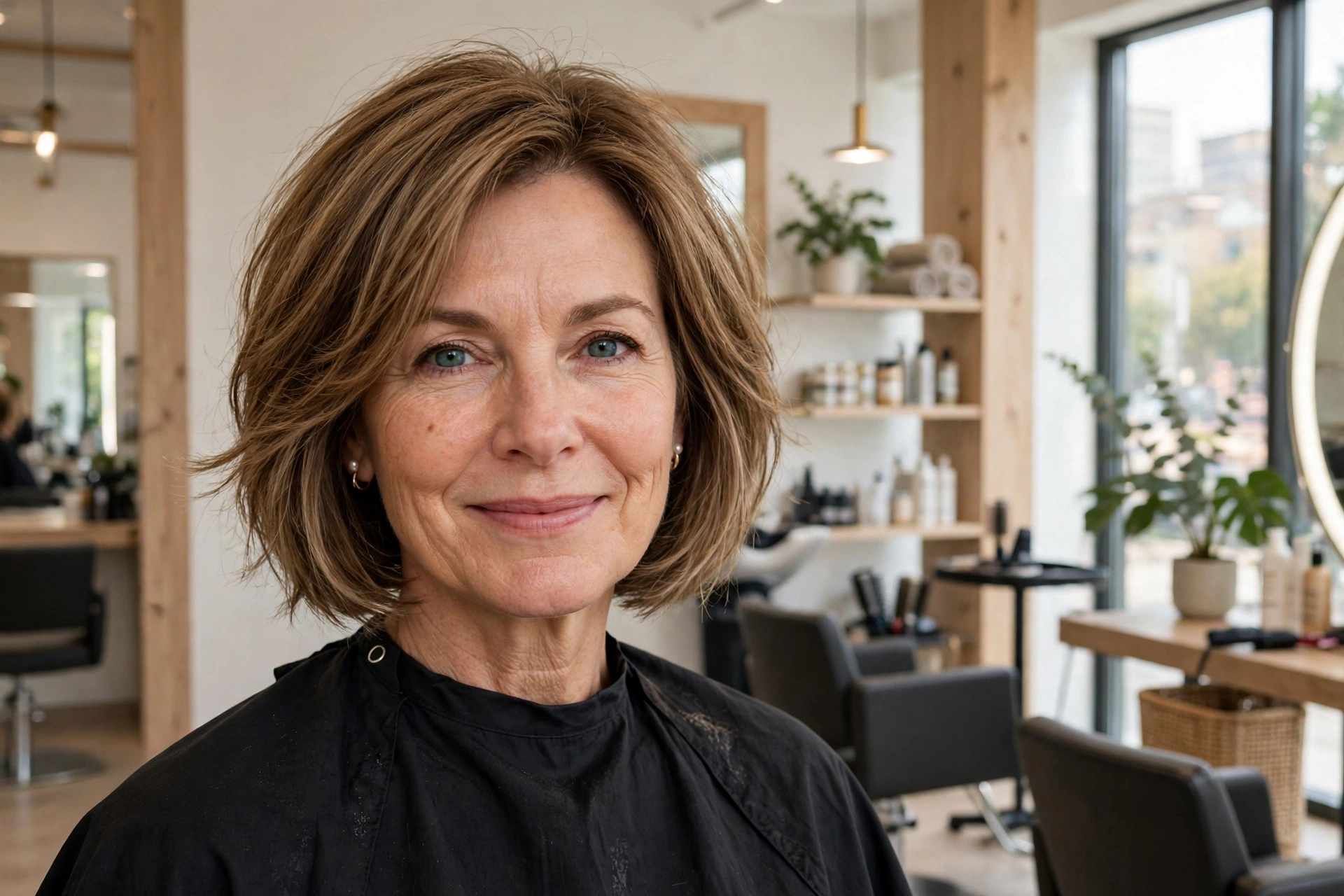
There is no rule that says your hair has to get shorter after 50. What changes is the hair itself: it often gets finer, drier, or wavier, and gray strands can feel coarser and springier than the rest. The most flattering haircuts for women over 50 work with those changes instead of fighting them — adding lift at the crown, movement around the face, and healthy-looking ends.
This guide covers the styles that stylists recommend most for women in their 50s and beyond, how to pick the right one for your hair type, and exactly what to ask for at the salon.
How Hair Changes After 50
Before choosing a cut, it helps to know what you are working with. Many women notice three changes in their 50s:
- Finer texture and less density, especially at the crown and temples
- Drier hair that needs more moisture and gentler styling
- Gray or silver growth that can be coarser and more wiry, with its own wave pattern
None of these is a problem — they just change which cuts work best. Weight at the crown gives lift, while weight that collects at the jawline pulls the eye down. Shorter cuts add fullness to fine hair, while longer hair looks fresh when it is layered and trimmed regularly, about every 8 weeks.
If you liked our guide to flattering haircuts for women over 40, many of the same ideas apply here, with a little more focus on volume and easy upkeep.
The Most Flattering Cuts for Women Over 50
1. Soft Feathered Pixie
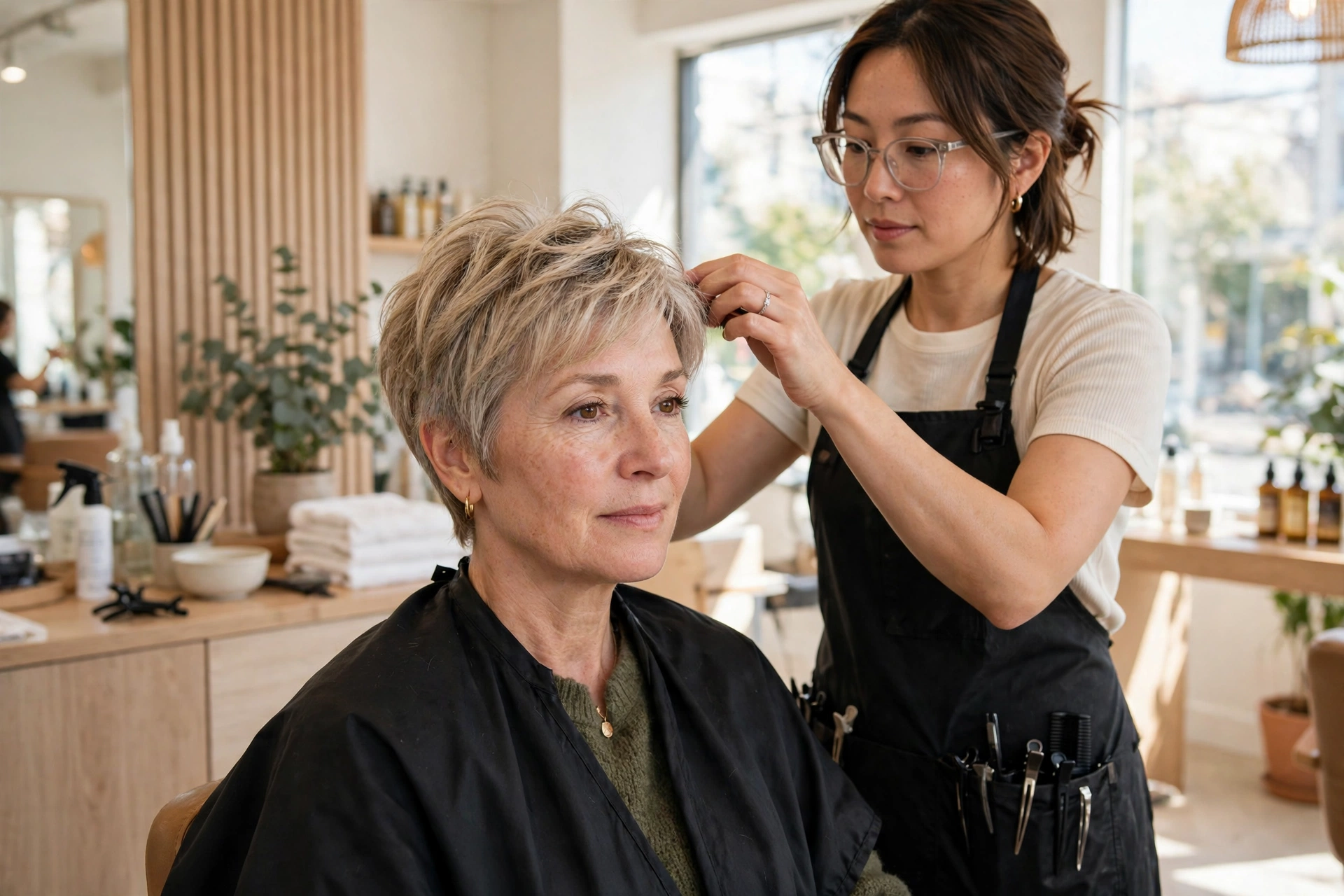
Short at the sides and nape, with a few inches left on top and soft, feathered ends. It draws the eye upward, highlights your cheekbones, and is one of the easiest cuts to style — a little texturizing cream and you are done. Best for fine hair and straight to slightly wavy textures. Our pixie cut guide explains who a pixie suits best and how to grow it out if you change your mind.
2. Layered Bob
The classic bob, cut to chin or jaw length with soft layers through the ends and face-framing pieces at the front. It adds movement without losing fullness, and it works for almost every face shape. A blunt version makes fine hair look thicker; a layered version removes bulk from thick hair. See our classic bob guide for the full breakdown of bob lengths and face shapes.
3. Collarbone Lob
The lob — a long bob that sits at the collarbone — is one of the most versatile cuts for women over 50. It frames the face, it is long enough to pull back, and soft layers keep it from looking heavy. It is a great choice if you want to keep some length but want a fresh shape.
4. Stacked Bob With a Rounded Back
Shorter at the back and longer at the front, with the back cut in short layers that sit on top of each other. The stacking builds real volume through the back, which helps if your hair feels sparser at the crown. It is especially good for straight to slightly wavy fine hair.
5. Soft Shag With Face-Framing Layers
A modern shag with choppy layers and soft pieces around the face. It works beautifully on wavy and curly hair, and it is very low-effort: add a little product, let it dry naturally, and the layers do the work. It also grows out gracefully, so you can stretch the time between appointments.
6. Curtain Bangs With Long Layers
If you want a noticeable change without going short, curtain bangs paired with long layers are a strong option. The bangs soften the forehead, the layers add movement, and the length stays. This is also a good way to ease into bangs if you have never had them.
7. Blunt Cut With Face-Framing Layers
For fine or thinning hair, a blunt cut with long face-framing layers is one of the smartest choices. The solid baseline makes the ends look fuller, while the longer pieces around the face add softness and movement. If your hair is very fine, your stylist may skip the layers completely — a one-length cut keeps as much density as possible.
8. Long Layers With a Lifted Crown
Long hair can absolutely work after 50. The key is layers: long layers through the length, shorter face-framing pieces, and some lift at the crown. Trim every 8 weeks to keep the ends healthy, and the length looks intentional rather than neglected.
9. Tapered Cut for Natural Coily Hair
For coily and curly textures, a tapered cut with a clear silhouette preserves the natural pattern while keeping the shape tidy. Shorter sides and back with length on top gives definition and makes daily styling simpler.
10. Silver or Gray-Blended Layers
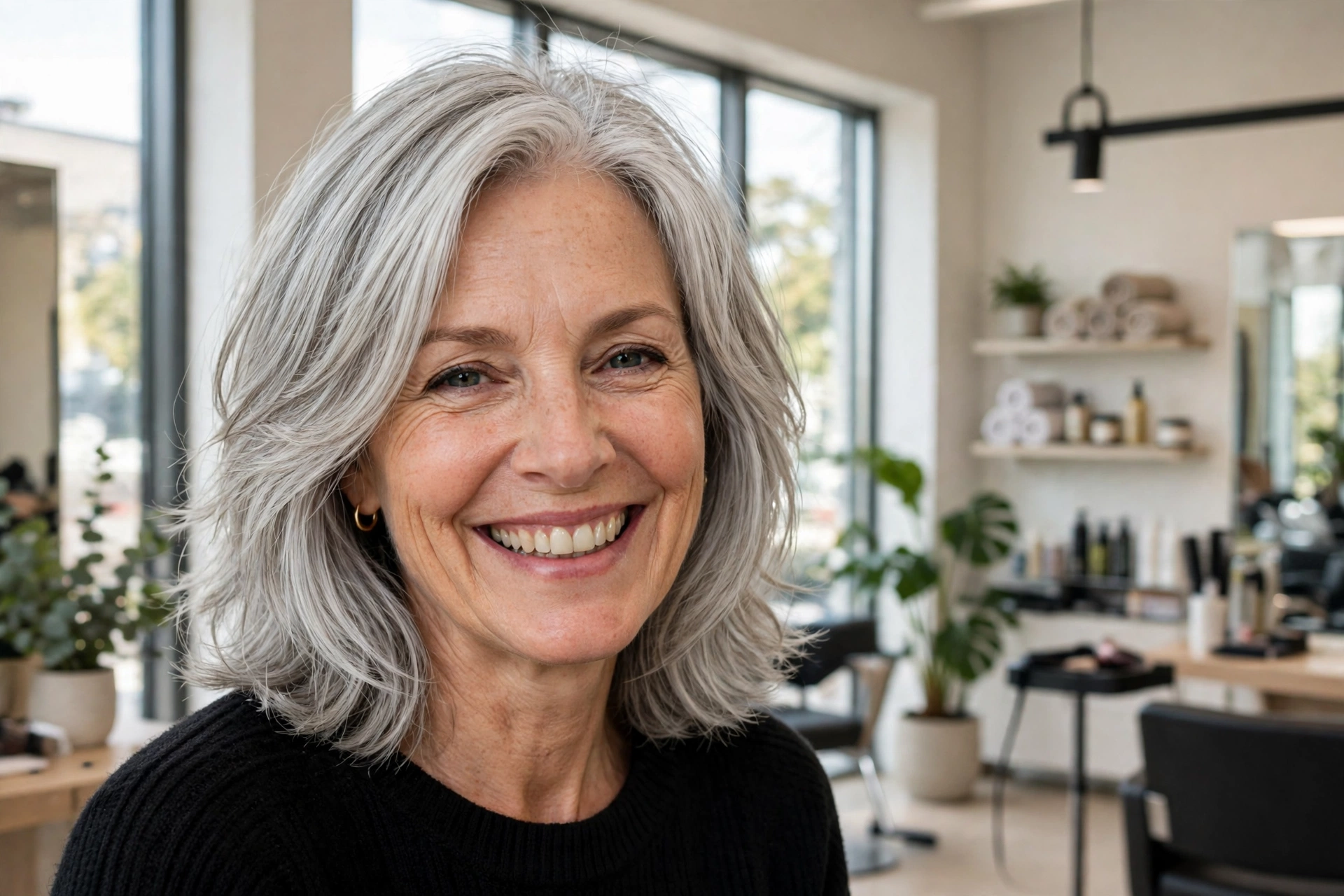
If you are growing out your gray, a sharp cut with blended layers makes the transition look deliberate. Many stylists blend gray with lowlights while it grows in, and a layered bob or lob shows off silver beautifully. Natural gray worn with a strong shape is one of the most popular looks right now.
How to Choose the Right Cut for You
Start with your texture, not the length. Fine hair looks fuller in shorter cuts with blunt ends. Thick hair needs layers to remove bulk. Curly and wavy hair needs a cut that respects the pattern — ask your stylist to cut it dry or show you how the layers fall when it air-dries.
Then think about your face shape and how much time you want to spend styling. A cut that needs 20 minutes with a round brush every morning is the wrong cut if you have 5 minutes. If low upkeep matters to you, our list of low-maintenance haircuts for busy women has options that stay in shape with almost no styling.
Finally, think about your lifestyle. Do you tie your hair back for work or workouts? Keep at least collarbone length. Do you want wash-and-go? A pixie or a soft shag is the better bet.
What to Ask Your Stylist
Bring photos of cuts you like — and photos of cuts you do not like. Then use clear, specific language:
- “I want lift at the crown, not weight at the jawline.”
- “Keep the ends looking full — please do not thin them out too much.”
- “I want soft pieces around my face, not a hard line.”
- “I need something I can style in under 10 minutes.”
Ask how often the cut needs a trim. Pixies and short bobs usually need shaping every 4 to 6 weeks. Lobs and long layers can go 8 to 10 weeks. And if you are unsure how often to book, our guide on how often women should trim their hair breaks down the timing by cut and hair type.
Styling Tips for Hair Over 50
- Volume starts at the roots. A volumizing mousse or root-lift spray at the crown makes the biggest difference for fine hair.
- Go lighter on product. Heavy creams and oils weigh fine hair down. Use a pea-sized amount and add more only if you need it.
- Protect gray hair from yellowing. A purple shampoo once a week keeps silver bright, and a heat protectant helps if you use hot tools.
- Moisture matters more now. A weekly deep-conditioning treatment keeps drier, coarser hair soft and manageable.
Frequently Asked Questions
What is the best haircut for a woman over 50?
There is no single best cut. The most flattering ones share three traits: lift at the crown, movement around the face, and healthy ends. A layered bob, a collarbone lob, and a soft pixie are the most versatile starting points.
Should women over 50 have long hair?
Yes, if it is healthy and layered. Long hair looks fresh at any age when it has movement and is trimmed regularly. The old rule that women over 50 must go short is outdated — length is your call, not a rule.
What haircut makes you look younger after 50?
Cuts with softness around the face — face-framing layers, curtain bangs, or a textured pixie — tend to look the most youthful, because they draw attention to your eyes and cheekbones instead of pulling the eye down.
How often should women over 50 get a haircut?
Short cuts like pixies and bobs need a trim every 4 to 6 weeks to hold their shape. Medium and long cuts can go 8 to 10 weeks. Gray hair often needs more frequent trims, because the ends can look dry faster.