
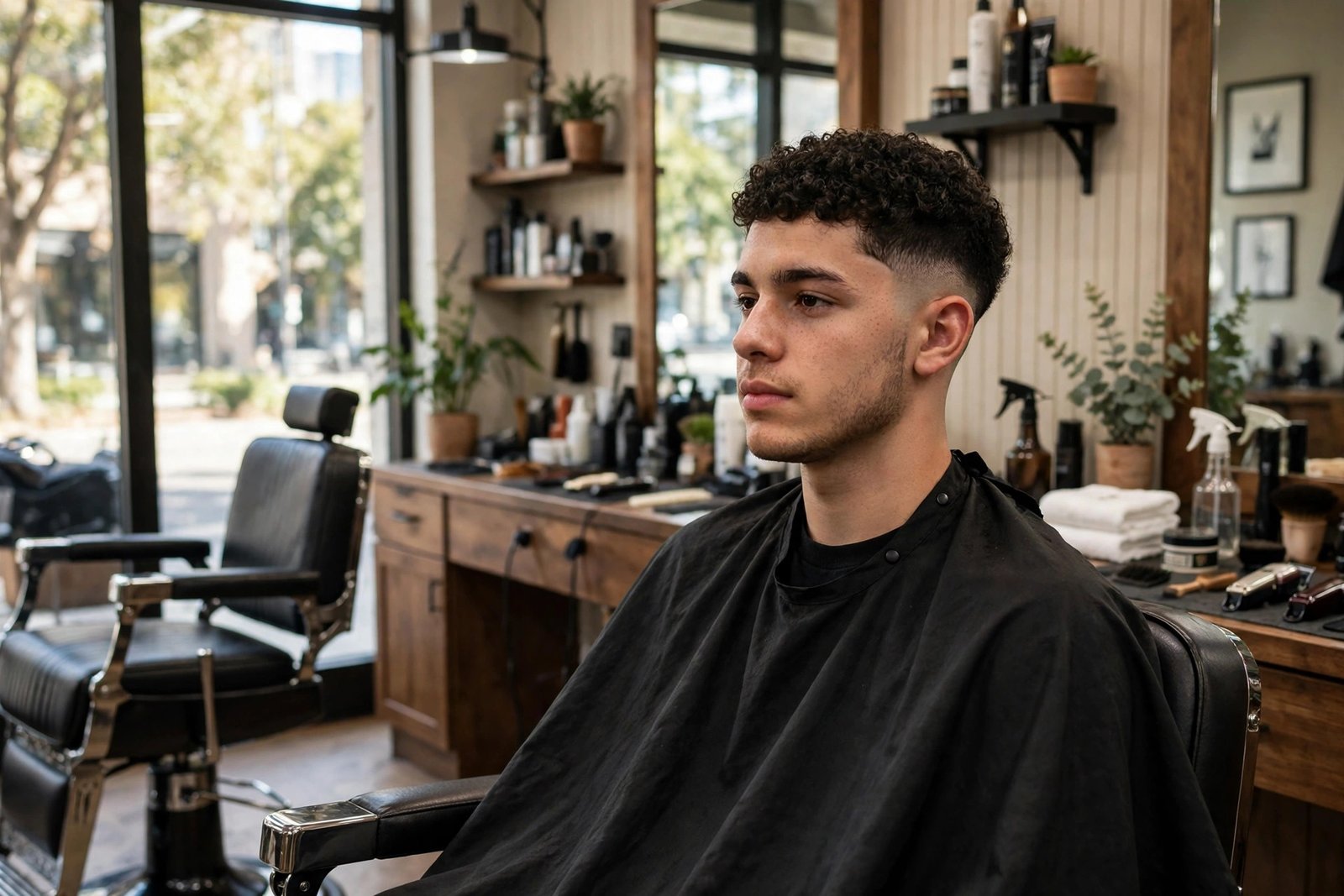
A low taper fade with sponge curls is one of the easiest ways to make short, coily hair look sharp without a long styling routine. The sides stay clean and gradually faded low around the ears and neckline, while the top keeps its natural texture, shaped into small, defined curls with a curl sponge. The contrast is what makes the cut work: neat edges below, lively texture on top.
This guide covers the right length, the sponge technique step by step, the products that actually help, and how often to get it touched up.
What the Cut Looks Like
The taper starts low, just above the ear, and blends down to the skin or a very short guard around the sideburns and neckline. The top is left longer, usually between half an inch and two inches, so the sponge has enough hair to form curls. Shorter than half an inch, and the sponge has little to grip; longer than two inches, and the curls get heavy and lose definition.
Who It Works Best For
Sponge curls work best on short to medium coily or tightly curled hair. If your hair already forms small coils when it is damp, the sponge will define them quickly. Men with looser waves can still use a sponge, but the result will be softer and less uniform, closer to a textured crop than true sponge curls.
If your hair is very fine or straight, this is not the right technique. A sponge needs natural curl or coil to work with; it cannot create curls from hair that has none. In that case, a textured crop or a wavy top with a low taper will give you a similar clean shape.
What to Ask Your Barber
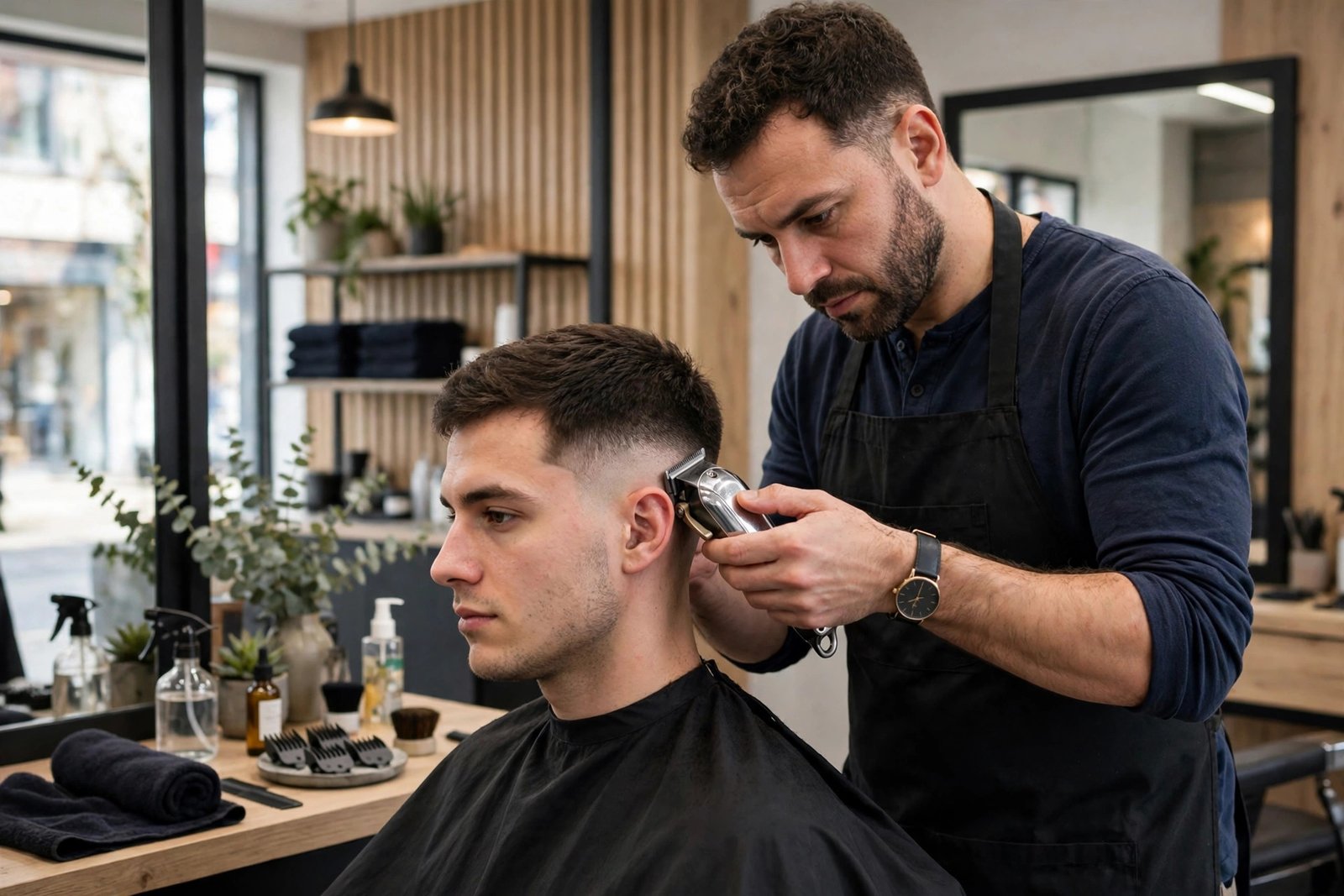
A clear request saves you from a disappointing cut. Say something like: “I want a low taper fade on the sides and back, blended down to the skin at the edges, with about one to one and a half inches left on top for sponge curls. Keep the top even, no hard line between the fade and the top.”
A few details worth mentioning: How low the taper goes. A true low taper starts just above the ear. If you want it even more subtle, ask for a taper rather than a fade at the very bottom. The lineup. A crisp edge-up at the hairline and temples frames the curls and makes the whole cut look intentional. Ask for it only if you like a defined hairline; it needs touching up every week or two. The neckline. A tapered neckline grows out more gracefully than a blocked, squared-off one, which matters if you stretch time between visits.
If you already know how guard numbers work, telling your barber the shortest guard you are comfortable with removes guesswork. And if you have curly hair and are unsure what to say in the chair, our guide on what to tell your barber if you have curly hair walks through the exact wording.
The Sponge Technique, Step by Step
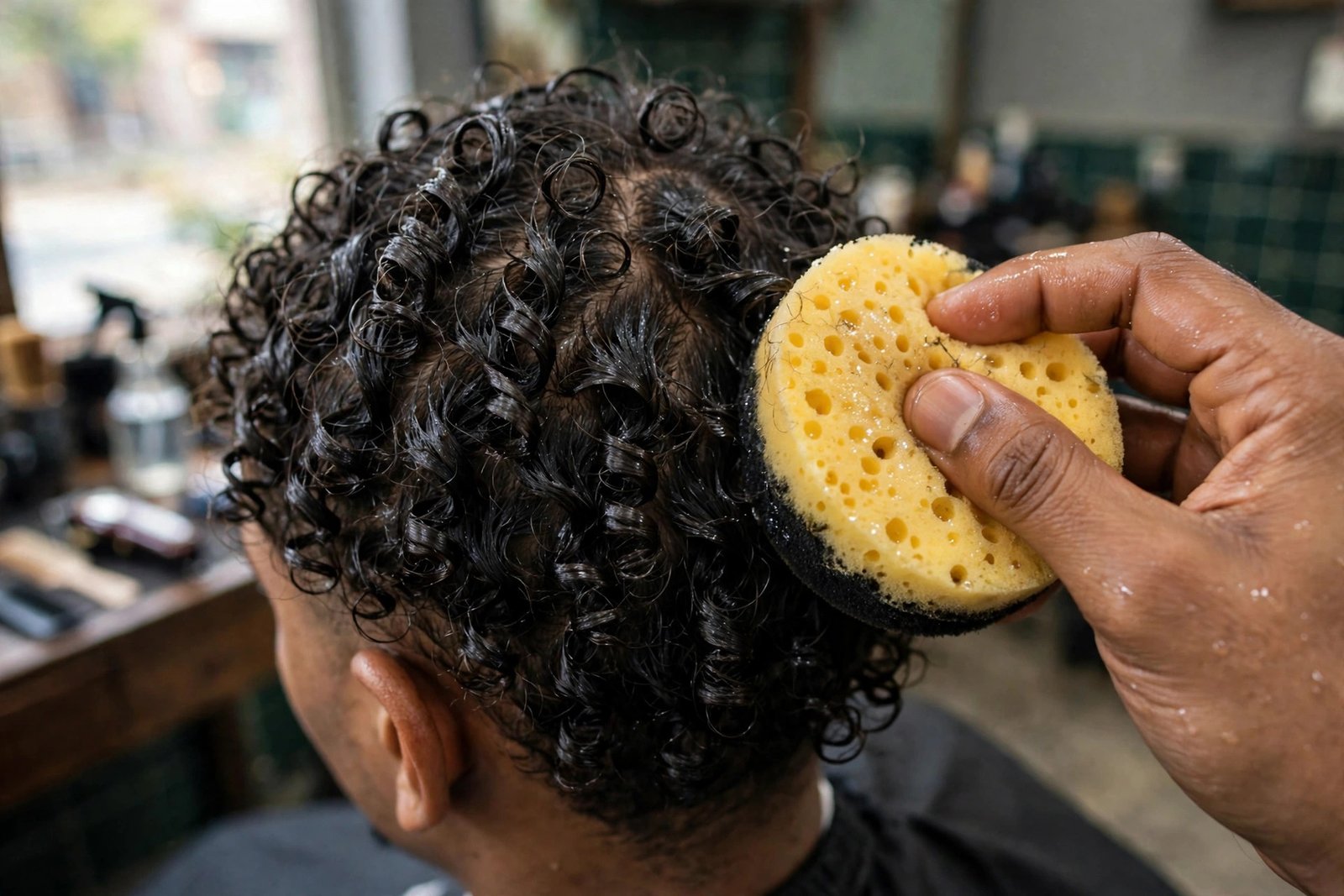
You need a curl sponge, which is a small foam tool with holes on one side, sold at most beauty supply stores and online for a few dollars. Use the side with smaller holes for tighter curls and the larger-holed side for looser texture.
1. Start with damp hair. Wash or mist your hair until it is evenly damp, not dripping. Apply a leave-in conditioner or a light curl cream and work it through with your fingers.
2. Sponge in small circles. Press the sponge flat against your hair and move it in small, steady circles in the same direction. Do not press hard; light, even pressure lets the coils form on their own.
3. Work section by section. Cover the whole top, moving from front to back, until the curls look even. This usually takes two to five minutes.
4. Let it dry naturally. Air-drying keeps the curls defined. A diffuser on low heat works if you are in a hurry, but avoid rough towel drying, which breaks the curl pattern apart.
5. Finish lightly. A drop of light oil or a small amount of curl cream seals in moisture. Skip heavy waxes and gels, which weigh sponge curls down and make them look stiff.
Products That Help (and Ones to Skip)
Keep the routine simple. You need moisture, light hold, and nothing heavy: Leave-in conditioner: the base of the routine. It keeps coils soft and stops them from drying out during the day. Light curl cream: adds definition without stiffness. Use a coin-sized amount; more product does not mean better curls. Light oil: a few drops on the ends seals moisture in, especially in dry weather or winter. Curl sponge: replace it when the holes start to flatten or tear, usually every few months.
Skip heavy pomades, thick waxes, and alcohol-heavy gels. They flatten the texture, build up on the scalp, and make the curls look dull rather than defined.
Upkeep: How Often to Get It Cut
The taper is the part that shows growth first. Book a cleanup every two to three weeks to keep the fade sharp and the lineup crisp. The top can go longer between full cuts, usually four to six weeks, since sponge curls hide a little growth well.
Between visits, sponge your hair every two to three days, or whenever the curls start to look loose or frizzy. A quick mist of water plus a little leave-in conditioner is usually enough to refresh them without a full wash. Sleep on a satin pillowcase or wear a durag at night to protect the curl pattern; cotton pillowcases pull moisture out of the hair and flatten the curls.
Common Mistakes to Avoid
Cutting the top too short. Below half an inch, the sponge cannot form curls, and you end up with a plain short cut instead. Sponging dry hair. Dry hair breaks and frizzes instead of coiling. Always start damp. Using too much product. Buildup makes curls heavy and dull. Start small and add more only if needed. Letting the taper grow out too long. Once the sides lose their blend, the whole cut looks overgrown, even if the curls still look good.
Is It High Maintenance?
Compared with other textured cuts, no. The daily routine takes about five minutes, and the cut itself is forgiving: the fade keeps it looking neat, and the curls hide uneven growth on top. The main commitment is the barber visit every two to three weeks. If you are comfortable with that schedule, a low taper fade with sponge curls is one of the lowest-effort textured styles you can wear.
It also pairs well with other short textured looks. Men who like this cut often also like a low taper fade for coily hair with more length on top, or a low taper fade with afro hair when they want extra volume. The barber conversation is the same in all three cases: low taper, clean edges, and enough length on top to work with.
FAQ
Q: How long does my hair need to be for sponge curls?
A: About half an inch at minimum, with one to two inches giving the best definition. Longer hair still works, but the curls become heavier and less uniform.
Q: Can I do sponge curls at home?
A: Yes. All you need is a curl sponge, damp hair, and a leave-in conditioner. Most men get the motion right within a few tries.
Q: How often should I sponge my hair?
A: Every two to three days is enough for most men. Refresh with water and a little leave-in conditioner between full routines.
Q: Will a low taper fade with sponge curls suit my face shape?
A: It suits most face shapes, since the volume stays on top and the sides stay clean. If your face is very round, ask your barber to keep a little extra height on top to add length.