
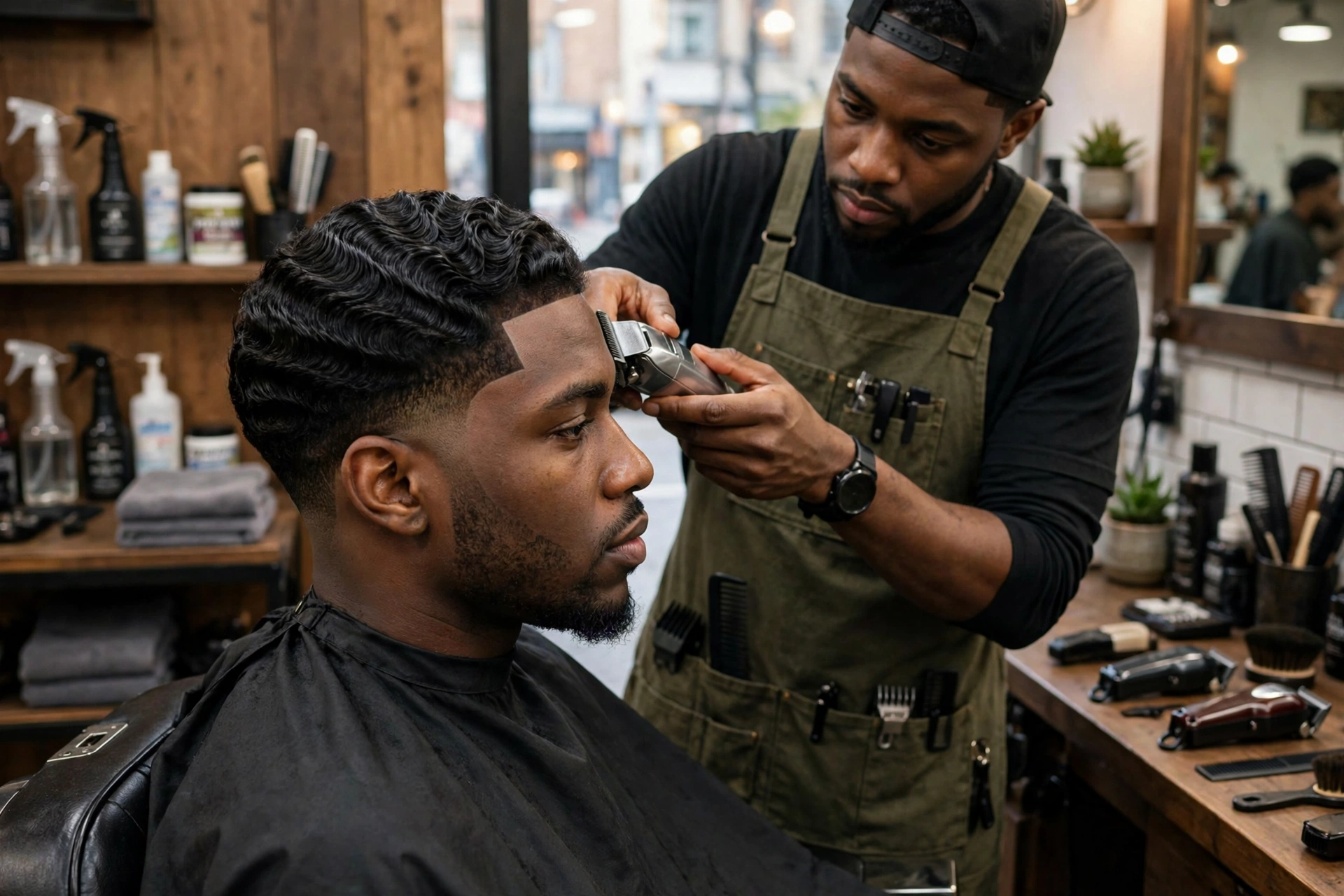
360 waves and a low taper fade are a natural pair. The waves give you the pattern. The taper gives you the frame. When the taper stays low, it cleans up the temples and neckline without cutting into the waves on top — so the circular pattern stays complete, from crown to edge. This guide covers the barber script, the brushing routine, and the upkeep habits that keep both parts of the cut sharp.
Why a Low Taper Works So Well With Waves
Waves are built by brushing hair in a circular pattern around the crown. For the pattern to read clearly, the top needs enough length and an unbroken surface. A high fade breaks that surface. A low taper does not. Because the taper starts just above the ears, the wave pattern on the sides stays mostly intact, and the contrast between the textured top and the clean edges actually makes the waves look deeper. It is also a more forgiving cut: as the taper grows out, the waves still look good, whereas a high fade can look messy within days.
What to Tell Your Barber
The biggest risk is a barber cutting the taper too high and breaking the wave pattern at the sides. Be specific: “I want a low taper fade with my 360 waves. Keep the taper low, just above the ears. Do not cut up into the waves. Keep the wave pattern intact on the sides, and taper only the temples and neckline. Give me a clean line-up.” If you are new to taper language, our guide to guard numbers helps you talk length in numbers — for example, asking for a #1 or #1.5 at the shortest point of the taper, rather than just saying “short.” Bring a photo taken from the side, not just the front. The side view shows exactly where the taper should stop, and that is the detail that protects your waves.
Starting Waves (If You Are New)
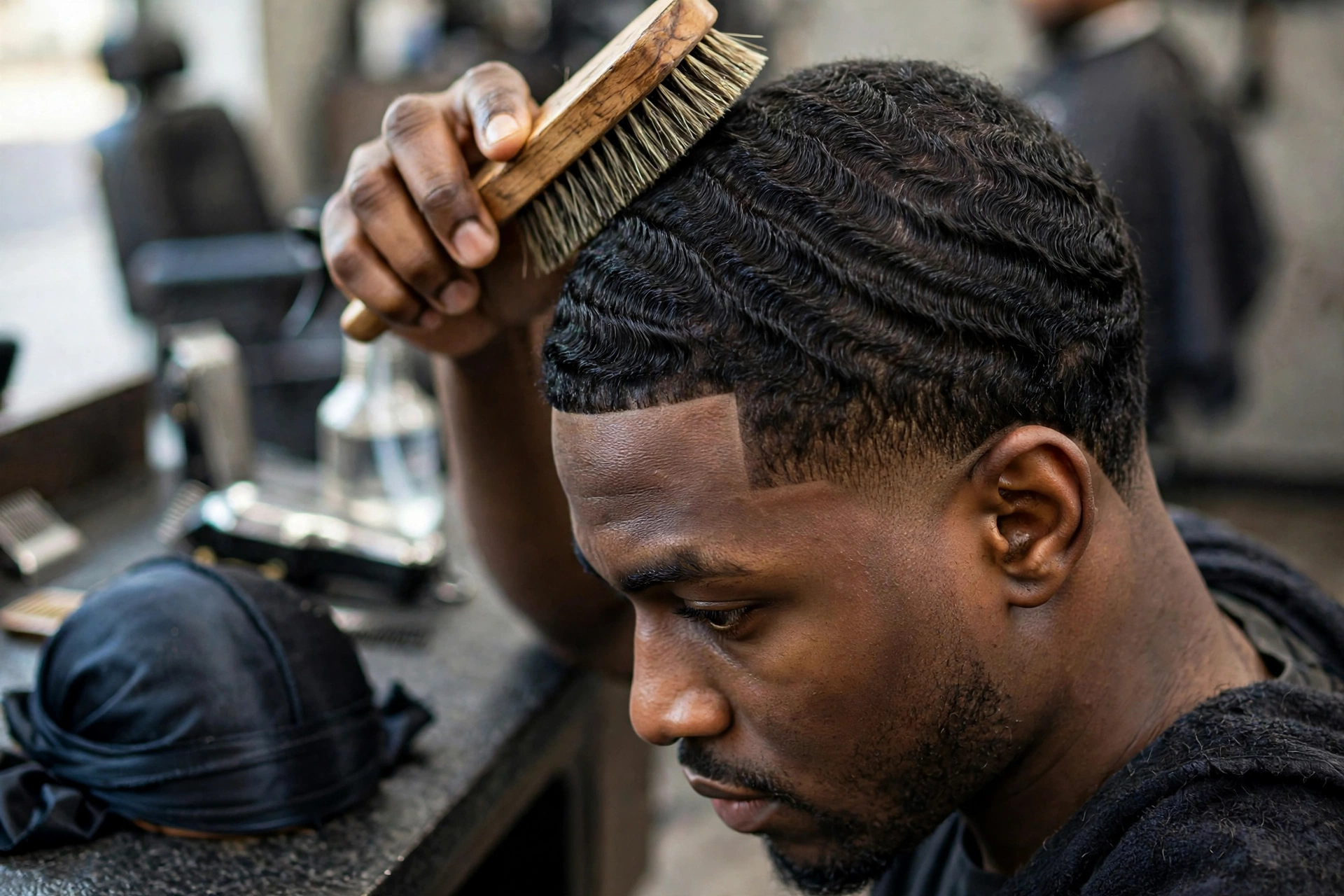
If you do not have waves yet, a low taper is still a good starting cut because it keeps enough length on top to brush into a pattern. The basic routine is simple: start with a short, even cut, apply a small amount of pomade or wave cream, then brush in the direction of your natural curl pattern — forward on top, down on the sides, and around at the back. Brush for 15 to 30 minutes a day in the early weeks, and wear a durag whenever you are not brushing. Waves take patience. Most men see a clear pattern after four to six weeks of consistent brushing. Coily and tightly curled hair often waves well, because the curl gives the pattern its ripple — see our Low Taper Fade for Coily Hair guide for texture-specific care.
The Brushing Routine That Builds Waves
Once the pattern is in, maintenance is about consistency, not effort. Brush in sessions, not all day. Two or three focused sessions of 10 to 15 minutes beat scattered brushing. Always brush with the grain of your pattern, following the same circular direction every time. Brushing against the pattern creates forks and breaks in the waves. Use a medium or soft brush for daily work, and keep a hard brush for deeper sessions once your hair can handle it. A small amount of pomade adds hold and shine, but too much product weighs the hair down and dulls the ripple. A light, even layer is enough.
Keeping the Pattern Sharp Between Cuts
A wave pattern fades in two ways: the hair gets too long, or the edges get fuzzy. Both are easy to manage. First, watch the length. When the top gets too long, the waves lose definition and start to look like loose curls. A cut every two to three weeks usually keeps the length in the sweet spot. Second, keep the line-up fresh. The hairline and temples frame the waves, so a clean edge makes the whole pattern pop. A line-up-only visit between full cuts can buy you an extra week of sharpness. Third, if you wear a beard, blend it carefully. A hard break between the taper and the beard draws the eye away from the waves. Our guide on blending a beard into a taper explains how a smooth sideburn transition keeps the focus on the pattern.
Night Routine: Protect the Pattern
Waves are made during the day and protected at night. A durag is not optional — it compresses the hair, holds the pattern in place, and stops the pillow from flattening one side while you sleep. Put the durag on after your last brush session, with the fabric smooth and snug, not tight enough to leave marks. In the morning, brush again for a few minutes to reset any flat spots, then apply a light layer of product if needed. A silk or satin pillowcase is a good backup for nights you forget the durag, but it does not replace compression. If you sleep without either, expect to spend extra brushing time the next morning.

Common Problems and Fixes
Forks in the pattern usually mean you brushed in two directions, or the hair is too dry. Brush consistently in one direction, moisturize, and give it a week — most forks brush out. Flat spots on one side often come from sleeping on that side without a durag, or from brushing that side less. Add extra brush strokes to the weak side and protect it at night. A taper that creeps too high is a barber problem, not a brushing problem. At your next visit, repeat the low-taper script clearly, and check the sides in the mirror before you leave the chair. Fixing a taper that is too high means waiting for the waves to grow back in that area, which takes weeks.
How Often to Get a Touch-Up
For most men, a full cut every two to three weeks keeps the taper and the wave length in balance. If your hair grows fast, you may need a visit every two weeks; if it grows slowly, three weeks can work. Read our guide on how often to get a touch-up to match the schedule to your growth speed. Between visits, a line-up-only appointment keeps the frame sharp without disturbing the wave pattern on top. Tell the barber to touch up only the hairline and neckline.
Frequently Asked Questions
Can a taper fade ruin 360 waves?
Yes, if it is cut too high. A high fade removes the wave pattern at the sides. A low taper avoids this by staying just above the ears and keeping the pattern intact.
How long does it take to get 360 waves?
Most men see a clear pattern after four to six weeks of daily brushing and durag use. Tighter curl patterns often wave faster, while looser textures may take longer.
Should I brush with pomade or without?
A small amount of pomade helps hold the pattern and adds shine. Use a light layer — heavy product weighs waves down and makes them look flat.
Can I wear a low taper with waves to work?
Yes. The low taper is one of the most office-friendly wave styles because the edges stay clean and the pattern looks disciplined rather than wild. Keep the line-up fresh and the shine moderate for a professional finish.
Final Verdict
A low taper fade is the safest frame for 360 waves: it cleans up the edges, keeps the pattern whole, and grows out gracefully. Tell your barber to stay low, brush consistently in one direction, and never skip the durag. Do those three things, and the pattern stays sharp between every cut.