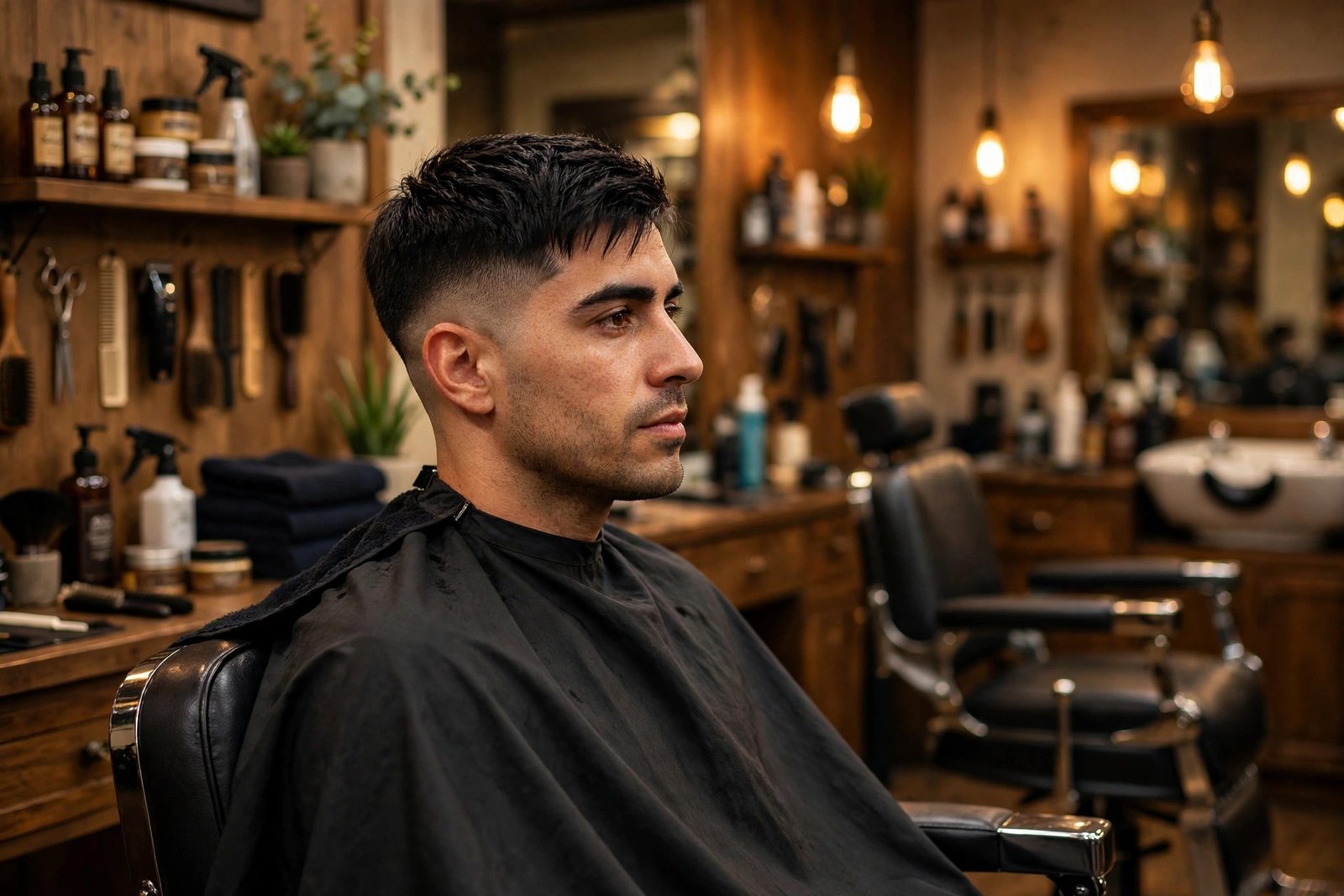
Straight hair and a low taper fade are a natural match — as long as the blend is clean. Because straight hair lies flat, it shows every clipper line and every blending mistake. A high taper on straight hair can look severe, but a low taper keeps things soft and natural while still looking sharp. If you have straight hair and are thinking about a low taper fade, this guide covers what to ask for, which styles work best, and how to keep it looking fresh.
Why Straight Hair Works So Well With a Low Taper
Curly and wavy hair hide small blending imperfections under their texture. Straight hair does not — which is actually an advantage when the cut is done right. A well-blended low taper on straight hair gives you crisp, defined edges and a mirror-smooth gradient that texture-heavy hair types simply cannot produce.
The low placement is the key. Because the fade starts just above the ear and around the neckline, the straight hair on top drapes naturally over the transition zone. The result is a cut that looks polished from day one and grows out more gracefully than a mid or high fade. If you want the full breakdown of what makes this cut different, read our complete low taper fade guide first.
What to Tell Your Barber
Straight hair needs a slightly different approach at the chair. Here is exactly what to say:
- Start point: ask for the taper to start low — just above the ear and tight around the neckline. Nothing above the temples.
- Guard range: ask the barber which guards they will use. On straight hair, tight guard steps (for example #1 to #0.5 to #0) give a smoother blend than big jumps.
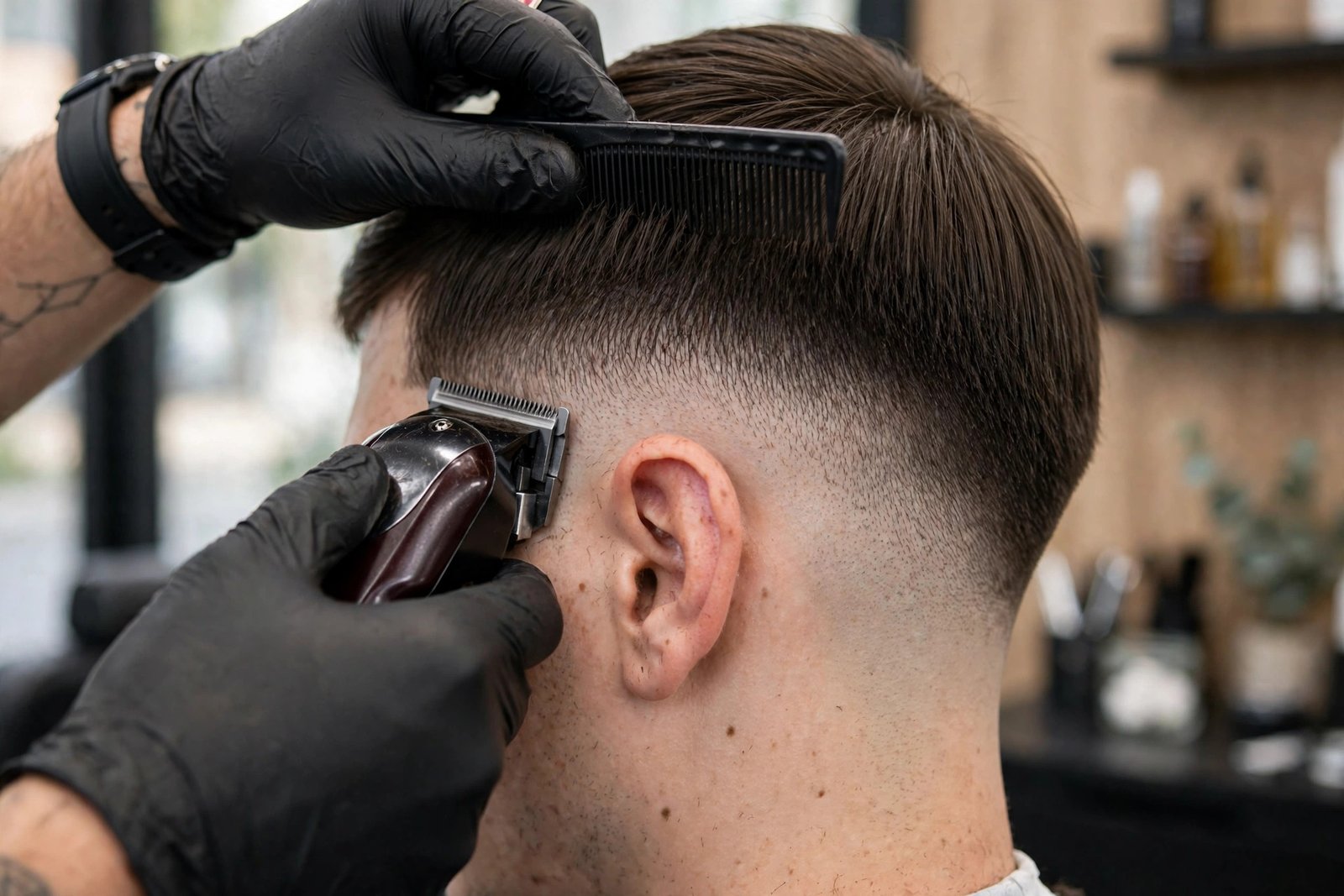
- Blending: specifically ask for extra blending time. Straight hair is unforgiving of visible “shelves” where one guard meets the next — clipper-over-comb blending makes the gradient seamless.
- The top: straight hair looks best on top with some texture cut in. Ask for point cutting (the barber snips into the ends at an angle) so the top does not sit like a flat helmet.
- Edges: a sharp line-up around the hairline and temples gives straight hair its crisp, finished look.
Bring reference photos from a couple of angles — our guide to asking your barber for a low taper fade includes an exact script you can use word for word.
Best Straight-Hair Styles With a Low Taper
Textured crop
Two to three inches on top, point-cut for movement, low taper on the sides. This is the most popular straight-hair combination for a reason: it needs almost no styling, just a pea-sized amount of matte clay scrunched through the ends.
Side part / comb over
Classic and office-safe. Keep three to four inches on top, part it on the side while damp, and finish with a light pomade. The low taper keeps the sides neat without the drama of a high fade.
Slick back
Works best if your hair is at least four inches on top. Blow-dry it back with a round brush, then apply a medium-hold pomade or cream. The tapered sides stop it from looking heavy.
Brush-up / quiff
Blow-dry the front upward and back, then lock it with matte paste. Adds height, which is flattering if your face is on the rounder side.
Browse our 35 low taper fade looks to see more combinations — most of them work well on straight hair.
Daily Styling Routine for Straight Hair
Straight hair is the easiest type to style with a low taper, and the routine takes five minutes:
- Start with damp hair. Towel-dry after your shower so it is damp, not dripping.
- Add a pre-styler (optional). A light volumizing spray or sea salt spray at the roots gives fine straight hair some body. Skip this if your hair is thick.
- Blow-dry with direction. Point the dryer where you want the hair to go — back for a slick back, up and back for a quiff, forward and textured for a crop. A round brush adds volume; fingers keep it natural.
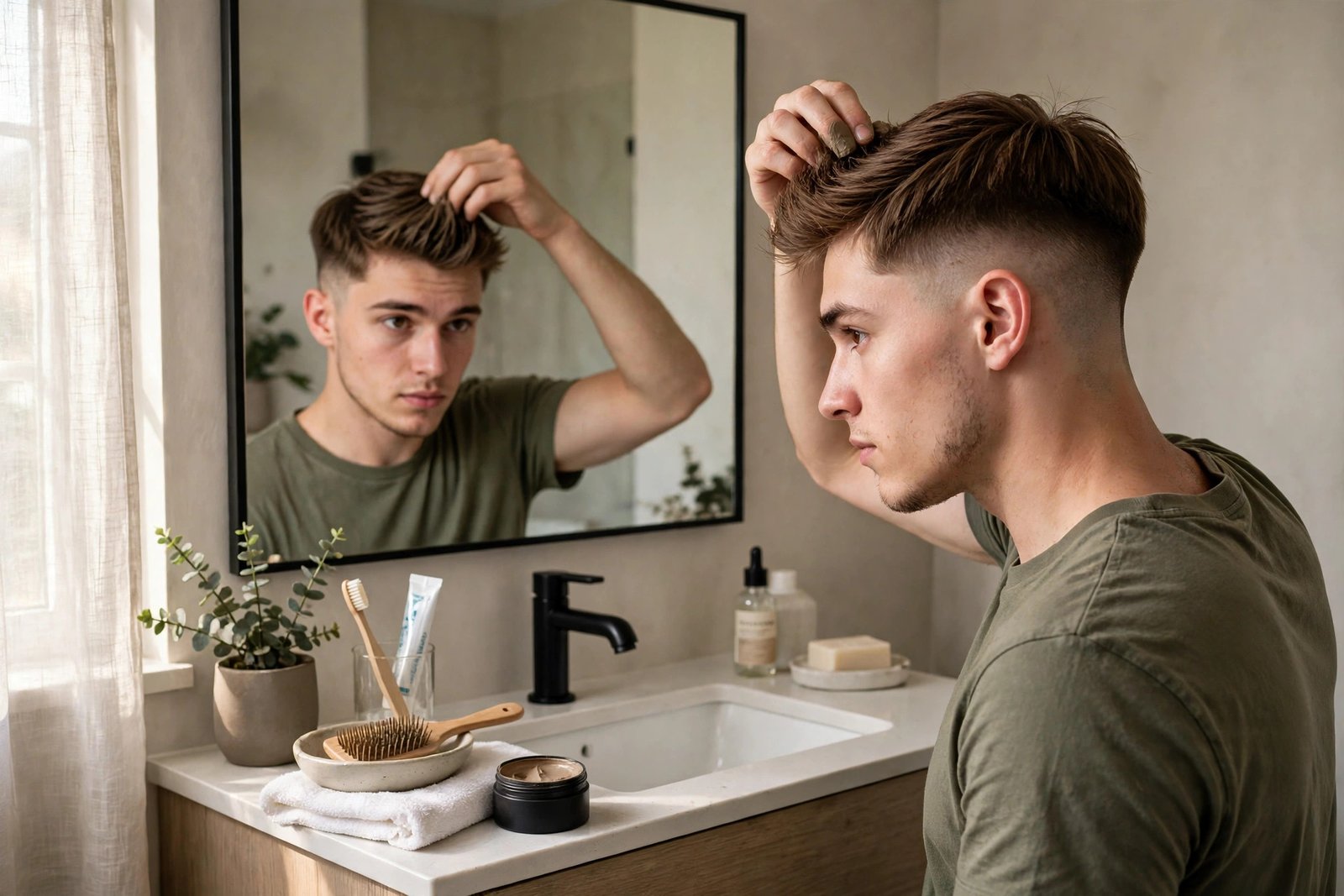
- Finish with product. For a matte, natural look: clay or matte paste. For shine and hold: a water-based pomade. Use less than you think — a pea-sized amount. Heavy products weigh straight hair down and make it look greasy by noon.
Products That Work (and Ones to Avoid)
Straight hair responds best to lightweight products. Matte clays, texturizing sprays, and light styling creams are your friends. Avoid heavy oil-based pomades and thick waxes unless you want a wet, slicked look — on straight hair, heavy products flatten everything and kill the shape of the cut.
If your hair is fine as well as straight, a volumizing mousse applied to damp hair before blow-drying makes a visible difference. For thick straight hair, a medium-hold water-based pomade gives control without stiffness.
Maintenance: How Often to Go Back
Straight hair shows regrowth faster than textured hair because there is no curl to camouflage the grow-out. Plan on a taper touch-up every two to three weeks to keep the gradient crisp. The top can go four to six weeks between full cuts. Between visits, keep your neckline clean with a small trimmer — it makes a surprising difference to how fresh the whole cut looks.
For comparison, wavy hair gets away with a little more grow-out — our low taper fade for wavy hair guide explains why texture hides regrowth better.
FAQ
Does a low taper fade work on fine straight hair?
Yes — in fact it is one of the best fades for fine hair. The low placement keeps weight and fullness on the sides, and a textured top creates the illusion of density. Avoid skin-tight tapers if your hair is very fine; a #1 or #0.5 finish looks fuller than bare skin.
Will a low taper fade make my straight hair look flat?
Only if the top is cut blunt with no texture. Ask your barber for point cutting or light layering on top, and use a matte product with a blow-dryer for lift. The cut itself does not flatten your hair — the styling does the lifting.
How long should the top be for a low taper fade on straight hair?
Two to four inches is the sweet spot for most styles. Shorter than two inches and you lose styling options; longer than five and the contrast with the taper gets extreme. Your barber can adjust based on your face shape.
Is a low taper fade good for a professional office look?
Yes. It is one of the most workplace-friendly fades because the fade sits low and subtle. Paired with a side part or neat comb over, it reads as a classic professional haircut, not a statement cut.
Bottom line: straight hair rewards precision. Find a barber who blends carefully, keep the top textured, style light, and touch up every two to three weeks — and the low taper fade will look sharp on you with minimal daily effort.