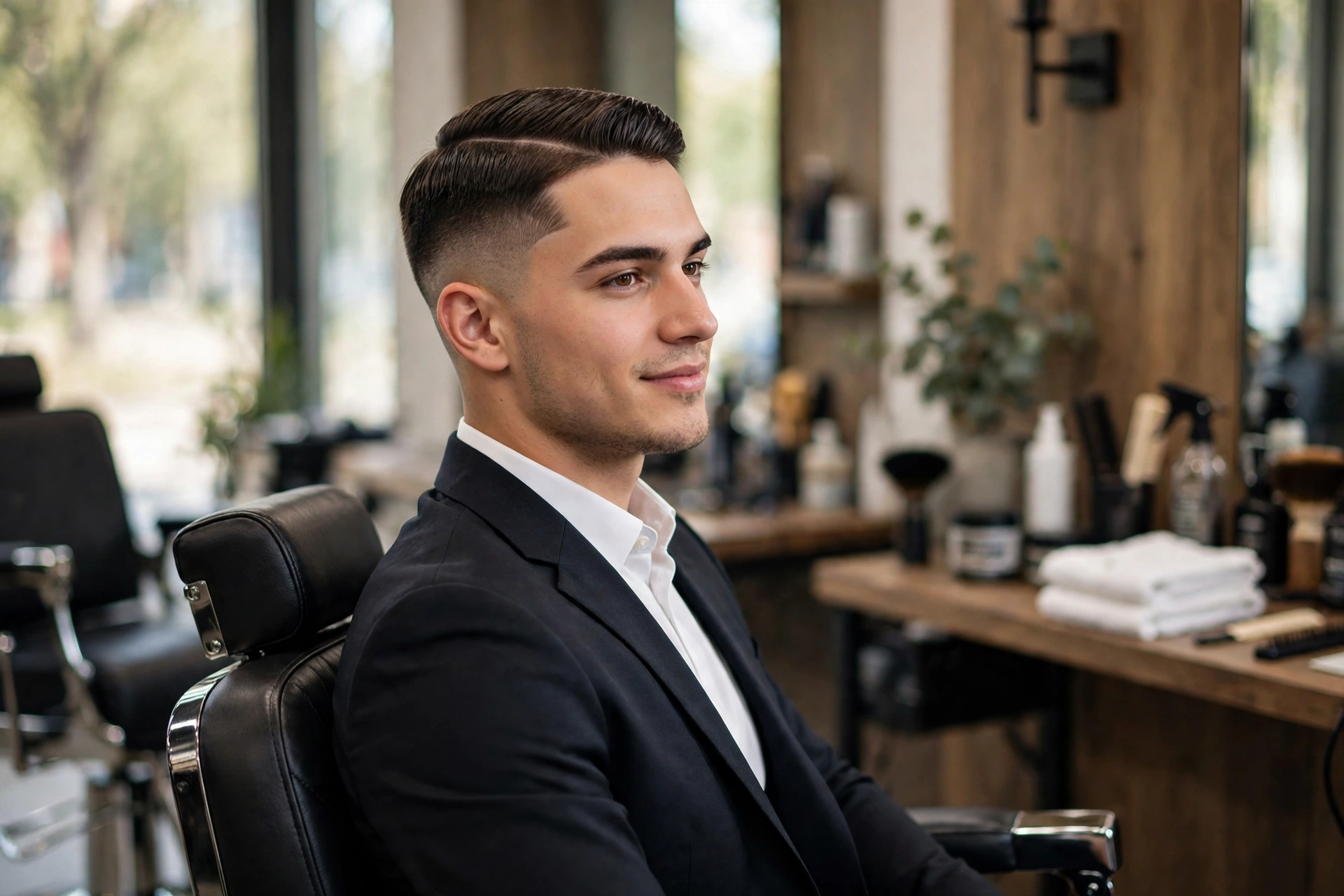
Your haircut will not get you the job. But it can shape the first impression before you say a word. Interviewers notice grooming fast, and a cut that looks clean and intentional tells them you pay attention to detail. A low taper fade job interview cut hits that sweet spot: sharp enough to look polished, quiet enough that nobody talks about your hair instead of your answers.
A low taper fade keeps the hair on the sides mostly intact and shortens it gradually only around the ears and the neckline. The blend is low and soft, so there is no harsh line and no dramatic contrast. That is exactly what you want when the goal is to look put together, not trendy.
Why a Low Taper Fade Works for Interviews
Most interview haircuts fail in one of two ways. They are either too casual — grown out, fuzzy around the ears, no clear shape — or too bold, with a high skin fade, a hard part, or a design that becomes the first thing people notice. A low taper fade avoids both problems.
It reads as classic and controlled. It works in conservative industries like banking, law, and government, and it works just as well in tech, healthcare, sales, and education. It also photographs well on video calls, which matters now that many first-round interviews happen on Zoom or Teams. And because the taper is low, it grows out gracefully. If your interview gets rescheduled by a week, you still look neat.
If you already wear a low taper fade day to day, you may not need a new style at all — just a fresh, tidy version of it. Our guide to the low taper fade for the office covers the same ground for everyday work, and the interview version is simply a slightly neater take on that cut.
5 Interview-Ready Low Taper Fade Styles
1. Classic Low Taper Fade
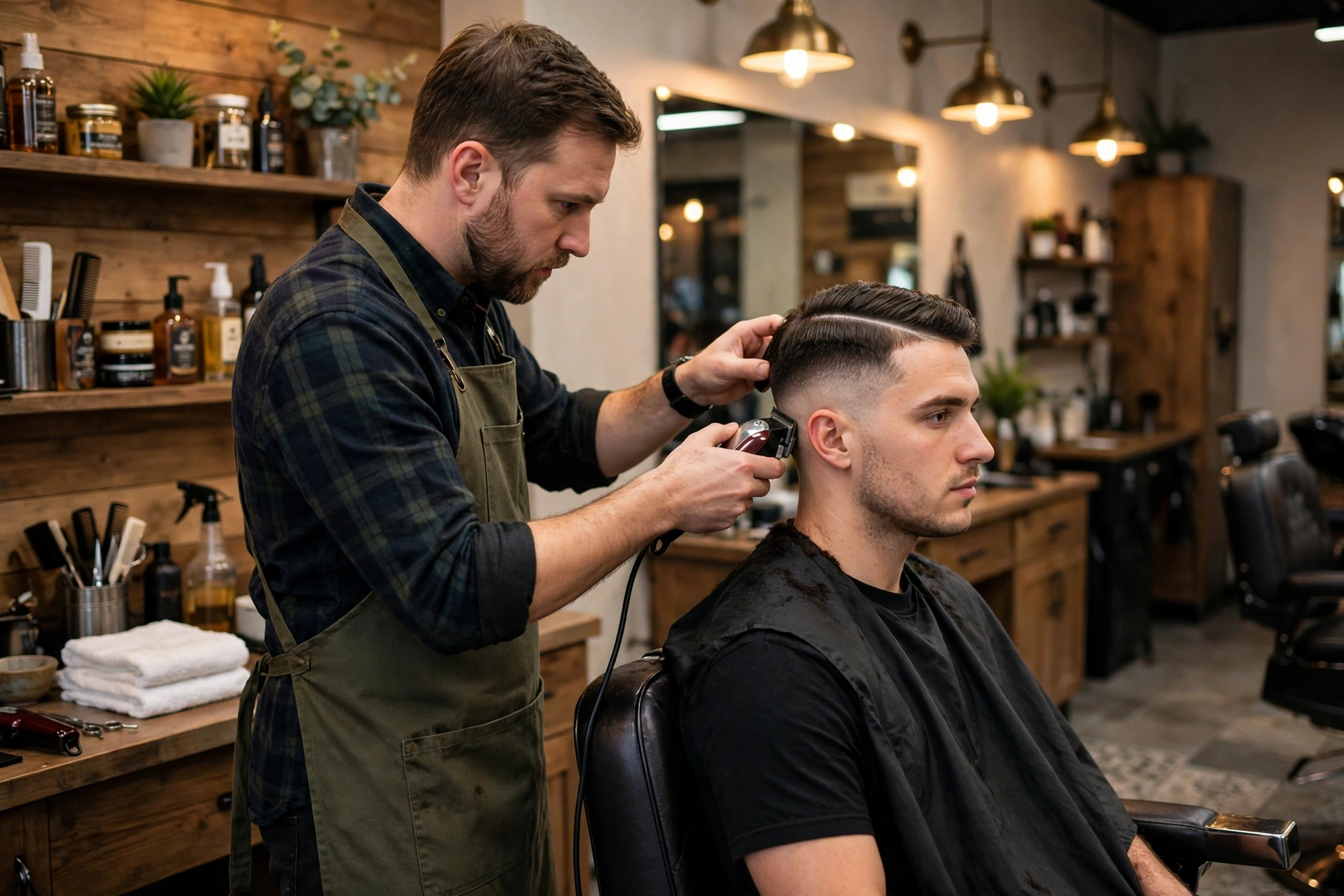
The safest choice. Clean taper around the ears and neckline, natural length on top, nothing complicated. Ask your barber to keep the top long enough to comb neatly and to blend the sides softly with no skin showing. It suits almost every face shape and hair type.
2. Side Part With a Low Taper Fade
The side part adds structure and makes the cut look deliberate. It is polished without being stiff, and it pairs well with a suit. Ask for the part combed in with a comb, not shaved in — a razor part looks sharper than most interview settings need.
3. Comb Over With a Low Taper Fade
A short comb over with a low taper fade is one of the most interview-friendly styles there is. The top is swept to one side, the sides stay tidy, and the whole cut reads as organized. Our comb over with a low taper fade guide explains the length and styling in detail.
4. Crew Cut With a Low Taper Fade
Short, neat, and almost maintenance-free. The top is about an inch long, the sides taper low, and there is nothing to restyle on interview morning. A good pick if you prefer less hair to manage or if you are interviewing in a warm climate.
5. Short Textured Crop With a Low Taper
A little texture on top with a low taper on the sides looks modern without looking edgy. Keep the texture subtle — a light matte product, no heavy spikes — and it works even in fairly formal settings.
What to Avoid Before an Interview
Some styles look great on a night out but pull focus in an interview room. Skip these until after you have the offer: high skin fades with strong contrast; shaved designs, lines, or patterns in the fade; hard parts carved with a razor; faux hawks, mohawks, or heavy spikes; bright or unnatural hair color; anything grown out, fuzzy, or unstyled.
The test is simple: if your hair is the first thing a stranger would notice about you, it is probably too much for an interview.
What to Tell Your Barber
Walk in with a clear sentence, not a vague “just clean it up.” Try this: “Low taper fade, keep it low and clean around the ears and neckline, no skin, and leave enough on top for a side part. I have a job interview, so I want it neat and professional.”
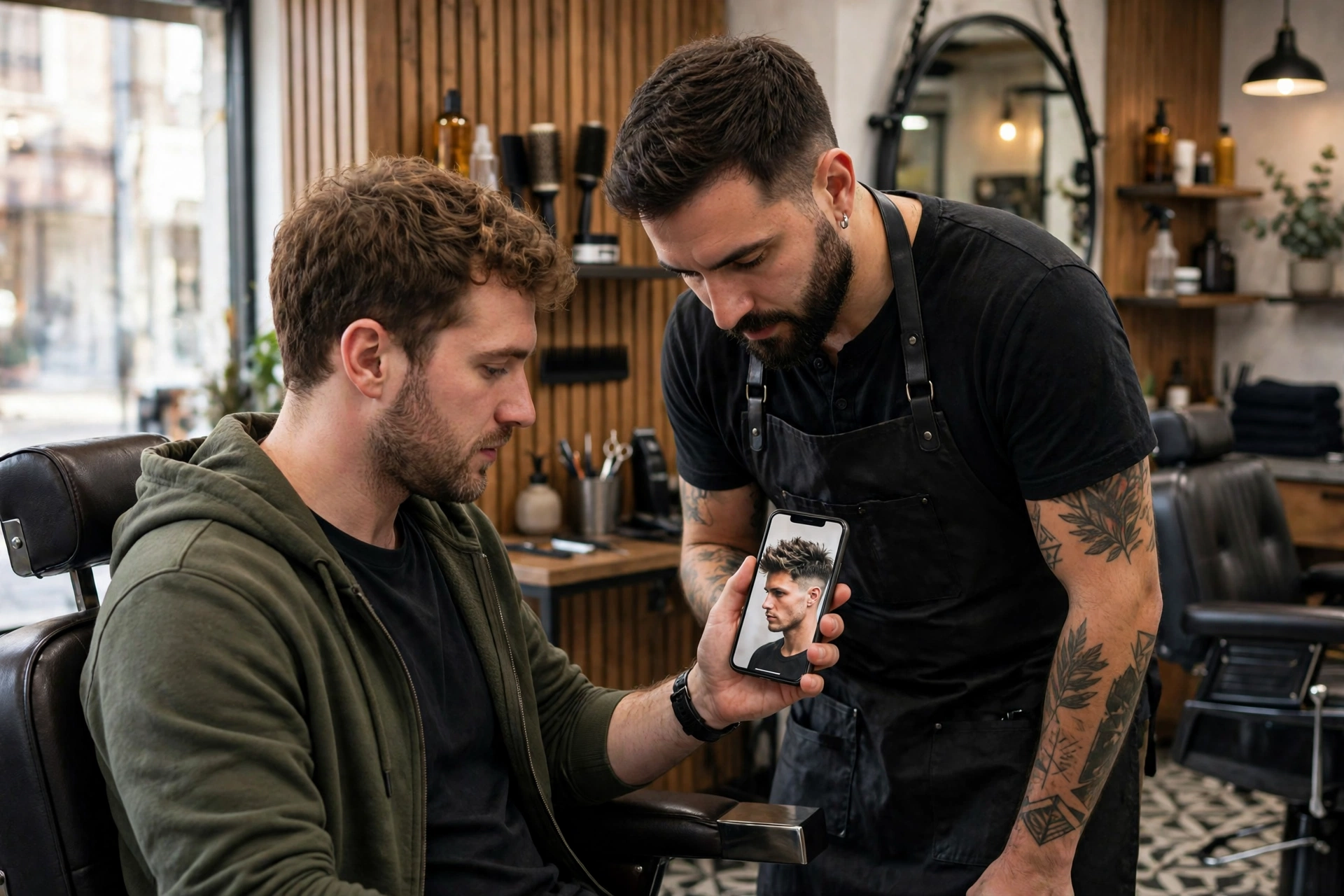
Bring one or two reference photos that show the side view, since that is where the taper lives. If you want the full wording, our exact script for asking your barber for a low taper fade walks through it line by line. And if your barber asks about guard numbers, a #2 or #3 on the sides with a #1 at the very bottom of the taper is a safe interview range — our guard numbers guide explains what each number means.
Also mention the neckline. A natural, tapered neckline looks softer and more professional than a hard blocked line, and it grows out better if the interview moves.
When to Book the Cut
Get the cut two or three days before the interview, not the morning of. A fresh fade can look a little too sharp right after the chair, and the skin around the ears and neck can be slightly red. Two days gives the edges time to settle while the cut still looks fresh.
If the interview is more than a week away, book the cut for two or three days before and do nothing drastic in between. Do not try a new style for the first time right before an interview. If you have never had a low taper fade, get it at least two weeks early so you have time to adjust it if needed.
Interview-Day Styling in 5 Minutes
You do not need a complicated routine on the morning of the interview. Wash your hair the night before or that morning, and let it dry mostly naturally. Use a small amount of matte pomade or styling cream — about a dime-sized amount — and work it through damp hair. Comb the top into your side part or sweep it back neatly. Check the neckline and sideburns in the mirror. If a few hairs have popped out, a quick pass with a trimmer or a dab of product keeps them in line. Step back and check the whole picture: suit, shirt, shoes, hair. Nothing should compete for attention.
Cost and Upkeep
A low taper fade at a US barbershop typically costs around $30 to $55, and $60 to $90 in downtown shops in bigger cities. A tip of 15 to 20 percent is standard in the US. That is a small price for a cut that can quietly support a first impression worth far more.
After the interview, the same cut needs a touch-up every three to four weeks to stay crisp. The low taper grows out softly, so you can stretch it a little longer than a high fade without looking messy.
FAQ
Is a low taper fade professional enough for a job interview?
Yes. It is one of the most interview-safe cuts because it is clean and subtle. Keep the taper low, skip the skin and designs, and pair it with a neat top.
Should I get a skin fade for an interview?
A low skin taper can work in casual or creative industries, but for most interviews a regular low taper with no skin is the safer choice. It reads as more conservative and grows out better.
How far in advance should I get my haircut before an interview?
Two or three days before is ideal. The cut still looks fresh, but the edges have settled and any redness around the ears has faded.
What should I avoid asking for at the barber before an interview?
Avoid high fades, shaved designs, hard parts, and any brand-new style you have never worn before. Stick with a clean, familiar cut and let your answers do the talking.