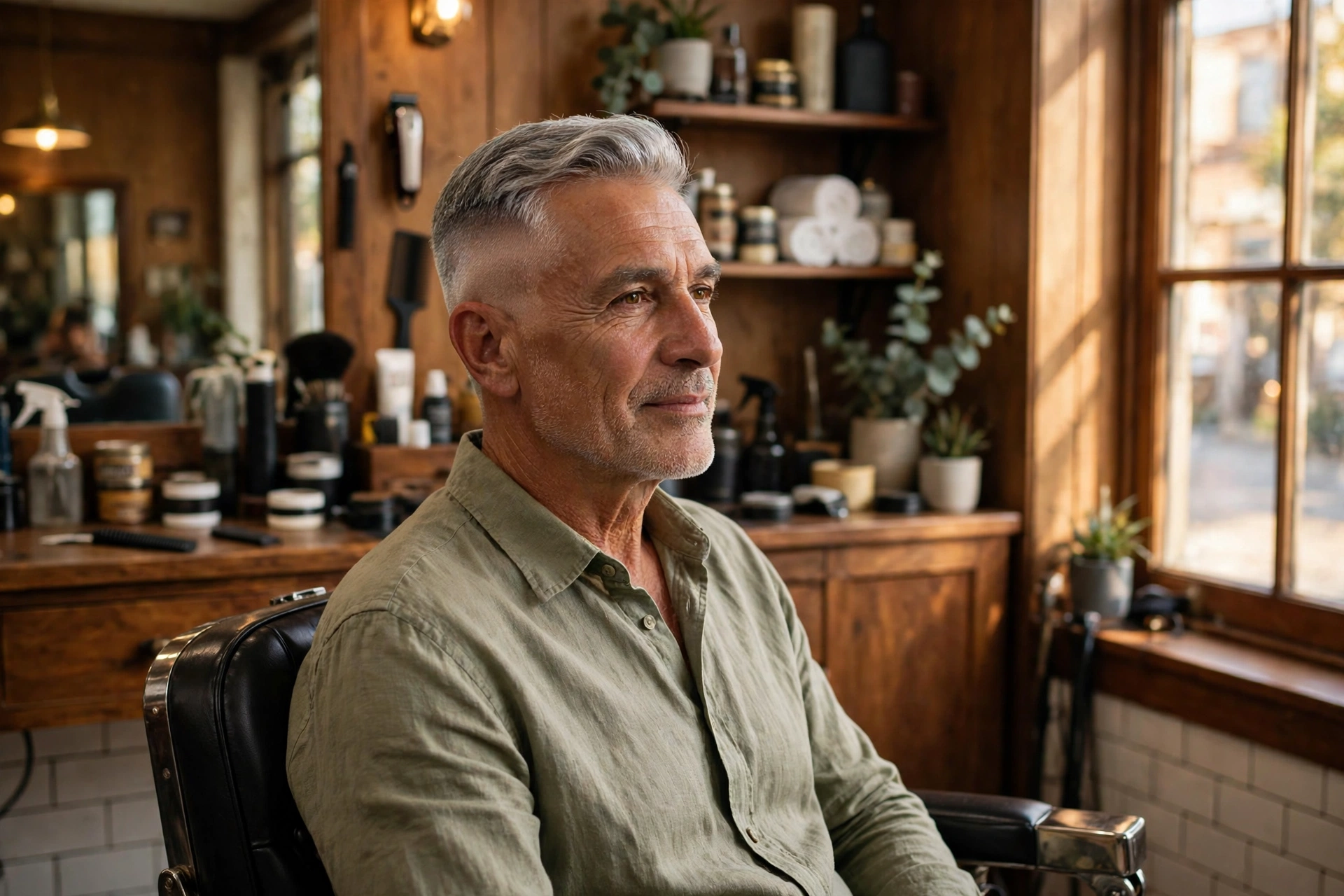
There is no age limit on a good haircut. The low taper fade works just as well at 55 or 65 as it does at 25 — the difference is in the details. A low taper fade older men wear well is not about chasing a young look. It is about clean sides, a natural top, and a cut that works with the hair you have now: grayer, maybe thinner, often coarser than it used to be.
The low taper is a strong choice for exactly that reason. It only shortens the hair around the ears and the neckline, blending gradually upward. There is no harsh line, no dramatic contrast, and no big reveal of scalp. The result looks tidy and intentional without looking like you are trying too hard.
Why the Low Taper Suits Older Men
Hair changes with age, and a good cut changes with it. Gray hair can look wiry and puff out at the sides. Thinning hair shows more contrast when the sides are cut too short. A high fade can expose a thin crown or frame a bald spot like a picture.
The low taper avoids all of that. The blend sits low, just above the ears, and stops before the head starts to curve. It keeps enough weight on the sides to look natural, and it grows out over four to five weeks without looking messy. That forgiving grow-out is a real advantage when you would rather visit the barber every month than every two weeks.
It is also versatile. The same low taper works with a side part, a crew cut, a slick back, or a short textured crop, so you can adjust the top to your hair type and your routine without changing the whole cut.
6 Low Taper Fade Styles for Older Men
1. Classic Side Part With a Low Taper
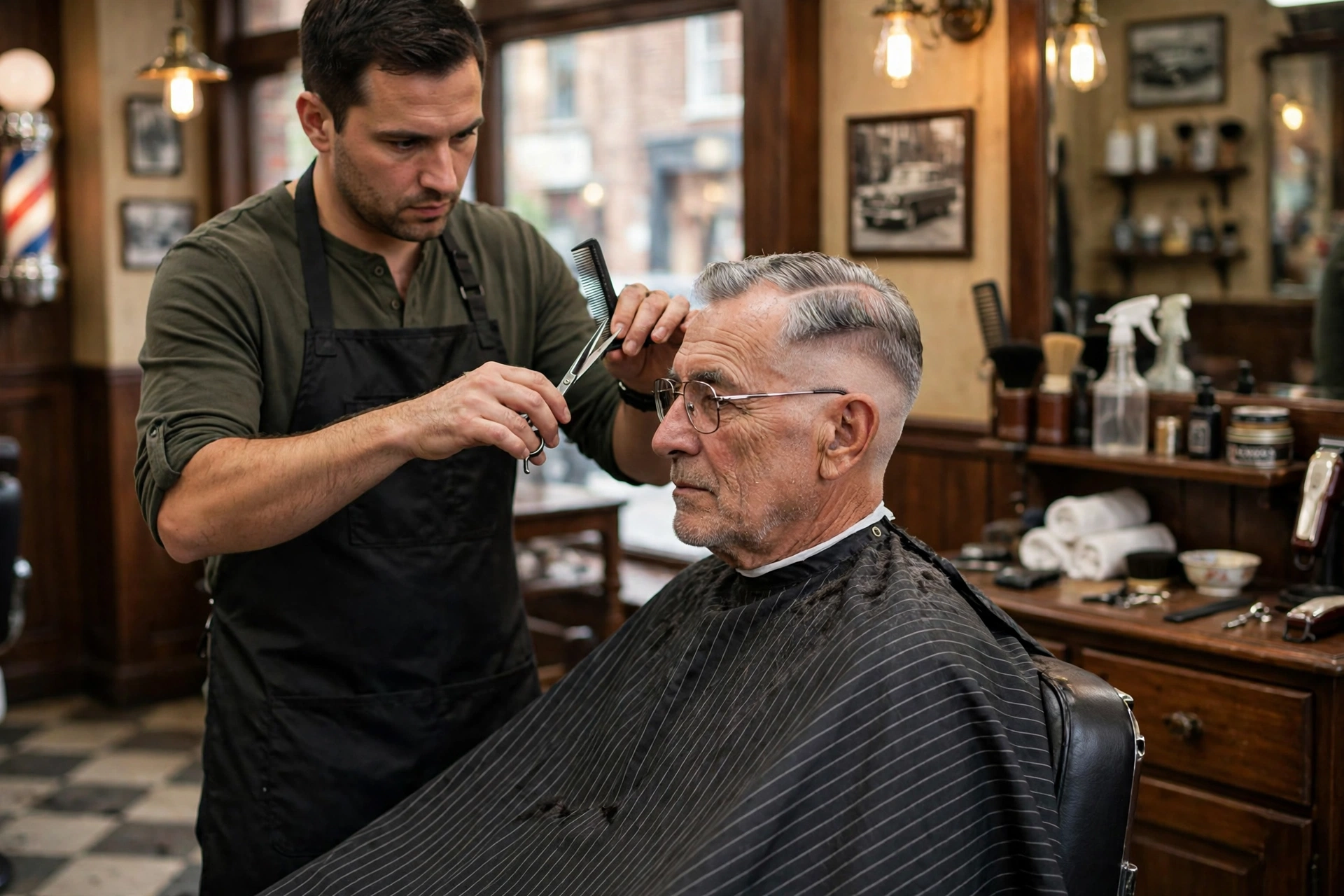
The most reliable option. The top is combed neatly to one side, the taper keeps the edges clean, and nothing looks shaved. It suits weddings, offices, and everyday life equally well, and it is especially flattering with gray hair. Ask for the part combed in, not carved with a razor.
2. Tapered Crew Cut
Short on top, slightly longer at the front, tapered sides. The crew cut is the safest cut for thinning hair because it shrinks the contrast between thin and full areas. Ask for a #2 or #3 on the sides and about an inch on top, blended with scissors.
3. Short Textured Crop
A little choppy texture on top with a low taper on the sides. The texture hides sparse areas well and adds movement, which keeps the cut from looking flat. Ask for point cutting on top and a matte finish — shine makes thin hair look thinner.
4. Slick Back With a Low Taper
If you still have good thickness on top, a slick back with a low taper looks confident and classic. Our slick back with a low taper fade guide covers the length and products in detail. Keep the hold light — a heavy, wet look can feel dated.
5. Buzz Cut With a Low Taper
A plain buzz is practical, but a buzz with a low taper looks deliberate. The gradient around the ears shows a barber shaped it. Ask for a #2 on top with a low taper at the temples and neckline. It is the lowest-maintenance option on this list.
6. Comb Over With a Low Taper
The taper only cleans up around the ears and neckline while the comb over gives the top direction. Thirty seconds with a comb and a touch of cream is all it needs each morning. It is the combination that suits almost every older man.
Working With Gray Hair
Gray hair is not a problem to hide. It is a feature to work with — but it does behave differently. It is often drier and coarser, and it can puff out at the sides between cuts. A few habits help: keep the sides shorter than you think you need, since the taper does this naturally and stops gray hair from flaring out; use a light cream or matte clay instead of heavy gel, because gray hair looks best with a soft, natural finish; use a purple or silver shampoo once a week to keep gray from turning yellow, especially if you spend time in the sun; moisturize with a light leave-in conditioner or a drop of hair oil to tame the wiry texture without weighing the hair down.
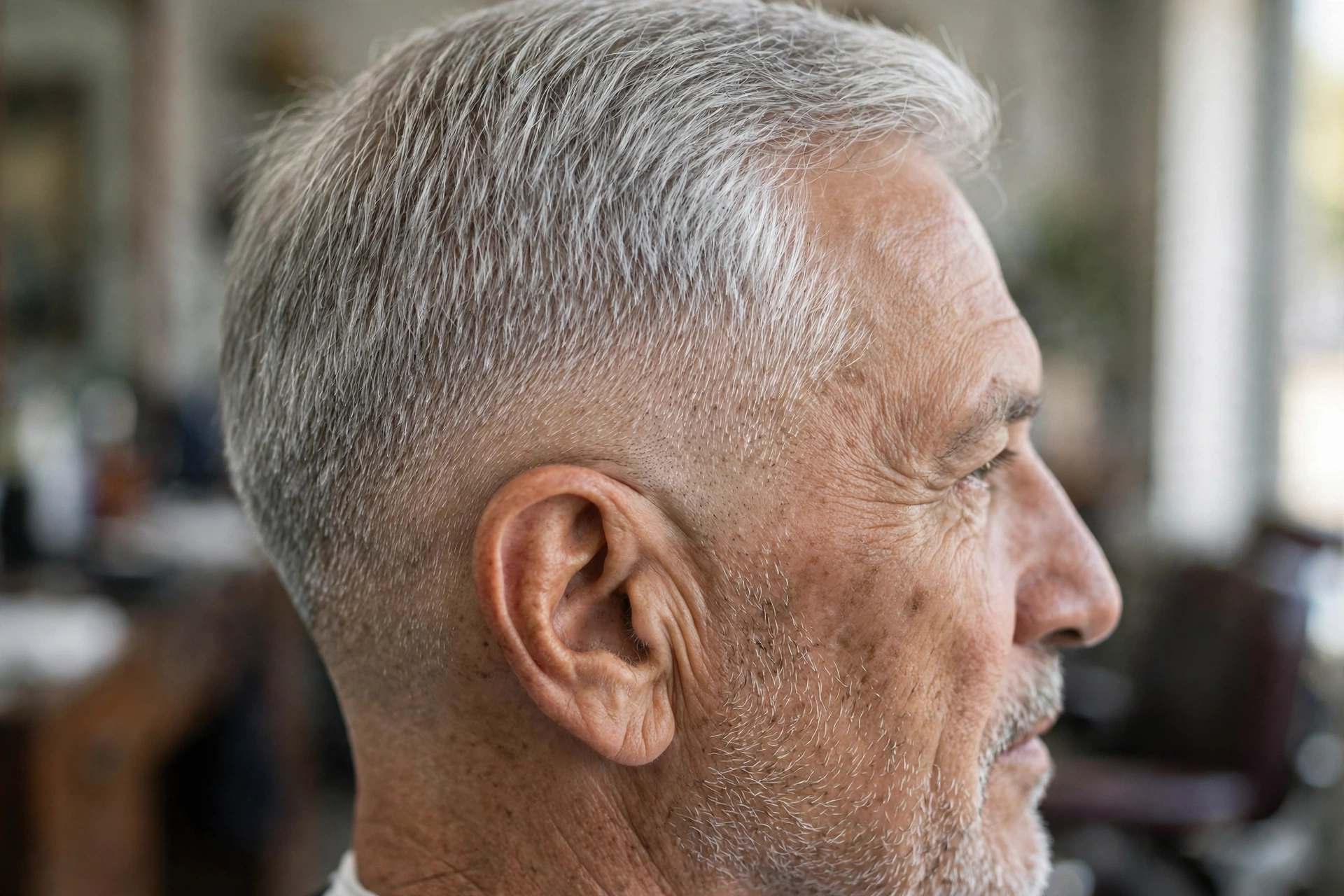
If you color your hair, tell your barber. A taper that blends into dyed hair needs a slightly different approach than one on natural gray, and a good barber will adjust the blend so the color line does not show.
If Your Hair Is Thinning
Shorter is usually better. Long hair on top with thin coverage only makes the thin areas more obvious. A short textured crop, a crew cut, or a buzz with a low taper all make thinning hair look denser by keeping the contrast low.
Ask your barber to check where your crown is thinning before setting the fade height. A fade that ends exactly where a thin patch begins draws the eye straight to it. A low taper that stays below the thin area avoids that problem entirely. Our low taper fade for thin hair guide explains the trade-offs in more depth.
Avoid heavy product and wet-look finishes — they clump thin hair together and expose more scalp. Matte products and a little texture are your friends.
What to Tell Your Barber
Older men often get the same cut they have had for twenty years, even when their hair has changed. It is worth updating the script. Try this: “Low taper fade, soft blend, no hard line. Keep it low around the ears and check where my crown is thinning before you set the height. About an inch on top with some texture, matte finish.”
If you are unsure about guard numbers, a #2 or #3 on the sides is a safe starting point. Our guard numbers guide explains each guard length in plain terms. And if the cut is for work as well as everyday life, the same principles apply as in our low taper fade for the office guide — clean, low, and nothing that demands attention.
Upkeep and Cost
A low taper fade for older men needs a barber visit every three to four weeks to stay sharp, though the soft grow-out means you can stretch it to five weeks without looking messy. A typical US barbershop charges around $30 to $55 for the cut, and $60 to $90 in downtown shops in bigger cities. A tip of 15 to 20 percent is standard.
Between visits, the morning routine is simple: a quick comb-through, a small amount of matte cream, and you are done. That is part of the appeal — a cut that looks good without a daily styling project.
FAQ
Does a low taper fade look good on men over 50?
Yes. It is one of the best fades for older men because it is clean without being severe, grows out gracefully, and works with gray and thinning hair.
Should older men get a high fade or a low taper?
A low taper is usually the better choice. High fades show more scalp, which can highlight thinning areas, and they need more frequent touch-ups. The low taper is softer and more forgiving.
What is the best low taper fade style for thinning hair?
A short textured crop or a tapered crew cut with a low taper. Both keep the contrast low so thin areas stand out less, and the texture adds the look of fullness.
How often should older men get a low taper fade touched up?
Every three to four weeks keeps it looking sharp. Because the taper is low and the blend is soft, you can often go four to five weeks before it starts to look grown out.