
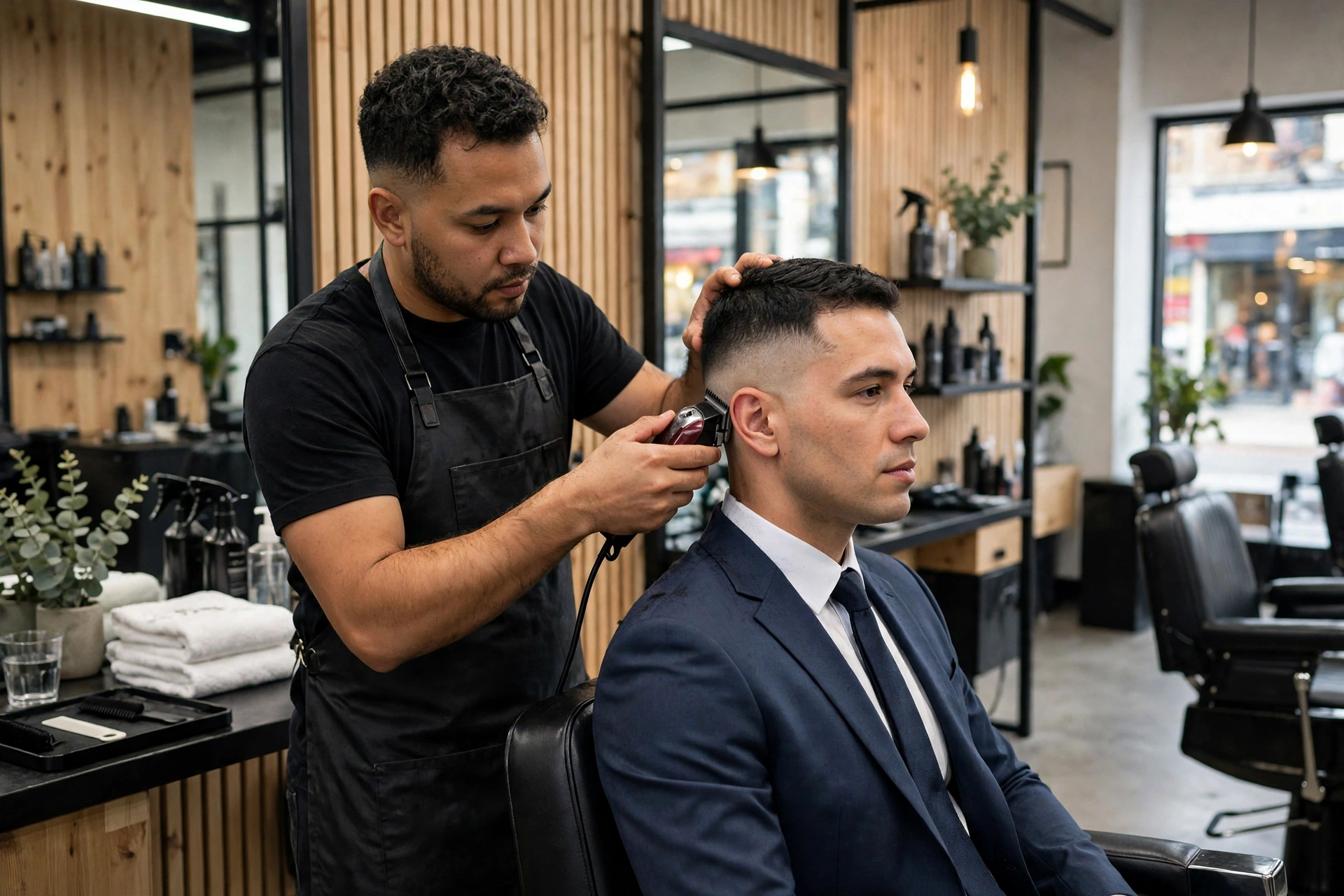
The low taper fade is the rare haircut that works in a boardroom and still looks good on a Saturday night. The fade starts low — just above the ear — so from the front it reads as a clean, traditional haircut, while the neat blend around the ears and neckline gives it a modern, intentional finish. That balance is exactly why so many lawyers, accountants, bankers, and government workers ask for it. The trick is picking the right version for your workplace and keeping it maintained.
Why the Low Taper Fade Works at Work
Most office dress codes do not ban fades. They ban hair that looks messy, extreme, or distracting. A low taper fade avoids all three problems: it keeps the sides short and tidy, it never drops to bare skin the way a skin fade does, and it pairs with a top you can control. A mid or high fade shows more skin and reads as bolder; the low taper keeps the silhouette conservative while still looking current. That is why barbers call it the safest fade for a first-time client who works in a traditional office — it looks professional from every angle, including the front, which is what managers and clients actually see.
The 5 Most Professional Low Taper Fade Styles
1. The side part with a low taper.
The gold standard for office hair. Keep about two to two and a half inches on top, part it cleanly on one side, and let the low taper do the work around the ears. Use a light styling cream or water-based pomade for a natural shine. It suits almost every face shape and every level of formality.
2. The comb over with a low taper.
A modern upgrade to the side part, with a longer top combed to one side. It works for work, for formal events, and for weekends, which makes it the most versatile styled cut on this list. Keep the top around three inches and the blend soft so it never looks severe. Our comb over guide covers the full technique and styling steps.
3. The Ivy League with a low taper.
A short, neat top — about an inch to an inch and a half — with a low taper instead of the traditional high taper. It is preppy, clean, and nearly impossible to mess up in the morning. Ideal if you want a cut that looks the same at 8 a.m. and 6 p.m. with almost no styling.
4. The slick back with a low taper.
For men with enough length on top, a slick back reads confident and polished in client-facing roles. It needs a little more product and a comb, so it suits men who do not mind two minutes of styling. Keep the sides tight and the top controlled — the goal is polished, not greasy.
5. The textured crop with a low taper.
The most modern option here, and the right pick for creative offices, tech companies, and relaxed workplaces. The top stays short and textured, the taper stays low, and the whole cut takes about thirty seconds to style with a matte paste. In a very conservative office, keep the texture soft rather than spiky.

What to Ask Your Barber
Walk in with a clear request and you will walk out with the cut you actually wanted. A good office script sounds like this: “Low taper fade, starting just above the ear, no skin showing. About two inches on top, side part, soft blend.” Add two details that matter for work: ask for a tapered neckline rather than a blocked one — it grows out more naturally between visits — and ask him to keep the lineup soft at the forehead rather than razor-sharp, since a hard edge can look too aggressive in a conservative office. If you have curly hair, tell him that too; our curly hair barber script covers exactly what to say so the top keeps its shape without looking wild.
Dress Codes: What Is Actually Allowed
Most US workplaces fall into three groups. In conservative offices — law firms, banks, finance, government — a low taper fade with a side part, comb over, or Ivy League top is always safe. Avoid skin fades, hard parts, line-ups, and hair designs in these settings. In business-casual offices, you have more room: a textured crop or a quiff with a low taper is fine as long as the top is controlled. In creative or casual workplaces, almost any low taper version works. One rule covers all three: the cut should look deliberate. A fade that has grown out for five weeks reads as neglected in any office, no matter how good it looked on day one.
Styling It in Under 5 Minutes
An office cut has to survive a full workday. Start with clean, towel-dried hair. Work a small amount of product — a pea-sized amount of matte paste for short tops, a light cream or water-based pomade for longer tops — through the hair from front to back. Comb a side part into place or push the top back for a slick back, then leave it alone. Touching your hair all day breaks the style down faster than anything else. If your hair goes flat by afternoon, a quick pass with a comb and a tiny bit of water usually brings it back. Keep a small comb in your desk drawer; it is the cheapest office grooming tool there is.
How Often to Get It Cut
A professional low taper fade needs a trim every three to four weeks. After four weeks the taper starts to lose its shape and the neckline looks soft, which is the first thing people notice in a meeting. Book your next cut before you leave the shop so the rhythm holds — many men book a standing appointment every three weeks on the same day. If a big presentation or client meeting is coming up, get the cut two to three days before it, not the morning of: a fresh fade looks best after a day or two, once the hair has settled. A typical low taper fade in the US costs roughly $30 to $50 depending on your city and the shop, and a standard tip is 15 to 20 percent.
Mistakes That Make It Look Unprofessional
The cut itself rarely fails — the maintenance does. The most common mistakes are waiting too long between cuts, using too much product so the hair looks wet or greasy, picking a skin fade when the office expects conservative, and asking for a hard part or sharp lineup in a traditional workplace. Another quiet one: a blocked neckline that grows out in a harsh line. A tapered neckline grows out softer and buys you an extra few days. If you are not sure whether your version is office-safe, ask your barber directly — he cuts office workers all day and knows what passes in your city.
FAQ
Is a low taper fade professional enough for a corporate office?
Yes. It is one of the most office-safe fades because the fade starts low and never drops to skin. Pair it with a side part, comb over, or Ivy League top for the most conservative look.
What should I tell my barber for an office low taper fade?
Ask for a low taper fade starting just above the ear, no skin showing, about two inches on top, with a soft blend and a tapered neckline. Mention your office dress code if it is strict.
How often should I trim a low taper fade for work?
Every three to four weeks. After four weeks the taper loses its shape and the neckline looks untidy, which shows in meetings and photos.
Can I wear a low taper fade to a job interview?
Yes — it is a strong interview cut. Get it trimmed two to three days before the interview, style it neatly, and keep the top controlled with a light product.