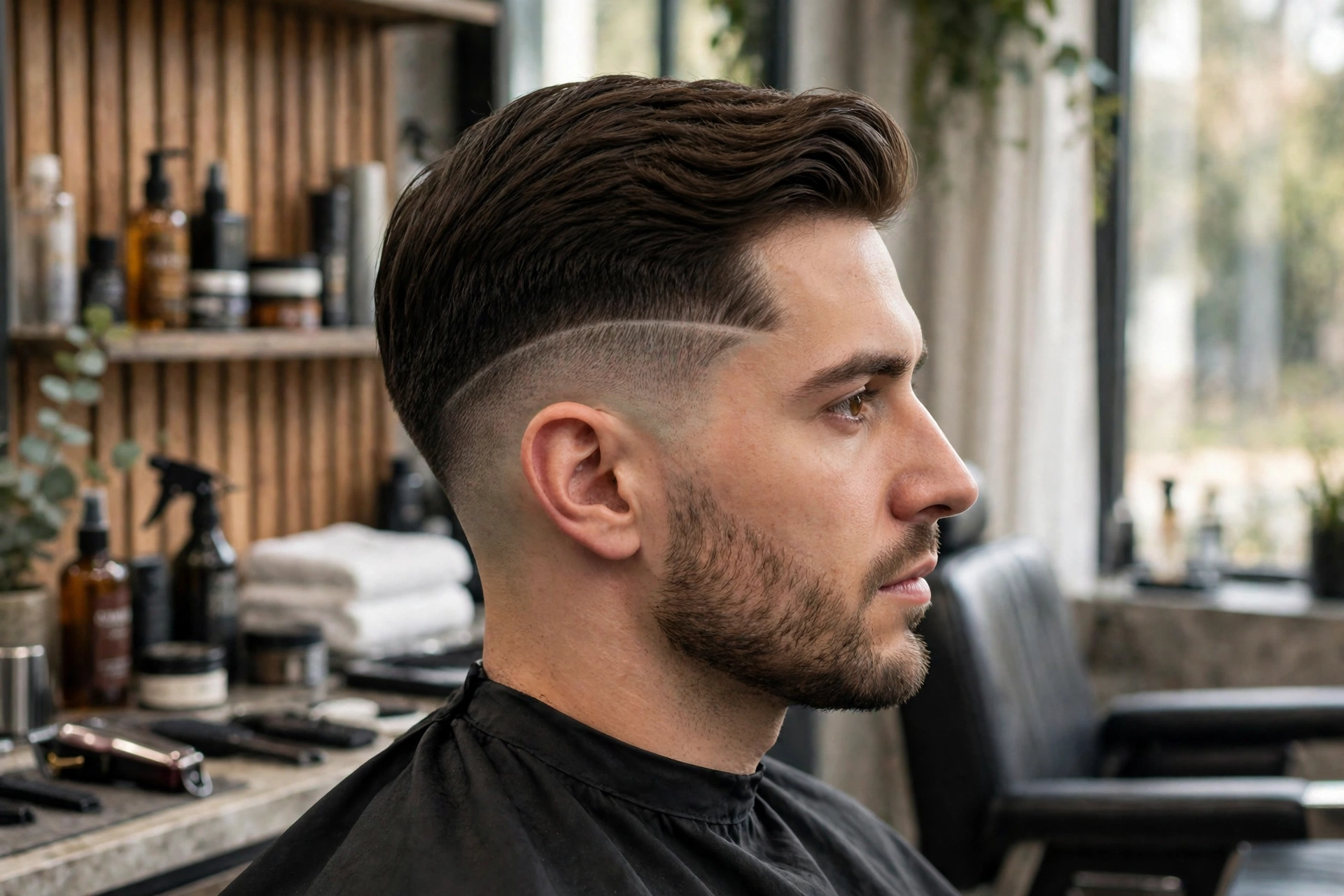
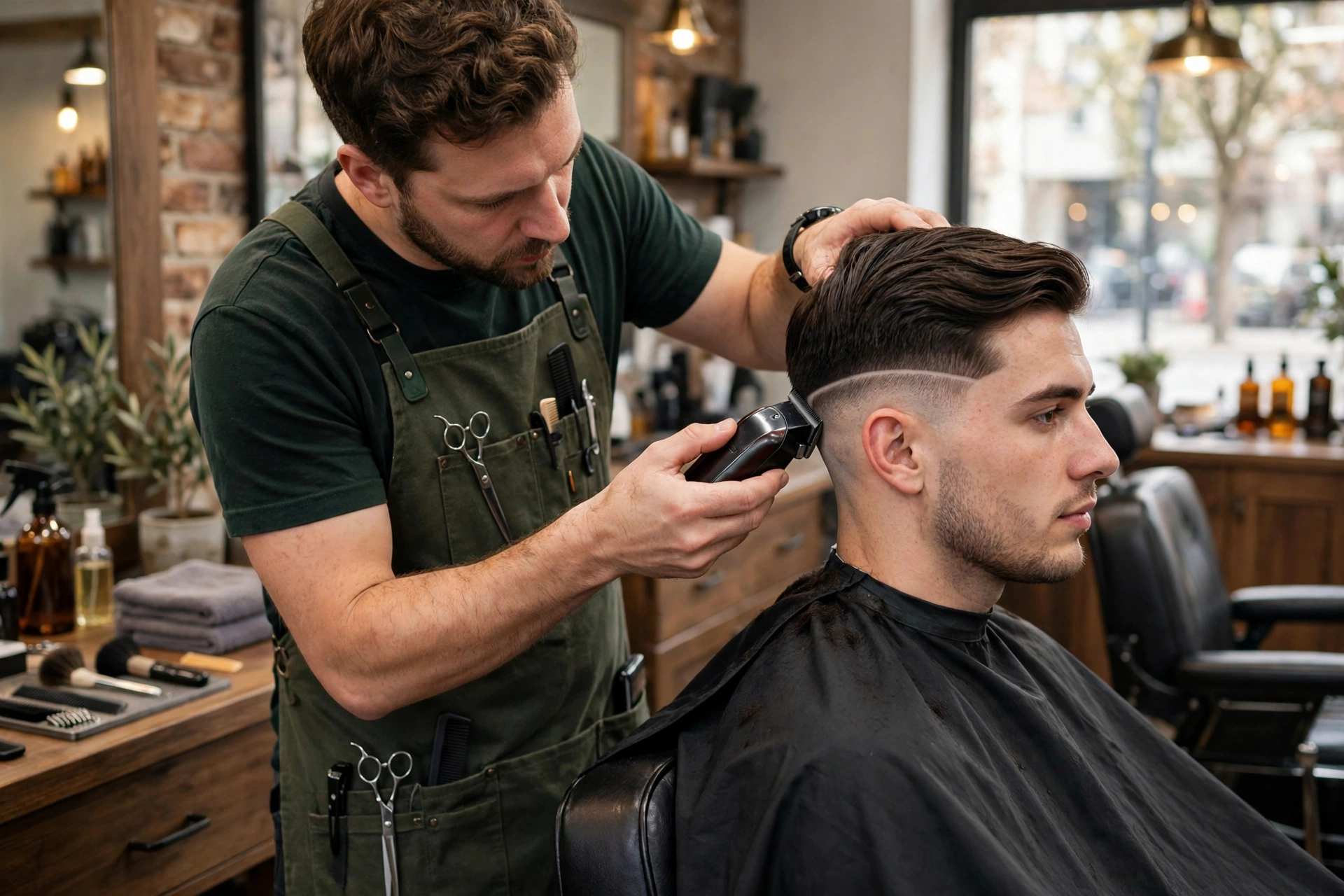
A hard part is a shaved line that runs along your natural part, and it changes a haircut more than its size suggests. On a low taper fade, that one thin line turns a soft, classic cut into something structured and deliberate. The taper keeps the sides clean, the top keeps its length, and the hard part draws the eye exactly where you want it.
This guide explains what a hard part is, how it differs from a natural part, where it should sit, and how much upkeep it really needs. If you like sharp detail but you do not want a high fade, this combination may be your best option.
What Is a Hard Part?
A hard part is a line shaved into the hair with a trimmer or razor, placed where your hair naturally parts. Unlike a natural part, which is just combed into place and can disappear when the wind blows, a hard part stays visible even when your hair moves. It creates a clean separation between the longer top and the shorter side.
The line should be thin and sharp. A wide line looks like a gap in your hair rather than a part, and it is much harder to grow out. A skilled barber finds your natural part first, by combing your hair back and seeing where it separates on its own, then shaves a narrow line along that exact path.
A hard part is not the same as a hair design. Designs are patterns, lines, or shapes shaved into the faded area. A hard part is simpler and more classic: one line, in one place, doing one job well.
Why It Works So Well With a Low Taper Fade
A low taper fade keeps most of the side length intact, because the shortest hair sits low, around the ears and neckline. That means the top has enough weight to hold a part, and the side below the part stays full enough to contrast with the shaved line.
With a higher fade, a hard part can look busy. With a low taper, the cut stays calm everywhere else, so the hard part stands out as a single, confident detail — polished without looking loud.
The combination also suits a range of top styles. A side-swept top, a low taper fade with a comb over, a low taper fade pompadour, and a low taper fade slick back all gain definition from a hard part, because the line marks exactly where the top begins.
Placement: The Detail That Makes or Breaks It
Placement matters more than anything else with a hard part. Too high, and the top looks disconnected from the rest of the cut. Too low, and the line crowds the fade and ruins the shape of the head. Your barber should place the line along your natural part, which usually sits above the temple, curving slightly back toward the crown.
Talk about placement before the clippers start. Ask your barber to show you where your natural part falls, and agree on the line before it is shaved. Once a hard part is cut, it takes one to two weeks to soften and several weeks to fully grow out, so this is not a detail to leave to chance.
What to Ask Your Barber
Use clear, simple language. Here is a script you can adapt:
“I want a low taper fade around the ears and neckline, with about two to three inches on top, swept to the side. Please add a thin hard part along my natural part — keep it narrow, not wide. I want the top styled with a side sweep, not slicked flat.”
Add one more sentence about the finish: “Please keep the neckline tapered, not blocked.” A tapered neckline grows out more smoothly, which matters when the hard part already gives the cut a strong shape. If you are new to barber scripts, our guide on how to ask your barber for a low taper fade walks through each part of the request in plain language.
Bring a photo, and point to the part line specifically. Many photos show a hard part from the front, where it looks subtle. Ask your barber to look at a side-angle photo too, so you both agree on how bold the line should read from the side.
Styling a Hard Part at Home
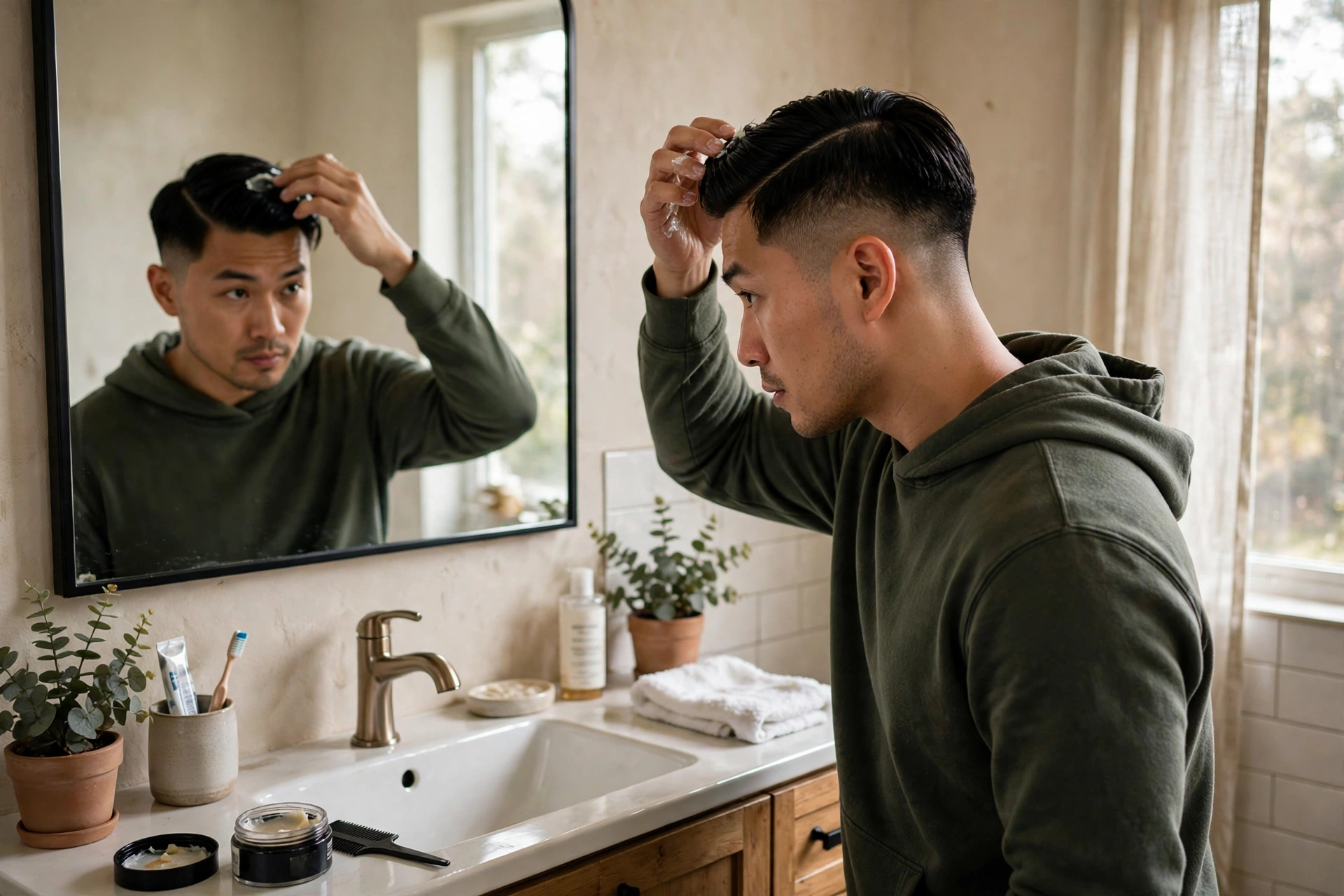
A hard part only looks good if you style your hair in the same direction every day. Part your hair along the shaved line while it is damp, then blow dry it into place. Aim the dryer in the direction you want the hair to fall, and use a vent brush or comb to lift the roots slightly. That lift is what gives the top its shape instead of letting it lie flat.
For product, a water-based pomade gives shine and strong hold for a classic slicked side part, while a matte clay or paste gives a more natural finish for a textured side sweep. Start with a pea-sized amount; too much makes the part look greasy.
Upkeep: How Often Does It Need Recutting?
A hard part needs more upkeep than a natural part. The shaved line starts to soften after about a week, as short hairs grow back into it. After two weeks, it often looks like a faint groove rather than a sharp line. Most men who keep a hard part book a touch-up every one to two weeks, or combine the touch-up with their regular fade appointment every two to three weeks.
That schedule affects cost: a typical full cut in the US runs roughly $25 to $50, and a quick touch-up usually costs less. Ask about a touch-up price at your first appointment.
You can tidy a hard part at home with a detail trimmer, but be cautious. Follow the existing line exactly, and do not widen it. If the line has already grown in unevenly, let your barber reset it rather than trying to fix it yourself.
Who Should Skip a Hard Part?
Skip it if you like to change your parting from day to day, since a shaved line locks you into one direction, or if you cannot commit to regular touch-ups: a half-grown hard part looks messier than no hard part at all. Very curly or coily hair also suits a softer, combed part better, since curls do not part in a straight line.
Hard Part vs Natural Part: A Quick Comparison
A natural part costs nothing extra, grows out invisibly, and lets you switch sides. A hard part holds its shape all day and gives the cut clear structure, but needs regular touch-ups. Try a hard part once, see how it grows out over two weeks, and then decide whether the upkeep is worth it for you.
Final Verdict
A low taper fade with a hard part is a refined, classic combination: soft where it should be soft, and sharp exactly where it counts. Get the placement right, keep the line thin, style in the same direction every day, and plan a touch-up every week or two. Done that way, it is one of the cleanest looks a low taper fade can offer.
FAQ
How long does a hard part last?
A hard part stays sharp for about one week and softens noticeably by week two. Most men get it touched up every one to two weeks, or at their next fade appointment.
Does a hard part work with curly hair?
It can, but it is less predictable. Loose waves and straight hair hold a straight shaved line best. Very tight curls may pull across the line, so ask your barber whether a softer part would suit your texture better.
Can I change my part after getting a hard part?
Not right away. The shaved line stays visible until the hair grows back, usually over two to four weeks. If you like switching sides, a natural part is a better choice.
Is a hard part professional enough for work?
Yes, in most workplaces. A thin, classic hard part reads as groomed and traditional. Keep the line narrow and the top neatly styled, and it fits office, formal, and wedding settings well.