
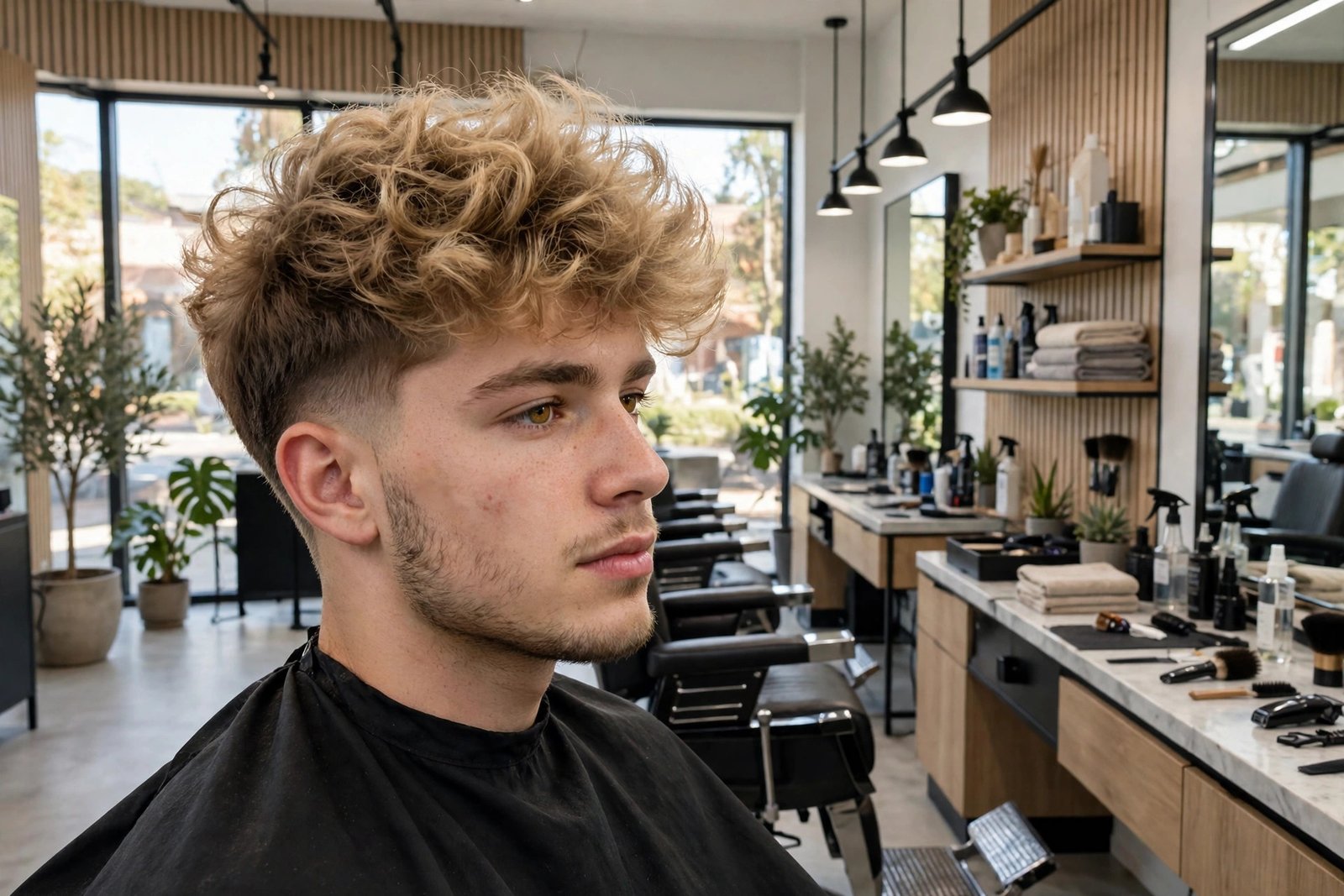
Fluffy hair is a gift and a problem at the same time. It has natural volume that other men pay for with products and blow-drying, but without the right cut it can puff out at the sides, lose its shape by midday, and look more like a cloud than a hairstyle. A low taper fade solves the biggest part of that problem: it cleans up the temples, sideburns, and neckline, so the volume stays where it belongs, on top.
The trick is balance. Take the taper too high and the top looks disconnected. Leave too much weight at the edges and the fluff spreads sideways. This guide explains the cut to ask for, the products that keep volume without weight, and a daily routine that holds up.
What “Fluffy Hair” Actually Means
Fluffy hair is soft, light, and full of air. It lifts easily at the roots and tends to expand outward rather than lie flat. It can be straight, wavy, or loosely curly, and it is often thick, though fine hair can look fluffy too when it is cut with layers.
The main challenges are familiar to anyone who has it: frizz in humidity, flatness after a hat or a helmet, and a shape that grows outward instead of downward. A good cut works with these tendencies instead of fighting them. That is why the low taper is such a good match: it removes bulk exactly where fluffy hair misbehaves, at the sides, while keeping the fullness on top that makes the texture attractive.
The Cut: What to Ask Your Barber
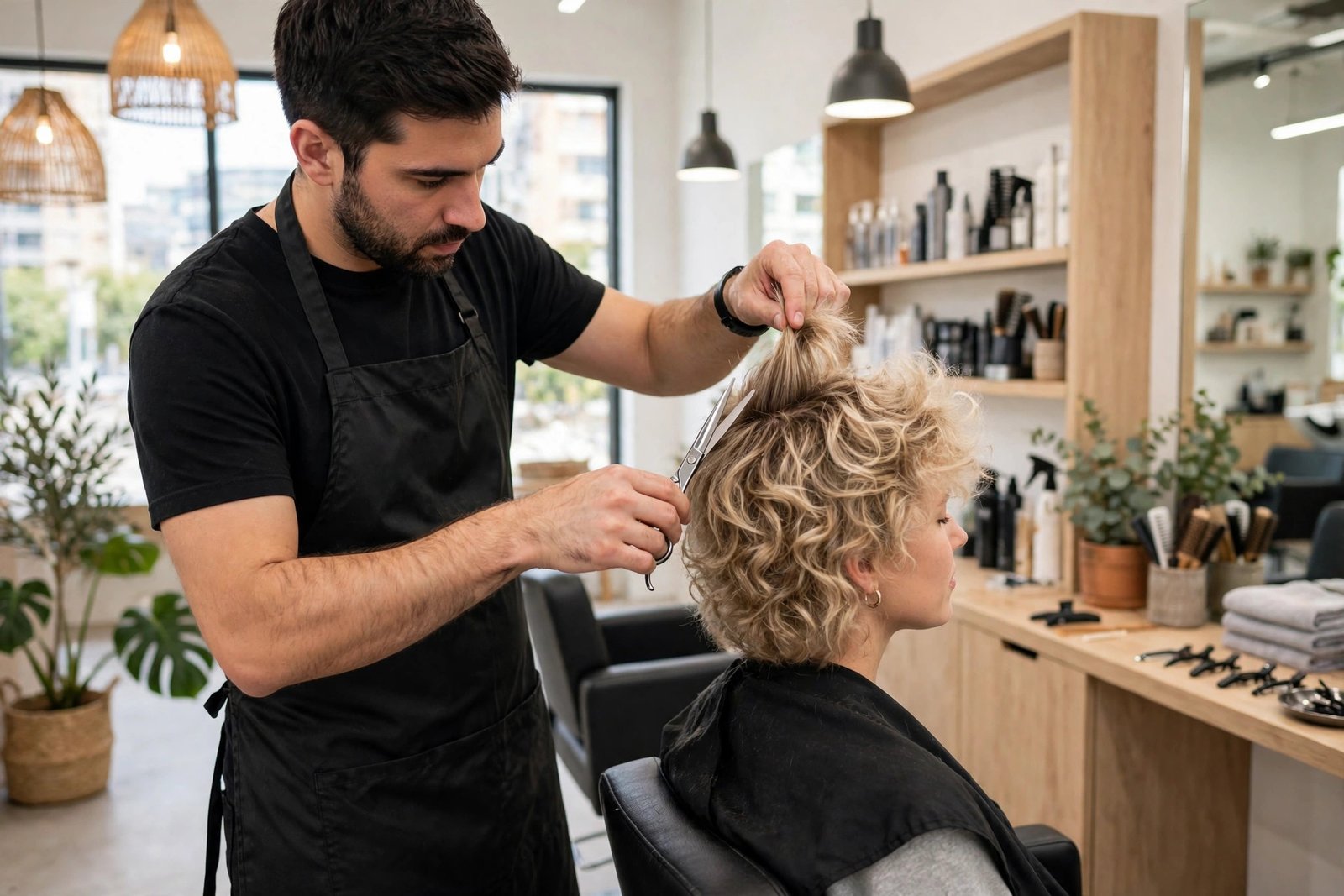
The conversation matters more than usual with fluffy hair, because the wrong thinning can ruin it. Ask for: “A low taper fade starting just above the ear, with the top left two to three inches long, cut with point-cutting or texturizing scissors so it sits soft, not blunt. Keep the blend gradual, no hard line between the sides and the top.”
A few points to agree on before the clippers come out: Top length. Two to three inches is the sweet spot for most men. Shorter than that, and you lose the fluff; longer, and the weight starts pulling the shape sideways. Thinning, done lightly. A little thinning on top controls bulk, but too much removes the density that makes fluffy hair look full. Ask your barber to thin lightly and check the result as they go. The blend zone. The area just above the taper is where fluffy cuts fail. If the transition is too abrupt, the top looks like it is sitting on a separate haircut. A gradual blend keeps the whole cut connected. The neckline. A tapered neckline grows out more gracefully than a blocked one, which matters because fluffy hair shows uneven growth quickly at the back.
Men with very thick hair face the same bulk problem from a different angle; our guide to a low taper fade for thick hair covers how barbers manage extra density. The same principle applies here: remove weight strategically, never all at once.
Products: Light Is Everything
Heavy products are the number one enemy of fluffy hair. Thick waxes, strong gels, and heavy pomades flatten the texture and make the hair look greasy by afternoon. What you want is hold without weight: Sea salt spray: adds grip and texture to damp hair, making it easier to shape. Spray lightly; too much dries the hair out. Lightweight mousse: boosts volume at the roots without stiffness. A golf-ball-sized amount worked through damp hair is plenty. Matte clay or paste, used sparingly: a pea-sized amount gives hold and definition. Rub it fully between your palms first so it spreads evenly instead of clumping. Light conditioner: fluffy hair still needs moisture, but a heavy conditioner flattens it. Use a lightweight formula and rinse thoroughly. Texture powder: a small shake at the roots adds lift on days when the hair falls flat. Use it only on dry hair.
What to skip: heavy oils, thick waxes, and strong-hold gels. If a product makes your hair feel coated or look shiny, it is too heavy for this texture.
Daily Styling Routine (About Five Minutes)
1. Start with damp hair. Wash or mist until evenly damp, then blot gently with a towel. Do not rub hard, which creates frizz.
2. Apply one light product. Sea salt spray or mousse is enough for most days. Work it through with your fingers, lifting at the roots.
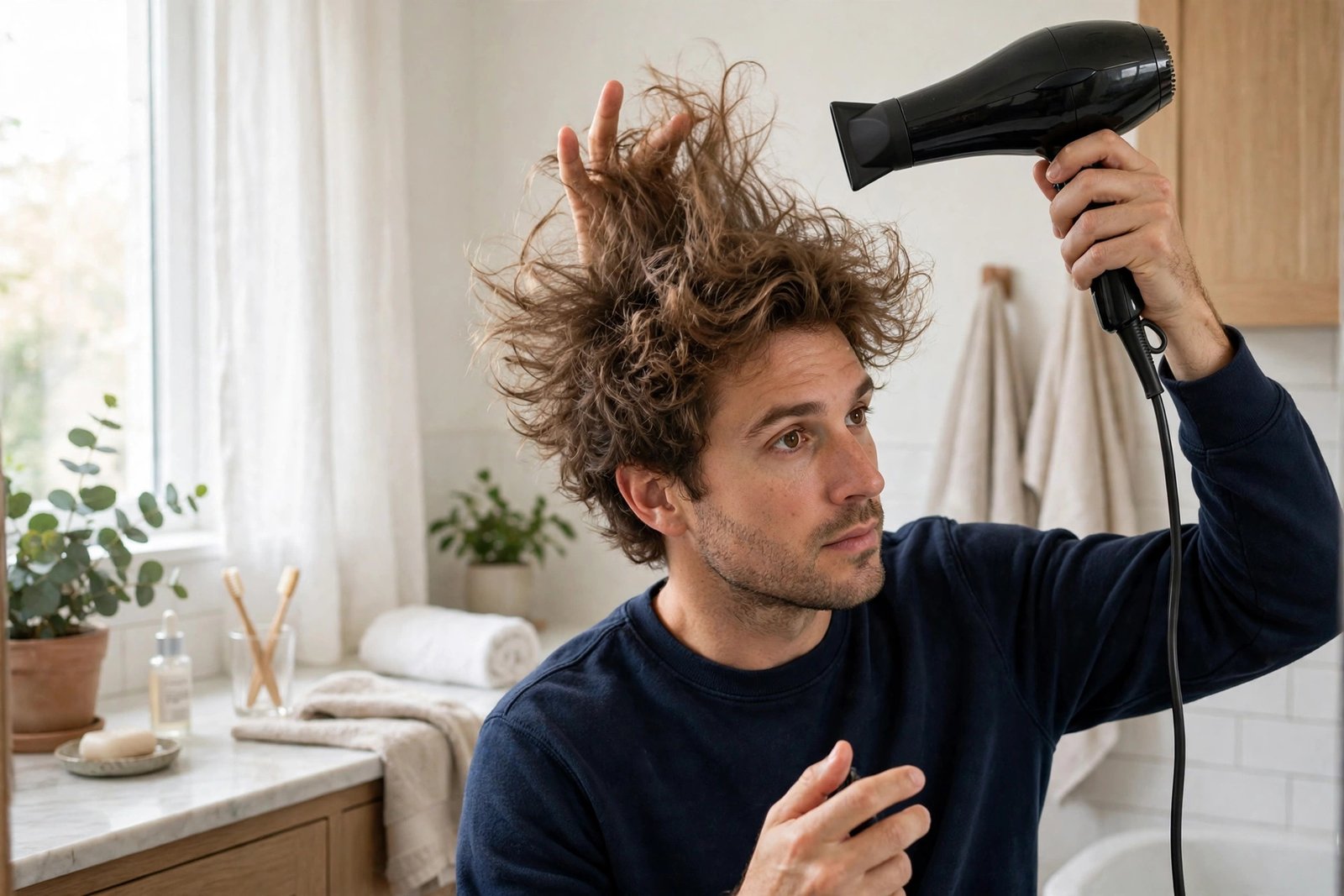
3. Blow-dry for volume. Dry on low or medium heat, lifting sections upward with your fingers or a vent brush. Direct the airflow upward at the roots, then let the ends fall naturally. A cool shot at the end locks the shape in.
4. Finish with a tiny amount of matte product. Warm it between your palms, then pinch a few sections on top to create separation and movement. Stop before the hair feels stiff.
5. Leave it alone. Touching fluffy hair through the day breaks the shape and adds frizz. Style it once, then let it be.
Controlling Fluff by Hair Type
Fluffy hair is not one thing, and the routine shifts slightly with your natural texture: Fluffy straight hair. This type falls flat fastest. Blow-drying against the growth direction, then redirecting forward, builds lift that lasts. Texture powder at the roots helps on flat days. A low taper fade for straight hair shows how barbers shape this texture. Fluffy wavy hair. Waves add natural movement, so you need less product. Scrunch instead of brushing, and let the hair air-dry when you have time. A diffuser on low heat keeps the wave pattern without frizz. See our low taper fade for wavy hair guide for the full routine. Fluffy curly hair. Curls need moisture first, volume second. A leave-in conditioner plus a light curl cream, air-dried or diffused, keeps the texture defined instead of puffy. Avoid brushing dry curls, which turns definition into frizz.
How Often to Get It Cut
The taper shows growth within two to three weeks, so book a cleanup on that schedule to keep the edges sharp. The top can go four to six weeks between trims, since fluffy hair hides a little growth well. If the sides start to puff out wider than the top, you have waited too long; that mushroom outline is the sign to book the next visit.
This rhythm matches the general advice on how often to get a low taper fade touched up: short, regular cleanups beat one big correction every two months.
Mistakes That Flatten or Puff Up Fluffy Hair
Over-thinning the top. Too much thinning removes the density that makes fluffy hair look full, leaving it wispy and hard to style. Using heavy products. One thick wax can undo a good cut for the whole day. Brushing dry hair. Brushing breaks up the natural texture and creates frizz. Use fingers or a wide-tooth comb on damp hair instead. Skipping the blow-dry. Air-drying is fine sometimes, but for maximum controlled volume, a quick blow-dry makes a visible difference. Taking the taper too high. A mid or high fade removes the weight that anchors the top and makes the fluffy section look disconnected.
FAQ
Q: Is a low taper fade good for fluffy hair?
A: Yes. It is one of the best matches for this texture, because it removes bulk at the sides while keeping the volume on top that makes fluffy hair attractive.
Q: How do I keep fluffy hair from looking messy?
A: The cut does most of the work: a gradual blend, light thinning, and a clean taper. After that, one lightweight product and a quick blow-dry each morning keep the shape controlled.
Q: Should I use gel on fluffy hair?
A: Usually no. Most gels are too heavy and flatten the texture. A sea salt spray, light mousse, or matte clay gives hold without the weight.
Q: How long should the top be for a fluffy low taper fade?
A: Two to three inches works for most men. Shorter loses the fluff, longer pulls the shape sideways and needs more styling time.