
Last updated: October 23, 2026
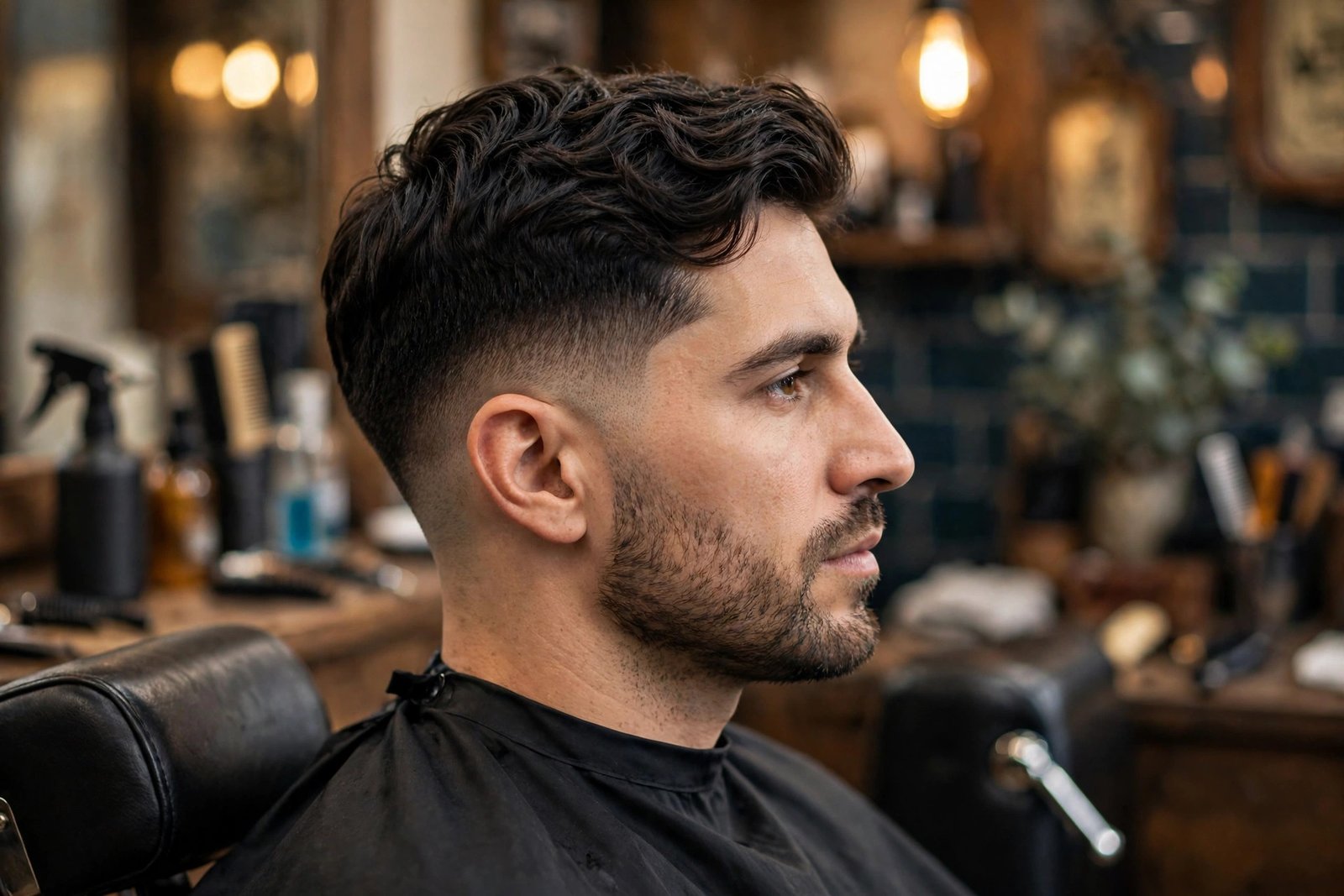
Thick hair is a gift — until your haircut puffs out like a helmet. If your hair is dense and heavy, the low taper fade can be your best friend or your worst enemy, and it all comes down to one thing: bulk control. Get it right, and thick hair holds a low taper fade better than almost any other hair type.
This guide covers why the cut works for thick hair, the exact words to use with your barber, the de-bulking techniques that make it work, and how to style it at home.
Key Takeaways
- Thick hair suits a low taper fade — but the bulk on top must be reduced, or the cut looks unbalanced.
- Ask for de-bulking: point cutting, slide cutting, or thinning shears on top.
- Keep 2–3 inches on top, #1 to #2 guards on the sides, blended low around the ears.
- Matte clay or paste + a blow dryer gives the best control for thick hair.
- Full recut every 3–4 weeks; a taper touch-up every 2–3 weeks keeps it sharp.
Why Thick Hair Loves a Low Taper Fade
A low taper fade keeps the shortest part of the cut low — around the sideburns, ears, and neckline — and blends upward gradually. For thick hair, that is exactly what you want. Dense hair grows outward from the sides, so a cut that removes weight at the perimeter stops the dreaded “puff-out” effect.
Thick hair also holds shape: where fine hair falls flat, dense hair keeps the silhouette your barber carved, so the cut looks intentional longer between visits.
The one risk is contrast: faded sides next to a heavy top can look unbalanced. The fix is called de-bulking, explained below. If your hair sits between straight and wavy, our low taper fade for wavy hair guide has extra styling ideas.
What to Ask Your Barber: The Exact Script
Walk in with these words ready:
“I want a low taper fade that stays around the ears and the neckline — don’t take it high. Take the sides down with a #1 or #2 guard and blend it up into the top. On top, keep about 2 to 3 inches, but remove the bulk with point cutting or thinning shears so it sits flat instead of puffing out. Textured finish, not spiky.”
Why each part matters:
- “Don’t take it high” — a high fade on thick hair exposes a sharp line of density above the blend, the classic mushroom look.
- “#1 or #2 guard” — the sweet spot for the sides (see our guard numbers explained guide if the numbers are new to you).
- “Remove the bulk” — the most important line. Many barbers skip it unless you ask.
Bring a reference photo too — one from the front, one from the side. Thick-haired results look different from fine-haired ones, so pick photos of guys with hair like yours.
De-Bulking Explained: What Your Barber Should Do
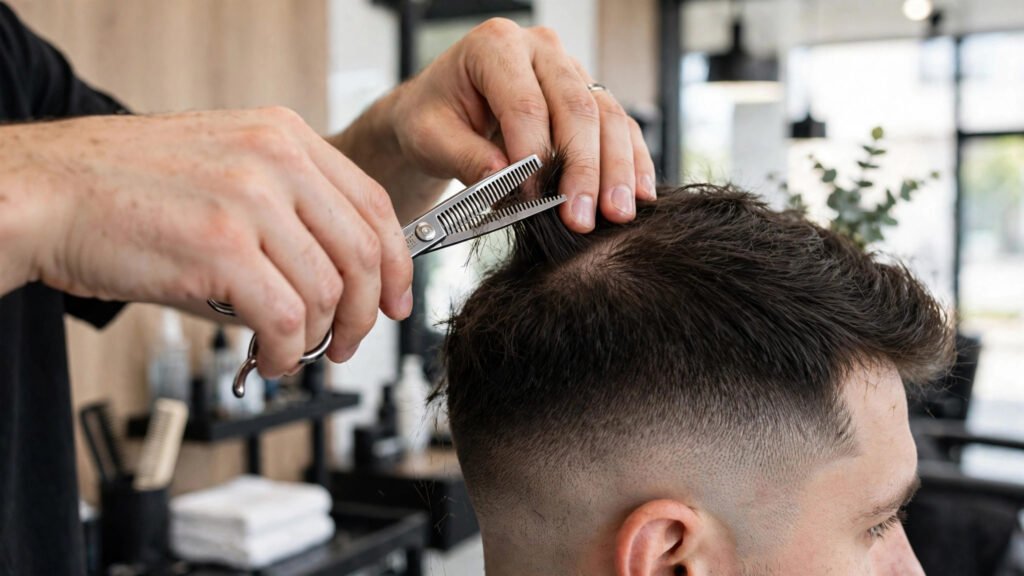
De-bulking (also called weight removal or texturizing) is how a barber takes density out of thick hair without making it shorter. Three common methods:
1. Point cutting
The barber snips vertically into the ends instead of cutting straight across, softening them so thick hair lies naturally.
2. Slide cutting
The shears glide through the mid-lengths while slightly open, removing weight from inside the cut — ideal for thick, straight hair (see our low taper fade for straight hair guide).
3. Thinning shears
Toothed shears that remove roughly 20–30% of density per pass, used on interior layers so the surface still looks full.
You do not need to name a method — just say “please take the weight out of the top.” A good barber picks the right tool. If yours looks unsure, that tells you something: look for a barber who cuts thick hair regularly.
Styling Thick Hair With a Low Taper Fade
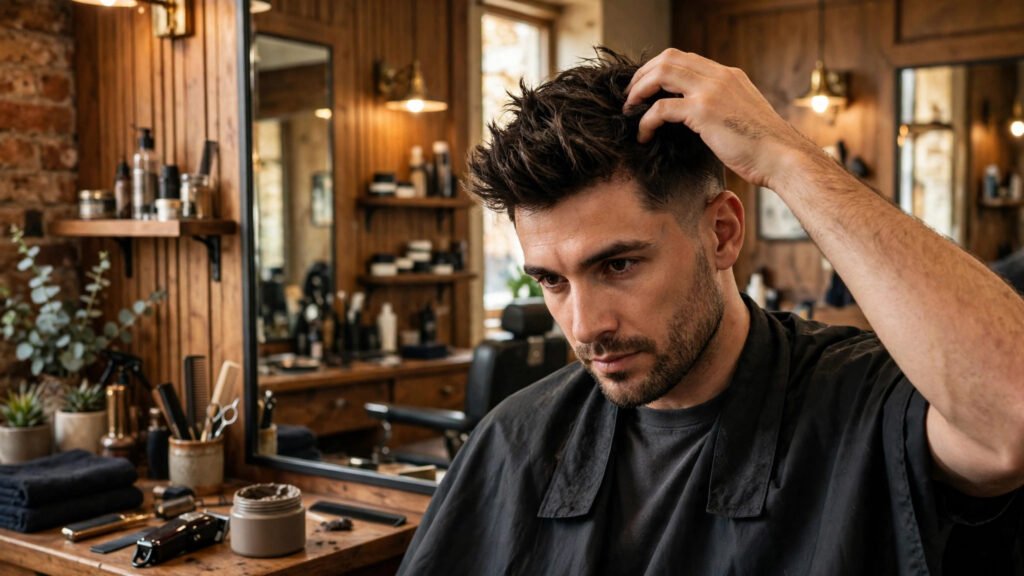
Thick hair needs a little heat and the right product. The routine takes about five minutes:
- Start with damp hair. Towel-dry after your shower — not dripping, not dry.
- Apply a pre-styler. A light leave-in cream or sea salt spray helps heavy hair move and gives the product something to grip.
- Blow-dry with direction. Use your fingers and push the hair the way you want it to sit — heat trains thick hair to lie flat.
- Warm up a pea-sized amount of matte clay or paste. Rub it between your palms until it nearly disappears, then work it through the top from roots to ends.
- Shape with your fingers. For texture, pinch small sections. For a neater look, sweep it to the side or back.
Best products: matte clay or paste with medium-to-strong hold. Skip heavy oil-based pomades (greasy by noon) and crunchy gels. For coily textures, pair this routine with our low taper fade for coily hair tips.
Upkeep: How Often to Come Back
Thick hair grows out of a taper faster than it looks like it does — the bulk returns before the length does. Plan on:
- Full cut every 3–4 weeks to re-shape the top and re-debulk.
- Taper touch-up every 2–3 weeks (optional) — many US shops offer this quick service for about $15–$25.
- At home: a light trim of the neckline with clippers can buy you a few extra days, but leave the blending to your barber.
A full low taper fade in the US typically costs $35–$60 depending on your city, and the standard tip is 15–20%. These are approximate ranges — ask your shop for exact pricing.
Mistakes to Avoid With Thick Hair
- Cutting the top too short. Very short thick hair sticks straight out. Keep at least two inches on top.
- Skipping the de-bulk. Without it, you get the helmet: heavy top, thin-looking sides.
- Going high on the sides. A high fade exposes the full density line above the blend. Keep it low.
- Too much product. Start with a pea-sized amount; thick hair needs less than you think.
- Air-drying every day. Thick hair air-dries into whatever shape it wants. A two-minute blow dry keeps you in charge.
FAQ
Will a low taper fade work if my hair is very thick and coarse?
Yes — dense hair holds the shape well. Just ask your barber to remove bulk from the top with point cutting or thinning shears.
What guard should my barber use on the sides?
#1 to #2 on the sides, blended up into the top. You can go shorter for more contrast, but keep the fade low.
How long should I keep the top?
Two to three inches. Shorter, and thick hair sticks out; longer, and it needs serious de-bulking.
Can I style it without a blow dryer?
Yes — apply matte clay to damp hair and shape with your fingers. The blow dryer just gives more control and a neater finish.
Final Verdict
The low taper fade and thick hair are a natural match — the taper controls the sides while the density gives the top real presence. Just remember the golden rule: always de-bulk. Say it at the start of the appointment, and you will walk out with a cut that looks sharp for weeks instead of days.