

Going gray is not giving up on your hair. It is a change of direction — and the right haircut makes all the difference between silver that looks intentional and silver that looks accidental. The best haircuts for gray hair women share one thing: they give the silver movement, shape, and personality instead of letting it sit stiffly around the face.
Gray hair behaves differently from the hair you had before. It is often drier, coarser, and more unruly, and the cut that worked five years ago can suddenly look flat or heavy. A strategic cut fixes that. It can also make the growing-out phase — the awkward months between dyed hair and full silver — look completely on purpose.
Why Gray Hair Needs a Different Cut
Silver strands catch the light differently, and they show shape more honestly than dyed hair does. A blunt, heavy cut can make gray hair look like a helmet. A cut with movement — layers, texture, a soft edge — lets the silver look alive.
The other issue is the transition. Most women do not go gray overnight. The roots come in silver while the lengths are still colored, and the line between the two is obvious. The right cut blurs that line. Layers and texture mix the silver in with the older color so the grow-out reads as dimension, not as roots you forgot to touch up.
6 Haircuts That Make Gray Hair Look Modern
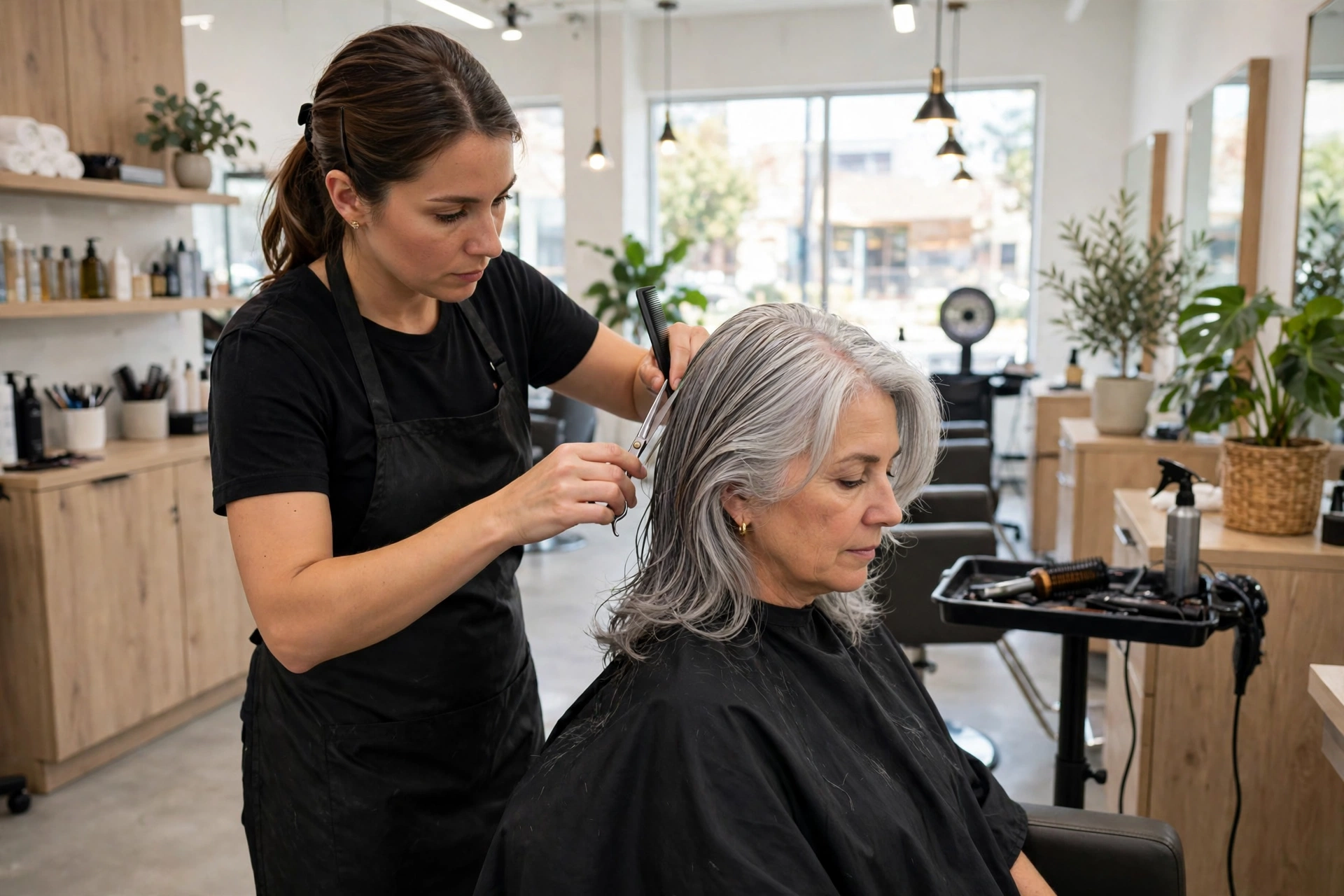
1. Soft, Wispy Bob
A bob that ends around the chin or jaw with soft, wispy ends brings movement and lightness to gray hair. It frames the face without feeling severe, and it is easy to style with a round brush or a quick blow-dry. A good first step if you are going shorter for the first time.
2. Textured Pixie
The fastest route to full silver. A textured pixie cuts off most of the old color in one appointment, so the harsh line between dyed hair and silver roots disappears almost overnight. The choppy layers keep it modern and edgy, and it suits women of all ages. If you are ready for a clean slate, this is it. Our guide to growing out a pixie cut also helps if you ever want to grow it back out again.
3. Choppy Lob
A long bob with choppy layers is the most forgiving option for the transition. The layers break up the line where gray meets dye, and the length gives you styling options — wear it straight, wavy, or tucked behind one ear. It works at almost every stage of going gray.
4. Modern Shag With Curtain Bangs
The shag is the master of disguise during a grow-out. Choppy layers and texture let the new silver mix naturally with the older colored pieces, creating a multi-dimensional look. Curtain bangs soften the forehead and draw attention to the face instead of the roots.
5. Long Layers With Face-Framing Pieces
If you want to keep your length, long layers are the answer. Ask for layers that start around the cheekbones or jaw so the grays around your hairline act like built-in highlights — almost a natural money piece. The layers remove weight so the hair moves instead of lying flat.
6. Blunt Bob With Soft Ends
A blunt bob can look striking on silver hair when the ends are softened slightly. The sharp shape makes the silver look deliberate and polished, and it is one of the lowest-maintenance options. Keep the length at the chin or just below for the most flattering result.
Blending vs Growing Out: Two Paths to Silver
You have two choices, and the right haircut depends on which one you pick.
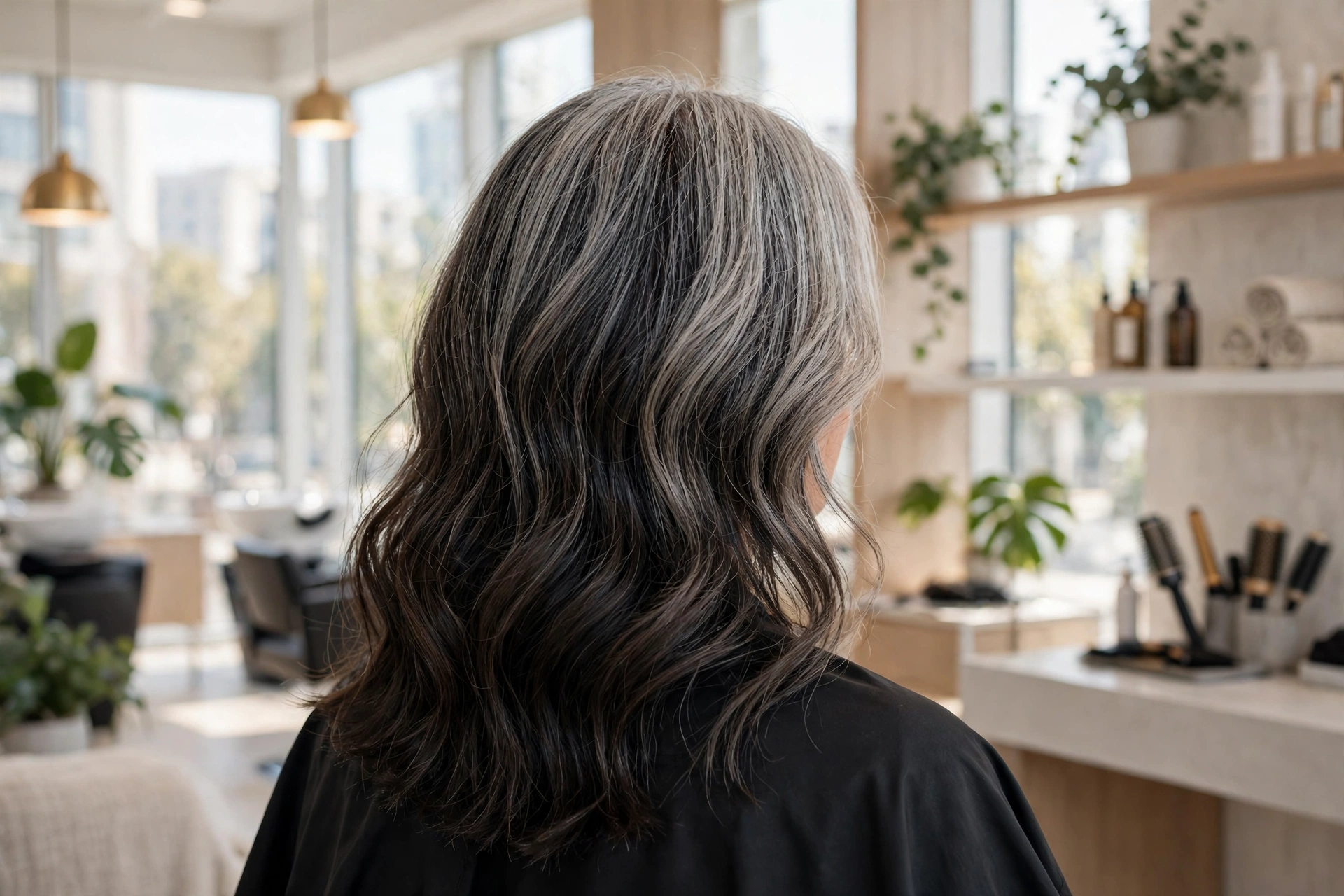
Blending means working with a colorist to soften the contrast while your gray grows in. Baby lights — very fine, delicate highlights that pick up your natural silver — break up the line of demarcation between colored hair and roots. Lowlights add depth and create a salt-and-pepper effect without covering the gray. Blending is the best way to transition at any length, and it works especially well with a lob, a shag, or long layers.
Growing out cold turkey means stopping color completely and letting the silver take over. It is cheaper and simpler, but the line is sharper for a while. The right cut matters more here: a pixie removes the line fastest, while a shag or a layered bob hides it best if you want to keep length. Hair grows about half an inch per month, so a full transition takes around six months for a short pixie and up to two years for shoulder-length hair. Regular trims keep the shape intentional while you wait — our guide to how often women should trim their hair explains the timing.
If you are still deciding between keeping some length or going short, our medium-length haircuts for women guide compares the options. And if you are over 50 and going gray at the same time, the styles in our haircuts for women over 50 guide pair well with silver hair.
Gray Hair Care: Keeping Silver Bright and Soft
Gray hair needs more moisture than pigmented hair, and it can turn yellow from sun, heat, and product buildup. A few habits keep it looking its best: use a purple or silver shampoo once a week to neutralize yellow tones, but do not overdo it — too much can leave a lavender tint; deep-condition once a week, since gray hair is drier by nature and a hydrating mask keeps it soft instead of wiry; use a heat protectant before blow-drying or flat-ironing, because gray hair is more fragile and shows heat damage faster; protect it from the sun with a hat or a UV-protectant spray in summer, since sun is one of the main causes of yellowing; trim every eight to ten weeks, because gray hair shows split ends more clearly and a fresh trim keeps the shape sharp.
What to Ask Your Stylist
Walk in with a clear plan, not just “I want to go gray.” Try this: “I am growing out my natural gray. I want a cut that blends the line while it grows in — soft layers, some texture around the face, and a shape I can grow out without it looking messy. Can we talk about blending options too?”
Ask about gray blending if you want a softer transition, and ask how often you will need trims to keep the shape. If you are growing out bangs at the same time, our growing out bangs guide covers that awkward phase too.
FAQ
What is the best haircut for women going gray?
It depends on your length and how fast you want the transition. A textured pixie is fastest, a choppy lob or modern shag hides the grow-out best at medium length, and long layers with face-framing pieces work if you want to keep your length.
How long does it take to grow out gray hair?
Hair grows about half an inch per month. A full transition takes around six months for a short pixie and up to two years for shoulder-length hair. Regular trims and blending treatments make the wait look intentional.
Should I use purple shampoo on gray hair?
Yes, once a week is usually enough. Purple shampoo neutralizes yellow tones and keeps silver looking bright. Using it too often can leave a lavender tint, so alternate with a regular moisturizing shampoo.
Does gray hair need different products?
Yes. Gray hair is drier and coarser, so it benefits from a weekly deep conditioner, a leave-in moisturizer, and a heat protectant. Avoid heavy products that build up and dull the silver.