
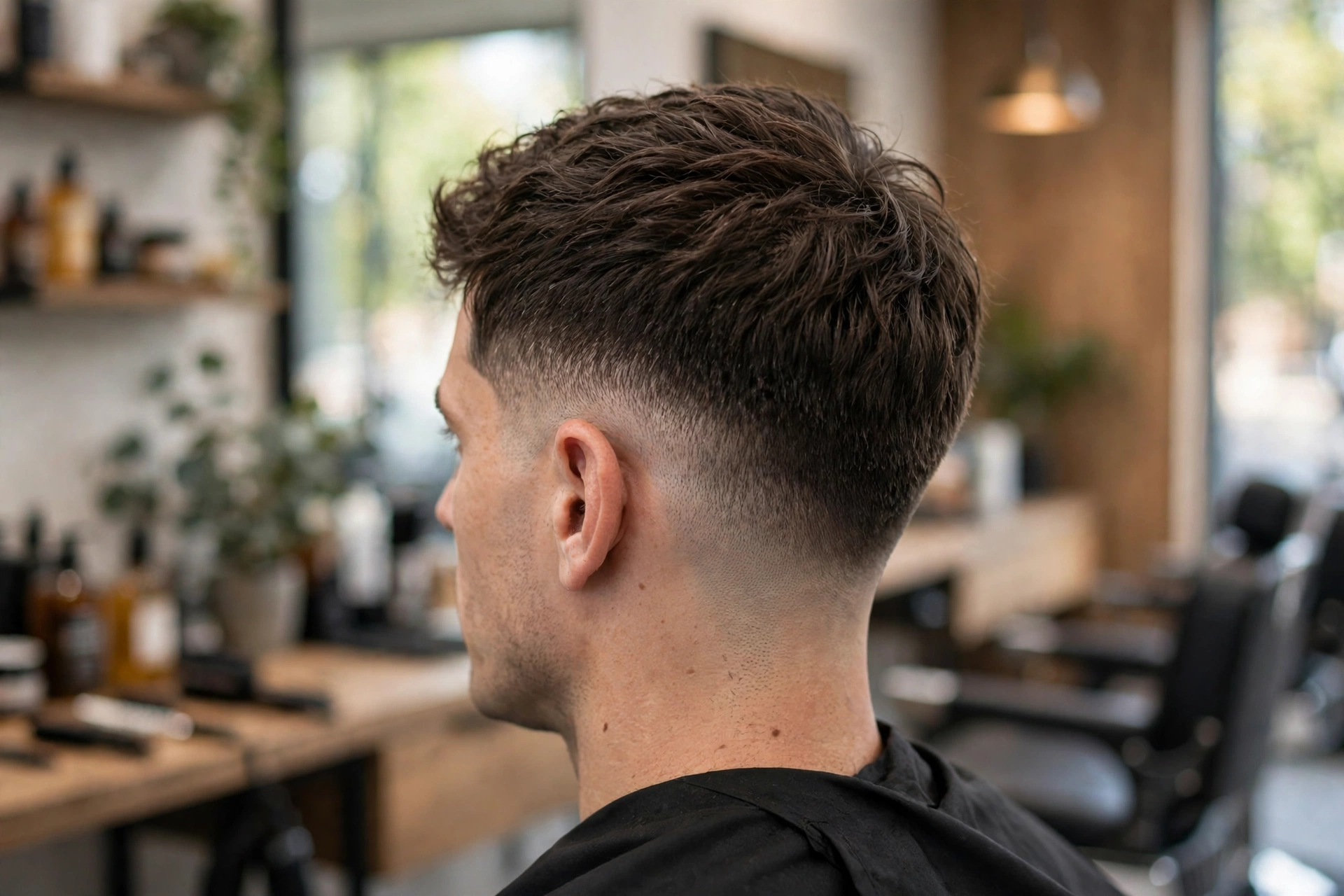
A neck taper and a full low taper fade sound like the same haircut, and in some barbershops they are treated that way. In others, they are two very different requests. The confusion comes from the fact that both cuts work the same part of your head: the lower edges around your ears and the nape of your neck. The real difference is how much of your head the blend covers, and how visible the change is from the side.
If you walk in asking for one and your barber hears the other, you can leave with a cut that is either too subtle or too sharp for what you wanted. This guide explains what each one actually is, how they differ in the chair, and how to ask for the right one.
What Is a Neck Taper?
A neck taper, also called a tapered neckline, is the smallest version of a taper. It only touches the back of your head at the nape. The hair at the very bottom of your neckline is cut short and blended upward into the longer hair above it, so there is no hard line where the haircut ends and your neck begins.
The sides of your head are left mostly alone. Your sideburns may get a light cleanup, but the bulk and shape of the sides stay the same. That is the key point: a neck taper is a finishing detail, not a full haircut style. It is the part of the cut that makes the back look clean.
A neck taper works well with medium and longer hair, scissor cuts, curls, locs, and braids, because it cleans up the outline without changing the style on top or the sides. It also grows out more naturally than a blocked neckline, since there is no square edge to grow into an uneven shape.
What Is a Full Low Taper Fade?
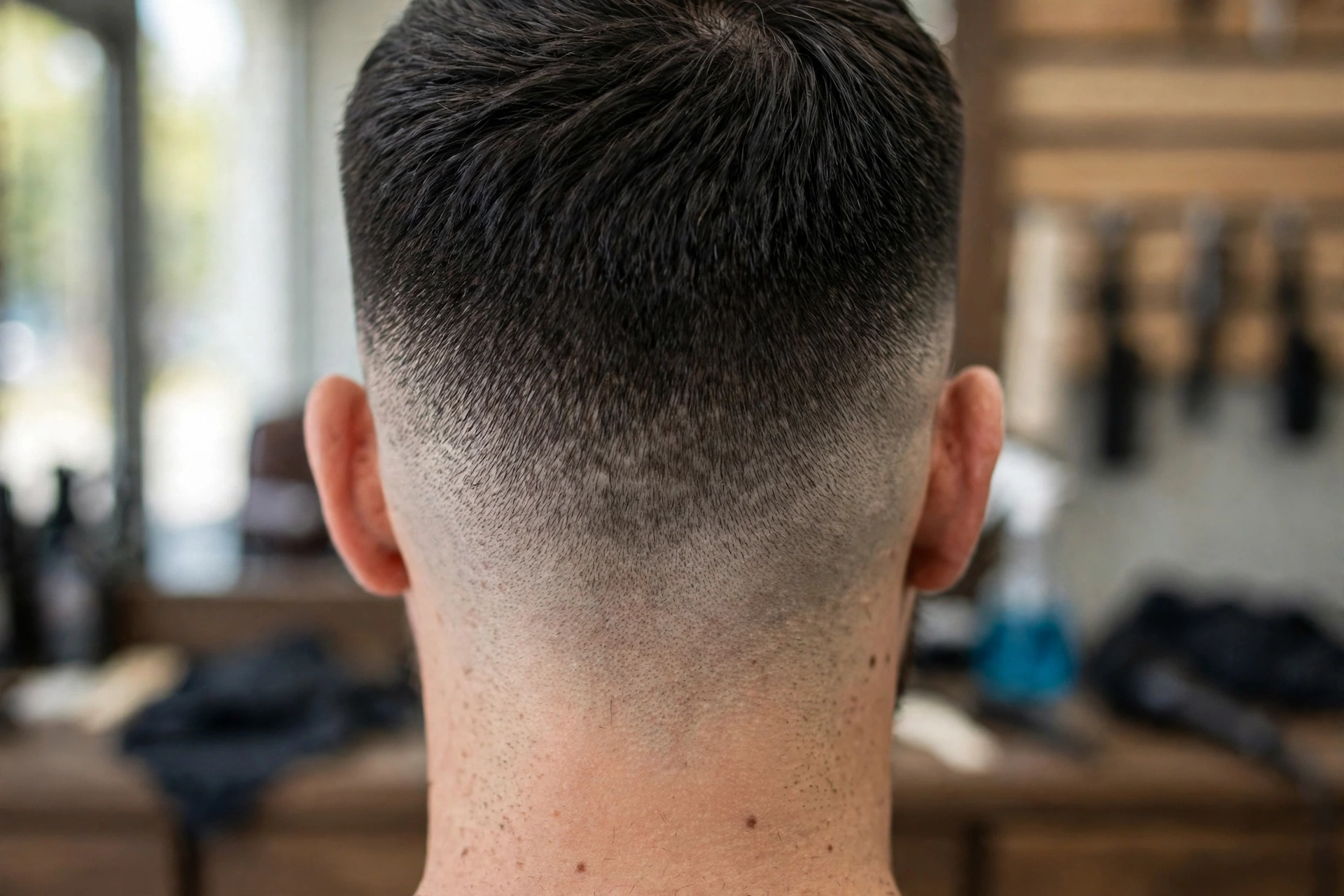
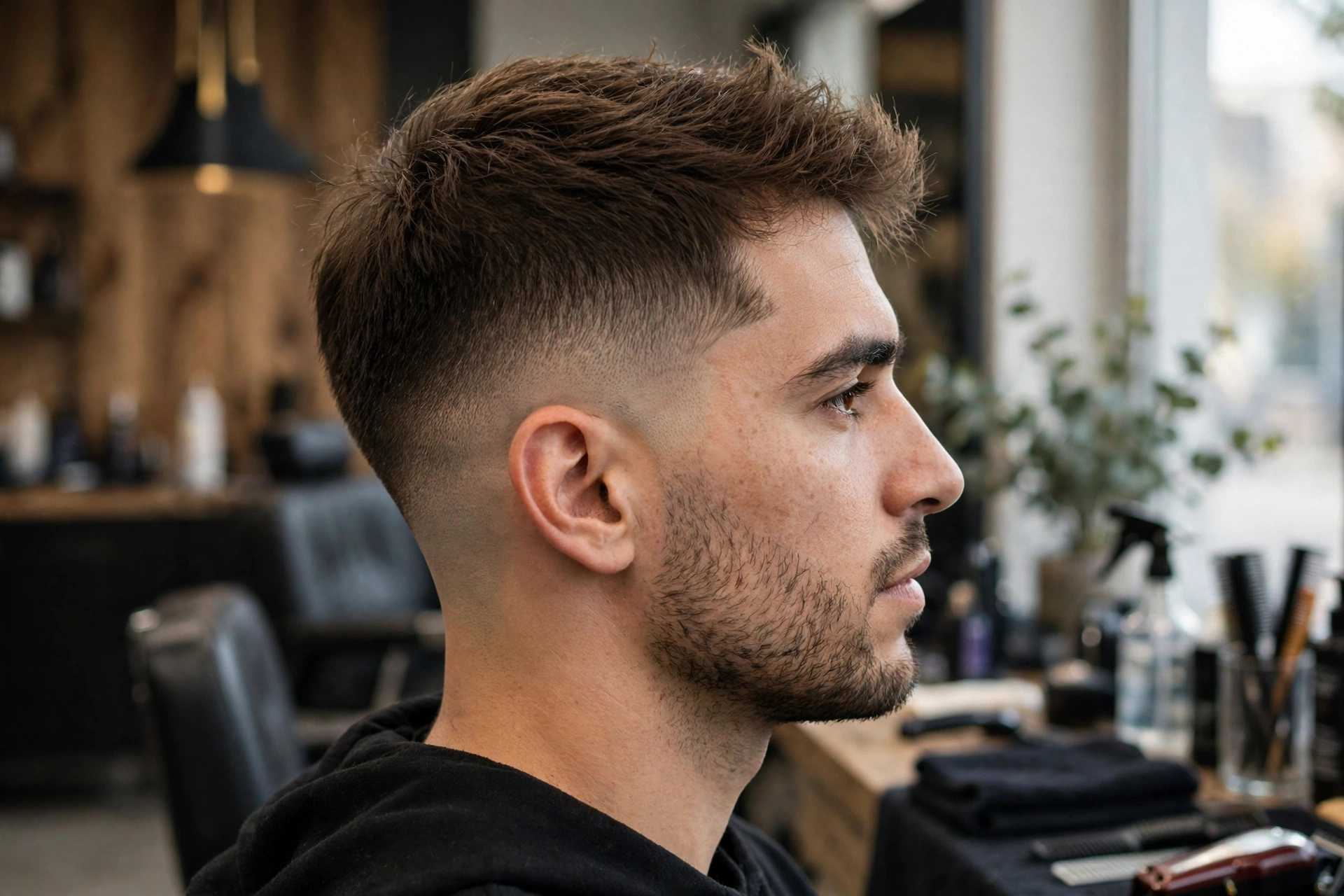
A full low taper fade covers more ground. The taper starts low, just above the ears, and runs around the temples, the sideburns, and the nape. The hair is blended gradually from longer on top down to very short — sometimes down to skin — at the edges. Unlike a neck taper, it changes the look of the sides as well as the back.
The word “full” matters here. A full low taper fade means the taper is applied all the way around the head: temples, sideburns, behind the ears, and the neckline. The result is a clean, defined outline that is visible from the front, the side, and the back.
If you want a clear comparison of nearby styles, our guide to the temple taper vs low taper fade breaks down another small-zone taper, and the low taper fade vs mid taper fade comparison shows how the height of the taper changes the whole look.
Neck Taper vs Full Low Taper Fade: Side by Side
| Neck Taper | Full Low Taper Fade | |
|---|---|---|
| Area covered | Nape only | Temples, sideburns, behind the ears, and nape |
| Sides | Mostly unchanged | Blended short, visible from the side |
| Shortest length | Usually a #2 guard or longer | Often a #0 or #0.5, sometimes skin |
| Visibility | Subtle, mostly seen from behind | Noticeable from every angle |
| Grow-out | 4 to 6 weeks before it looks messy | 2 to 3 weeks before the blend softens |
| Best for | Longer styles, first-time taper | Clean, sharp everyday look |
The simplest way to think about it: a neck taper is a detail, and a full low taper fade is a style. You can add a neck taper to almost any haircut. A full low taper fade is the haircut.
What Barbers Actually Do in the Chair
When you ask for a neck taper, most barbers will clipper-over-comb or freehand the nape, blending the bottom half inch to one inch upward. The work takes a few minutes at the end of the cut. Some barbers finish with a foil shaver for a smooth edge, but the hair above the taper stays at its normal length.
When you ask for a full low taper fade, the barber sets a guideline low around the head and works through the guards — often starting around a #2 and stepping down to a #1, #0.5, and #0 — to build the blend. The sides are thinned and shaped, not just cleaned up. The cut takes longer and needs more precision, because the blend is visible from the side.
One thing to know: barbers do not all use these terms the same way. Some use “neck taper” to mean any taper at the nape, even as part of a fade. Others use “low taper fade” to mean only the sides. That is why the exact words matter less than the picture and the description you give.
How to Ask Your Barber for Each One
If you want a neck taper, say: “Just taper the neckline at the back — blend it up, don’t take the sides short. Keep everything else the same.”
If you want a full low taper fade, say: “Low taper fade all the way around — temples, sideburns, and the back. Keep the blend low and tight, and leave the top as it is.”
Bringing a photo helps more than any term. Show the back of the head in the photo, not just the front, because the neckline is where these two cuts differ most. If you are unsure, ask your barber to show you the difference with a mirror before they start cutting.
It also helps to know your neckline options before you sit down. Our guide to low taper fade neckline options explains the tapered, blocked, and rounded finishes, and our guard numbers guide explains what #0 to #2 actually look like so you can name the length you want.
Which One Should You Choose?
Choose a neck taper if:
- You have medium or long hair and like the length on the sides
- You want a cleaner neckline without a visible fade
- You go 4 to 6 weeks between cuts and want a forgiving grow-out
- You wear curls, locs, braids, or a scissor cut on top
Choose a full low taper fade if:
- You want a sharp, clean outline that is visible from the side
- You like short sides and a defined shape
- You are happy to visit the barber every 2 to 3 weeks
- You want the classic low taper look with a tight finish
There is also a middle ground. Many men ask for a low taper fade on the sides with a soft, natural neckline at the back — the blend is visible around the ears, but the nape grows out gently. If that sounds like you, say exactly that. Barbers are used to mixing these details.
Cost and Upkeep
A neck taper on its own is often part of a regular haircut, and a quick neckline cleanup between cuts usually costs a few dollars or is included in a touch-up visit. A full low taper fade is a full haircut, typically $25 to $50 at most US barbershops, with a tip of 15 to 20 percent being standard.
For upkeep, a neck taper holds its shape for about 4 to 6 weeks. A full low taper fade starts to lose its sharpness after about 2 to 3 weeks, when the shortest part grows out and the blend softens. If you want to stretch the time between visits, ask your barber for a slightly longer base length — a #1 instead of a #0, for example — so the grow-out is less obvious.
Frequently Asked Questions
Is a neck taper the same as a low taper fade?
No. A neck taper only blends the hair at the nape of the neck. A full low taper fade blends the temples, sideburns, and nape, and changes the look of the sides too.
Can I get a neck taper with any haircut?
Yes. A neck taper is a finishing detail, so it works with almost any style — long hair, curls, locs, braids, or a classic scissor cut. It is the most flexible taper option.
Which one grows out better?
A neck taper grows out better because it covers a small area and leaves more length. A full low taper fade shows grow-out sooner, usually after 2 to 3 weeks, because the shortest part is very short.
What should I say if my barber mixes them up?
Show a photo of the back of the head and describe the area: “only the back” for a neck taper, or “all the way around, including the sides” for a full low taper fade. Words vary between shops; the photo settles it.