
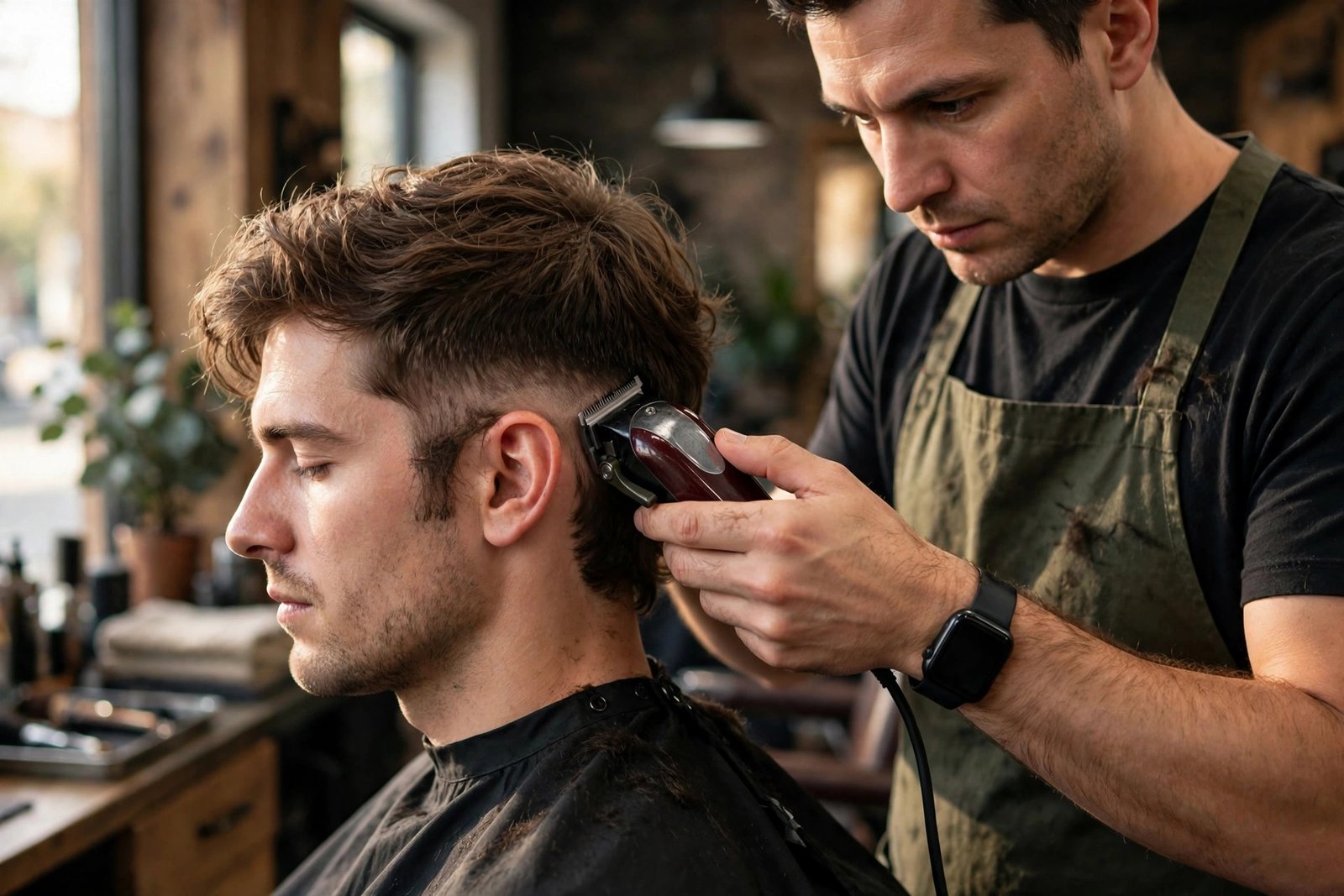
Ask five barbers what a temple taper is and you may get five slightly different answers. Ask the same five about a low taper fade and you will hear nearly the same thing every time. That confusion is exactly why this comparison matters: the two cuts look related, but they change very different amounts of hair.
A temple taper touches a small zone — the temples and the sideburns. A low taper fade blends a wider area around the ears and the back of the neck. Pick the wrong one and you either get far more cut off than you expected, or far less. Here is how to tell them apart and choose the right one.
What Is a Temple Taper?
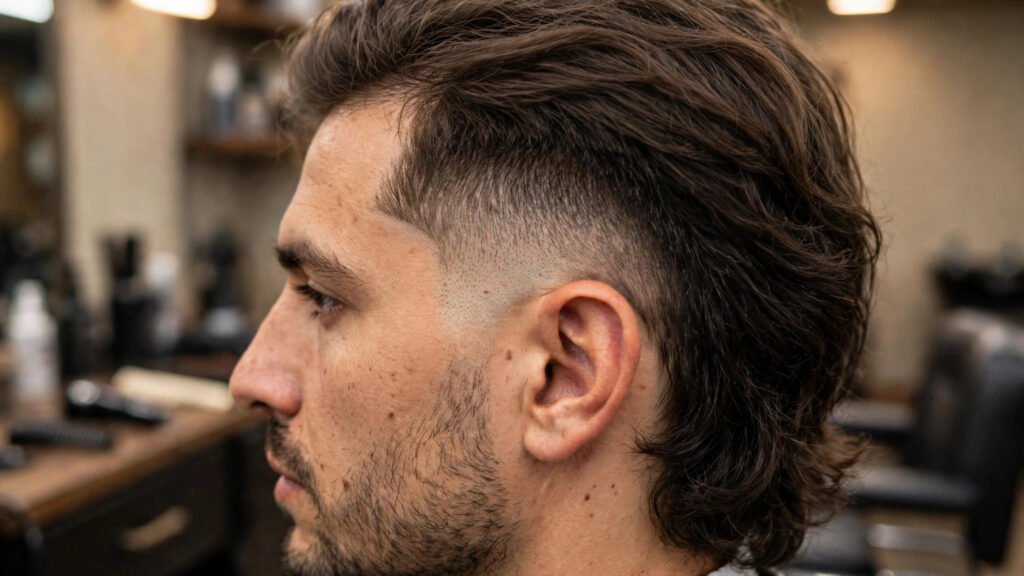
A temple taper — also called a temp fade or Brooklyn fade — is a small, focused fade around the temples. The barber blends the hair short just at the front hairline and the sideburns, usually down to skin or a #0 guard at the very edge, and the rest of the sides and back stay at full length.
Think of it as a cleanup, not a full cut. It sharpens the outline of the hairline, removes the puffy corners above the ears, and leaves everything else untouched. It is often added to longer styles — afros, locs, twists, curly tops, and long hair — because it tidies the edges without changing the shape of the cut.
The temple taper is sometimes called a temp fade, and that name causes most of the confusion. A temple taper and a temp fade are the same thing: a fade that lives only at the temples.
What Is a Low Taper Fade?
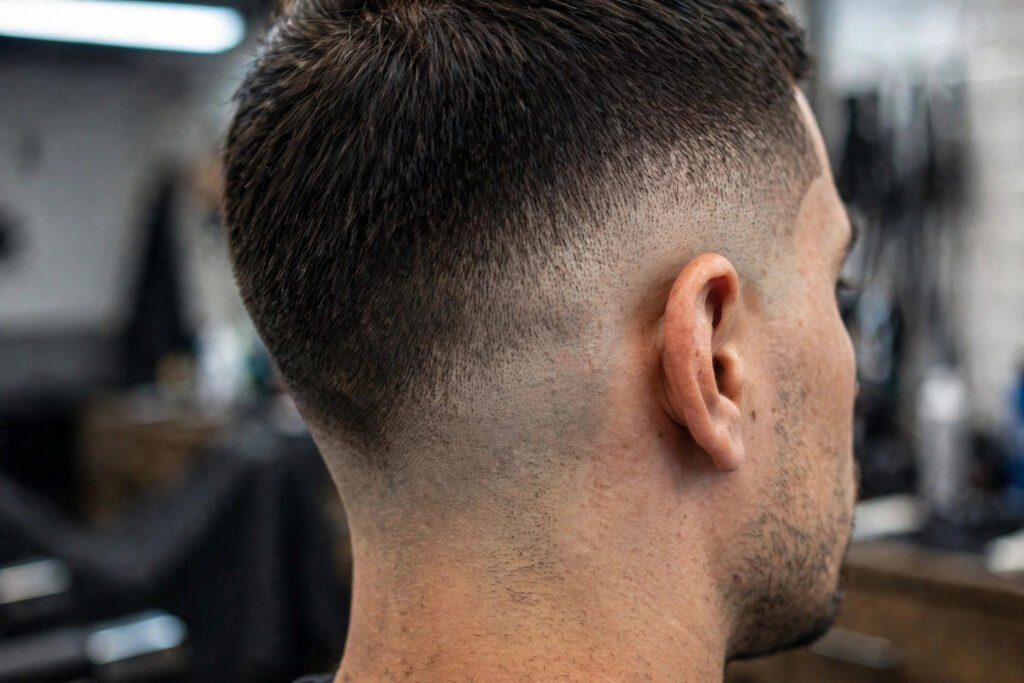
A low taper fade blends the hair gradually shorter around the whole lower edge of the cut — the sideburns, the area above and behind the ears, and the nape at the back of the neck. The blend starts low, just above the ear, and the shortest point is usually a #1 guard, so hair is still visible at the bottom.
Unlike the temple taper, the low taper fade is a complete side-and-back treatment. It connects all the way around the head. The result is a clean, even outline from every angle, and it works as a standalone haircut rather than an add-on to another style.
The Real Difference: Area, Not Just Height
Most comparisons focus on height — where the fade starts. That misses the point. The real difference is area: how much of your head gets faded.
A temple taper fades two small patches, one at each temple. Everything between them — the sides above the ears and the whole back — stays long. A low taper fade fades a continuous band around the entire lower head. That is why a temple taper can be added to almost any hairstyle, while a low taper fade is a haircut in its own right.
A second difference is the finish. Temple tapers often go down to skin at the very edge of the temple, which gives a sharp, defined corner. Low taper fades usually stop at a #1 guard, which gives a softer, more gradual edge. Neither is better — they simply do different jobs.
Temple Taper vs Low Taper Fade: Side by Side
| Temple Taper | Low Taper Fade | |
|---|---|---|
| Area faded | Temples and sideburns only | Full band: ears, sides, nape |
| Shortest length | Often skin or #0 at the edge | Usually #1 guard |
| Contrast | Medium at the temple, none elsewhere | Low and even all around |
| Works as a standalone cut? | No — an add-on to another style | Yes — a complete haircut |
| Best with | Long hair, locs, twists, afros, curly tops | Any top, from buzz cuts to pompadours |
| Grow-out | 3 weeks before the edge softens | 3–4 weeks, very forgiving |
| Risk of a surprise | High if you expected a full fade | Low — what you see is what you get |
Which One Suits Your Face Shape?
Round faces: the temple taper helps. Removing bulk at the temples makes the face look narrower and longer, which balances a round face. A low taper fade also works, but it keeps more volume at the sides, so it softens the face less.
Square faces: both work. A temple taper sharpens the corners of the hairline, which suits a strong jaw. A low taper fade keeps the outline softer, which suits men who want to tone the angles down rather than highlight them.
Long faces: the low taper fade is usually the better pick. It keeps fullness at the sides, which adds width and balances the length of the face. A temple taper removes volume from the sides of the head, which can make a long face look even longer.
Oval faces: either one works — oval faces suit nearly every fade. Choose based on the hairstyle on top rather than the face shape.
Which One Fits Your Hair and Lifestyle?
Long hair, locs, twists, or an afro: the temple taper is the natural choice. It cleans up the edges while the length on top stays exactly as it is. A low taper fade would cut into the sides and change the silhouette of the style.
Short to medium hair: the low taper fade is the better all-round cut. It gives you a finished look from every angle and pairs with almost any top — a crop, a comb over, a quiff, or a buzz cut.
Maintenance: a temple taper needs a touch-up about every 3 weeks, because the sharp edge at the temple softens quickly as hair grows. A low taper fade lasts 3 to 4 weeks and hides grow-out better. If you stretch your visits, the low taper fade is the more forgiving of the two.
Work: both are professional. A temple taper is nearly invisible from behind, so it is the subtlest option of all. A low taper fade is tidy from every angle. Either one passes in a strict office.
What to Tell Your Barber
This is the cut where clear words matter most, because the two names sound alike and barbers use them loosely. Say the area, not just the name.
For a temple taper: “Temple taper only — just the temples and the sideburns. Take it down to skin right at the edge, but leave the sides and the back completely alone. I do not want a fade around the ears.”
For a low taper fade: “Low taper fade all the way around — sideburns, above the ears, and the nape. Nothing shorter than a number one guard. Keep it gradual.”
Bring a photo that shows the cut from the side and the back, not just the front. The back view is where the two cuts differ most, and it is the view most reference photos skip. If you want more help with the exact words, our guide on how to ask your barber for a low taper fade has a full script you can use.
Cost in the US
A temple taper is usually the cheaper of the two, because it is a quick edge cleanup — typically $15 to $30 as a standalone touch-up at a barbershop, or included free with a full haircut at some shops. A low taper fade is a full haircut, typically $30 to $60 at a mid-range barbershop. Tip 15 to 20 percent, which is standard in the US. Prices are approximate and vary by city and shop.
How They Fit With Other Fades
The temple taper and the low taper fade sit at the subtle end of the fade family. Step up from a low taper fade and you reach the mid taper fade, which starts at the temples and gives more contrast, and then the high taper fade, which starts near the top of the head and is the boldest of the three. The temple taper is different from all of them: it is not a height on that ladder at all, it is a zone. You can even combine the two — a low taper fade with a sharper temple taper at the front — but tell your barber that is what you want, because it is not the default.
One more detail worth deciding in advance: the neckline. A taper fade can finish with a tapered, blocked, or rounded neckline, and the choice changes how the back of the cut looks as it grows out. Our guide to neckline options explains the three finishes so you can pick before you sit down.
FAQ
Is a temple taper the same as a temp fade?
Yes. Temp fade is short for temple fade, and a temple taper and a temp fade are the same cut: a short fade limited to the temples and sideburns.
Can I get a temple taper with a low taper fade?
Yes, and many men do. The low taper fade handles the sides and back, while a sharper temple taper defines the front hairline. Ask for it by name — “low taper fade, with the temples taken a little sharper” — so the barber knows you want both.
Which one is better for a round face?
The temple taper, in most cases. It removes volume at the temples, which makes a round face look narrower. A low taper fade keeps more side volume, which can make a round face look wider.
How often do I need a temple taper touched up?
About every 3 weeks. The sharp edge at the temple is the first thing to soften as hair grows, so temple tapers need slightly more frequent visits than a low taper fade, which lasts 3 to 4 weeks.