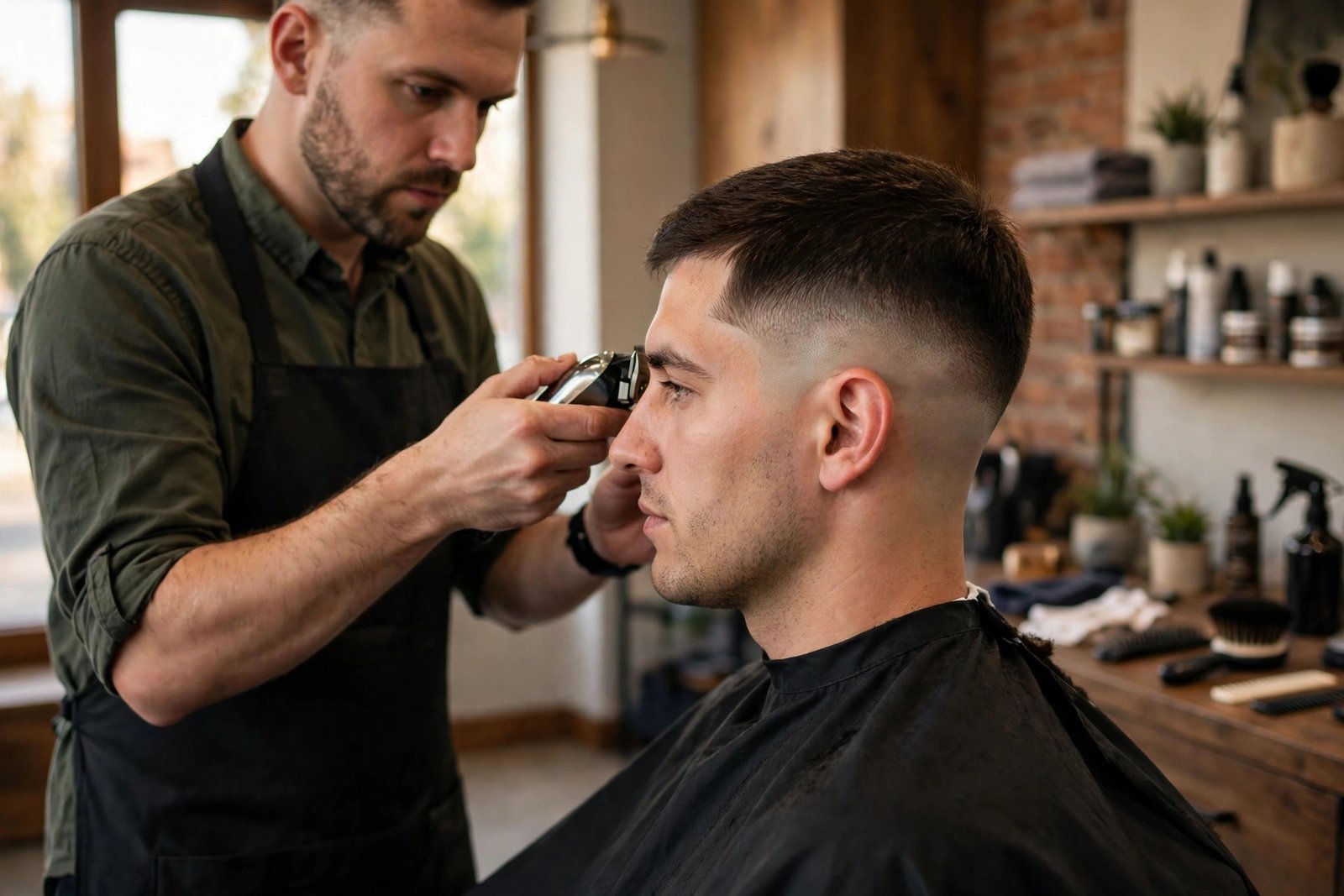
If you like a clean fade but cannot decide how bold to go, the choice usually comes down to two cuts: the low taper fade and the shadow fade. Both start low, both look tidy, and both work in an office. The difference is the finish. One keeps visible hair all the way down. The other fades to a soft shadow of stubble that almost touches skin.
This guide explains exactly how they differ, who each one suits, what they cost in the US, and the words to use at the barber so you get the cut you actually want.
What Is a Low Taper Fade?
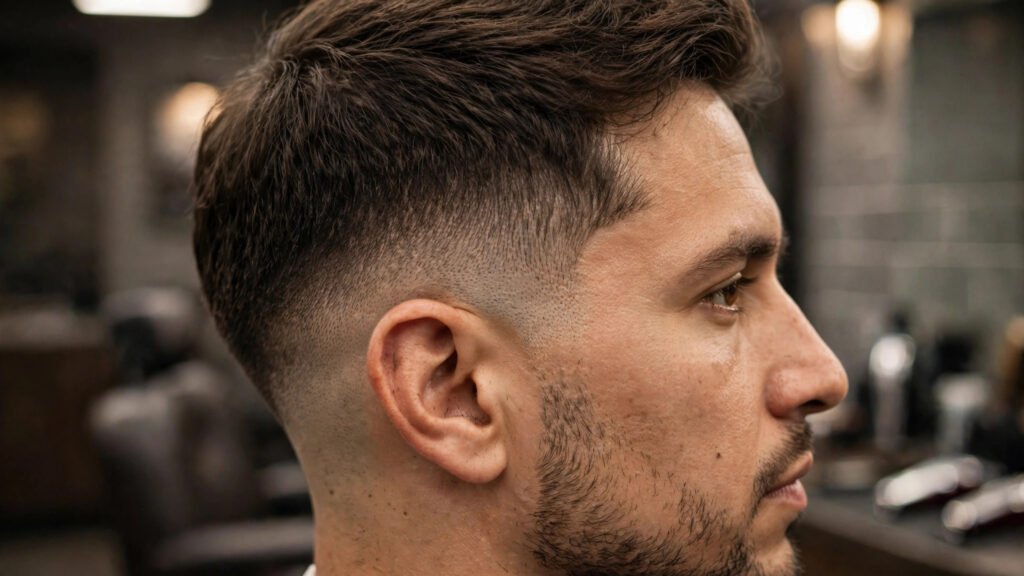
A low taper fade is the gentlest fade there is. The blend starts just above the ear and around the nape, and the shortest point is usually a #1 or #1.5 guard — hair is still clearly visible at the bottom. The sides above the ears keep most of their length, so the cut reads as a very clean, well-kept haircut rather than an obvious fade.
It is the most forgiving fade for everyday life. It grows out slowly, it suits almost every face shape, and it never looks out of place at work, at a wedding, or in a job interview. If you want your haircut to look intentional without announcing itself, this is the one.
What Is a Shadow Fade?
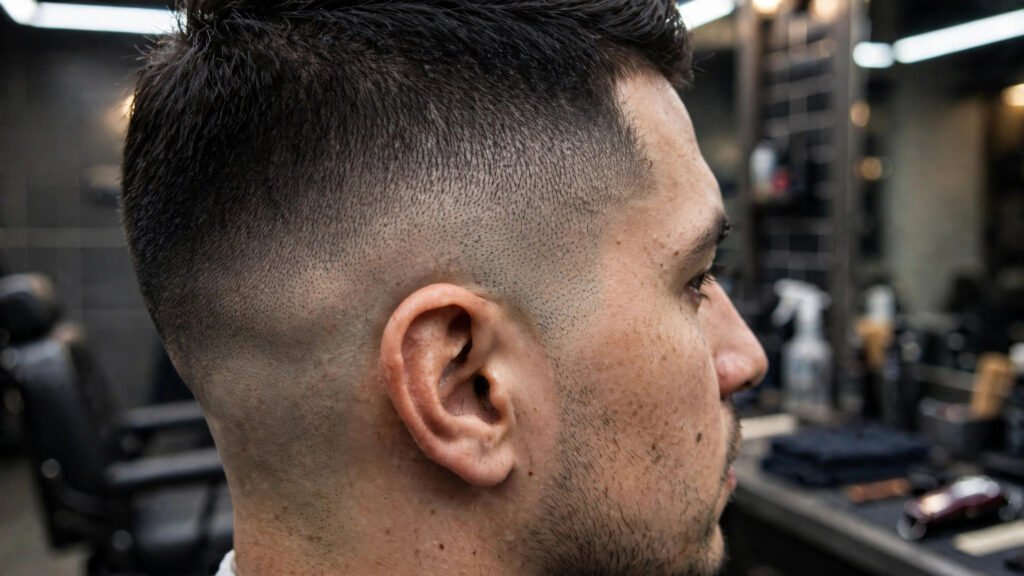
A shadow fade takes the same low placement but blends down further, to a #0 or #0.5 guard. At the bottom you see a faint shadow of stubble instead of bare skin — like five o’clock shadow on the scalp. The gradient is still smooth, but the contrast between the shortest hair and the longer hair above it is clearly stronger than a low taper fade.
The name tells the story: the fade leaves a shadow, not skin. That is the key difference from a skin fade, which blends all the way down to bare scalp and gives the sharpest, highest-contrast look of all.
A shadow fade is a middle ground. It is bolder than a low taper fade and softer than a skin fade, and it works with almost any top — a textured crop, a comb over, a quiff, or a buzz cut.
Low Taper Fade vs Shadow Fade: Side by Side
| Low Taper Fade | Shadow Fade | |
|---|---|---|
| Shortest length | #1 or #1.5 guard, hair visible | #0 or #0.5 guard, stubble shadow |
| Contrast | Low — very subtle | Medium — clearly visible gradient |
| Where the blend starts | Just above the ear and nape | Just above the ear and nape |
| Skin showing? | No | No, but close — a shadow of stubble |
| Grow-out | Very forgiving, 3–4 weeks | Forgiving, 3–4 weeks |
| Best for | Offices, first fades, fine hair | Men who want more definition without skin |
| Styling effort | Low | Low |
The height is the same. Only the finish changes. That is why the two cuts look so similar in photos and so different in person: the shadow fade has a darker, more defined edge at the bottom.
Which One Suits Your Hair Type?
Fine hair: the low taper fade is the safer pick. Because it never goes below a #1 guard, it does not expose sparse areas the way a shorter fade can. A shadow fade can work on fine hair too, but ask your barber to keep the shortest point at a #0.5 rather than a #0 so the scalp does not show through.
Thick hair: both work well. Thick hair holds the gradient of a shadow fade beautifully, and the extra contrast shows off the blend. If your hair is very thick, the shadow fade can look sharper because the difference between the top and the sides is more obvious.
Curly or coily hair: the low taper fade is usually the easier choice, because it keeps more length around the edges and the curl pattern stays visible. A shadow fade also works, but the blend needs a barber who is comfortable fading textured hair — ask to see photos of their work on your hair type first.
Straight or wavy hair: either cut works. Straight hair shows the gradient line most clearly, so a shadow fade gives you a crisper result, while a low taper fade gives you a softer, more natural finish.
Which One Fits Your Lifestyle?
Both cuts need a trim every 3 to 4 weeks to stay sharp, which is less often than a skin fade — a skin fade usually needs attention every 1 to 2 weeks. The shadow fade shows regrowth slightly sooner than a low taper fade, because the stubble base grows into visible length faster. In practice the difference is a few days, not a week.
For work, both are safe in most US offices. The low taper fade is the more conservative of the two, so if your workplace is strict, pick it. The shadow fade still reads as professional — it is a long way from a high skin fade — but it does draw more attention to the cut itself.
For low effort, the low taper fade wins by a small margin. Its gradual blend hides grow-out better, so you can stretch an extra few days between visits without the cut looking rough.
What to Tell Your Barber
The two cuts are easy to confuse at the chair, so name the finish, not just the height. Use these scripts:
For a low taper fade: “Low taper fade. Keep it as gradual as possible — I want to see hair all the way down, nothing shorter than a number one guard. Just clean up the sideburns and the neckline and let the blend happen naturally.”
For a shadow fade: “Low shadow fade. Bring it down to a zero guard at the bottom, but do not go below that — I want to see a shadow of hair, not skin. Keep it soft.”
Two tips that prevent most mistakes. First, agree on the shortest guard numbers before the clippers start. Second, bring one photo of the exact finish you want, not three photos of different cuts. One clear reference beats a folder of options.
Cost and Tipping in the US
In the US, both cuts cost about the same — typically $30 to $60 at a mid-range barbershop, and $60 to $100 or more at a high-end shop in a big city. The price depends on the shop and the city, not on which of the two cuts you pick. A shadow fade takes a little longer to blend, but most barbers charge the same flat rate for either. Tip 15 to 20 percent of the pre-tax total, which is standard barber etiquette in the US. Prices are approximate — ask the shop for its menu before you sit down.
How They Compare to Other Fades
If you are still deciding, it helps to know where these two sit in the family. A burst fade curves around the ear instead of running straight, which gives a rounder shape. A drop fade drops lower at the back of the head, which suits longer tops. Both the low taper fade and the shadow fade are straighter and simpler — they are the two most versatile low fades, and the choice between them is really a choice about contrast.
FAQ
Is a shadow fade the same as a skin fade?
No. A shadow fade stops at a #0 or #0.5 guard, so you still see a shadow of stubble. A skin fade goes all the way to bare skin. The shadow fade is softer, grows out more gracefully, and needs fewer touch-ups.
Which fade lasts longer between cuts?
The low taper fade, by a small margin. Its longer shortest length hides regrowth better, so it holds its shape for 3 to 4 weeks. A shadow fade also lasts 3 to 4 weeks, but the stubble base shows new growth a few days sooner.
Can I get a shadow fade with thin hair?
Yes, but ask for a #0.5 guard as the shortest point instead of a #0. That keeps enough stubble to cover the scalp and avoids the patchy look a very short fade can give on fine hair.
Which one should I get for my first fade?
The low taper fade. It is the most forgiving fade to grow out, the easiest to fix if you do not like it, and the safest choice for work. You can always go shorter — to a shadow fade — at your next visit.