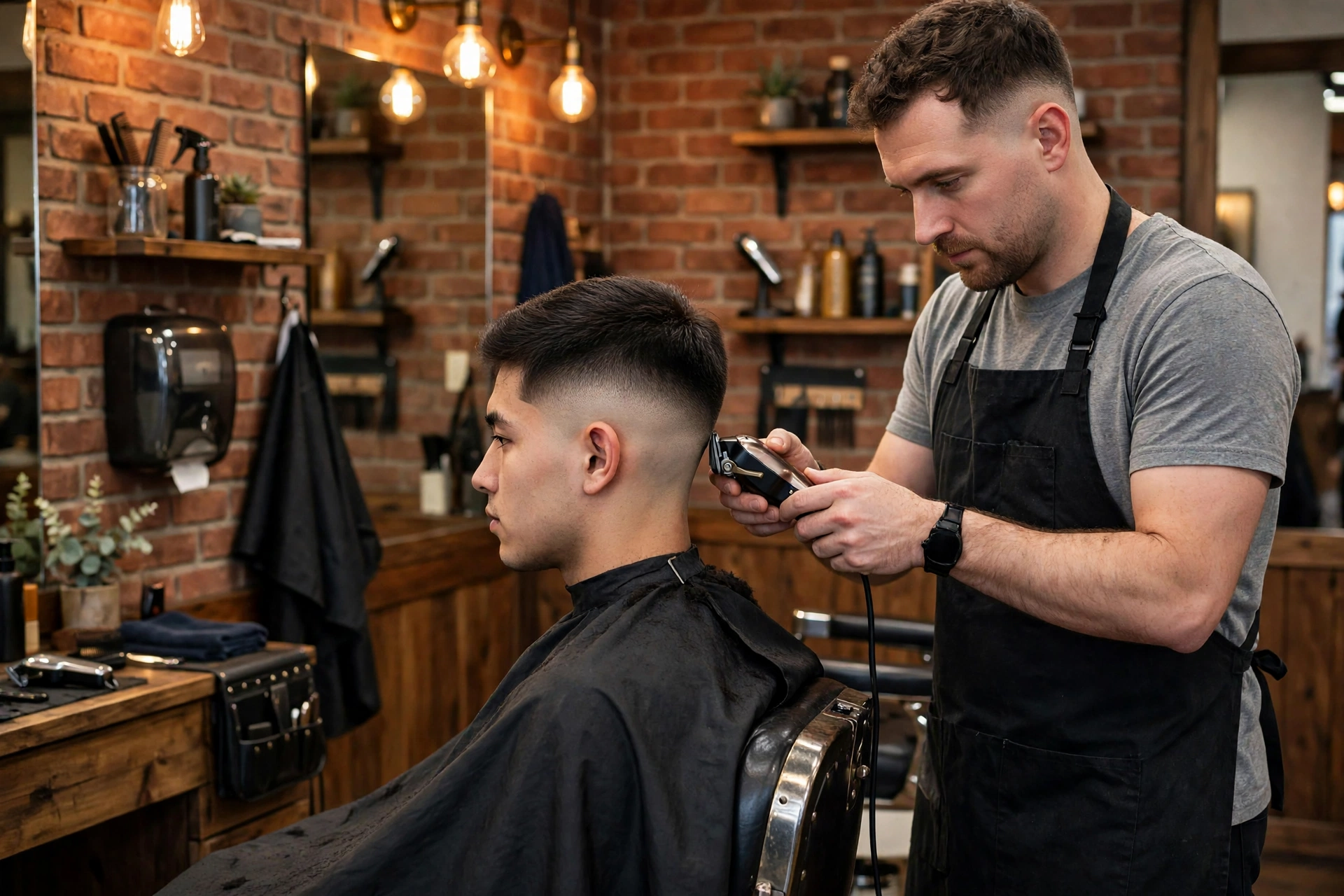
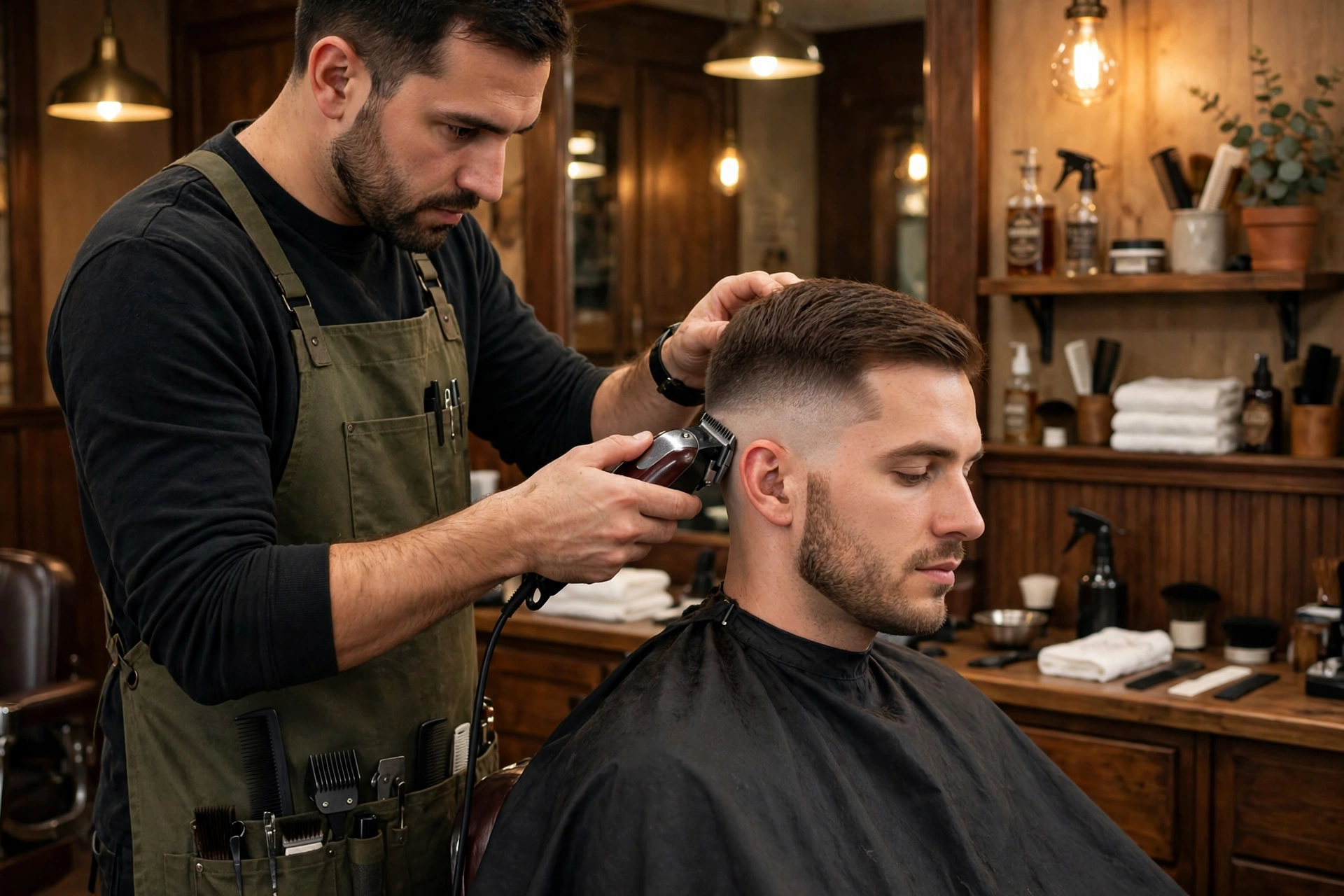
A low taper fade and a burst fade can look similar in a photo, but they are built on two different ideas. The low taper follows a straight, gentle line down the side of the head. The burst fade curves around the ear in a rounded arc, like a small sunburst. That one difference in shape changes the whole look — how bold it feels, how fast it grows out, and where it fits in your life.
If you are choosing between the two, this guide compares them side by side so you can walk into the barbershop knowing exactly what to ask for.
What Is a Low Taper Fade?
A low taper fade starts just above the ear and at the nape of the neck. The barber gradually shortens the hair as it moves down toward the hairline, but the shortest point still keeps visible hair — usually a #1 or #2 guard, never bare skin. The blend runs in a straight, vertical line down the sideburn.
The result is clean and quiet. From the front, most people will not even notice it is a fade — it just looks like very tidy sides. It works with almost every top style, from a textured crop to a slick back, and it suits every face shape.
What Is a Burst Fade?
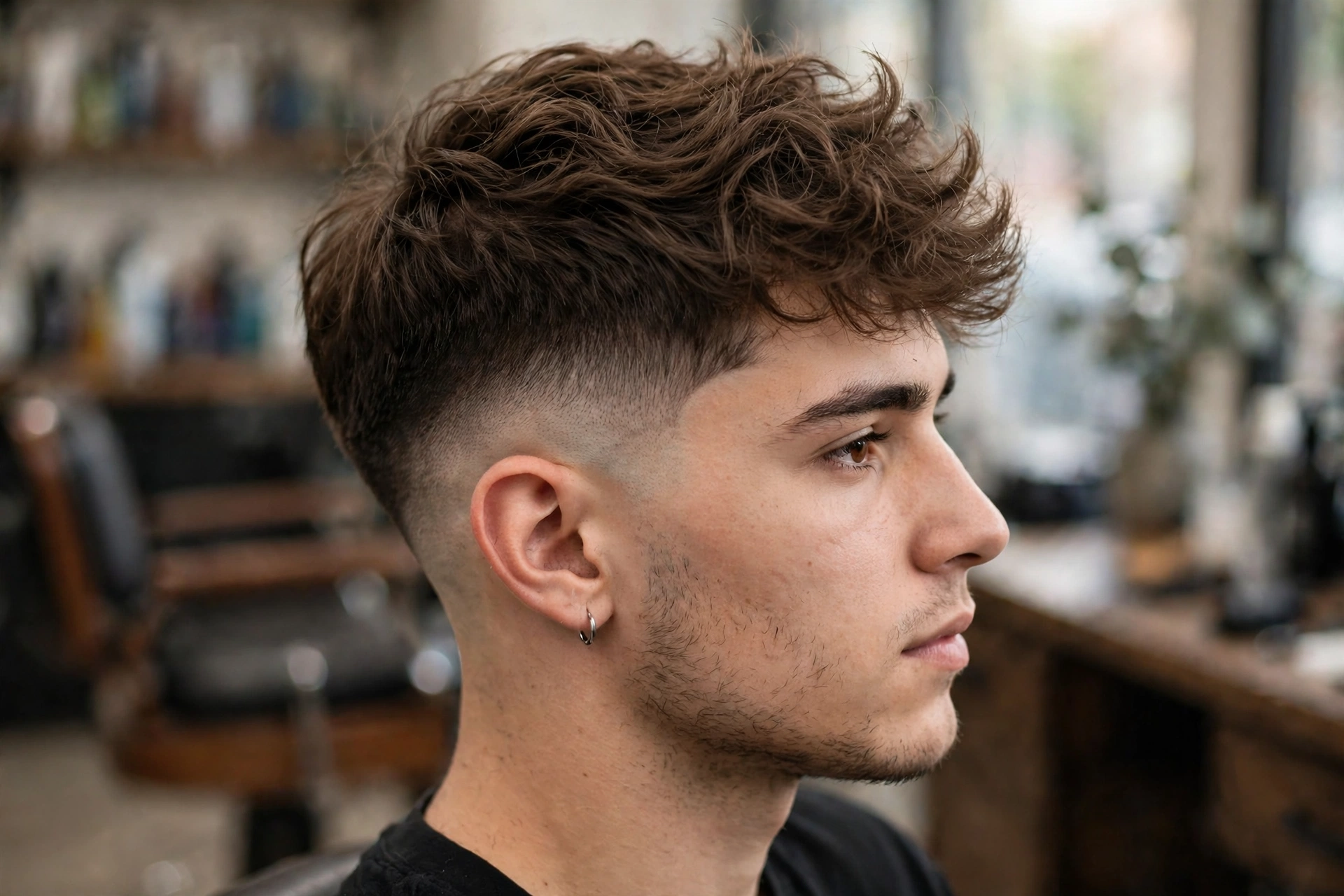
A burst fade curves around the ear in a semicircle, then tapers down toward the back of the neck. The fade is strongest right around the ear, while the hair behind the ear and at the nape stays longer. That rounded arc is the signature of the cut — it draws the eye to a clean, sculpted curve.
Because the burst shape is so visible, it reads bolder and more modern than a low taper. It is the fade barbers usually pair with a mohawk, a frohawk, a mullet, or a textured top. On curly and coily hair, the burst curve shows up especially well, since the contrast between the tight fade and the textured top is so clear.
Low Taper Fade vs Burst Fade: The Key Differences
| Feature | Low Taper Fade | Burst Fade |
|---|---|---|
| Fade shape | Straight, vertical line down the side | Rounded arc curving around the ear |
| Shortest point | #1–#2 guard, hair still visible | Often down to skin around the ear |
| Contrast | Low to moderate, soft and natural | High, bold and eye-catching |
| Hair left at the back | Short and blended at the nape | Longer at the nape |
| Best top styles | Almost anything — crop, quiff, slick back | Mohawk, mullet, curly or textured tops |
| Professional settings | Safe almost anywhere | Depends on the workplace |
| Maintenance | Touch-up every 3–4 weeks | Touch-up every 2–3 weeks |
The simplest way to remember it: the low taper is a straight line, the burst is a curve. Everything else — the boldness, the upkeep, the vibe — follows from that shape. For another curved fade, see our low taper fade vs drop fade comparison.
Face Shape and Hair Type: Who Suits What
Face shape. The low taper is forgiving on every face shape because it changes so little of the silhouette. It adds no height and no width, so it works for round, square, oval, long, diamond, and heart-shaped faces alike. Our low taper fade vs mid taper fade comparison covers how fade height changes the look for different faces.
The burst fade suits faces that can carry a stronger focal point. It works well on oval and square faces, where the curved line echoes a strong jaw. On very round faces, the burst arc can add width around the ears, so ask your barber to keep the curve tight and low.
Hair type. The low taper works on all hair types — straight, wavy, curly, coily, thick, or fine — because the blend is so gentle. The burst fade shines on curly, coily, and thick hair, where the tight curve against textured length creates real contrast. On very fine, straight hair, the burst arc is less visible, so the effect is softer and the extra upkeep may not be worth it.
Maintenance and Grow-Out
This is where the two cuts separate most in real life. A low taper fade grows out gracefully. Because the shortest point still has hair and the blend is gradual, it still looks tidy at three weeks and acceptable at four. Most men stretch a low taper to every 3–4 weeks between cuts.
A burst fade needs more attention. The curved line around the ear loses its shape as hair grows back — stubble blurs the arc within about 10–14 days. To keep that clean semicircle, plan on a touch-up every 2–3 weeks, or a quick lineup between full cuts. Our guide on how often to get a low taper fade touched up explains the timing in detail, and the same logic applies — sharper lines need sooner visits.
Cost in the US
In the US, a low taper fade at a mid-range barbershop typically costs about $25–$45, while a burst fade usually runs about $30–$50 because the curved blend takes more time and precision. Prices are approximate — big-city shops and high-end barbers charge more, and a cut that includes a beard trim or a hot-towel finish costs extra. Expect to tip 15–20% of the pre-tax total, which is standard barber etiquette in the US. Over a year, the maintenance gap adds up: a burst fade at every 2–3 weeks means roughly 17–26 cuts a year, while a low taper at every 3–4 weeks means roughly 13–17.
Which One Should You Pick?
Choose a low taper fade if you:
- Want a clean, everyday cut that works everywhere
- Prefer low maintenance and longer gaps between cuts
- Are trying a fade for the first time
- Work in an office or a conservative setting
- Have fine or straight hair and want a subtle finish
Choose a burst fade if you:
- Want a bold, modern look with real personality
- Have curly, coily, or thick hair that shows the curve well
- Pair it with a mohawk, mullet, or textured top
- Do not mind visiting the barber every 2–3 weeks
- Like your haircut to stand out
If you are torn, there is a middle ground: a low burst fade. It keeps the curved shape around the ear but starts lower and blends more gently, so it grows out better and reads more office-friendly. Ask your barber about it as a first step into the burst style.
What to Tell Your Barber
Words matter — show a photo too. For a low taper fade, say: “Low taper fade, please. Keep the sides long above the ear, take it down to a #1 at the sideburn and nape, and blend it low. No skin.” For a burst fade, say: “Burst fade, please. Curve the fade around my ear in a rounded shape, take it down to skin right around the ear, and leave the back longer.”
If you want more help with the exact wording, our guide on how to ask your barber for a low taper fade gives you a word-for-word script you can use.
FAQ
Can a burst fade be combined with a low taper fade?
Yes — a low burst fade is exactly that combination. The barber keeps the low, gentle blend of a taper but shapes it into the burst curve around the ear. It is a good middle ground if you like the burst shape but want an easier grow-out.
Which fade is better for a first fade?
The low taper fade. It is the most forgiving fade you can get — it grows out softly, suits every face shape, and looks right in any setting. You can always try a burst fade at your next visit once you know you like fades.
How long does a burst fade last before it needs a touch-up?
About 2–3 weeks. The curved line around the ear blurs as hair grows back, so the shape fades faster than a straight low taper, which can stretch to 3–4 weeks.