
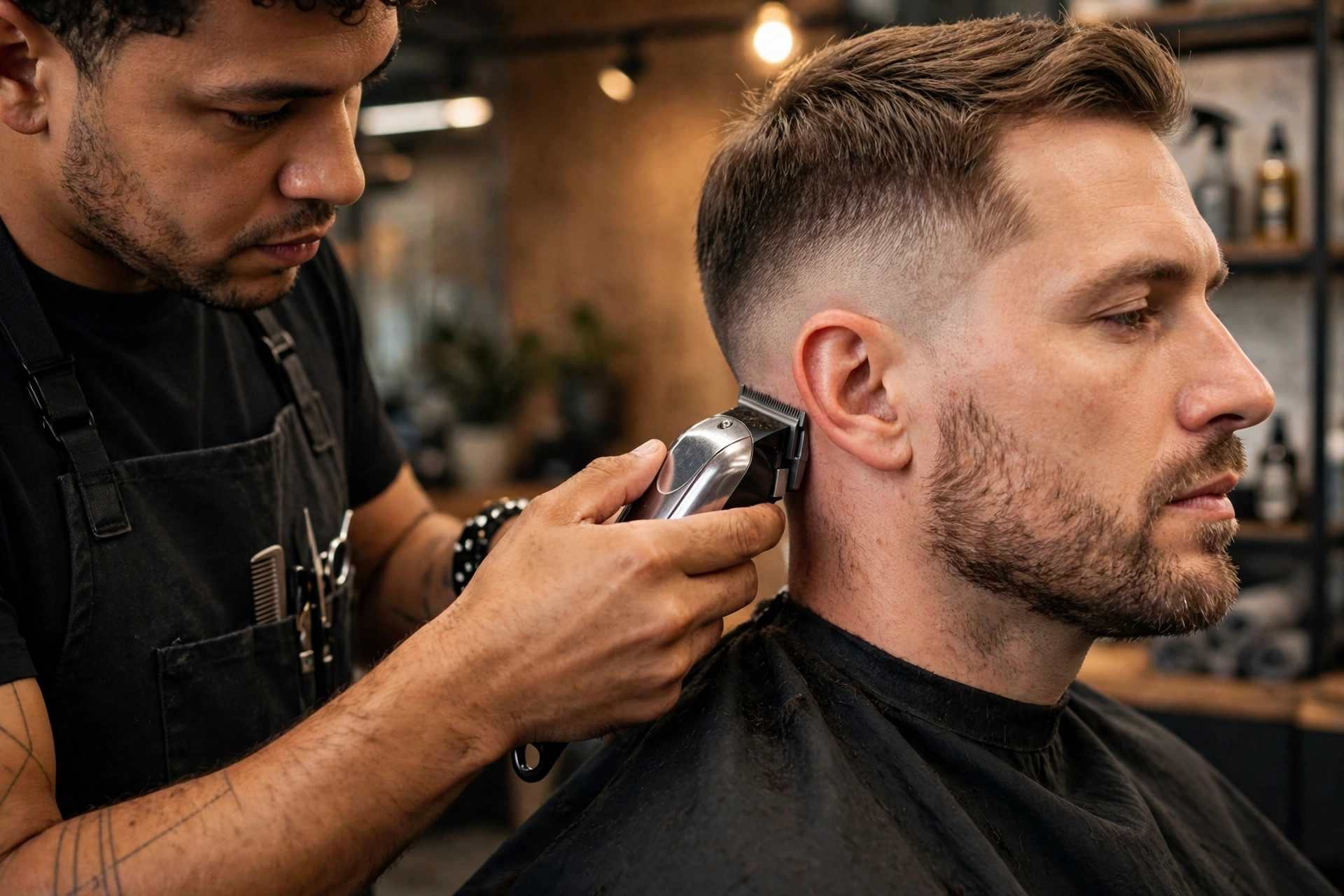
The difference between a good haircut and a great one often comes down to one small area: the sideburn. That is where your haircut meets your beard, and when the two do not connect, the whole look feels unfinished. A proper beard blend makes the fade flow down through the sideburn and into the beard with no hard line anywhere.
This guide explains exactly how barbers blend a beard into a low taper fade — the guard steps, the tools, and the order of work — so you know what to ask for and what to watch for in the chair.
Taper vs Fade: What Is a Beard Blend?
First, a quick distinction. A beard taper shortens the beard gradually toward the sideburn and neckline but keeps some hair everywhere. A beard fade takes the sideburn all the way down to skin, or very close to it, and then blends up into the beard. Think of a fade as a taper taken to zero.
With a low taper fade, either version works. The taper version is softer and more forgiving — a good pick if your beard is thin on the cheeks. The fade version is sharper and more dramatic, and it suits a full beard with a low taper fade best, because there is plenty of beard length to blend into. If your beard is very short, the stubble version of the same idea still works — see our guide to the low taper fade with stubble.
The Sideburn: Where the Blend Happens
The sideburn is the bridge. The fade on the sides of your head ends near the top of the ear. The beard starts on the cheek and jaw. The sideburn connects them, and it has to step down gradually from one length to the other.
The rule barbers follow is simple: the blend starts where the haircut ends. If your fade is low and soft, the beard blend starts low and soft too. If the fade is higher or goes to skin, the beard blend starts higher. When the haircut and the beard are blended as two separate jobs, you get a hard step at the sideburn — and that step is the first thing people notice.
A good barber checks both sides from the front and from the side before finishing, because a blend that looks smooth from one angle can show a line from another.
How Barbers Do It: Step by Step
Here is the usual order of work in the chair. Knowing it helps you spot a careful barber — and helps you maintain the blend at home between visits.
1. Cut the fade first
The barber starts with the haircut. The fade on the sides decides where the beard blend begins, so the haircut always comes first. The guard numbers used on the fade set the top of the blend.
2. Bring the sideburns down through the guards
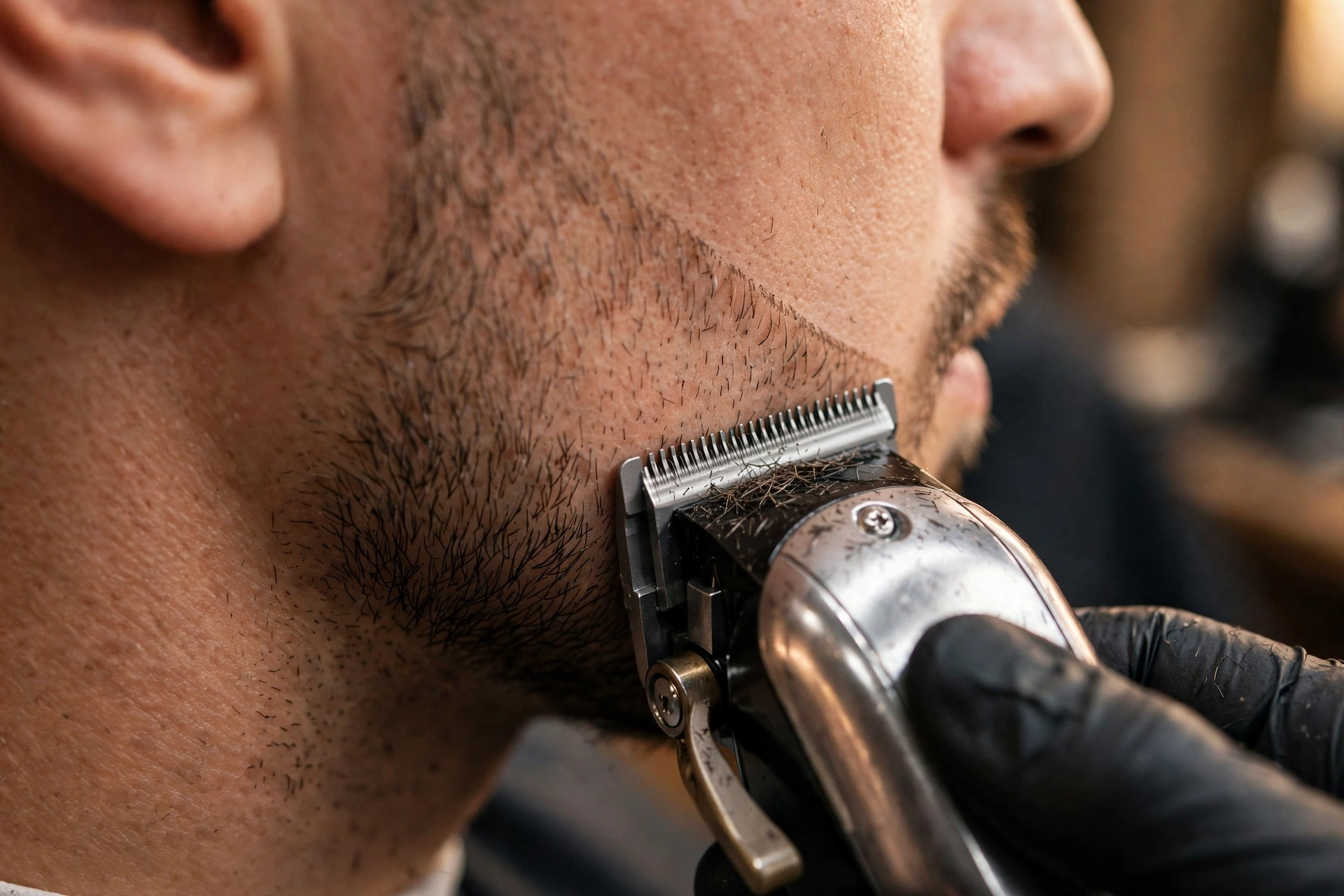
Working from the top of the sideburn down, the barber steps through guard lengths — for example, a #2 at the top, then a #1.5, then a #1 — so the hair gets shorter in small steps instead of one jump. Each step is blended into the next with short, flicking strokes of the clipper, lifting away from the skin at the end of each pass.
3. Set the beard length
Next, the barber sets the main beard length on the cheeks and chin with a guard — often a #3 or #4 for a short beard, longer for a full beard. The chin usually keeps more length than the cheeks, which gives the face shape and keeps the blend gradual.
4. Blend where the beard meets the sideburn
This is the critical step. The barber goes back over the boundary between the sideburn and the beard with the longer of the two guards, using short upward flicks. The goal is a smooth gradient: skin at the top of the sideburn, short hair in the middle, full beard at the jaw — with no visible line between any of the stages.
5. Line up the cheeks and neckline
Finally, the barber defines the cheek line and the neckline with a trimmer. The neckline usually sits about two fingers above the Adam’s apple, curving up toward the ears. A line-up on the cheeks gives the sharpest finish; a natural cheek line looks softer and grows out more gracefully.
6. Finish with oil and a check
A little beard oil, combed through, settles flyaways and shows up any uneven spots. A good barber hands you the mirror and checks the blend from behind too.
What to Tell Your Barber
You do not need to know the guard numbers by heart — but giving your barber three clear details gets you the right blend:
- How short the fade starts at the top of the sideburn — to the skin, or a #1 to match your haircut.
- The guard for the beard on your cheeks and chin — for example, a #2 or a #3.
- How you like your lines — a natural cheek line or a sharp line-up, and where the neckline sits.
A ready-made version: “Taper my beard into the haircut, starting the blend at the sideburn. Keep full length on the jaw and chin, and give me a natural neckline about two fingers above my Adam’s apple.” For the full conversation, our exact script for asking your barber for a low taper fade covers the haircut side too.
Maintaining the Blend at Home
A beard blend softens first at the sideburn, because that is where the shortest hair grows out most visibly. A quick home routine keeps it sharp between barber visits:
- Every few days: Run a trimmer over the sideburn and upper cheek with the shortest guard from your blend, using the same flicking motion. This refreshes the gradient before it blurs.
- Weekly: Re-set the neckline with a trimmer, about two fingers above the Adam’s apple.
- Daily: Brush the beard downward and apply a small amount of beard oil or balm. Brushing trains the hair to lie in the direction of the blend.
- Every 2–3 weeks: See your barber. The haircut and the beard need to be blended at the same point, and that only happens when both are cut in the same visit.
FAQ
How do barbers blend a beard into a fade?
They step down through clipper guards from the fade into the sideburn and then into the beard, blending each boundary with short, flicking clipper strokes so no line shows. The cheek line and neckline are defined last with a trimmer.
What guard should I ask for on a beard blend?
It depends on your beard length, but a common setup is a #3 or #4 on the cheeks and chin, stepping down to a #2 and then a #1 through the sideburn, with the top of the sideburn faded to skin or a #0.5 to match the haircut.
How often should I get a beard blend touched up?
The sideburn area needs attention every few days at home, and a barber visit every 2–3 weeks keeps the haircut and beard blending at the same point. Longer gaps let the two grow out at different rates, which breaks the blend.
Can a barber blend a patchy beard into a low taper fade?
Yes. A taper keeps some hair at the sideburn instead of going to skin, which hides patchiness better than a hard fade. Ask for a soft taper and a natural cheek line rather than a sharp line-up.
The Bottom Line
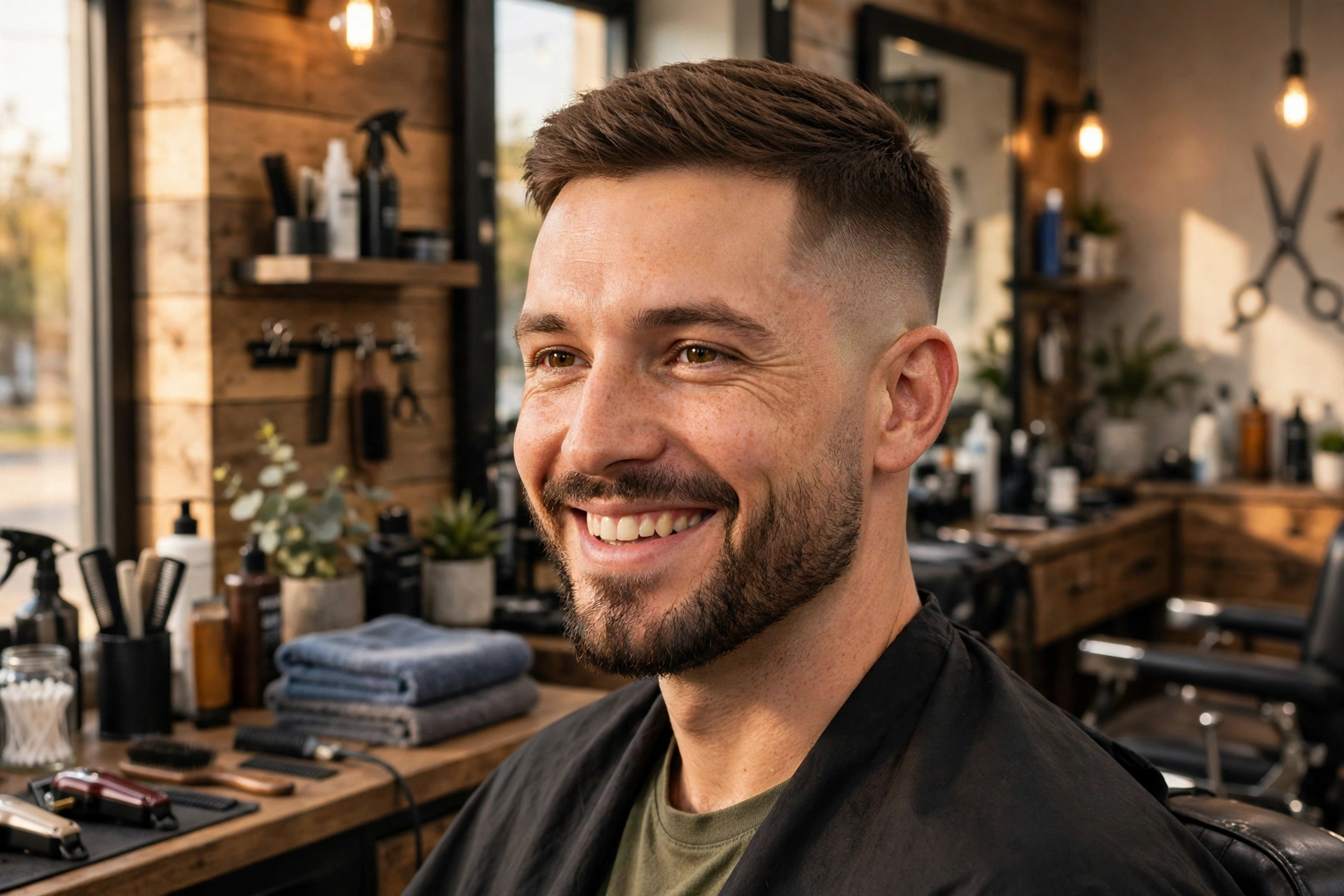
A beard blend is not one technique — it is a series of small steps: the right fade height, guard steps through the sideburn, a set beard length, and clean lines to finish. When each step is done in order, the haircut and the beard look like one style instead of two. Ask for it by name, give your barber the three details above, and check the back in the mirror before you leave the chair.