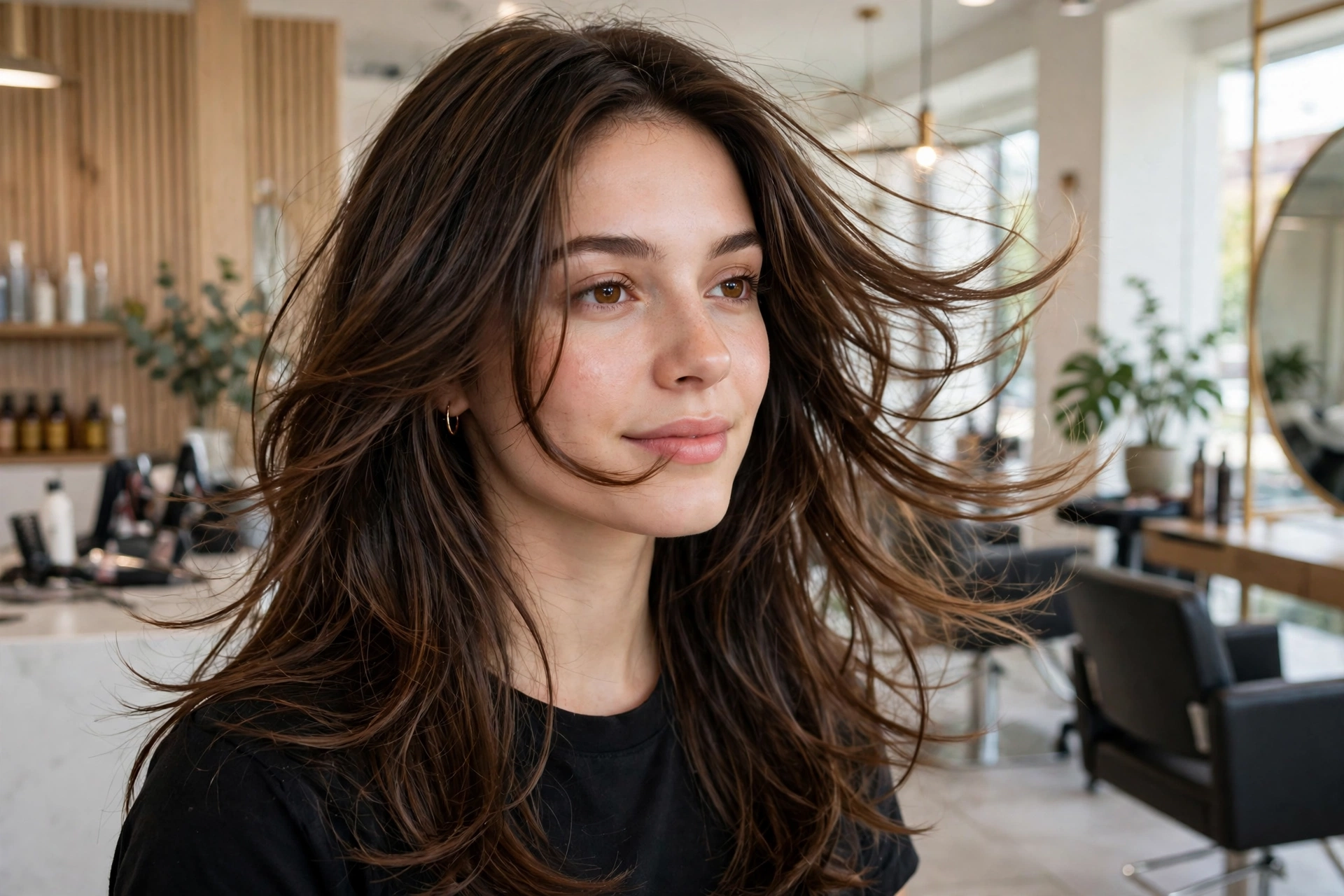
“I want layers” is one of the most common salon requests, and one of the most misunderstood. Layers can mean soft, barely-there movement. They can also mean short, choppy pieces up near the crown. Two stylists can hear the same word and cut two very different haircuts. The fix is not a better haircut name. It is a clearer request. This guide gives you the exact script to use in the chair, explains what each line means, and covers how to adjust it for your hair type so you leave with the cut you actually pictured.
First, Know What Kind of Layers You Want
Before you sit down, decide on three things. These three answers shape everything else. 1. How much length are you keeping? Layers remove weight, not necessarily length, but only if you say so. “Keep my length” is the most important sentence in this whole guide. If you do not say it, a stylist may assume you are open to losing inches. 2. Long layers or short layers? Long layers start lower down the hair and keep the shape soft. Short layers start higher and create obvious steps and volume. If you want movement without drama, ask for long layers. If you want a bold, textured shape, short layers are the tool. The difference between long layers vs short layers is worth understanding before you book, because it changes the whole silhouette. 3. Do you want face-framing pieces? Face-framing layers are shorter pieces around the front that fall near the cheekbone, chin, or collarbone and blend back into the rest of the cut. They are optional, but they are what make a layered cut look intentional from the front, not just from the back.
The Exact Script
Say this, filling in the blanks for your hair. You can read it straight from your phone if that feels easier. Stylists prefer a clear request over a vague one.
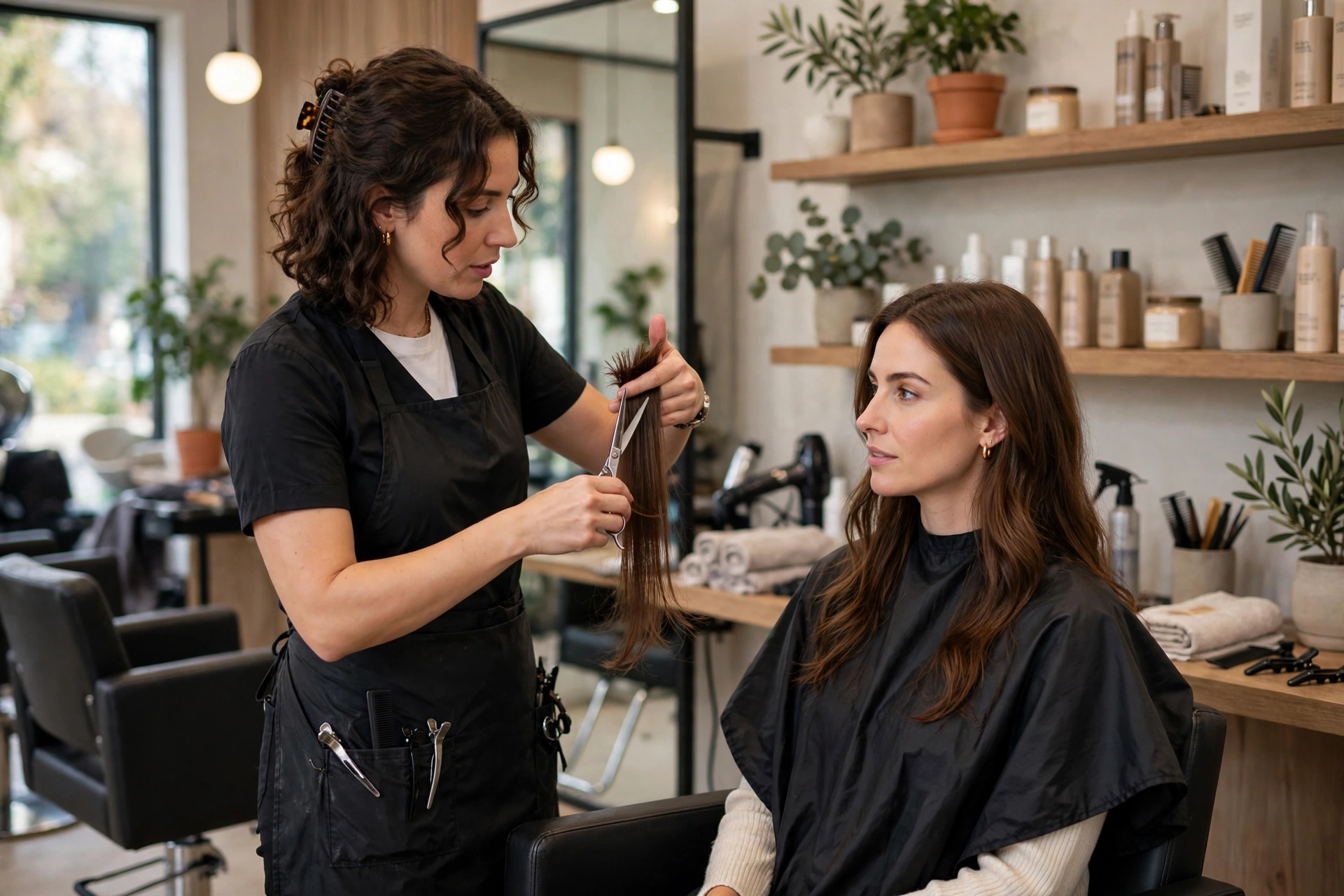
“I want to keep my length, but I want long layers for movement, nothing choppy. I want face-framing pieces that start at my chin and blend into the layers. I want the ends to stay full, not thinned out. I usually part my hair in the middle, so please cut it so it works with that part. If you need to remove bulk, please do it lightly and only where it is heavy.”
Each line does a job: “Keep my length” stops accidental inches from disappearing. “Long layers, nothing choppy” rules out short, stepped layers. “Face-framing pieces that start at my chin” names the exact starting point. Chin is the safest default. Cheekbone is bolder and shows more. Collarbone is softer and easier to grow out. “Ends stay full” protects fine hair from going wispy. “Works with my part” matters because layers and curtain-style front pieces fall differently on a middle part versus a side part. “Remove bulk lightly” tells the stylist you want movement, not a thinning session. If you want curtain bangs as well, add one line: “I would like curtain bangs that start below my cheekbone and blend into the face frame, not a blunt bang line.” Starting below the cheekbone keeps them soft and low-commitment.
What to Tell Your Stylist About Your Hair
The same script lands differently depending on your hair, so add one or two facts about yours: Thick hair: say “My hair is thick and gets bulky underneath.” Your stylist may use thinning shears or internal layering to remove weight. That is normal for thick hair, but ask them to keep the ends full so the cut does not go flat at the bottom. Fine hair: say “My hair is fine, so please keep the layers long and the ends blunt.” Short layers on fine hair can make it look thinner. Long layers plus a blunt perimeter keep the density you have. Wavy hair: say “My hair dries wavy and shrinks up a bit.” Wavy hair springs shorter when dry, so ask for face-framing pieces a little longer than you think you want. The best haircuts for wavy hair all share this rule: cut for the dry result, not the wet length. Curly hair: ask your stylist to cut your hair dry, or at least check the layers dry before you leave. Curly layers change shape dramatically as they dry, and a wet cut alone often surprises people. Straight hair: layers show more clearly on straight hair, so blending matters most. Ask for “soft, blended layers with no visible steps” if you want a smooth finish.
Bring Photos, and Use Them Right
Photos help, but only if you use them well. Bring two or three photos of the same kind of cut, not ten different ones. Point to specific things in each photo: “This is the amount of layering I want, long, not short.” “This is where I want the face frame to start.” “This is the back shape I like, soft, not blunt or sharply angled.” Also show a photo of what you do NOT want, if you have one. “Not this short on top” is just as useful as “like this.” Ask your stylist to confirm back what they heard before they start cutting. A good check sounds like: “So, long layers, keep the length, chin-length face frame, full ends. Is that right?” If their summary does not match yours, fix it now, not halfway through.
Adjusting the Script for Popular Cuts
For a long layered cut with volume: add “I want more layering through the back for movement, but still keep the overall length.” Layers higher in the back create lift. Layers only at the ends just lighten the bottom. For a soft, everyday cut: keep the base script as is. It is designed to be wearable with almost no styling. For growing out a shorter cut: if you are growing out a pixie cut or a lob, layers can help the awkward stage look deliberate. Say: “I am growing my hair out, so please keep the length and just blend the old shape into long layers.” Do not let a grow-out trim turn into a re-cut. For a bob with layers: if you are considering a shorter shape instead, a classic bob with light layering gives movement without losing the clean line. The script still applies: name the length, the layer type, and the face-frame point.
Styling Your Layers at Home
Layers are cut to move, so styling them is simpler than styling a blunt cut. After washing, apply a light leave-in or volumizing mousse through the mid-lengths and ends. Blow-dry with a round brush, lifting at the roots and rolling the ends under or outward, depending on the finish you want.

Letting layers air-dry also works, especially for wavy hair, but the shape will look softer and less defined. On no-wash days, a quick refresh works well: dampen the front pieces, blow-dry them with a round brush, and leave the rest alone. Layers hide second-day flatness better than one-length hair does, which is part of their appeal. Avoid heavy oils or thick creams on the top layers. They weigh the movement down and make the cut look flat by midday. Save richer products for the ends if your hair is dry.
If It Goes Wrong
Even with a good script, cuts sometimes miss. Here is how to respond calmly: Layers are too short: do not panic. Ask the stylist to blend the shortest layer down as much as possible and to check the cut dry. Short layers grow out, and blending softens the step while you wait. Face frame is too short: ask for the front pieces to be blended back into the longer layers. A disconnected front piece looks worse than a slightly longer one. Ends look thin: ask whether thinning shears were used heavily. For the next visit, say “no thinning shears on the ends” clearly at the start. It looks fine wet but odd dry: go back within a week. Most salons will adjust a cut for free in that window, and a dry check is the honest test of layers. If you leave unhappy, do not just wait months and hope. A quick adjustment visit is normal, and stylists would rather fix a cut than lose a client.
How Often to Trim Layers
Most layered cuts need a trim every 8 to 12 weeks. Fine hair can stretch a little longer. Thick, fast-growing hair may need 8 weeks to keep the shape. Between trims, the layers will grow out softly, which is forgiving. You do not need a perfect schedule, but do not wait six months and expect the shape to hold. A typical US salon price for a women’s cut with layers is about $50 to $100, varying by city and salon level. A tip of 20 percent is standard for good service.
FAQ
Should I ask for layers if my hair is fine? Yes, but ask for long layers only, and keep the ends blunt. Long layers add movement without removing the density that makes fine hair look full. What is the difference between layers and face-framing? Layers shape the whole cut. Face-framing pieces are just the front sections, cut shorter to frame the face. You can have layers without face framing, but most layered cuts look better with at least soft front pieces. Do layers work with a middle part? Yes, if the cut is shaped for it. Tell your stylist your usual part before they cut, so the face frame falls evenly on both sides. How do I grow out layers? Trim the ends regularly and let the shorter layers catch up. Ask for “dusting the ends only” at trims so you do not reset the layers each visit.
Final Word
You do not need salon vocabulary to get a good layered cut. You need three clear facts: keep the length, long layers not choppy ones, and where the face frame starts. Say those, bring two good photos, and ask your stylist to repeat the plan back before the scissors come out. That short conversation is the difference between a cut you love and a cut you spend three months growing out.