Last updated: October 23, 2026
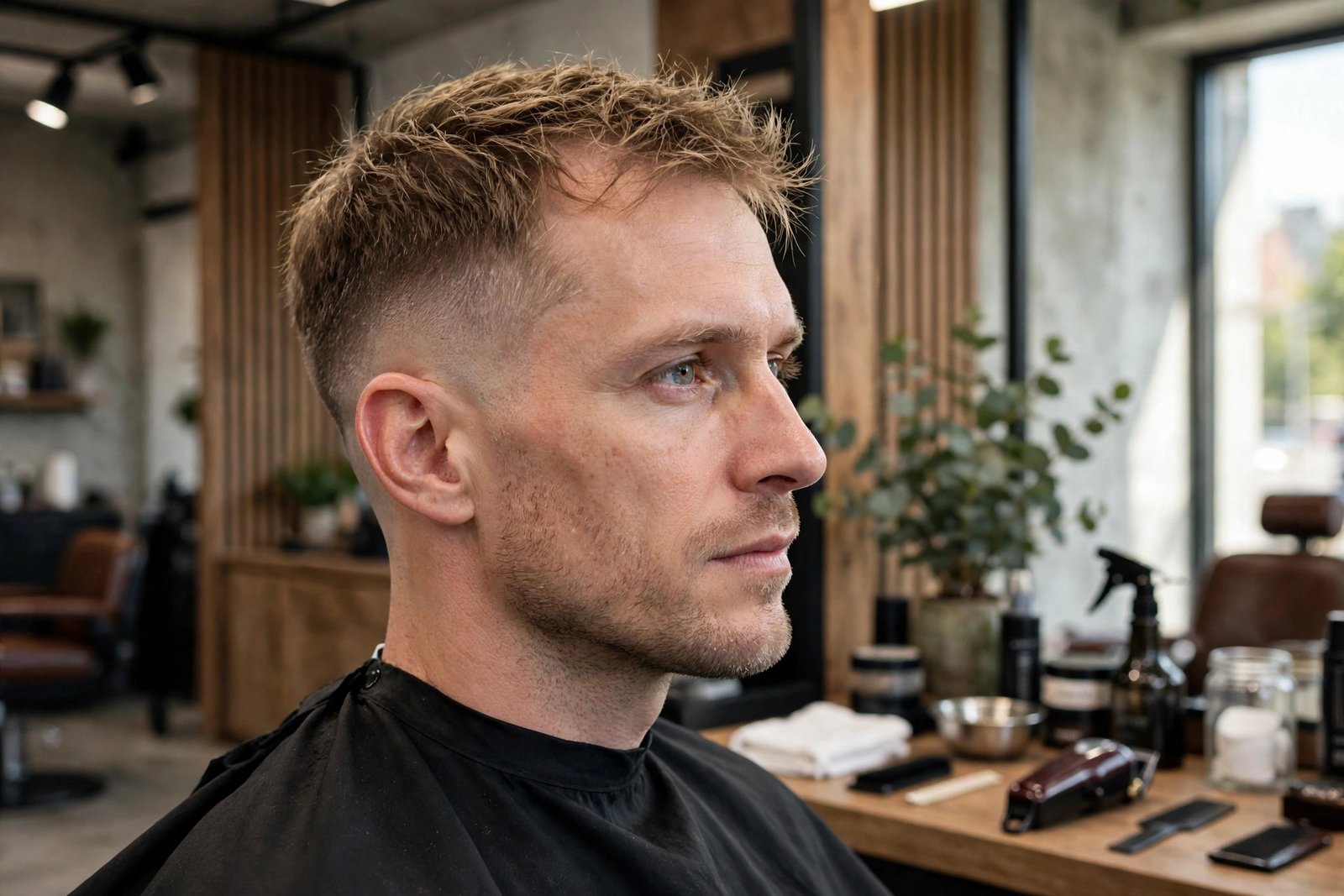
If your hair is fine or thinning, you have probably wondered: “Will a low taper fade work with my hair?” Here is the honest answer: yes, for most guys, a low taper fade is one of the best haircuts for thin hair. It is more forgiving than a high fade, it never exposes the scalp the way a skin fade does, and it makes the hair you have look fuller.
But it works because of how it is cut. This guide gives you the honest breakdown: why it works, what to ask your barber, when it is not the right choice, and how to style it.
Key Takeaways
- A low taper fade suits thin or thinning hair because the low placement never exposes the scalp.
- Keep 2–2.5 inches on top with texture; avoid high or skin fades that over-contrast a thin crown.
- Lightweight, matte products (sea salt spray, texture powder, light clay) add fullness; heavy pomade flattens.
- For advanced thinning, shorter styles or a buzz may look better.
- Touch up every 3 weeks — a grown-out taper draws attention to thin areas.
The Short Answer: Yes — Here’s Why
A low taper fade does three things that flatter thin hair:
1. It reduces contrast. Thinning looks most obvious when there is a big gap between dense and sparse areas. Short, neat sides shrink that gap, so the eye stops landing on the thin spots.
2. It keeps the outline sharp. Clean edges around the ears and neckline make any haircut look intentional. A grown-out, shapeless cut reads as “losing hair”; a crisp taper reads as “styled hair.”
3. It keeps visual weight on top. Unlike a high fade, which strips hair from the temples and crown, the low taper leaves the top mostly alone — the hair you have stays where people look.
The reason it beats a skin fade for thin hair is simple: a low taper never exposes the scalp. The shortest guard stays low and subtle, so there is no shiny skin next to thin hair drawing the eye.
Why a Low Taper Beats a High Fade for Thin Hair
A high fade climbs the sides and exposes a lot of scalp — exactly what you do not want when density is low. Its gradient pulls the eye upward, and on thinning hair that journey ends at the thinnest part. A low taper does the opposite: it stays quiet at the bottom and lets the top do the talking.
If your barber suggests a “shadow taper,” say yes. That just means the fade stops at a #1 guard instead of going down to skin — the softest, most forgiving version of the cut. For more on how guard numbers change the look, see our guard numbers explained guide.
What to Ask Your Barber: The Exact Script
Use these words:
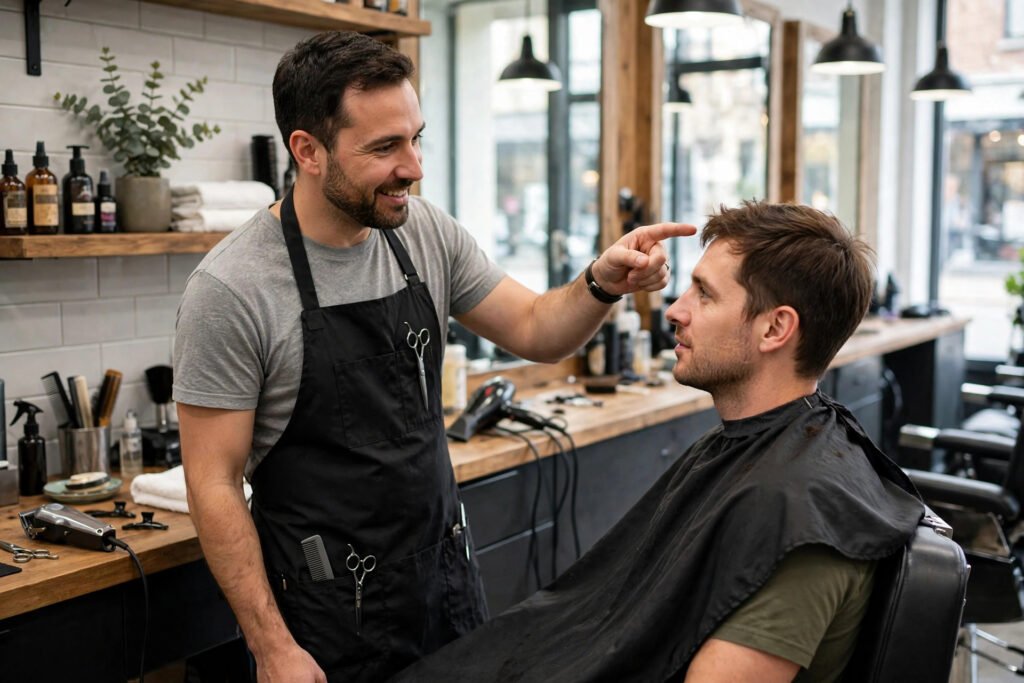
“I want a low taper around the ears and neckline — keep it low, no skin fade. Take the sides down to about a #1 or #2 and blend it softly. On top, keep 2 to 2.5 inches with a lot of texture, styled forward or to the side. Tapered neckline, not blocked.”
Why each part matters:
- “No skin fade” — skin next to thin hair maximizes contrast. Keep some hair everywhere.
- “2 to 2.5 inches with texture” — choppy ends scatter light and read as fuller; flat, one-length hair exposes the scalp underneath.
- “Tapered neckline, not blocked” — a soft, natural neckline grows out gracefully. A hard blocked line next to thin hair looks harsh as it grows. (See our neckline options guide for the full breakdown.)
If you have never asked for a taper before, our guide on how to ask your barber for a low taper fade walks through the whole conversation.
When It Might Not Work: An Honest Caveat
A low taper fade is not magic. Be realistic in two situations:
Advanced thinning or a visible bald spot on the crown. If the top is very sparse, keeping 2 inches of it can look stringy — long strands lying flat over scalp is the “see-through effect” that makes thinning obvious. Going shorter (a textured crop or a buzz with a low taper) usually looks better, because short hair cannot clump and separate.
Thinning at the hairline with a desire to slick everything back. Slicked-back styles pull hair away from the face and expose the hairline. If that is where you are thinning, a forward-styled textured top hides it far better.
If your hair is shedding fast, that is worth a conversation with a dermatologist — a haircut works with what you have; it does not stop loss.
Styling Thin Hair: Products That Add Fullness
The product rules for thin hair are the opposite of thick hair: light and matte, never heavy and shiny. Shine on the scalp emphasizes every thin area.
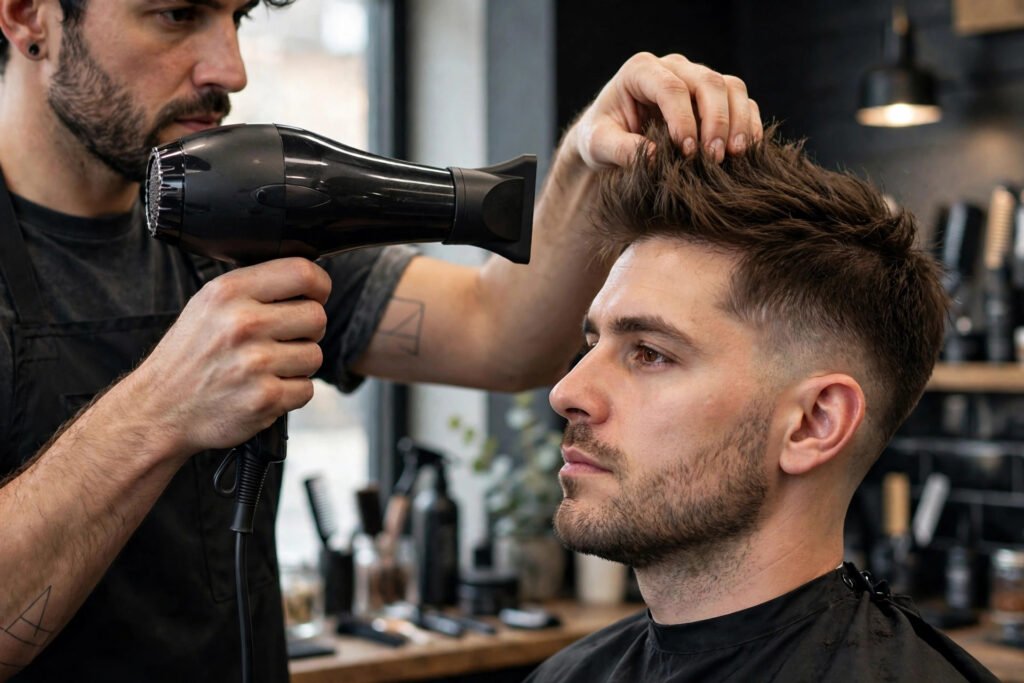
- Start with damp hair. Apply a sea salt spray — it adds grip and texture without weight.
- Blow-dry upward and forward. Lift at the roots with your fingers — heat plus lift is the fastest way to fake fuller hair.
- Add texture powder at the roots (optional but effective). A small shake at the crown adds instant volume that lasts all day.
- Finish with a pea-sized amount of matte clay. Work it through the ends for definition. Matte finishes absorb light instead of reflecting it, so the scalp stays hidden.
Avoid: heavy pomades, oils, and wet-look gels — they glue thin hair flat and make density look worse. Also avoid over-washing: thin hair looks fuller with a little natural texture, so most guys do fine washing every other day.
Upkeep and Maintenance
Thin hair shows grow-out faster, because a softening taper draws attention back to the thin areas. Book your next cut every 3 weeks — stretching to 4 is fine if the neckline still looks clean, but do not push past that. Between visits, keep the neckline tidy.
For inspiration on tops that pair well with thin hair, browse our 35 low taper fade looks and show your barber the ones with textured, forward-styled tops.
FAQ
Does a low taper fade make thin hair look thinner?
No — short, clean sides reduce the contrast between thin and dense areas, and the low placement never exposes the scalp. Problems start only if the fade goes too high or down to skin.
Should I keep my hair longer on top to cover thinning?
Usually not. Past about 3 inches, hair gets heavy, lies flat, and clumps — exposing more scalp. Two to 2.5 inches with texture is the sweet spot.
What products should men with thin hair avoid?
Heavy oil-based pomades, shiny gels, and anything that weighs hair down. Stick with matte, lightweight products: sea salt spray, texture powder, and a light matte clay.
How often should I get it recut?
Every 3 weeks. Thin hair shows an overgrown taper sooner than thick hair, so the schedule matters more.
Final Verdict
So, does a low taper fade work for thin hair? Honestly, yes — it is one of the safest, most flattering choices. Keep it low, keep the top textured at 2–2.5 inches, skip the skin fade, and style it matte.