
Last updated: October 21, 2026
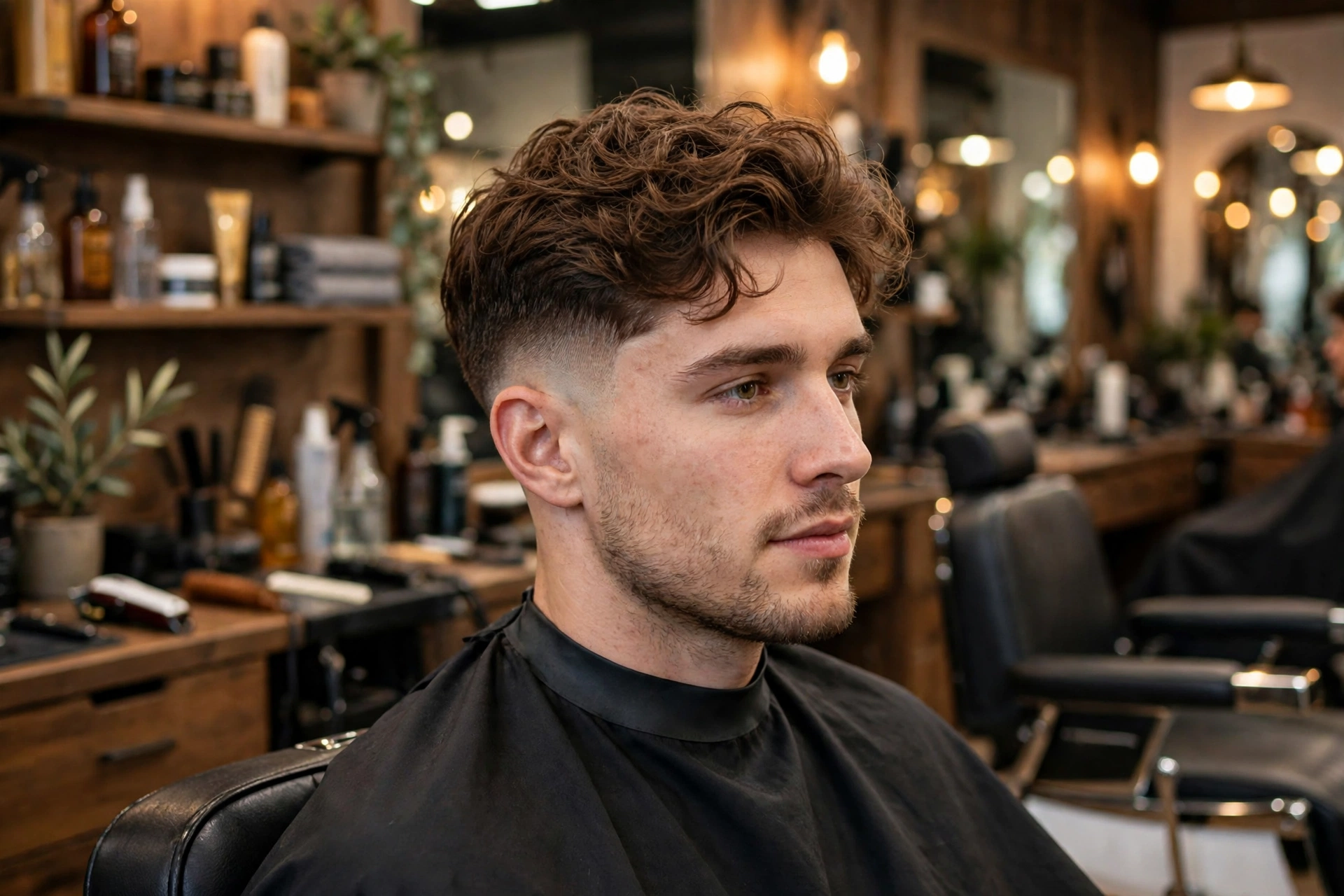
Wavy hair has a mind of its own. It is not straight enough to lie flat and not curly enough to form tight ringlets, which is why so many guys with waves struggle to find a haircut that works with their texture instead of against it. A low taper fade is one of the best answers: it keeps the sides and neckline clean and sharp while leaving enough length on top for your waves to do what they do naturally. If you want the full background first, read the complete guide to the low taper fade, then come back for the wavy-hair specifics below.
Why a Low Taper Fade Suits Wavy Hair
A fade that starts low — around the ears and the nape — removes bulk exactly where wavy hair tends to puff out, while the top keeps the length waves need to form. The result is contrast: tidy, controlled sides against a textured, moving top. Because the taper is gradual rather than skin-tight, it also grows out more forgivingly than a high fade, which matters for wavy hair that can look uneven as it grows.
Wavy hair also hides the blend line well. The natural movement of the waves breaks up any visible transition between the faded sides and the longer top, so even a slightly grown-out taper still looks intentional.
What to Ask Your Barber
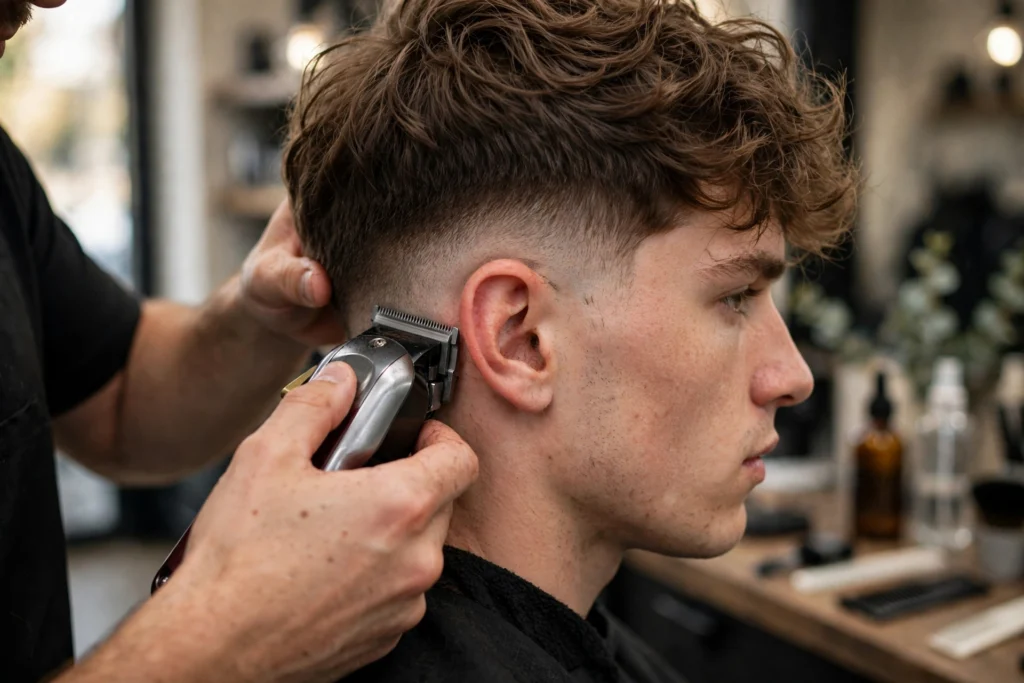
Walk in with a plan. Use the exact script for asking your barber for a low taper fade as your base, then add these wavy-hair specifics:
- Top length: Ask for 2 to 4 inches on top. Loose, beachy waves look best at 3 to 4 inches; tighter or thicker waves sit better at 2 to 3 inches. Below 2 inches, most wave patterns disappear and you lose the whole point of the cut.
- Texture on the ends: Ask your barber to point-cut or texturize the ends instead of cutting them blunt. This removes bulk without creating hard lines and lets the waves nest into each other for a natural finish.
- The taper: Ask for a low taper that starts around the ear and blends down to a #0 or #1 at the hairline and nape, working up through the guard numbers from #0 to #2. If you want a softer, more conservative look, ask for a “low taper, not a skin fade.”
- Weight distribution: Ask for a scissor or textured cut on the crown so the weight is spread evenly. This avoids the dreaded “mushroom” effect where wavy hair balloons out over faded sides.
- Growth direction: Wavy hair grows in different directions. Ask your barber to follow your natural growth pattern so the cut grows out evenly instead of flipping in odd directions.
Bring one reference photo that shows the exact wave length and taper height you want. One photo beats ten minutes of describing.
How to Style Wavy Hair With a Low Taper Fade
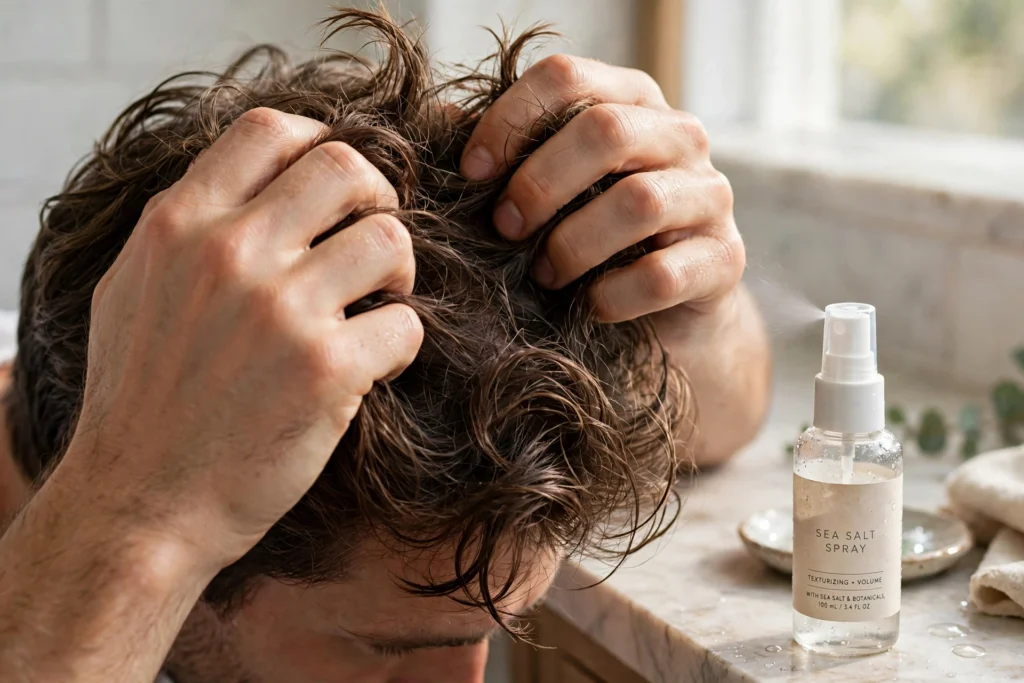
The good news: this cut is genuinely low-effort. The waves do most of the work.
Daily routine (about 5 minutes):
- Start with damp hair — towel-dried after a shower, or misted with water.
- Work a small amount of sea salt spray or lightweight curl cream through the top. Sea salt spray adds texture and volume without weighing waves down.
- Scrunch the hair upward with your hands instead of brushing it flat. Scrunching encourages the wave pattern; brushing breaks it up and causes frizz.
- Let it air-dry, or use a diffuser on low heat if you are in a hurry.
- If you need more hold, rub a pea-sized amount of matte paste or clay between your palms and pinch it through the mid-lengths. Stop before the hair feels stiff.
Second-day refresh: Mist the top with water, re-scrunch, and add a tiny bit of product. Wavy hair often looks better on day two because the waves have settled.
Know Your Wave Type
Not all waves behave the same, and your styling should match:
- Loose waves: Keep 3 to 4 inches on top. Sea salt spray is your best friend for volume. Avoid heavy conditioners that flatten the wave.
- Tight or thick waves: Keep 2 to 3 inches. A leave-in conditioner controls frizz without killing texture. Your barber may need to thin the top slightly so the waves do not stack into bulk.
- Fine wavy hair: Keep around 2 inches. Use lightweight matte products to add the appearance of thickness. Too much length will make fine waves look stringy.
Variations Worth Trying
Once the base cut is dialed in, these are the most popular ways to wear it:
- Textured fringe: The front is layered and worn forward. It softens a high forehead or strong hairline and gives a modern, youthful edge. Ask for a point-cut fringe so the ends stay piece-y.
- Brushed back: The classic. Drier, more polished — good for the office or formal events.
- Side sweep: Push the waves to one side for an easy, natural look that works on almost every face shape.
Maintenance: Keeping It Sharp
The taper is the part that shows regrowth first. Plan on a touch-up every 2 to 3 weeks to keep the sides and neckline crisp — learn exactly how often you should get a low taper fade touched up. The top can go 4 to 6 weeks between trims depending on how fast your hair grows.
Between visits, wash 2 to 3 times per week (daily washing strips the natural oils waves need) and use conditioner on the top length. A light trim of the ends every couple of months keeps split ends from making the waves look frizzy.
Mistakes to Avoid
- Cutting the top too short. Below about 2 inches, waves flatten out and you are left with a generic short cut.
- Heavy waxes and shiny pomades. They weigh waves down and make the top look greasy by midday. Matte and lightweight wins.
- Brushing dry waves. This is the fastest way to turn defined waves into a frizzy cloud. Scrunch, do not brush.
- Skipping taper touch-ups. Grown-out sides erase the contrast that makes this cut work. The top can wait; the taper cannot.
- Blow-drying on high heat without a diffuser. It blasts the wave pattern apart. Low heat with a diffuser, or just air-dry.
FAQ
How long should my wavy hair be for a low taper fade?
Keep 2 to 4 inches on top. Loose waves need 3 to 4 inches to show their pattern; tighter waves work at 2 to 3 inches. The taper itself stays short around the ears and nape regardless.
Can I get this cut if my hair is only slightly wavy?
Yes. Sea salt spray plus scrunching can coax visible waves out of mostly-straight hair, and the low taper still gives you the clean sides. Tell your barber your hair is “wavy when styled” so they leave enough length.
Will the fade make the sides look too thin compared to the wavy top?
That contrast is the point of the cut. A low taper is gradual, not skin-tight, so the transition looks natural. If you worry about too much contrast, ask for a longer guard at the bottom of the taper.
How often do I need to trim it?
Get the taper touched up every 2 to 3 weeks and trim the top every 4 to 6 weeks. The sides show growth first, so do not let the taper go too long between visits.
Final Word
The low taper fade might be the easiest great haircut a wavy-haired guy can get: the sides stay sharp with minimal effort, the top needs little more than sea salt spray and a scrunch, and the cut flatters nearly every face shape. Ask for the right length, texturize the ends, and let your waves do the talking.