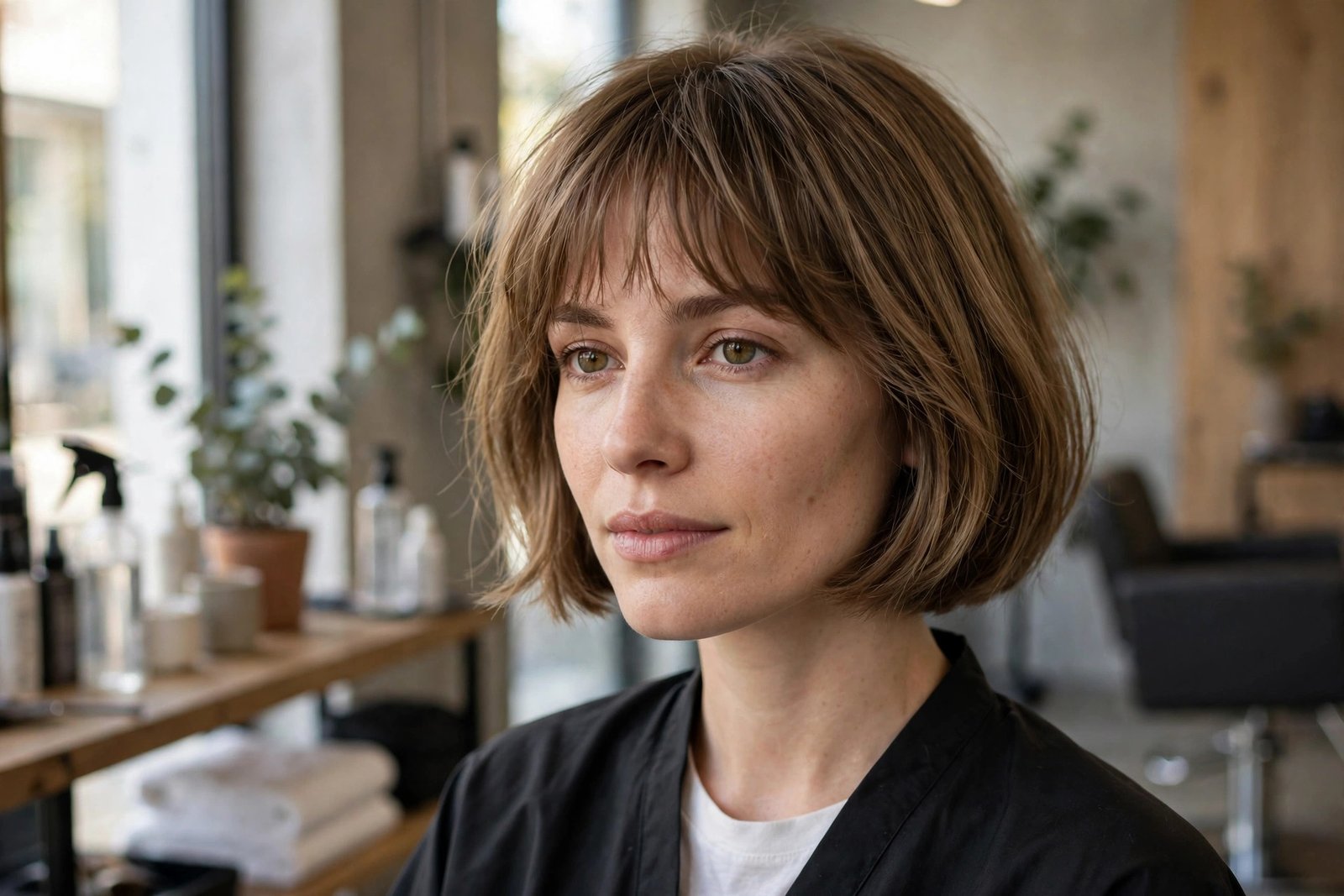
Some haircuts try hard. The French bob does not. It is the chin-length, slightly undone cut that looks like you woke up in Paris and simply did not bother — in the best way. Short, textured, usually with bangs, and styled in about five minutes, it has been cool since the 1920s and it is not going anywhere. Here is what it is, who it suits, and exactly what to ask your stylist for.
New to bobs in general? Our classic bob guide covers the longer, more polished versions — the French bob is its cooler, shorter cousin.
What Exactly Is a French Bob?
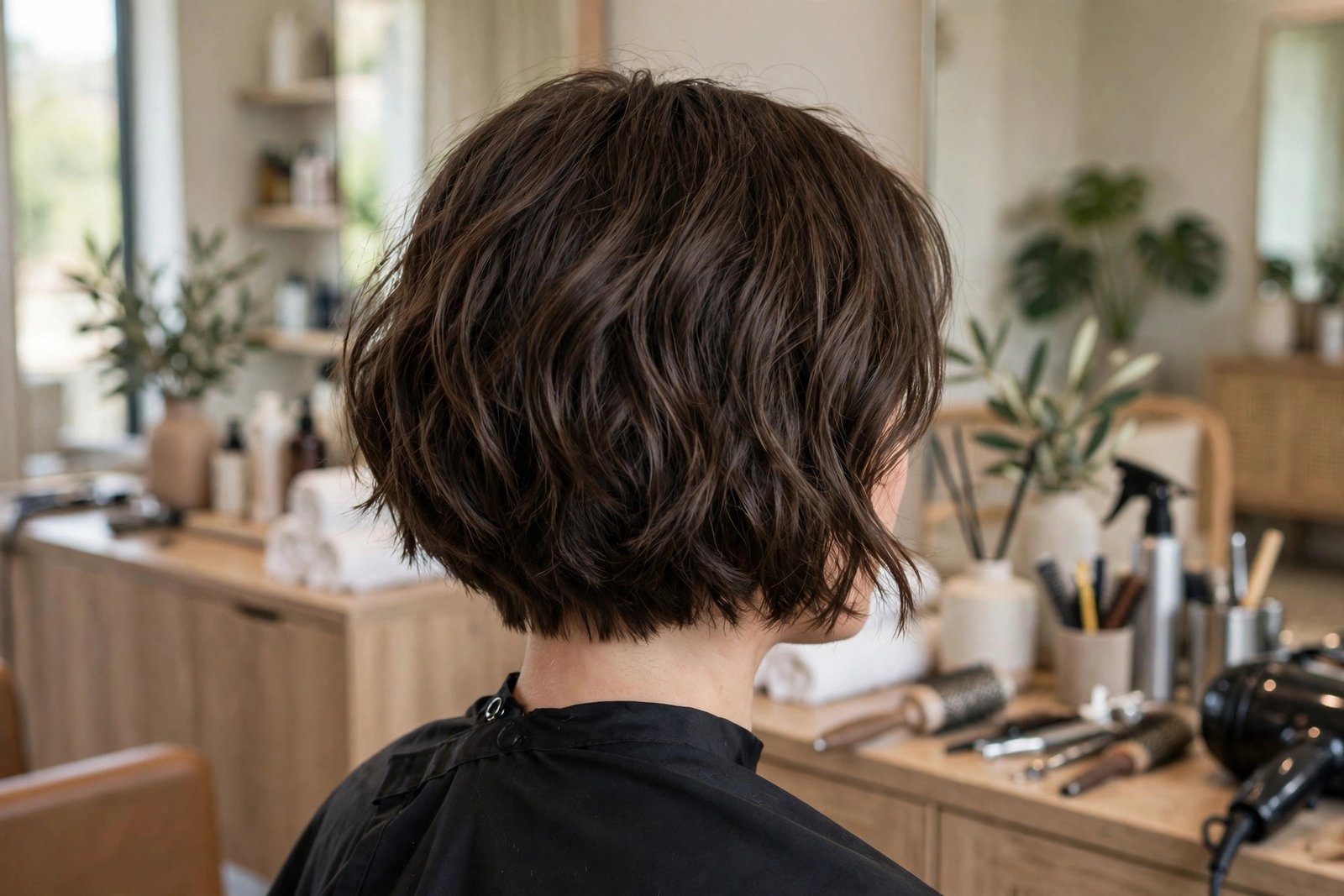
The French bob sits at the jawline or chin — noticeably shorter than a classic bob. Its signature traits:
- Short length: jaw to chin, sometimes tucked behind the ears.
- Undone texture: soft layers and piece-y ends instead of a sharp, polished line. It is meant to look a little imperfect.
- Bangs, usually: a short textured fringe, curtain bangs, or micro bangs complete the look — though you can wear it without.
- Volume over sleekness: the cut builds in airiness and movement rather than lying flat.
The style comes from 1920s Paris, when flapper-era women chopped their hair as a statement of independence. A century later, the appeal is the same: it looks deliberate without looking fussy.
French Bob vs. Classic Bob: What Is the Difference?
People mix these up, so here is the quick version. A classic bob is longer (neck to collarbone), often sleeker and more polished, and takes more styling time. A French bob is shorter (chin or above), textured and airy, and takes about a minute to style. The classic bob says polished; the French bob says effortless. In length, the French bob sits between the classic bob and the pixie cut — shorter than the first, longer than the second — with the most relaxed attitude of the three.
Who Does It Suit?
Face shapes
Almost everyone can wear one — the length and bangs just get adjusted:
- Oval: the easiest match. Any version works, including the shortest crop.
- Round: keep the length at the chin or slightly below to lengthen the face, and choose side-swept or curtain bangs over a straight-across fringe.
- Square: ask for soft, piece-y ends around the jaw rather than a hard blunt line, which softens strong angles.
- Long: the ideal candidate — full bangs with a chin-length bob add width and balance a longer face beautifully.
- Heart: wispy bangs soften a wider forehead; texture through the ends balances a narrower chin.
Hair types
- Straight: shows off the cut’s clean geometry. A little texture spray keeps it from looking too severe.
- Wavy: arguably the best match — natural wave gives you the undone Parisian finish with almost no effort.
- Curly: works beautifully, but ask for a dry cut so shrinkage is accounted for, and keep the layers strategic to avoid a triangle shape.
- Fine: the blunt perimeter creates the illusion of fullness. Great choice.
- Thick: the internal layers remove weight and make thick hair more manageable.
What to Ask Your Stylist For
Use this script at your appointment:
- “I want a French bob — chin length, textured, undone.”
- “Soft internal layers for movement, not a blunt one-length cut.”
- “Piece-y ends, not a hard line.”
- For bangs: “a short textured fringe” (classic), “curtain bangs” (softer, face-slimming), or “micro bangs” (boldest).
- “I want to air-dry it most days — cut it so it falls into place.”
Bring two or three reference photos showing the exact length and bang style you want. If you are torn between bangs or no bangs, start without — fringe can always be added at your next trim. Curious about layering in general? Our long layers vs. short layers breakdown explains how layer length changes the whole look.
How to Style It at Home (5 Minutes)
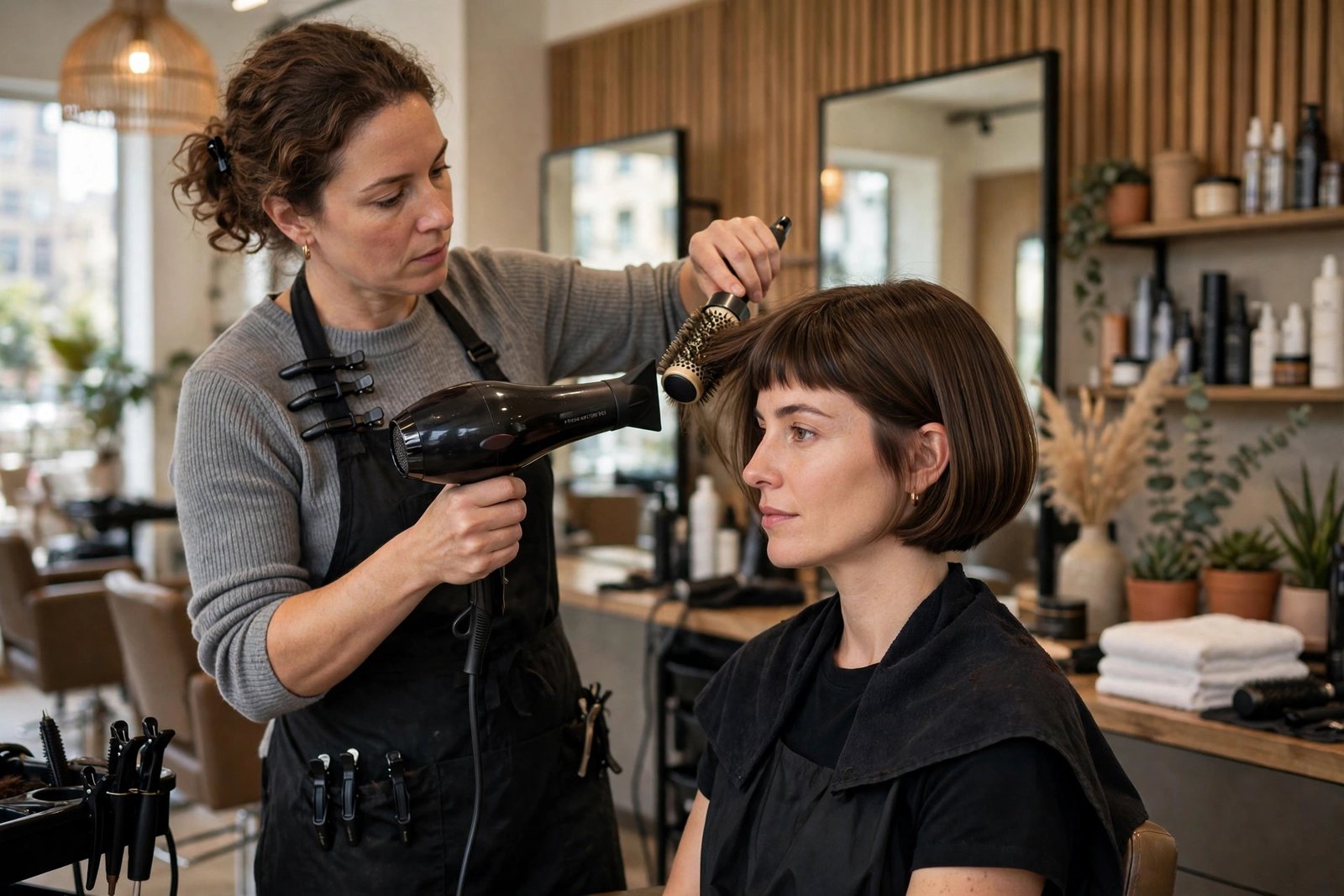
This is the whole point of the cut — it should not need much:
- On damp hair, work a small amount of lightweight styling cream or mousse through the lengths.
- For the classic undone finish: spray sea salt spray on damp hair, scrunch, and air-dry. Done.
- For a bit more polish: rough-dry with your fingers, then bend the ends with a flat iron — one pass, low heat.
- Finger-comb the bangs into place. Do not over-brush; the texture is the style.
- Finish with a drop of lightweight oil on the ends if they look dry.
You do not need heavy products. Skip high-shine pomades and heavy silicones — the French bob should look matte and touchable, not greasy. It famously looks even better on day two or three than freshly washed.
Maintenance and Growing Out
The one thing this cut demands is trims. Because it lives at a precise length, it loses its shape faster than longer styles — plan on a trim every six to eight weeks to keep the line crisp. The good news: it grows out gracefully into a longer bob, so you are never stuck in an awkward phase. If you decide to grow it out, trims every ten to twelve weeks will keep the shape intentional while the length builds.
FAQ
Is a French bob high maintenance?
Day to day, no — it is one of the lowest-maintenance short cuts, styled in minutes with minimal product. The maintenance is in the trims: every six to eight weeks to hold the shape. That is the trade-off, and most wearers find it worth it.
Does a French bob work on curly hair?
Yes, and curly French bobs are some of the most striking versions. The keys: a dry cut to account for shrinkage, strategic layers to avoid the triangle effect, and bangs cut longer than you think (curls spring up). The short length actually helps curls spring to life.
French bob or pixie cut — which should I choose?
Go French bob if you want short hair that still has styling options (tuck it, wave it, accessorize it). Go pixie if you want the shortest, boldest option and are ready for frequent trims. Our pixie cut guide covers who suits the pixie — and who should skip it.
What is the difference between a French bob and a classic bob?
Length and attitude. The French bob is shorter (chin or above), textured, and undone, usually with bangs. The classic bob is longer (neck to collarbone), sleeker, and more polished. Choose based on how much styling time you want to spend each morning.