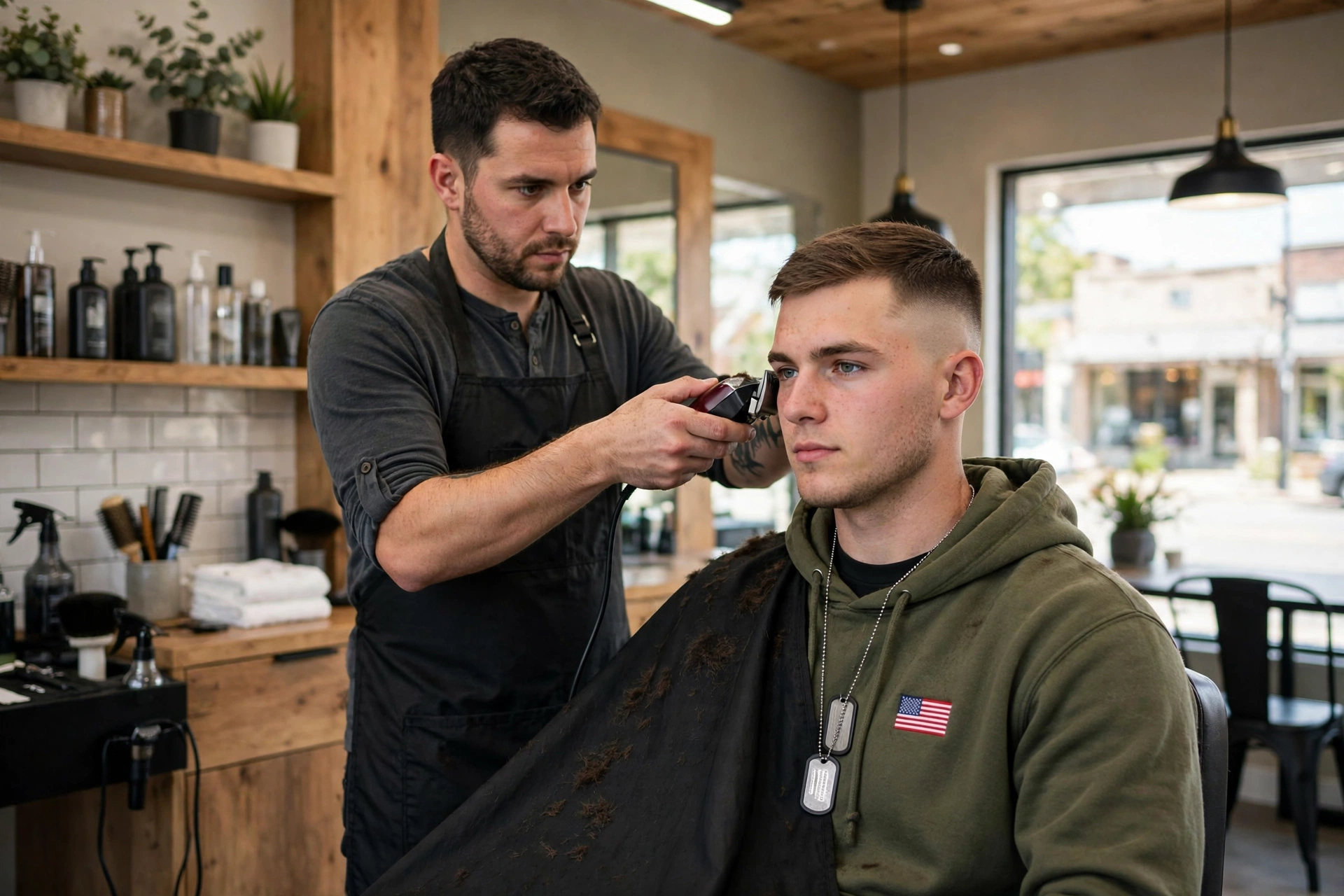
A low taper fade is one of the best haircuts a soldier can wear. It looks sharp in uniform, it grows out neatly between cuts, and — unlike a high skin fade or a hair design — it fits inside the Army’s grooming rules. But “military-friendly” is not automatic. The Army’s rules set exact limits on length, bulk, and shape, and a barber who does not know them can easily cut a fade that fails inspection.
This guide explains the current Army rules in plain language, shows which low taper fade versions pass, and gives you the exact words to use at the barber chair. Always check your unit’s current guidance too: regulations change, and a commander can set stricter local standards.
What the Army Actually Requires
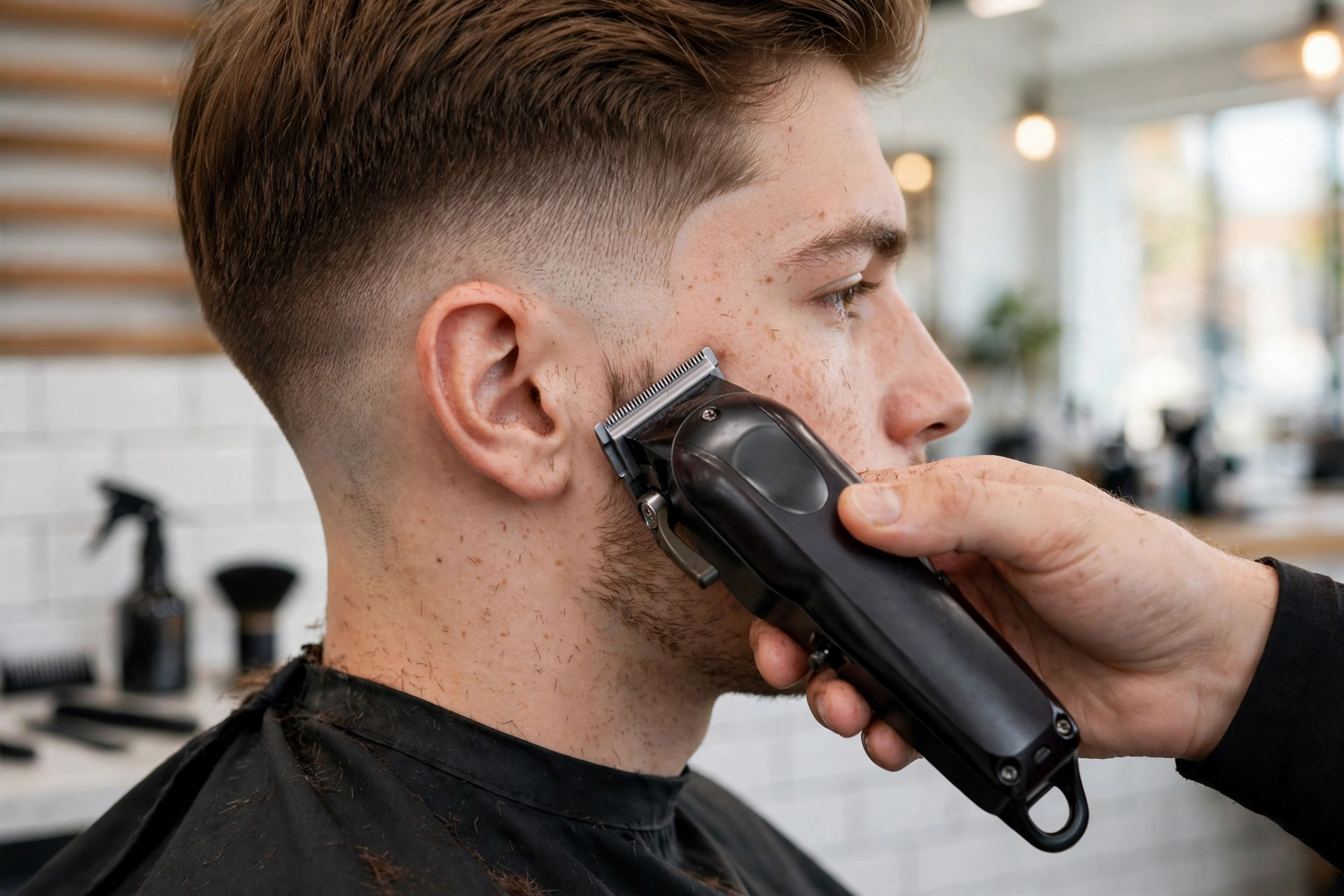
Army Regulation 670-1 covers wear and appearance of Army uniforms, and Army Directive 2025-18 updated the grooming standards. For male soldiers, the hair rules come down to a few clear numbers:
- Tapered or faded is required. Hair must be tapered or faded, starting at skin level or at 1/4 inch at the sideburns and around the ears. A low taper fade meets this by definition.
- Top bulk: no more than 2 inches. Bulk means how far the hair stands out from the scalp. Keep the top at 2 inches or shorter.
- Side bulk: no more than 1 inch. The hair on the sides must not stick out more than 1 inch from the scalp.
- Off the ears and collar. Hair must not fall over the ears. Only closely cut hair at the back of the neck may touch the collar.
- Natural color only. Hair color must look natural. No bright or unnatural dye.
- No designs. Soldiers may not shape or cut designs into their hair or scalp. That rules out hair designs and line patterns.
- No locs, braids, or twists for male soldiers. A low taper fade with a textured top is fine; braided or twisted tops are not.
A shaved head is also authorized, and a cut part is allowed if it follows the natural hairline and is no wider than 1/8 inch. Sideburns must be neatly trimmed and cannot extend below the lowest part of the ear opening.
Why the Low Taper Fade Works So Well in Uniform
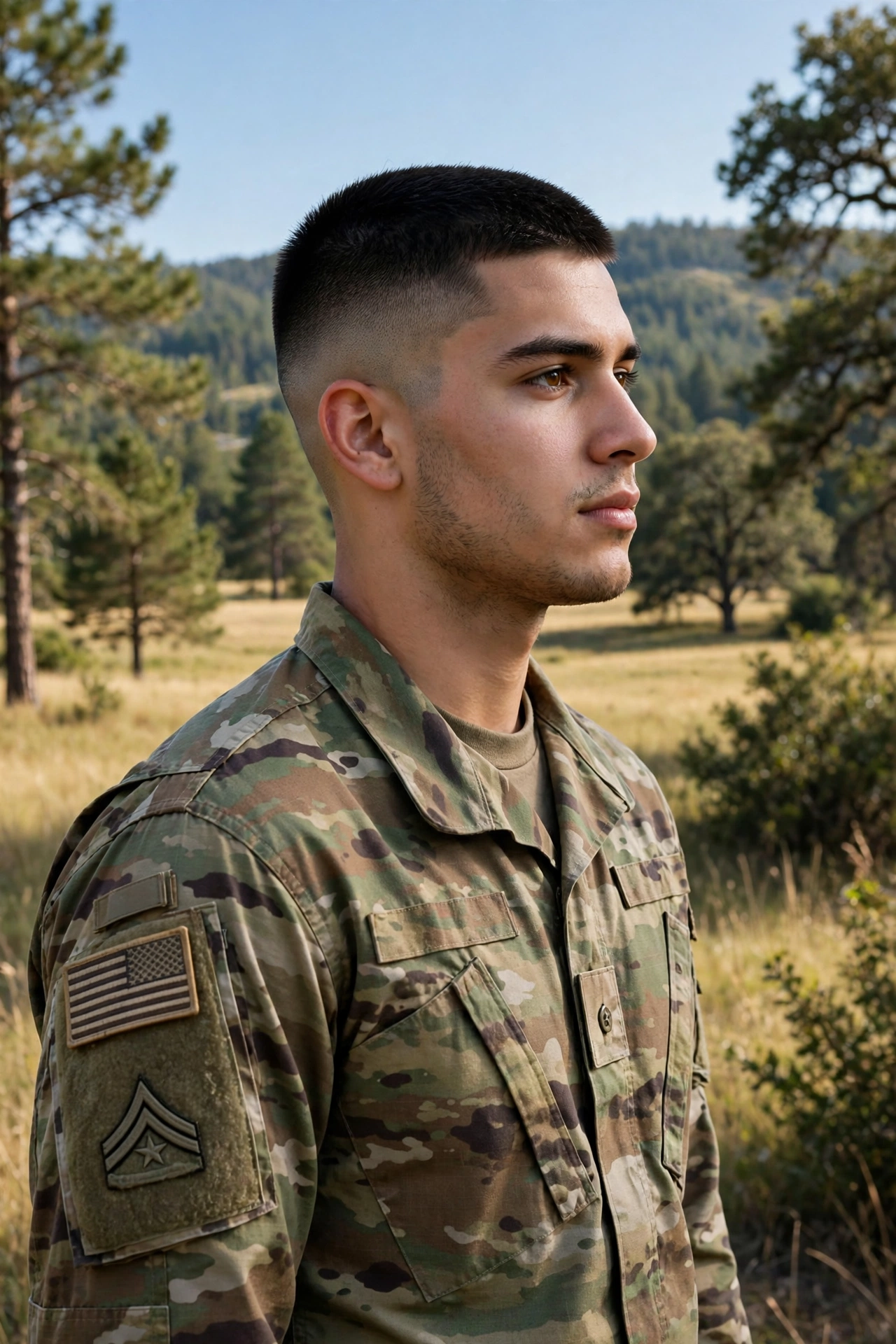
The low taper fade keeps the shortest part of the cut low — just above the ears and around the nape — and blends it up gradually. That matches the regulation’s demand for a tapered appearance on the sides and back. Because the fade sits low, the cut still looks neat after two or three weeks of growth, which matters when field time or a busy training schedule keeps you away from the barber.
It also works under headgear. A patrol cap or helmet presses the sides flat, and a low taper has no bulky transition zone up high that can stick out or look uneven under a cover. Keep the top short enough that it does not push the cap up, and the cut stays inspection-ready all day.
5 Regulation-Safe Low Taper Fade Versions
1. The Classic Regulation Taper
Short on top (about 1 to 1.5 inches), tapered from a #1 at the edges up to a #3, with a clean tapered neckline. This is the safest option — the closest thing to a standard Army cut with a modern finish. Ask for: “low taper, #1 at the bottom blending to a #3, top scissor-cut to about an inch, tapered neckline.”
2. Low Taper Fade With a Short Textured Crop
A textured crop on top, kept under 2 inches, with a low taper around the ears. It looks modern without breaking any rule. Use a small amount of matte clay to keep the texture in place. Skip heavy shine products, which can look greasy under a cap.
3. Low Taper Fade With a Buzz Cut Top
A buzz cut on top (a #3 or #4 guard) with a low taper fade on the sides is the lowest-effort regulation cut there is. It is the same idea as a low taper fade with a buzz cut — clean, sharp, and almost impossible to mess up. Great before basic training or a field exercise.
4. Low Taper Fade With a Side Part
A short side part on top, combed neatly to one side, with the low taper doing the work around the ears. This is the dress-uniform version: tidy, classic, and safe for ceremonies and photos. Keep the part natural and narrow.
5. Low Taper Fade With a Short Quiff
A small quiff — about 1.5 inches swept up at the front — stays under the 2-inch bulk limit and adds a little style for off-duty time. A low taper fade with a quiff is a good reference, but tell your barber to keep the height modest. A tall quiff will fail the bulk rule.
What to Tell Your Barber (Exact Script)
Walk in with this script and you will not get a surprise:
“I need a military regulation cut. Low taper fade, starting at skin or a #0 at the bottom, blending up to a #3. Top no longer than 2 inches — keep it around an inch and a half. Nothing over my ears, tapered neckline, no designs, no hard lines. Sideburns trimmed even with the bottom of my ear.”
If your barber is not used to military cuts, show them the numbers: top bulk 2 inches maximum, side bulk 1 inch maximum. Most barbers near a base already know these rules, but a civilian barber in a new town may not.
Styles That Will Fail Inspection
Avoid these, even if they look good on Instagram:
- Hair designs or shaved lines. Any pattern cut into the hair is prohibited.
- High skin fades with a long top. The fade itself is allowed, but a top over 2 inches of bulk fails. The contrast also reads as extreme.
- Long textured tops. A messy top that sticks out more than 2 inches fails the bulk rule, even with a perfect taper.
- Blocked or squared necklines that touch the collar. Only closely cut hair may touch the collar. A heavy blocked neckline is risky.
- Braids, twists, or locs on top. Not authorized for male soldiers, even with a tapered fade underneath.
- Unnatural color. A dyed top with a natural taper still fails.
How Often to Get It Cut
A regulation low taper fade needs a touch-up every 1 to 2 weeks to stay inspection-ready. The taper grows out fastest at the nape and around the ears — the two places an inspector checks first. If you cannot get to a barber, a quick clean-up of the neckline and sideburns with a trimmer keeps the cut legal between visits. Our guide to guard numbers explains which guards to use for a safe at-home clean-up.
Budget about $25 to $45 per cut at a typical US barbershop, plus a tip of 15 to 20 percent. Shops near military bases often offer a military discount — ask before you sit down. For the full tipping picture, see how much to tip your barber in the US.
Other Branches: Same Idea, Different Rules
This guide covers the Army. The other branches have their own regulations — the Marine Corps, Navy, Air Force, and Coast Guard each publish their own grooming standards, and the details differ. The low taper fade is a safe starting point in every branch because it is short, tapered, and off the ears, but always check your branch’s current regulation before a new cut. A professional low taper fade for the office follows the same tidy logic and is a useful reference for civilian-side events too.
FAQ
Is a low taper fade allowed in the Army?
Yes. Army rules require hair to be tapered or faded, starting at skin level or 1/4 inch at the sideburns. A low taper fade meets that requirement as long as the top stays under 2 inches of bulk and the sides stay under 1 inch.
Can soldiers get a skin fade?
Yes, a fade may start at skin level. The risk is the top: a skin fade paired with a long top over 2 inches of bulk fails the rule. Keep the top short and the cut passes.
How short does the top have to be?
The bulk on top must not exceed 2 inches from the scalp. In practice, 1 to 1.5 inches is the sweet spot — it looks good, stays under the limit, and sits well under a patrol cap.
Are designs or line-ups allowed?
No. Soldiers may not shape or cut designs into their hair or scalp. A natural line-up that follows the hairline is different from a design, but keep it subtle and check with your unit if you are unsure.
Final Verdict
The low taper fade is the easiest regulation-safe haircut a soldier can choose. Keep the top under 2 inches, the sides under 1 inch, the taper low and blended, and skip designs and unnatural color. Use the script above at the chair, get a touch-up every 1 to 2 weeks, and the cut will pass inspection in uniform and still look good off duty.