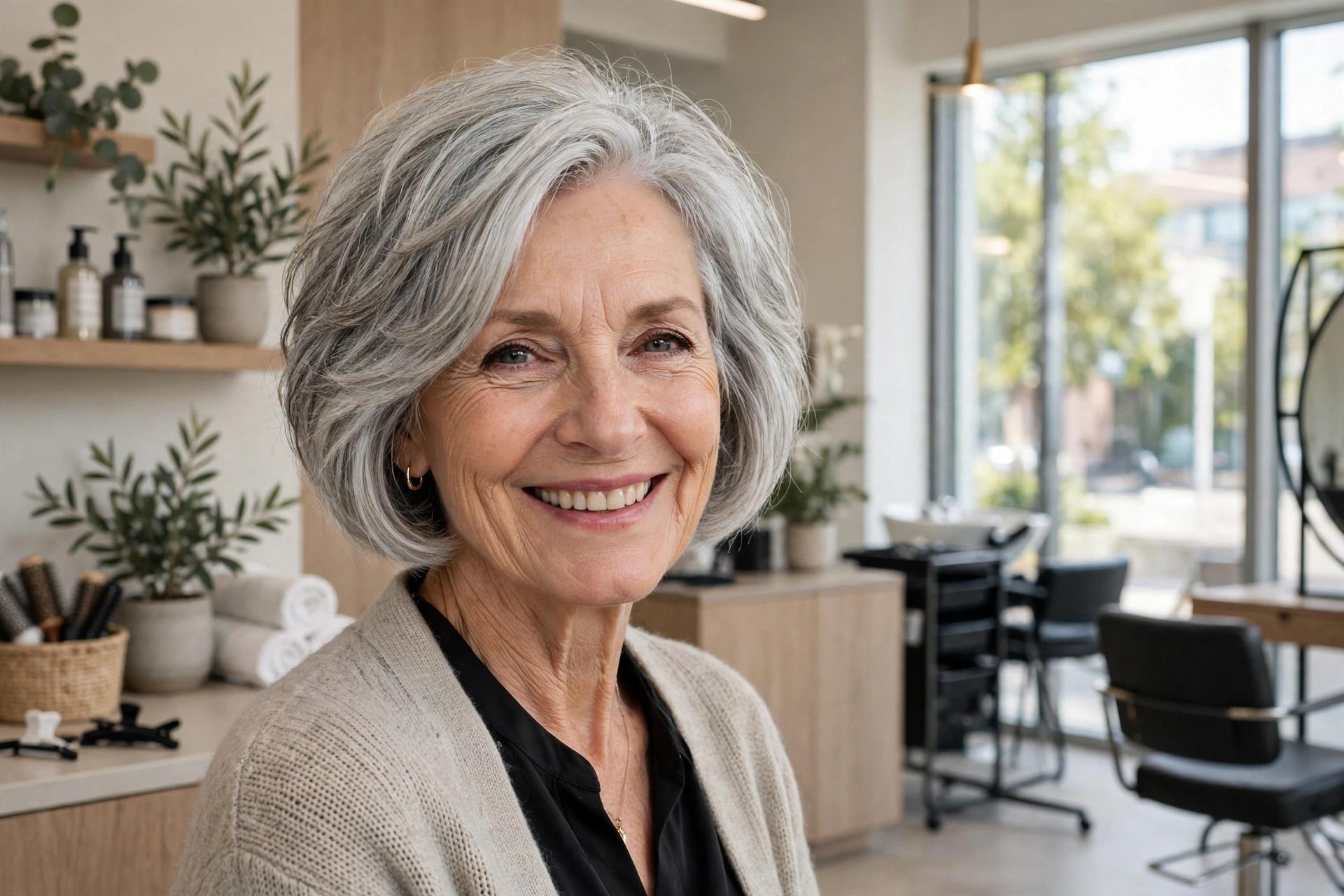
Turning 60 is a good time to refresh your haircut — not to play it safe, but to find a style that works with your hair as it is now. Hair naturally changes with age: it often becomes finer, drier, or thinner, and gray or silver takes over. The most flattering haircuts for women over 60 work with those changes instead of fighting them. They add volume where hair has thinned, soften the face, and style in minutes rather than half an hour.
What Makes a Haircut Flattering After 60?
Three things matter more than anything else: lift, softness, and ease. Lift comes from layers and crown volume, which make fine or thinning hair look fuller. Softness comes from face-framing pieces and wispy ends, which are kinder than blunt, heavy lines. Ease comes from a cut with shape built in, so it dries into place instead of needing daily heat styling.
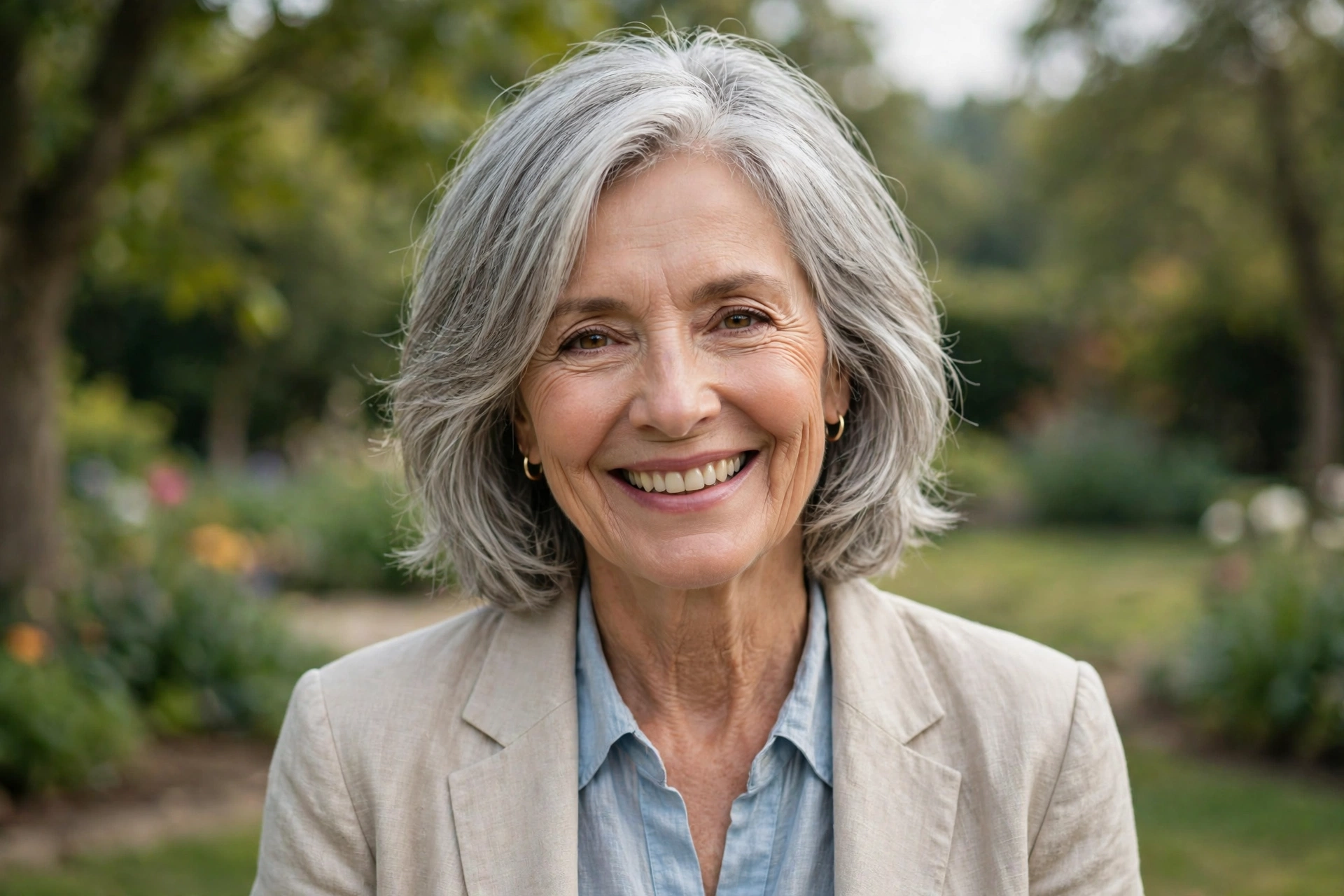
Length matters too. The sweet spot for most women over 60 sits between the chin and the collarbone. Hair that is very short can emphasize facial lines, while very long hair tends to drag features downward and look thin at the ends. Chin-to-collarbone length frames the face, holds volume, and still gives you styling options. If you are already blending silver into your color, our guide to haircuts for women going gray covers blending, growing out, and styling silver hair in detail.
The Best Haircuts for Women Over 60
1. The Classic Pixie
The pixie is the queen of low-maintenance cuts. Short all over with soft layers on top, it adds volume and texture, which makes it ideal for fine hair. The shorter the hair, the denser it reads — so a pixie can make thinning hair look fuller than a longer cut. It styles in minutes with a little mousse or texturizing paste, and it draws attention to your eyes and cheekbones. If you want the full picture before committing, our pixie cut guide covers who it suits best. One honest note: a pixie grows out fast, so plan a trim every 4 to 5 weeks to keep the shape.
2. The Feathered Pixie
A softer take on the classic pixie, with choppy, textured layers and often a long side-swept fringe. The feathered pieces add movement and let the hair sit naturally, so the shape feels gentle rather than harsh. It is a good choice if you like short hair but want something softer than a sharp crop.
3. The Textured Bob With Side-Swept Bangs
A chin-length bob with light layers and a side-swept fringe is the safe, flattering middle ground for anyone not ready for a pixie. The layers remove weight from the bottom so the hair moves freely, and the fringe softens the forehead. It grows out gracefully, which stretches the time between salon visits to about 6 weeks.
4. The Stacked Bob
A stacked bob builds short layers low at the back, with length toward the front. That stacking creates crown height while the front length frames the face — a flattering combination after 60, and a gift for fine, flat hair. It looks polished with almost no styling.
5. The Layered Lob
The lob, or long bob, falls just above the shoulders with graduated layers that create natural movement. It adds volume without bulk, making fine or thinning hair look fuller, and it keeps enough length for a ponytail or a clip on days you want hair out of the way. If you like a middle length, our guide to medium-length haircuts for women covers the lob and similar cuts in detail.
6. The Modern Shag With Curtain Bangs
Choppy layers meet face-framing curtain bangs that part naturally in the center. The layers add volume at the crown, where hair often flattens, while the bangs soften forehead lines. This low-maintenance style grows out gracefully and works well with natural wave or curl.
7. The Soft Curly Crop
If your hair has natural curl or wave, a short curly crop lets the texture do the work. The curl pattern is the style, so you need almost no heat tools — a little curl cream, air-dry, and go. Ask your stylist to cut it dry or mostly dry so the shape matches how your curls actually fall.
8. The Feathered Crop
A wash-and-go dream: short all over, with soft feathered pieces through the crown for lift and movement. It is the cut to ask for if your top priority is a five-minute morning. It air-dries into shape and needs little more than a quick finger-style.
Choosing by Face Shape
Round face: angled bobs, asymmetrical bobs, tousled shags, and styles with height at the crown. Avoid blunt bobs at chin level, which can widen the face.
Oval face: almost anything works — pixies, bobs, lobs, and shoulder-length waves. Pick by hair type and lifestyle instead.
Square face: soft layered bobs, feathered pixies, side-swept bangs, and wavy styles. Softness around the jawline matters more than length.
Heart-shaped face: chin-length bobs and styles with volume at the jaw balance a wider forehead. Side-swept bangs help too.
If you wear glasses, the frame and the cut should work together. Our guide to haircuts for women with glasses covers which lengths and fringes suit different frames.
Choosing by Hair Type
Fine or thinning hair: pixies, stacked bobs, and textured bobs. Shorter lengths and stacked layers create the illusion of thickness. Avoid one-length long cuts, which can look flat and stringy.
Thick hair: layered lobs, long layers, and textured shags. Layers remove bulk without losing length.
Curly or wavy hair: curly bobs, soft shags, and wash-and-go crops. Let the natural pattern lead, and keep layers long enough to avoid a triangle shape.
Gray or silver hair: any of the cuts above work, but gray hair is often coarser and drier, so a gloss or purple shampoo every couple of weeks keeps silver bright instead of yellow. A typical gloss runs roughly $40 to $70 at most salons.
What to Ask Your Stylist
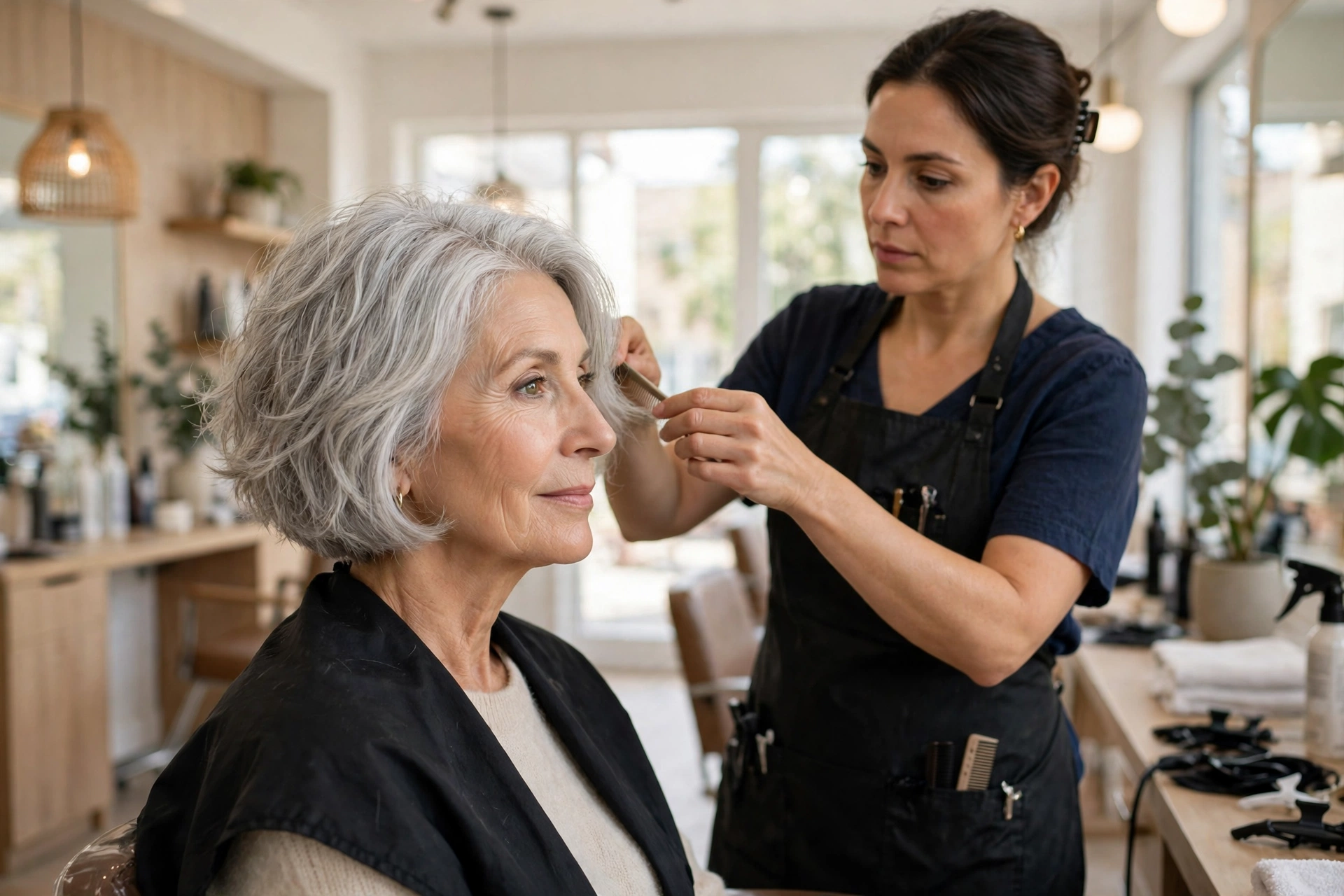
Bring a photo of the cut you want — ideally of someone with a similar face shape and hair texture. Then say three things: how much time you want to spend styling each morning, how often you are willing to come in for a trim, and whether you want to keep your gray or cover it.
A good script sounds like this: “I want something easy — wash and go, five minutes max. My hair is fine and thinning on top. I am growing out my gray. What would give me volume without a lot of styling?” That gives your stylist everything they need to pick the right cut instead of guessing.
Styling and Upkeep
- Trims: pixies and crops every 4 to 5 weeks; bobs and lobs every 6 to 8 weeks. Short cuts lose their shape faster, so the schedule is part of the deal.
- Products: use product only where the cut needs help. Root lift goes at the crown, smoothing serum belongs on dry ends, curl cream belongs on curls, and texturizing paste belongs on short pieces that need separation.
- Heat: the best cuts on this list need little to no heat. If you do blow-dry, use a round brush at the crown for lift and let the ends air-dry.
- Color: if you color your hair, a root touch-up every 4 to 6 weeks keeps the grow-out clean. If you are going gray, a gloss every couple of months keeps silver shiny.
- Cost: a typical women’s cut in the US runs roughly $40 to $70 at most salons, with trims for short cuts at the lower end. Prices vary by city and salon.
Styles to Be Careful With
Very long, one-length hair can drag the face down and look thin at the ends after 60. Heavy, blunt bangs can feel harsh and need constant trimming. And a cut that needs 30 minutes of heat styling every morning is a cut you will stop styling — pick the version that works with your real routine, not your ideal one. That does not mean you have to go short: a layered lob or a shoulder-length cut with soft layers can be just as flattering as a pixie. The rule is shape, not length.
FAQ
Should women over 60 have short hair?
Not necessarily. Short hair adds fullness where hair thins and cuts styling time, which is why it is popular after 60. But a chin-to-collarbone bob or lob can be just as flattering. The right length is the one that suits your face shape, hair type, and routine.
What is the lowest-maintenance haircut for women over 60?
A feathered crop or a textured pixie. Both air-dry into shape with almost no styling. The trade-off is more frequent trims — every 4 to 5 weeks — to keep the shape.
How do I make thin hair look thicker after 60?
Go shorter, add layers at the crown, and use a volumizing mousse at the roots. Stacked bobs and textured pixies create the most fullness. Avoid heavy, one-length cuts, which make thin hair look thinner.
Can I keep long hair after 60?
Yes, if it is healthy and layered. Long layers remove weight and add movement, which stops long hair from looking flat or stringy. Keep the ends trimmed regularly — split ends show more on long hair.
The Bottom Line
The best haircuts for women over 60 are the ones that give you lift, softness, and ease: a pixie or feathered crop for the shortest mornings, a textured or stacked bob for the flattering middle ground, or a layered lob if you want to keep some length. Bring a photo, tell your stylist how much time you really want to spend styling, and pick the cut that fits your life — not the one that needs a life you do not have. For more ideas in the same age range, see our guide to flattering haircuts for women over 50.