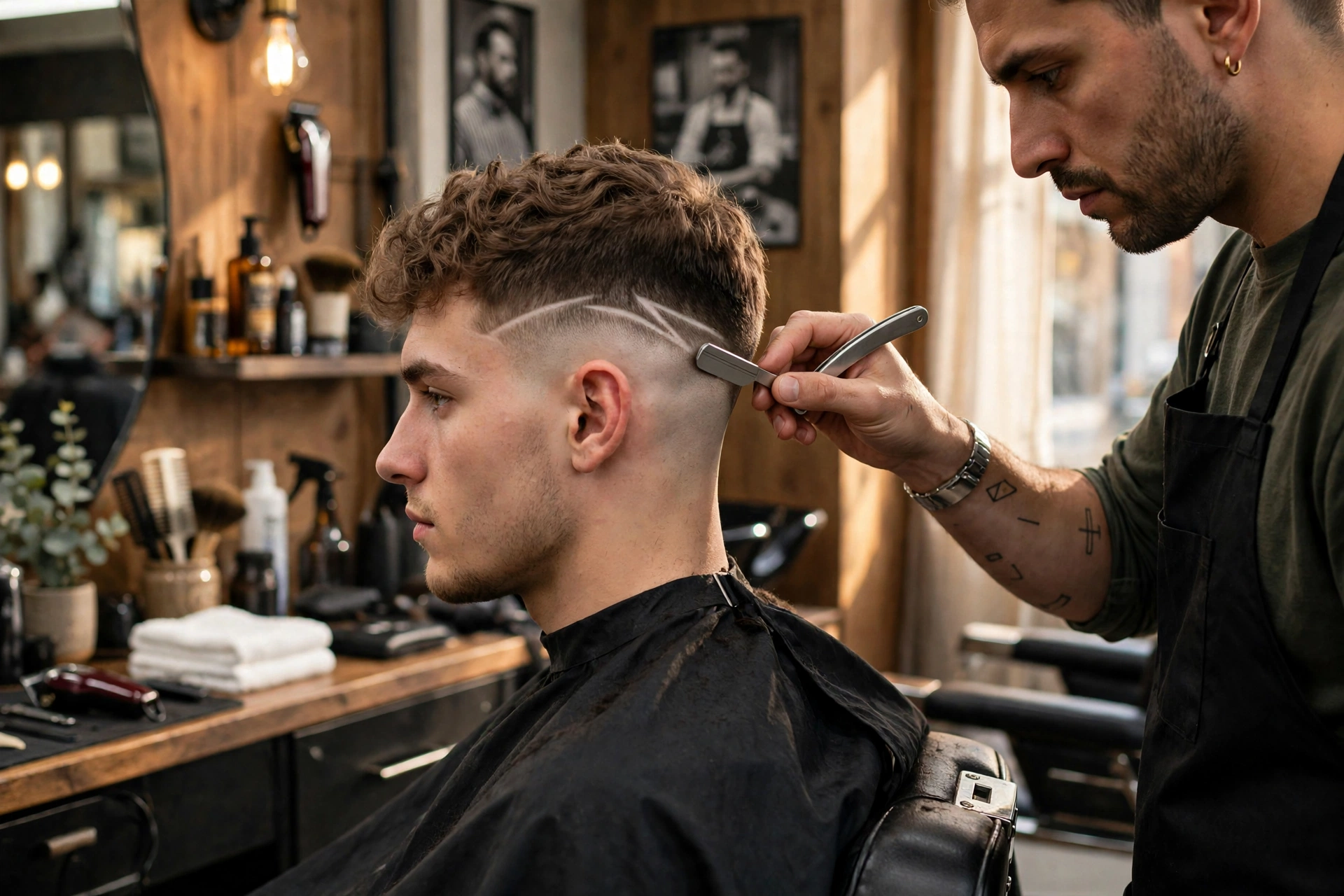
A low taper fade with a hair design takes a clean, classic cut and gives it a signature. The fade stays low and subtle around the ears and neckline, while the barber carves a line, curve, or pattern into the hair with a trimmer or razor. The result is a cut that looks sharp from every angle — and a detail that is entirely yours.
Designs have become one of the most requested add-ons in US barbershops in 2026. The low taper fade is the perfect canvas: enough faded area to show the detail, without the boldness of a high skin fade. Here is how to choose, ask for, and keep one.
What Is a Low Taper Fade Design?
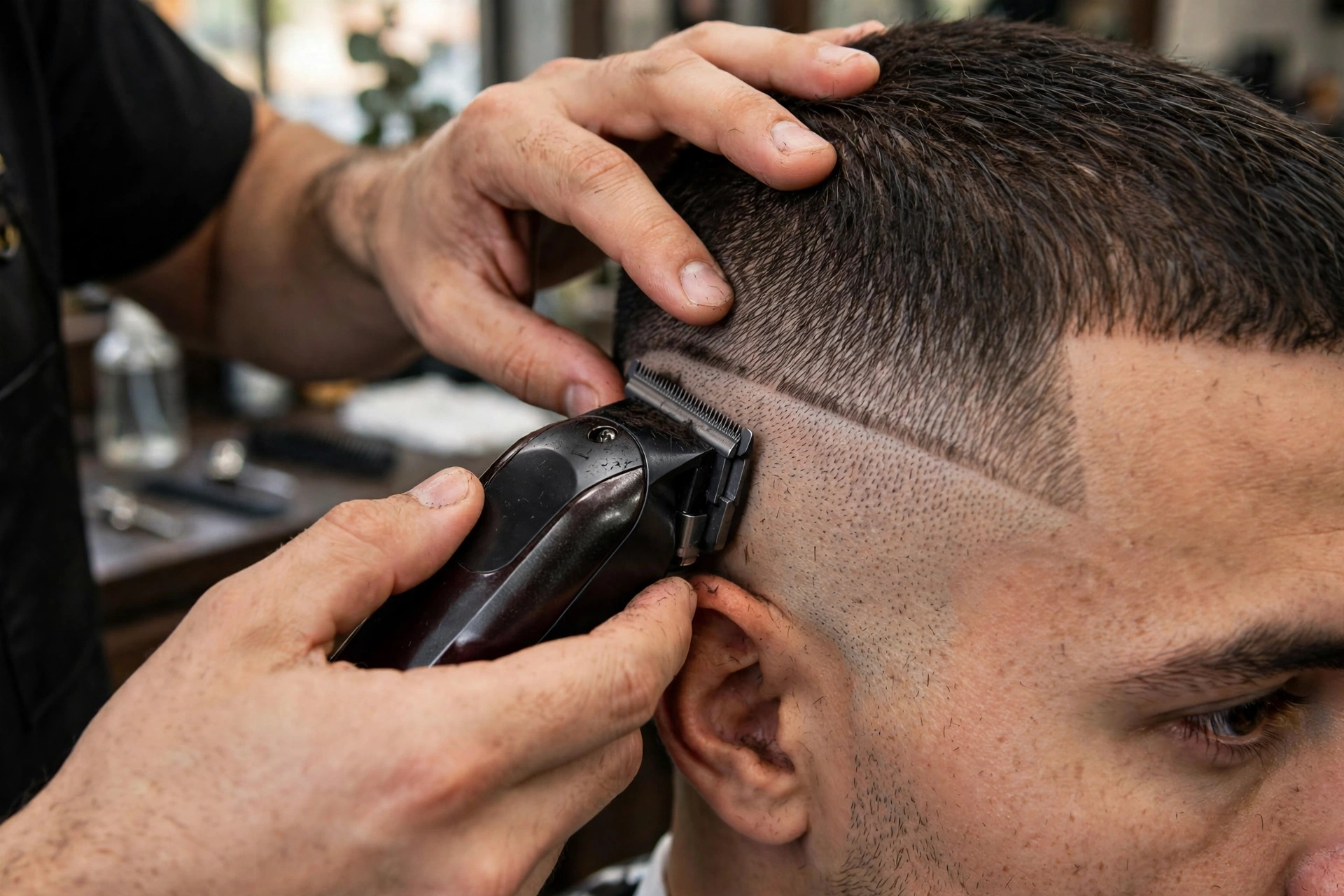
A low taper fade starts short near the neckline and ears, then blends gradually into longer hair as it moves up the head. The fade sits low, close to your natural hairline, which keeps the whole cut soft and wearable. The design is the detail a barber shaves into that faded area — a line or small shape near the temple, a line running down the side parallel to the hairline, or a detail at the neckline such as a V shape or a curve. The barber cuts the fade first, then adds the design.
Thicker hair holds design lines sharper and longer than fine or thin hair, because the contrast between the shaved line and the surrounding hair is stronger. On very fine hair, a simple line usually looks cleaner than a complex pattern.
The Best Low Taper Fade Design Ideas
1. Single Line
One clean line along the temple or side. This is the foundation of the whole category and the right place to start if you have never had a design before. Minimal, easy to keep up, and appropriate just about anywhere, including the office.
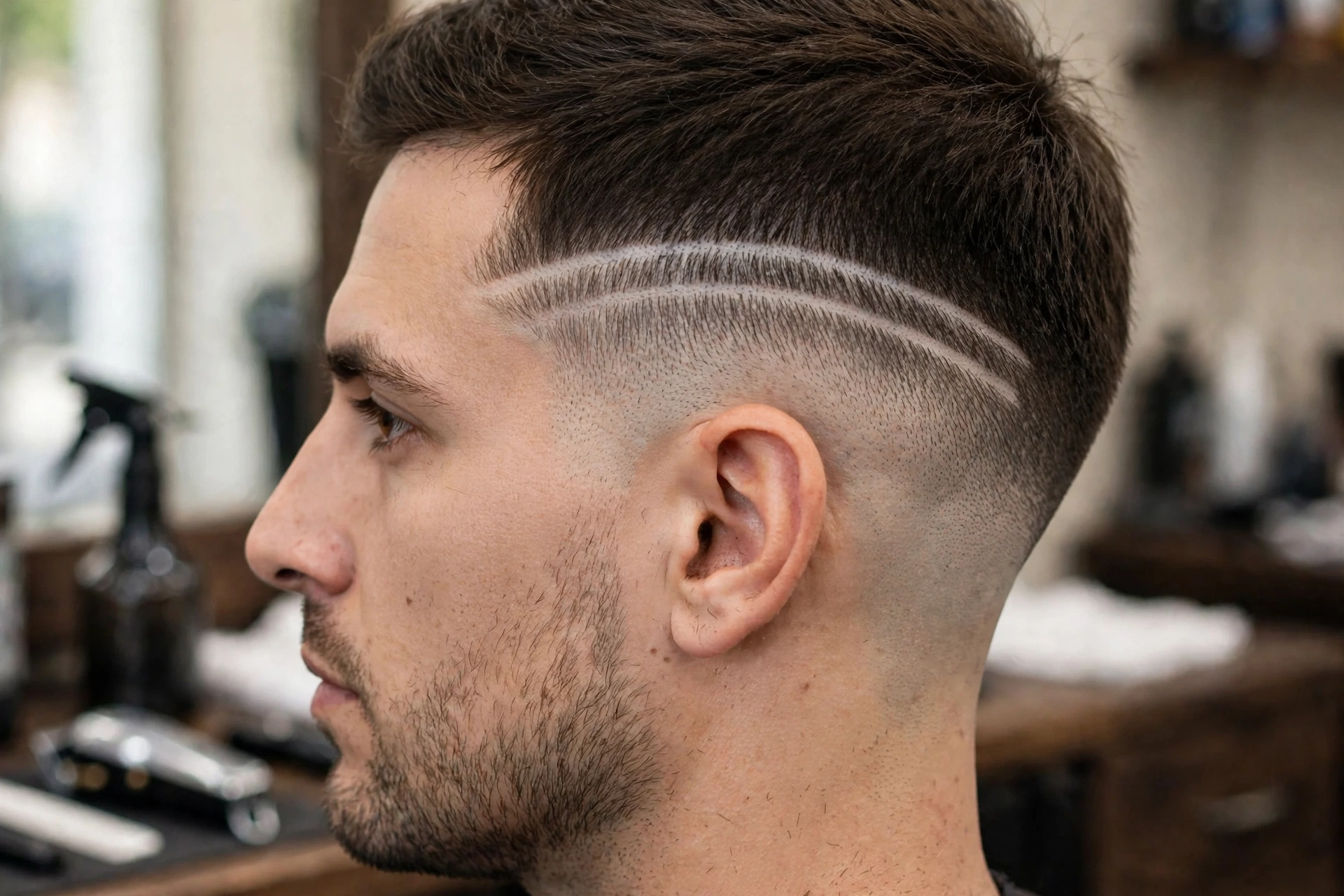
2. Double Line
Two parallel lines close together at the temple or above the ear. The gap between them is everything: too wide and the design loses shape, too tight and the lines blur as the hair grows. The single line with a bit more weight.
3. Curved Line
A soft arc that follows the curve of your head or traces the hairline. It feels natural rather than rigid, and it moves with the fade instead of fighting it.
4. Hard Part
A razor line shaved in to divide the hair from the fade along the side. It doubles as structure, not just decoration, which makes it one of the cleanest options. A low taper fade with a hard part looks polished without being showy.
5. Temple Accent
A small line, angle, or curve right where the fade meets the hairline at the temple. It blends in so naturally that people may not notice it at first — the most office-safe design on the list.
6. Lightning Bolt
A short angular zigzag at the temple, popular with teens. It adds character without taking up much space. Keep it small and precise — oversized versions look clumsy rather than sharp.
7. V-Shaped Neckline
A downward V cut into the back of the neckline instead of a straight line across. It adds real structure when seen from behind, but it lives or dies on clean execution. If you already like sharp edges, a low taper fade with a line-up pairs well with a V neckline.
8. Geometric Patterns
Triangles, diamonds, zigzags, or interlocking shapes shaved into the fade. These bold designs need a steady hand and a barber who does this work often, and they look best on a clean, even fade with strong contrast.
9. Freestyle Art
Custom swirls, waves, or abstract shapes that flow with the natural curve of your head. Freestyle is the most personal option — nobody else will have the same design — but it is also the hardest to repeat exactly, so take a photo of the result right after the cut.
How to Ask Your Barber for a Design
Bring a photo. Designs are visual, and one reference photo does more than five minutes of describing. Save two or three photos on your phone: one of the design you want, and one of the fade length you want under it.
Then say three things: where the design goes, how bold it should be, and how much upkeep you are willing to do. For example: “Low taper fade, skin at the bottom, with a single line above the ear — keep it subtle.” If you are unsure, start with a single line. A barber can always add more next visit; removing a design means waiting for it to grow out.
Ask how long it takes. A simple line adds about 5 to 10 minutes. A complex geometric or freestyle design can add 20 to 30 minutes, and some shops charge extra. If you are not sure your barber does designs regularly, ask before you sit down — a simple line looks sharp in skilled hands and uneven in inexperienced ones. Before you book, it helps to know the basics: our guide to low taper fade guard numbers explains the #0 to #2 range your barber will use at the bottom of the fade.
Cost: What to Expect in the US
A design usually adds a small fee on top of the haircut price. In most US barbershops, expect roughly $5 to $15 extra for a simple line, and roughly $15 to $30 extra for a complex geometric or freestyle pattern. Prices vary by city and by shop, so ask when you book. Some shops include a simple line in the cut price, especially for regular clients.
Tip on the total. If the cut is $35 and the design adds $10, tip 15 to 20 percent of the $45 total — that is roughly $7 to $9.
How Long Does a Design Last?
A simple line design lasts about 1 to 2 weeks before the hair grows enough to soften the edges. Complex patterns blur a little faster, usually within a week, because fine detail disappears first as hair grows.
Designs placed where hair grows straight out last longest. Lines cut against your natural growth direction tend to close up within days, so a good barber works with your growth pattern, not against it. If you want the design to stay sharp, plan a touch-up every 1 to 2 weeks — the same rhythm as keeping a low taper fade looking fresh in 2026, where softer blends and matte finishes are the current trend.
Who Should (and Shouldn’t) Get a Design?
A design works best if you like detail, you visit the barber every 1 to 2 weeks, and your hair is thick enough to show contrast. It is a great pick for teens, for special occasions, and for anyone who wants a cut with personality. Skip it — or keep it very subtle — if your workplace has a strict dress code, if you go 3 to 4 weeks between cuts, or if your hair is very fine. A small temple accent is the safe middle ground: it reads as a detail up close and disappears from a distance.
FAQ
Does a hair design damage your hair?
No. A design is just hair cut very short in a pattern. It grows back the same as the rest of your hair, usually within 2 to 3 weeks.
Can I get a design with a low taper fade if I have curly hair?
Yes, but keep it simple. A single line or a gentle curve holds up best on curly hair, because tight curls blur fine detail quickly.
How do I remove a hair design I don’t like?
You cannot erase it instantly. Let the hair grow for 1 to 2 weeks until the lines soften, or ask your barber to blend the area into the fade.
Is a design okay for school or work?
A single line or a small temple accent is fine in most schools and offices. Bold geometric patterns can clash with strict dress codes — or place the design behind the ear, where it stays hidden most of the time.
The Bottom Line
A low taper fade with a hair design is a small detail with a big payoff. Start with a single line, bring a photo, pick a barber who does designs often, and plan a touch-up every 1 to 2 weeks. Done right, it is the easiest way to make a classic cut unmistakably yours.