Long hair is not a style on its own — it is a canvas. The cut is what turns length into a look, and the right long haircut can make your hair feel lighter, move better, and look healthier without losing the length you worked so hard to grow. The wrong cut, on the other hand, leaves long hair looking flat, heavy, and shapeless.
This guide covers the long haircuts that actually work in 2026, how to choose one for your hair type, exactly what to ask your stylist for, and the care routine that keeps long hair looking its best.
Why Long Hair Needs a Real Cut
Many women with long hair only ask for a trim, and then wonder why their hair looks the same — heavy at the ends, flat at the crown, and hard to style. A trim removes split ends. A haircut adds shape.
The difference is layers. Layers remove weight without removing length, and they give long hair the movement and volume it cannot get from a single-length cut. The right layer placement depends on your hair type: thick hair needs more internal layering to remove bulk, while fine hair needs fewer, longer layers so the ends do not look thin.
1. Long Layers: The Foundation
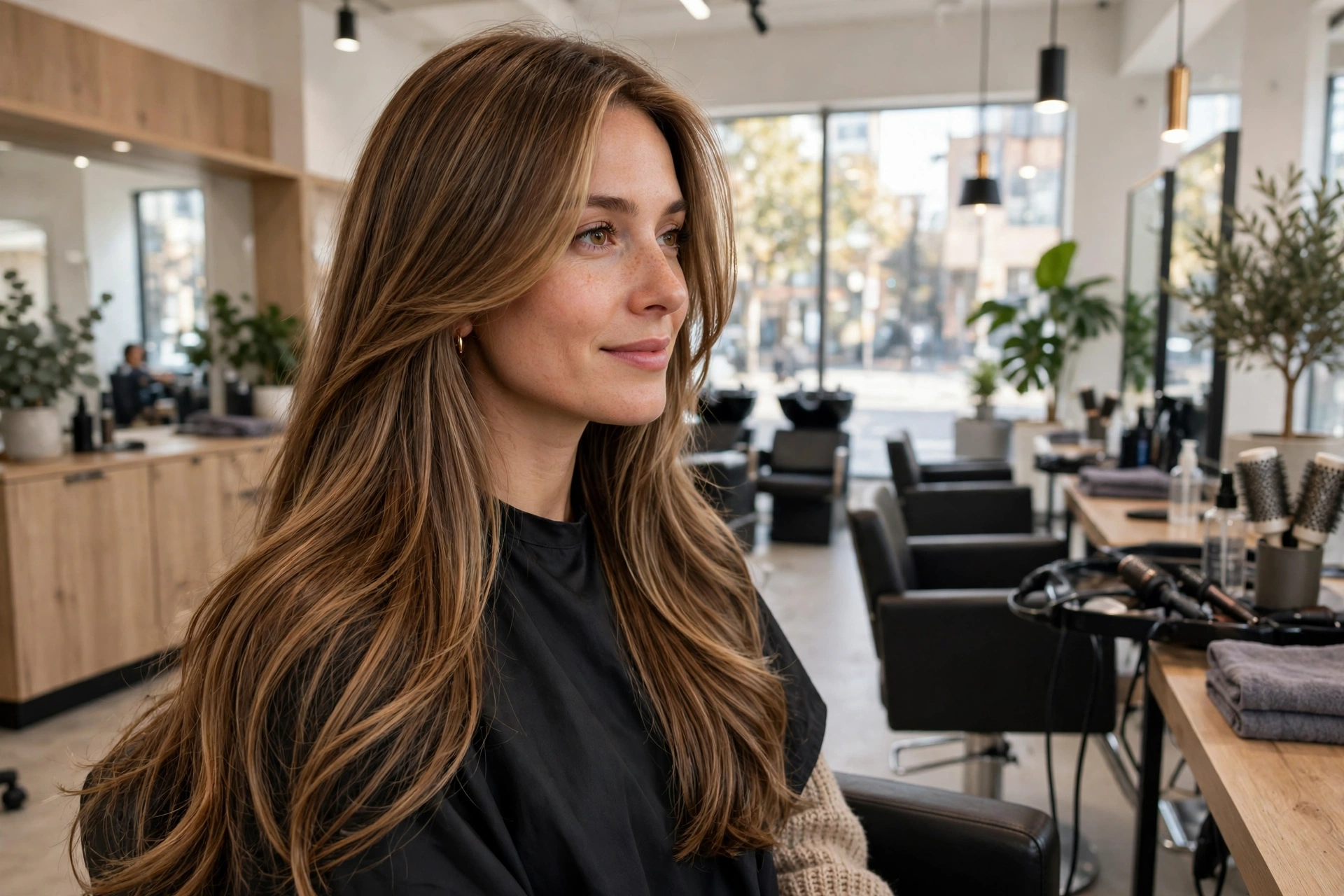
Long layers are the most-requested haircut for long hair, and for good reason. The layers are cut through the mid-lengths and ends, which removes weight, adds movement, and keeps the overall length intact. Your hair looks shaped from every angle instead of hanging in one flat sheet.
Ask your stylist for face-framing layers that start around your cheekbones. This creates dimension and prevents the heavy, one-length look. For fine hair, keep the layers subtle — too much layering can make the ends look wispy. For thick hair, ask for more layering through the crown and mid-lengths; it can make thick hair feel half as heavy while looking twice as voluminous. Long layers vs short layers explains the difference in detail, including which one suits your hair type and how each one grows out.
2. Face-Framing Layers
Face-framing layers are shorter pieces cut around the front of the hair, usually starting at the cheekbones or jawline and getting longer toward the back. They highlight your features without changing the overall length, and they are the single easiest way to refresh long hair without a dramatic change.
This cut works on almost every face shape, because the layer placement can be adjusted: shorter pieces near the cheekbones soften a square jaw, while longer pieces that start at the jawline suit round faces. Face-framing layers also grow out gracefully, so you can go longer between appointments than with a more structured cut.
3. The V-Cut
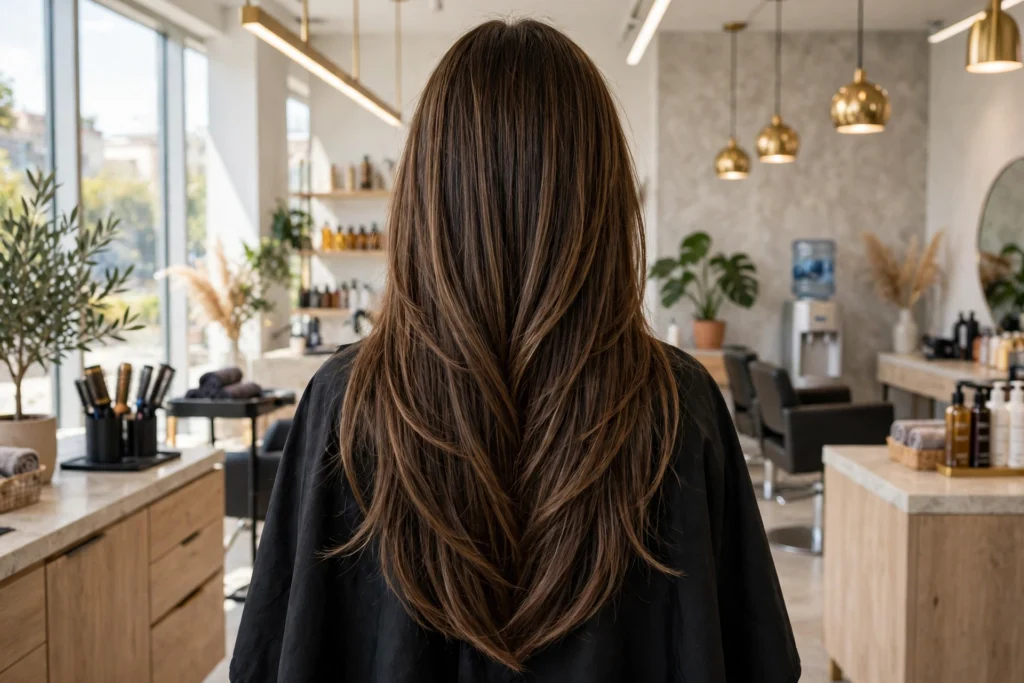
The V-cut is exactly what it sounds like: when you look at the back of the hair from behind, it forms a soft V-shape, with the center slightly longer than the sides. Combined with long layers, it creates a shape that looks dynamic and intentional from every angle.
The V-cut is a strong choice if you want your long hair to look styled even when you do nothing to it. It suits straight and wavy hair best, and it works particularly well on thick hair because the shape removes weight from the sides. Ask for it with long layers through the mid-lengths so the V-shape reads as soft, not sharp.
4. The U-Cut
The U-cut is the V-cut’s softer sister: the back forms a gentle U-shape instead of a point. It gives long hair a polished, rounded silhouette and is the best choice if you prefer a softer, more classic look. The U-cut also makes the ends look fuller, which is useful if your hair is fine and you want the length to look thick.
Pair a U-cut with swoopy, blended layers for a polished finish, or keep it nearly one-length with just a few long layers for a simple, low-maintenance cut. Both versions work; the layered version has more movement, the one-length version has more weight at the ends.
5. Blunt Ends for Fine Hair
If your hair is fine, the usual advice — add more layers — can backfire. Too many layers make fine hair look thinner at the ends. The better choice is often a blunt cut: the ends are cut straight across, which makes the hair look thicker and fuller at the bottom.
A blunt long cut with just a few long layers at the very front gives you the best of both: full-looking ends and a little movement around the face. Ask your stylist to keep the layers long and minimal — no short layers through the crown — and to cut the ends blunt rather than point-cut.
6. Butterfly-Style Layers
The butterfly cut is one of the biggest long-hair trends of 2026. It features short, feathered layers concentrated around the crown and face, with the length preserved at the bottom. The result is a cut that looks like a short, bouncy blowout from the front and long hair from the back.
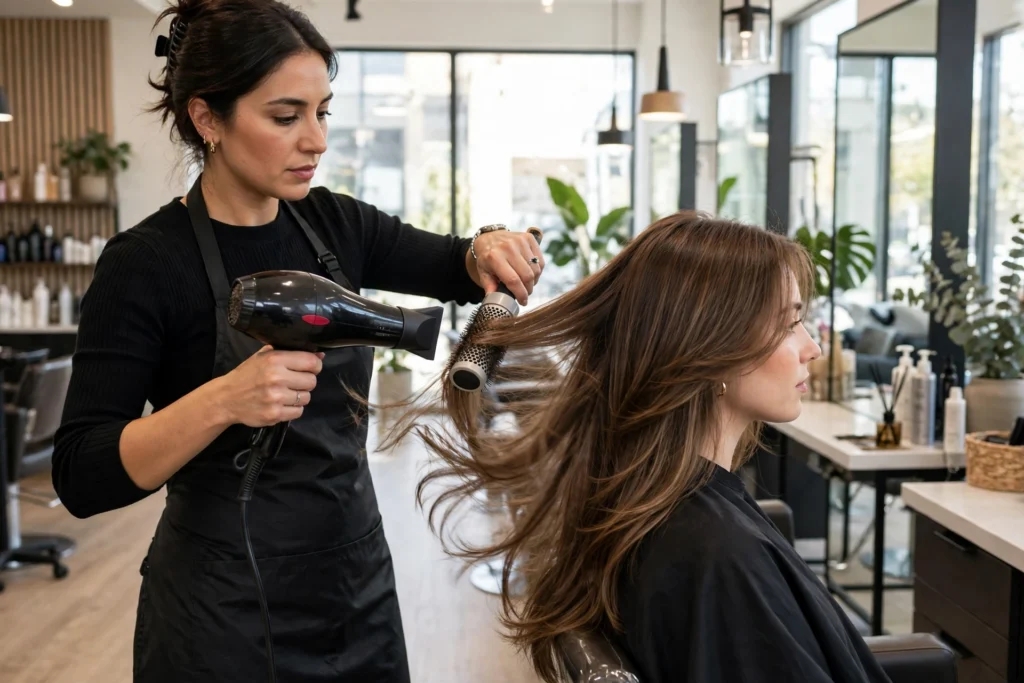
This style needs some styling effort — a round-brush blowout or rollers bring out the shape — but it is one of the most flattering long cuts for women who want volume without losing length. It suits medium to thick hair best; very fine hair can struggle to hold the feathered shape.
Choosing the Right Long Cut for Your Hair Type
- Fine hair: Blunt ends with minimal long layers. Avoid heavy layering, which thins the ends. A U-cut keeps the silhouette full.
- Thick hair: Long layers through the crown and mid-lengths, or a V-cut to remove weight. Thinning shears can help blend the ends — this is normal and nothing to worry about.
- Wavy hair: Long layers that follow your natural wave pattern. Face-framing layers starting at the cheekbones add shape without fighting the texture.
- Curly hair: Layers cut on dry hair, so your stylist can see how the curls fall. Ask for long layers that remove bulk while keeping the curl pattern intact, and avoid a blunt cut, which can make curly hair look triangular.
- Straight hair: Almost any long cut works. A V-cut or face-framing layers add the movement that straight hair lacks on its own.
If long layers feel like too much upkeep, medium-length haircuts for women offer a shorter fallback with the same layered shape.
How to Ask Your Stylist for Long Layers
The exact words matter. Try this script:
“I want to keep my length. I would like long layers with face-framing pieces starting at my cheekbones, and a [V-cut/U-cut] at the back. Please do not take off more than half an inch from the overall length.”
Bring a photo on your phone — ideally two: one of the front and one of the back. Photos remove the guesswork about what “long layers” means to you, and they help your stylist match the layer placement to your face shape.
The Care Routine That Keeps Long Hair Healthy
A great cut only stays great if the hair is healthy. Long hair is older at the ends than short hair — the ends of waist-length hair can be three or four years old — so it needs more care.
Wash less often. Long hair does not need daily washing. Two to three times a week is enough for most people; overwashing strips the natural oils that protect your hair. Apply shampoo to the scalp only and conditioner from the mid-lengths to the ends, never at the roots.
Trim on a schedule. Even if you are growing your hair, trim the ends every 10 to 14 weeks. This removes split ends before they travel up the hair shaft and keeps the shape of your cut intentional. Structured cuts like the butterfly or V-cut need trims closer to every 10 weeks; a softly layered cut can go to 14 weeks.
Protect it from heat. If you use a blow dryer, flat iron, or curling wand regularly, a heat protectant is not optional. Apply it to damp hair before blow-drying and again on dry hair before hot tools. Keep the heat setting on medium rather than high.
Deep condition weekly. Swap your regular conditioner for a deep treatment or hair mask once a week, and leave it on for at least five minutes. Long hair needs the extra moisture, especially at the ends.
Be gentle when it is wet. Wet hair is at its weakest. Detangle with a wide-tooth comb, starting at the ends and working up, and blot gently with a soft towel instead of rough towel-drying. Sleeping on a silk or satin pillowcase reduces friction and breakage overnight.
What a Long Haircut Costs in the US
A long layered haircut in the US typically costs roughly $60 to $150, depending on the city, the salon, and the stylist’s experience. Prices are higher in big cities like New York or Los Angeles and lower in smaller towns. A blowout is often included in the price at higher-end salons and may cost roughly $30 to $60 extra elsewhere. A standard tip is 15 to 20 percent of the service price. Ask for the full price before the appointment so there are no surprises.
FAQ
How often should I trim long hair?
Every 10 to 14 weeks is ideal for most long haircuts — long enough that you are not losing hard-won length every month, but frequent enough that the shape stays intentional and the ends stay healthy. How often women should trim their hair covers the timing for different hair types in detail.
Will layers make my long hair look thinner?
It depends on your hair type. On thick hair, layers remove weight and add volume. On fine hair, too many layers can make the ends look wispy — so ask for fewer, longer layers and a blunt finish at the ends instead.
What is the best long haircut for a round face?
Face-framing layers that start at the cheekbones or jawline work best, because they add length to the look of the face. A V-cut also helps, since the shape draws the eye downward. Avoid a blunt, one-length cut that ends at the chin.
How do I grow my hair long without it looking shapeless?
Get a long layered cut rather than just trims, and keep the 10-to-14-week trim schedule. Layers give growing hair shape at every stage, and regular trims keep the ends healthy so you keep more length over time. Growing out a pixie cut uses the same principle — shape at every stage, not just at the end.