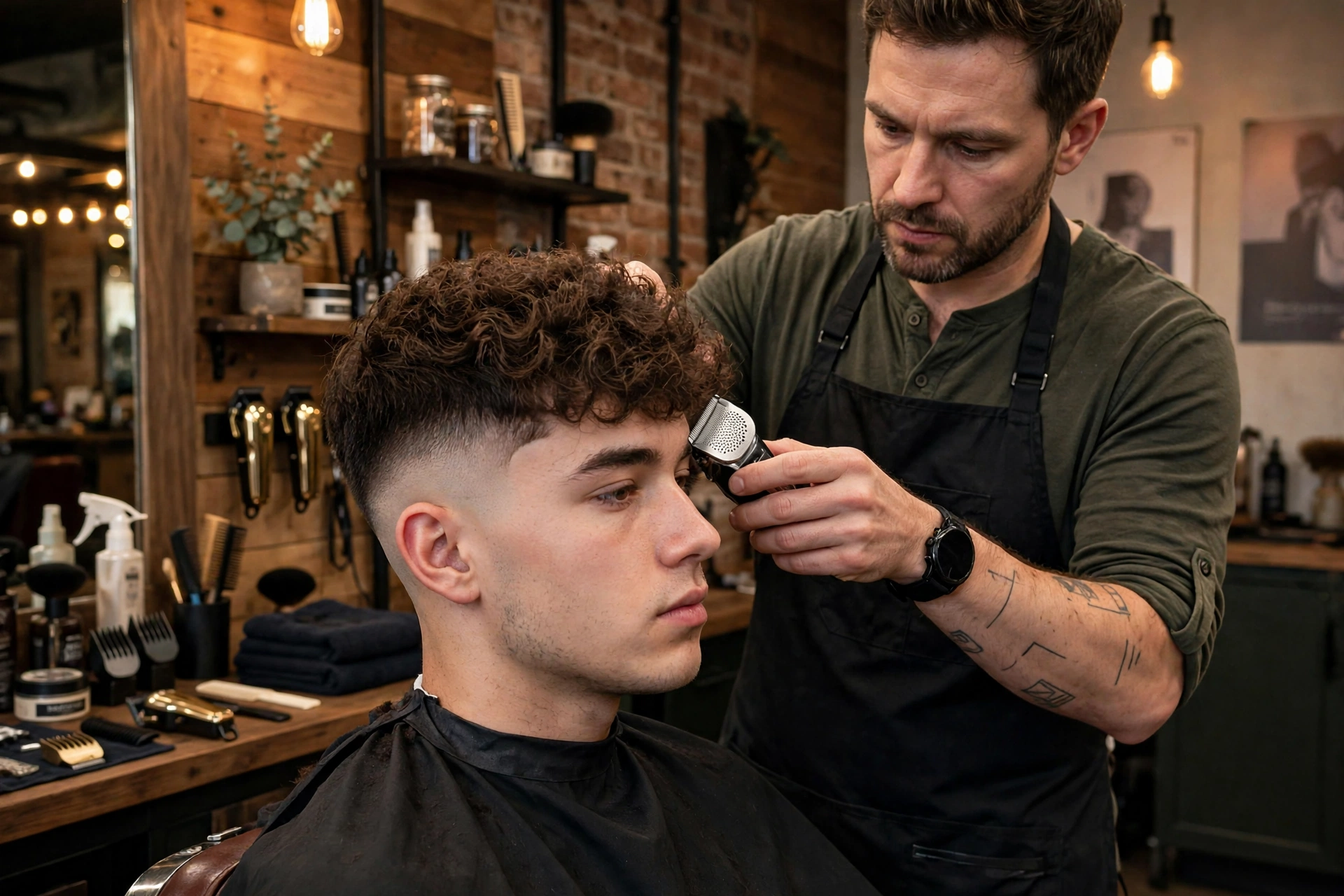
Here is the one detail that separates a low taper fade from a skin fade: what happens at the very bottom. A low taper fade stops at a #1 or #2 guard, so you can still see hair at the sideburn and the nape. A skin fade — also called a bald fade — keeps blending until the hair disappears into bare skin.
That single difference changes the contrast, the upkeep, and how the cut grows out. If you are deciding between the two, here is the honest comparison.
What Is a Low Taper Fade?
A low taper fade starts just above the ear and at the nape. The barber shortens the hair gradually as it moves down, but the shortest point still has visible length. The blend zone is about two to three inches tall, and the transition is soft — from the front, most people will not even realize it is a fade.
It is the gentlest fade you can ask for. It works on every hair type, suits every face shape, and grows out so gracefully that most men stretch it to every 3–4 weeks between cuts. It is also the safest fade for a first-timer and for any workplace.
What Is a Skin Fade?
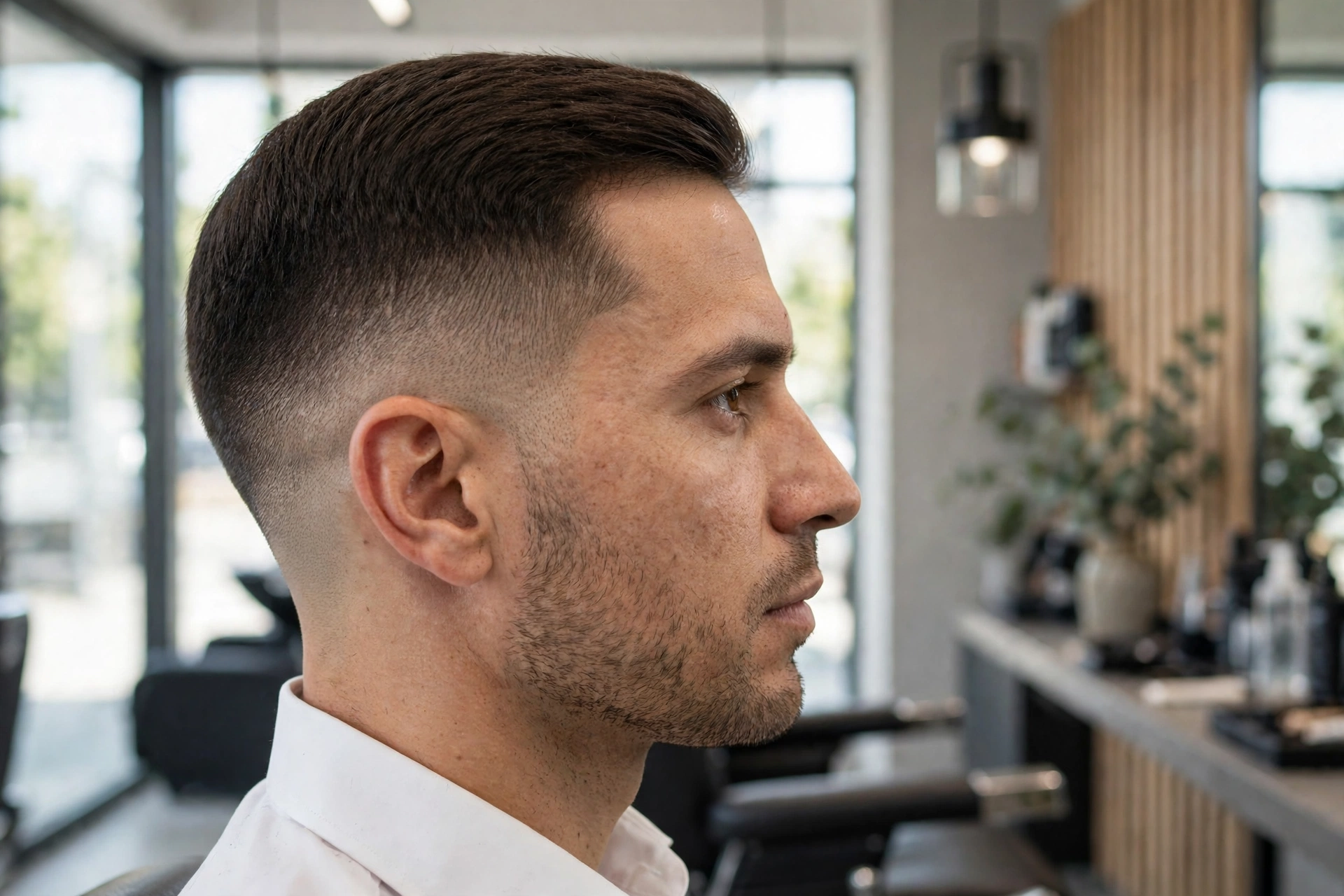
A skin fade takes the blend all the way down to bare skin, usually finished with a foil shaver or a straight razor. The contrast is dramatic: skin at the bottom, full hair on top, with a smooth gradient between them. A skin fade can start low, mid, or high on the head — a low skin fade, with skin only in the bottom inch above the ear, is the closest cousin to the low taper and the easiest skin fade to live with.
Low Taper Fade vs Skin Fade: The Key Differences
| Feature | Low Taper Fade | Skin Fade |
|---|---|---|
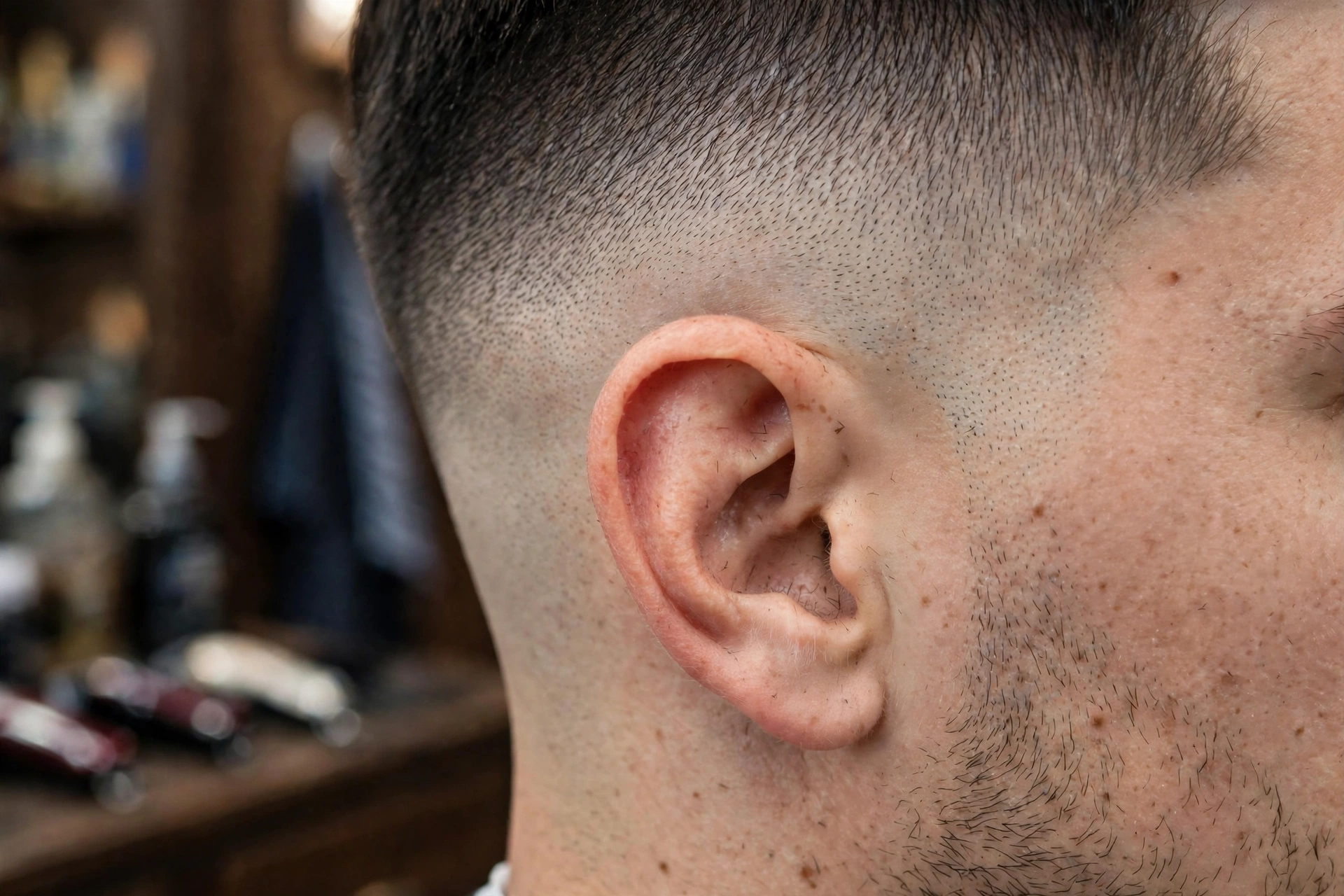
| Shortest point | #1–#2 guard, hair still visible | Bare skin, finished with a razor or foil shaver |
| Contrast | Low to moderate, soft and natural | Maximum — sharp line where hair meets skin |
| Blend zone | Wide and gradual, 2–3 inches | Tighter gradient, often with a visible skin line |
| Grow-out | Graceful, still looks neat at 3–4 weeks | Stubble shows in 3–5 days; a hard line appears by week 2 |
| Maintenance | Touch-up every 3–4 weeks | Touch-up every 1–2 weeks |
| Best for | First fades, offices, low upkeep | Bold looks, sharp contrast, younger styles |
| Skin sensitivity | Gentle on the skin | Razor work can irritate sensitive skin |
The short version: the taper keeps hair at the bottom, the skin fade removes it. That is the whole difference, and it drives everything else.
Contrast: Soft vs Sharp
Contrast is the real choice here. A low taper fade has low contrast — the sides look tidy and clean without shouting about it. It flatters thick hair by keeping weight on the sides, and it flatters fine hair by never exposing the scalp, which can make thin hair look thinner near the temples.
A skin fade has maximum contrast. The bare-skin base makes any top style pop — a textured crop, a quiff, a pompadour, or curls all look sharper against skin. It is especially striking on thick, dark, or coily hair, where the gradient from skin to full hair is most visible.
But contrast cuts both ways. A skin fade also shows every imperfection: a scar, a bump, or an uneven hairline is more visible when the skin is exposed. A low taper hides all of that under a soft layer of hair.
Maintenance and Grow-Out
This is where the skin fade costs you time and money. Bare skin shows stubble within three to five days, and by week two the regrowth creates a visible line where the fade used to be sharp. To keep a skin fade looking fresh, most men need a touch-up every 1–2 weeks — some even weekly.
A low taper fade is the easiest fade to maintain. The gradual blend disguises regrowth, so it still looks intentional at three weeks and acceptable at four. Our guide on how often to get a low taper fade touched up breaks down the timing by fade height, and the low taper always wins on longevity.
Between visits, a skin fade needs a little care: keep the shaved area moisturized to prevent dryness and flaking, especially in cold or dry climates, and use sunscreen on the exposed skin in summer. A low taper needs almost nothing — a little product on top and you are set.
Cost in the US
A low taper fade at a mid-range US barbershop typically costs about $25–$45. A skin fade usually runs about $30–$55, since the razor finish and tighter blend take more time and skill. Prices are approximate — expect higher prices in big cities and at high-end shops. Tip 15–20% of the pre-tax total, which is standard barber etiquette in the US. The bigger cost is frequency: a skin fade every 1–2 weeks means roughly 26–52 cuts a year, while a low taper every 3–4 weeks means roughly 13–17.
Who Should Pick Which?
Choose a low taper fade if you:
- Want a clean, professional cut that works anywhere
- Are getting a fade for the first time
- Have fine or thinning hair and want to avoid exposing the scalp
- Have sensitive skin or get razor bumps easily
- Prefer fewer barber visits and lower yearly cost
Choose a skin fade if you:
- Want maximum sharpness and contrast
- Have thick, dark, curly, or coily hair that shows the gradient well
- Pair it with a bold top style like a crop, quiff, or pompadour
- Do not mind a touch-up every 1–2 weeks
If you are unsure, try the low taper first. You can always go to skin at your next appointment — the reverse means living with a skin fade for two or three weeks while it grows out. Our low taper fade vs high taper fade guide covers the same “start low, go higher later” logic for fade height.
What to Tell Your Barber
Bring a photo and use clear words. For a low taper fade, say: “Low taper fade, please. Blend it low, down to a #1 at the sideburn and nape. No skin — I want hair left at the bottom.” For a skin fade, say: “Skin fade, please. Take it down to the skin at the bottom and blend it up from there. Low skin fade” — or mid or high, depending on how much contrast you want.
Guard numbers help too. A #1 guard leaves about 1/8 inch of hair; a #0 is about 1/16 inch; skin means no guard at all, finished with a razor. If you want the full guard-number breakdown, our low taper fade guard numbers explained guide covers #0 through #2 in detail.
Pairing With a Top Style
Both fades work with almost any top, but they shine in different ways. A low taper pairs beautifully with a low taper fade with a buzz cut for the lowest-effort combo, or with a comb over and a slick back for a classic office look. A skin fade pairs best with tops that need contrast to stand out — a textured crop, a quiff, or a pompadour.
FAQ
Is a skin fade the same as a bald fade?
Yes. Skin fade, bald fade, and zero fade are the same cut — the hair is taken down to bare skin at the lowest point. A taper fade is different: it always leaves some hair at the bottom.
Can you get a low skin fade?
Yes, and it is the best of both worlds for many men. A low skin fade takes only the bottom inch above the ear down to skin, so you get the sharp finish without the dramatic overall look — and it grows out more gracefully than a mid or high skin fade.
Does a skin fade cause razor bumps?
It can, especially on curly or coily hair and sensitive skin. The razor finish at the base can trigger ingrown hairs. If you get bumps easily, tell your barber, moisturize the shaved area daily, and consider a low taper fade instead — it never goes to skin.