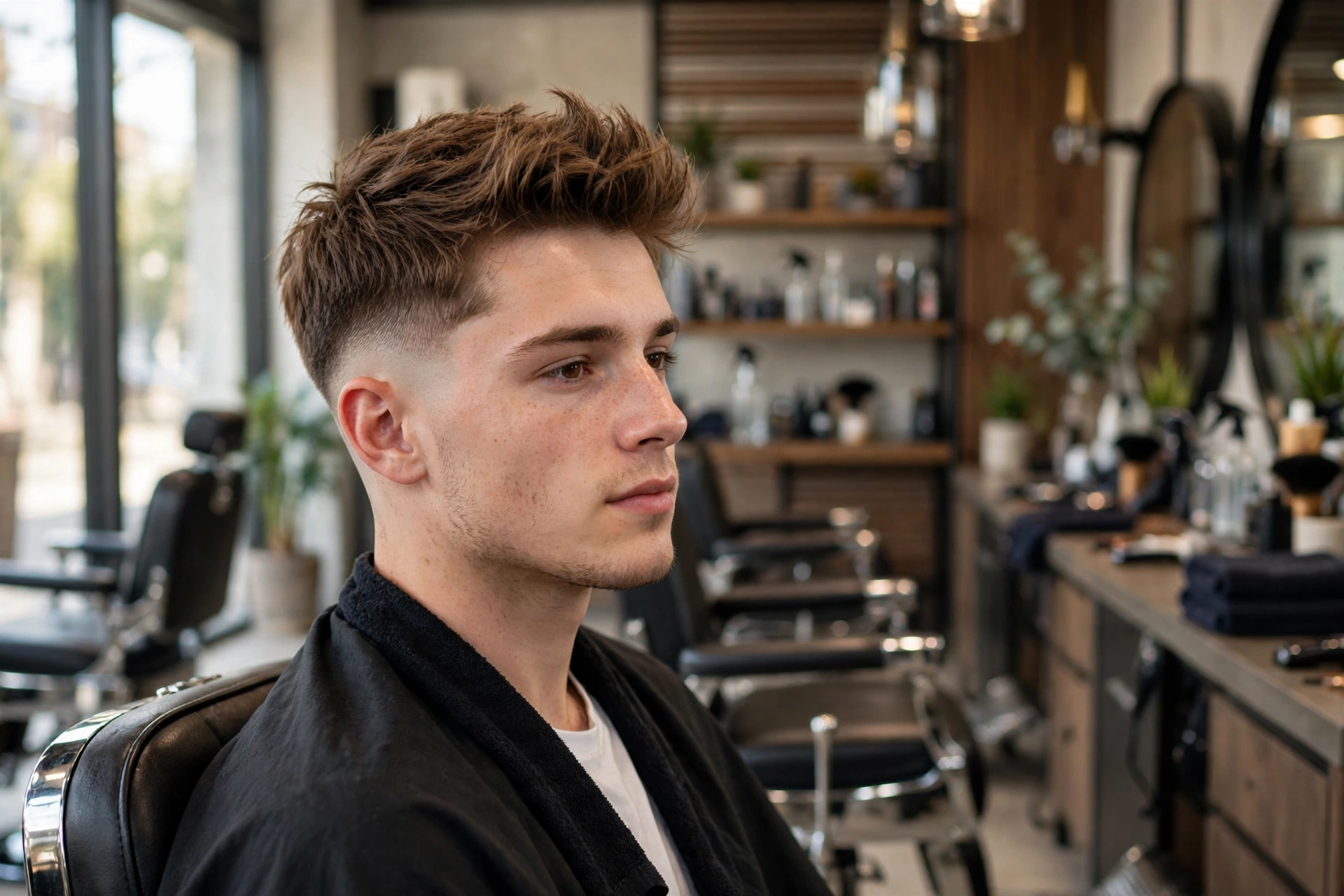
A heart-shaped face is wide at the forehead, with strong cheekbones and a narrower jaw and chin. That shape looks great with the right cut — but the wrong fade can make the forehead look even wider and the chin even smaller. A low taper fade is one of the best tools for fixing that balance, as long as your barber keeps volume in the right places.
The trick is simple: keep some fullness around the temples and jaw level, and let the taper stay low and soft. Here is how to make it work.
What a Heart-Shaped Face Needs From a Haircut
Every face shape has a balance problem to solve. For a heart-shaped face, the top half carries most of the visual weight. The goal of the haircut is to: Soften the width of the forehead without hiding it completely. Add a little width around the jaw and chin, where the face is narrowest. Keep the sides from going too bare at the temples, which puts the forehead back in the spotlight.
A high skin fade does the opposite of all three. It strips the temples bare, exposes the widest part of the face, and leaves nothing at jaw level to balance it. That is why a low taper — which keeps most of the side volume — is usually the smarter choice for this face shape.
Why a Low Taper Fade Works So Well Here
A low taper fade starts just above the ears and around the nape. The blend stays low, so the upper sides keep their natural fullness. That fullness adds horizontal width at jaw level, exactly where a heart-shaped face needs it.
The taper still gives you clean edges around the ears and neckline, so the cut looks sharp and intentional. You get structure without the harsh contrast of a high fade. It is the same reason barbers reach for a low taper on heart-shaped faces again and again: it balances the face instead of fighting it. The same logic applies to other shapes — our guide to the best low taper fade for a round face shows how height on top balances a wider face.
The Best Low Taper Styles for a Heart-Shaped Face
1. Textured Quiff With a Low Taper
A low taper fade with a quiff adds height at the front, which draws the eye upward and away from the width of the forehead. Ask your barber to keep the peak angled back rather than straight up, and to blend the sides into a low taper — not a high fade. Leave at least 2.5 inches at the front so the lift holds. This works best on straight to wavy hair with medium thickness.
2. Side-Swept Fringe With a Low Taper
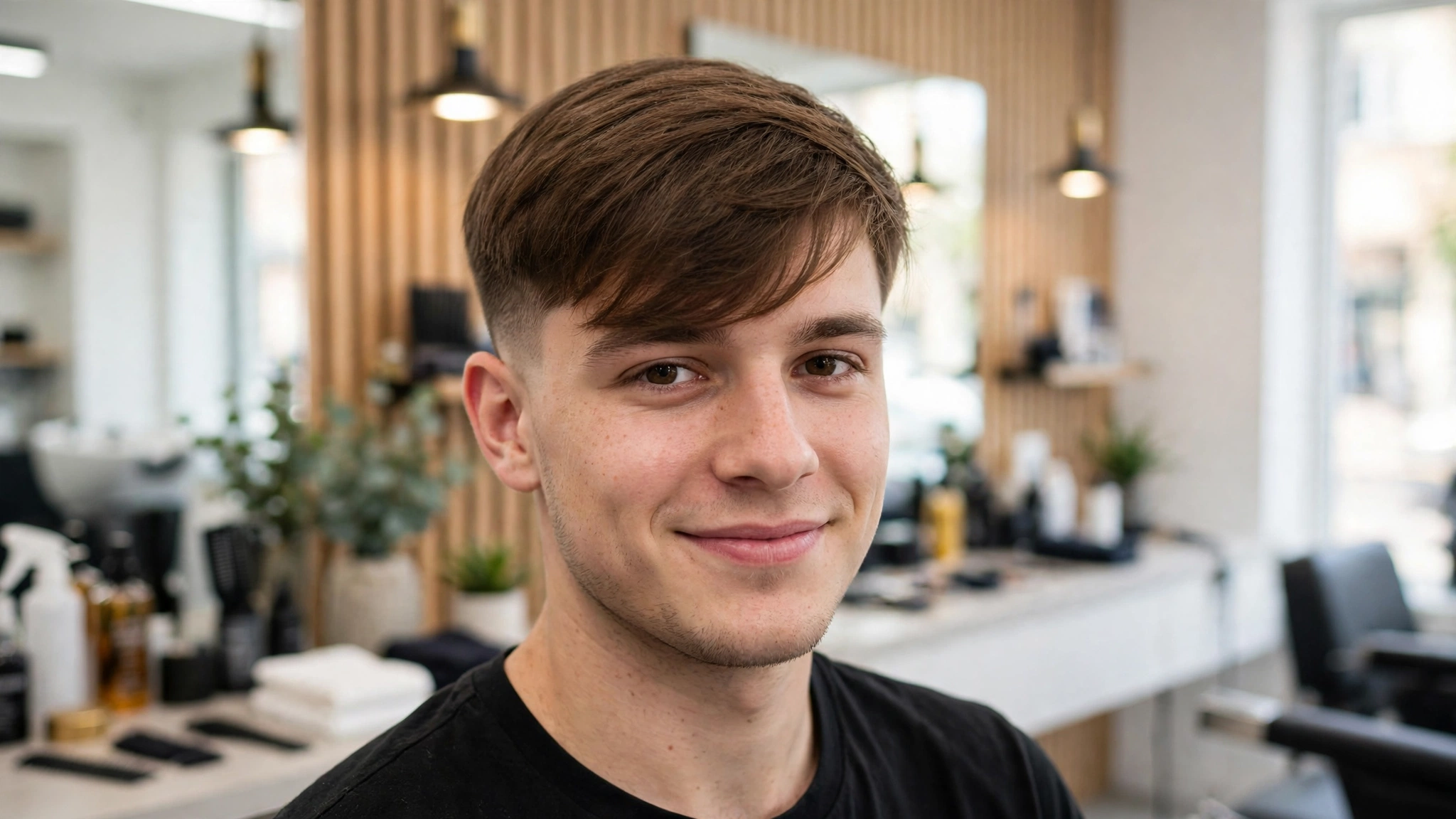
A fringe that sweeps to one side softens the forehead and breaks up its width. Pair it with a low taper on the sides and you get a relaxed, balanced look that works in an office or on a weekend. Ask for the fringe to fall just above the eyebrows — too short and it stops doing its job.
3. Crew Cut With a Low Taper
If you want something short and simple, a crew cut with a low taper is a strong pick. Keep 1.5 to 2 inches on top and ask for a taper, not a fade, on the sides. The fuller sides add width at jaw level. Sweep the top slightly to one side instead of leaving it flat. Trim every 3 weeks to keep the shape.
4. Curly Top With a Low Taper
Curls are a natural advantage for a heart-shaped face. They add volume in every direction, including at the jaw and chin, where the face needs it most. A low taper keeps the sides full enough to hold that balance while cleaning up the edges. Ask for scissor-over-comb blending on the sides, not just clippers, and let the curls keep their natural volume on top.
5. Soft Side Part With a Low Taper
A classic side part with a low taper is the most low-effort option on this list. It keeps the top neat, the sides controlled, and the overall shape soft. It suits fine hair especially well, since a low taper never leaves the sides looking bare.
Temple Volume: The One Rule That Matters Most
If you remember one thing from this guide, make it this: do not let the taper eat your temple volume.
The temples are where a heart-shaped face is widest. When a barber takes the sides too high or too tight, the temples go bare and the forehead looks even wider by comparison. A low taper avoids that by keeping the blend low and the transition gradual.
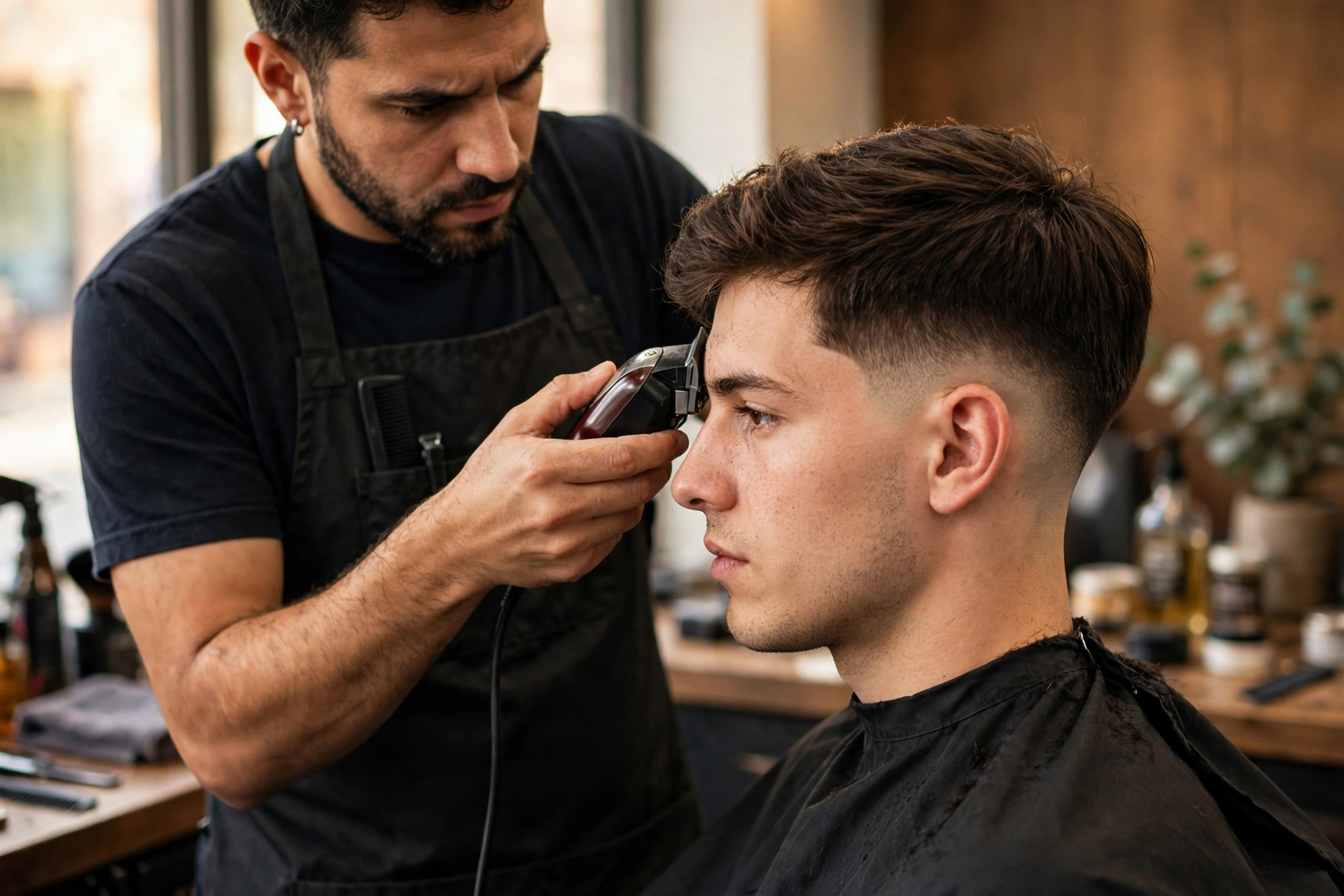
What to say at the chair: “Keep the taper low and soft around the temples. I want to keep some weight on the upper sides — don’t take it up high.” If your barber reaches for the clippers high on the temple, speak up before the blend starts. It is much easier to take more off later than to grow it back.
What to Avoid
High skin fades. They remove the side volume your face needs for balance and expose the temples. Very tall, spiky tops. Extreme height at the crown adds width to the upper face, which is already the widest part. Buzzed or shaved temples. A bare temple line draws the eye straight to the forehead. A hard part with a high fade. The sharp line plus the bare sides doubles the focus on the upper face. A soft side part with a low taper is the safer version.
Styling Tips for Everyday Wear
Use a matte product. A matte clay or paste gives texture without shine, which keeps the top looking natural instead of stiff. Work a pea-sized amount through damp hair and push it in the direction you want.
Keep the fringe moving. A side-swept fringe needs a little direction. A quick pass with a blow dryer on low heat, pushing the hair to one side, sets it for the day.
Do not over-style the sides. The whole point of the low taper is that the sides stay fuller. Flattening them with heavy product defeats the purpose.
Trim every 3 to 4 weeks. For how often to get a low taper fade touched up, the answer is every 3 to 4 weeks. The low taper grows out gracefully, so you can stretch a little longer than a high fade — but the temple lines lose definition first, so book before they go fuzzy.
What to Tell Your Barber (Exact Script)
Bring this to your appointment. If you want the full version, here is the exact script for asking your barber for a low taper fade, adapted here for a heart-shaped face:
“I have a heart-shaped face, so I want a low taper fade — low and soft, not a high fade. Keep some volume around the temples and the upper sides, and blend it gradually. On top, quiff, side-swept fringe, crew cut, or curly top — pick one, and keep the neckline tapered, not blocked.”
Add one detail about your hair type — “my hair is thick and wavy” or “my hair is fine and straight” — so your barber can adjust the blending method. A good barber will know what to do with that information.
FAQ
Does a low taper fade suit a heart-shaped face?
Yes. It is one of the best fade choices for a heart-shaped face because it keeps volume on the sides at jaw level, which balances a wide forehead and a narrow chin. A high fade usually does the opposite.
Should I get a beard with a low taper if I have a heart-shaped face?
A short, well-shaped beard can help a lot. It adds visual weight around the jaw and chin, which is the narrowest part of a heart-shaped face. Ask your barber to blend the beard into the taper so there is no harsh break at the sideburns.
How long should the top be for a heart-shaped face?
It depends on the style, but 1.5 to 3 inches covers most options. A crew cut works at 1.5 to 2 inches, while a quiff or side-swept fringe needs 2.5 inches or more at the front. The key is controlled volume, not maximum height.
What fade should a heart-shaped face avoid?
Avoid high skin fades and anything that takes the temples very short. Both expose the widest part of the face and remove the side volume that creates balance. A low or mid taper is almost always the safer choice.