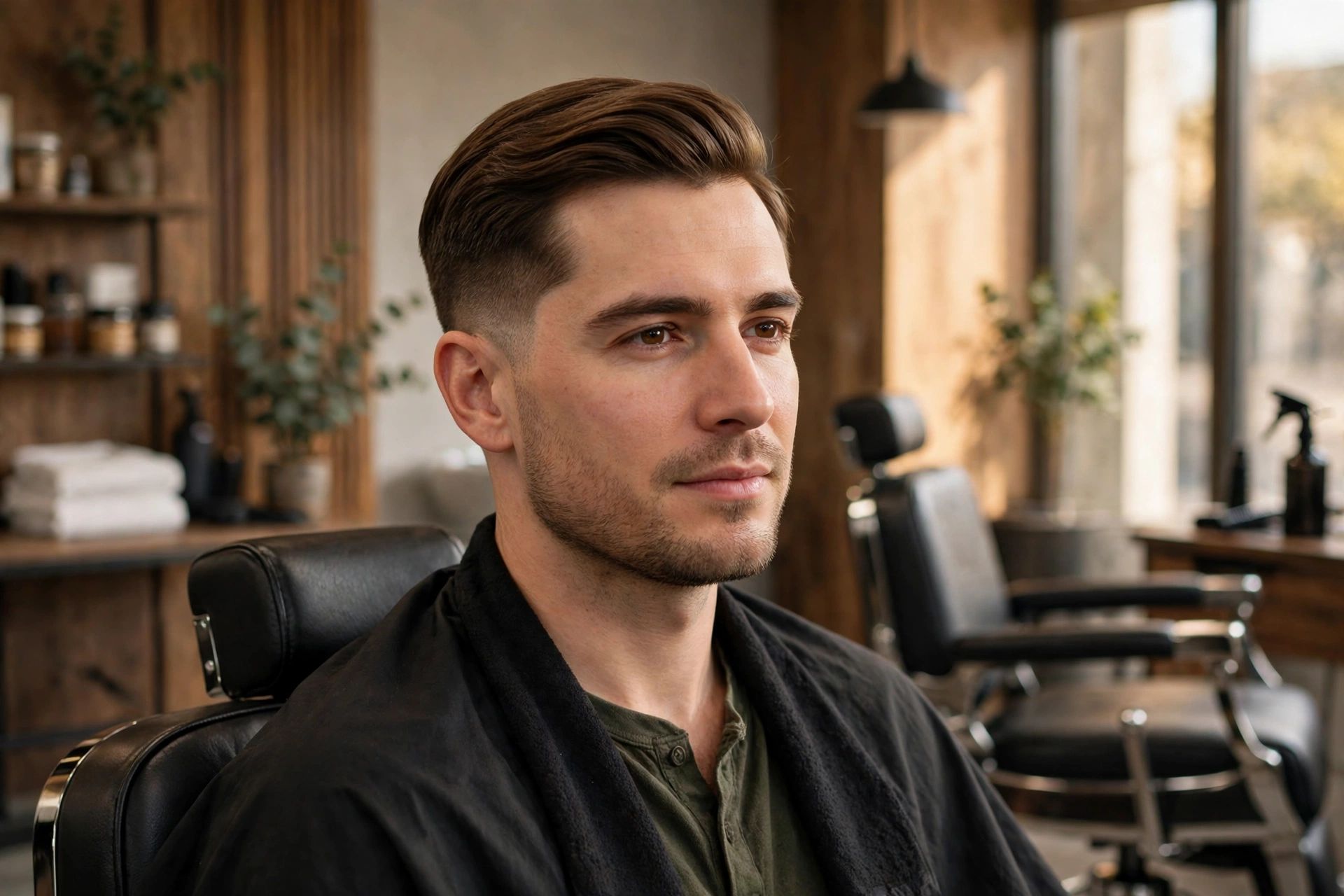
An oval face is the easiest face shape to cut for. Your face is a little longer than it is wide, your forehead and jaw are about the same width, and your features are balanced. That balance is exactly why a low taper fade works so well on you: the fade stays low and clean around the ears and neckline, and almost any length on top keeps your proportions looking right.
Barbers often call the oval face the reference shape. Other face shapes get styled toward it. If you have one, your job is simple: pick a top you like, keep the taper low, and avoid the few mistakes that can throw your balance off.
Why the Low Taper Fade Suits an Oval Face
A low taper fade starts the blend low, just above the ear and around the neckline. It leaves more hair on the sides than a mid or high fade, which keeps the width of your face intact. On an oval face, that matters: your proportions are already balanced, so you do not need a fade to add width or length. You just need clean edges.
The low taper also grows out gracefully. Because the blend starts low, the grow-out line is less obvious, and most men can stretch visits to every three to four weeks. It looks sharp in an office, and it works with short, medium, or longer hair on top.
How to Tell If Your Face Is Oval
Stand in front of a mirror with your hair pulled back. An oval face is about one and a half times as long as it is wide. Your forehead is slightly wider than your jaw, your chin is softly rounded, and your cheekbones are the widest point but not by much. If your face looks long and balanced with no hard angles, you are most likely oval.
Not sure? Ask your barber at your next visit. A good barber checks face shape before picking a fade height, and it takes ten seconds.
The Best Low Taper Fade Styles for an Oval Face
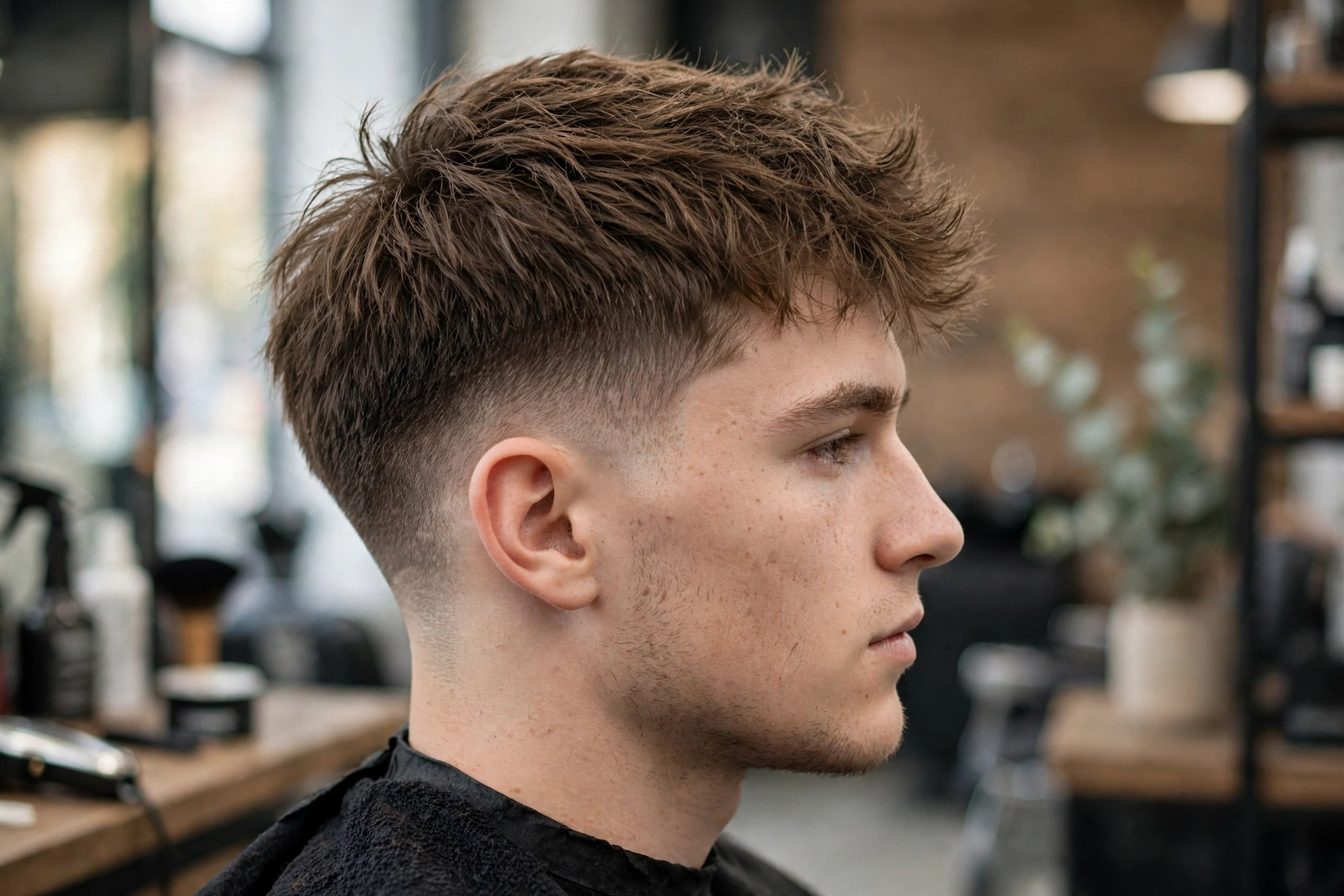
1. Classic Side Part With a Low Taper
The side part is the safest pick for an oval face. Ask for a low taper fade with a #1 or #2 at the shortest point, about two to three inches on top, and a soft side part. Style it with a light pomade or cream and a comb. It is clean, professional, and it shows off your face’s natural symmetry.
2. Textured Crop With a Low Taper
If you want something more modern, go for a textured crop. The top is point-cut for choppy texture, about one to two inches long, with the fringe sitting just above the forehead. The texture adds a little width at the temples, which an oval face can easily carry. Style it in under a minute with a small amount of matte clay, pushed forward with your fingers.
3. Low Taper Fade With a Quiff
A quiff adds height at the front, which suits an oval face because your face can handle the extra length without looking longer. Keep three to four inches at the front, sweep it up and back with a blow dryer, and finish with a medium-hold product. If your oval face is on the longer side, keep the quiff modest — too much height can stretch your proportions.
4. Pompadour With a Low Taper
The pompadour is the classic volume option. Three to four inches on top, swept up and back, with the low taper keeping the sides neat. It works best on straight or wavy hair. Use a blow dryer for lift and a medium-hold pomade for shine. This is a great choice for weddings, job interviews, or any day you want to look polished.
5. Curly Top With a Low Taper
Oval faces wear curls well. Keep two to three inches of curls on top and let the low taper clean up the edges without removing volume. Use a curl cream or leave-in conditioner, and let your hair air dry or use a diffuser. The taper keeps the sides from puffing out, which is the most common problem with curly hair and no fade.
6. Low Taper With a Middle Part
A center part works beautifully on oval faces because it highlights your natural symmetry. Ask for a low taper fade with three to four inches on top, parted down the middle. Blow dry each side away from the part for a clean, flowing finish. This style suits straight and wavy hair best.
What to Avoid on an Oval Face
Oval faces are forgiving, but two mistakes can still throw things off. First, too much height on top. A very tall quiff or pompadour can make a long oval face look even longer. Keep the height moderate unless your face is on the shorter side. Second, a very high skin fade with no length on the sides can make your face look narrow and long. If you want a high fade, balance it with some volume on top. For contrast, read our guide to the best low taper fade for a round face, where height on top is actually the goal.
What to Tell Your Barber
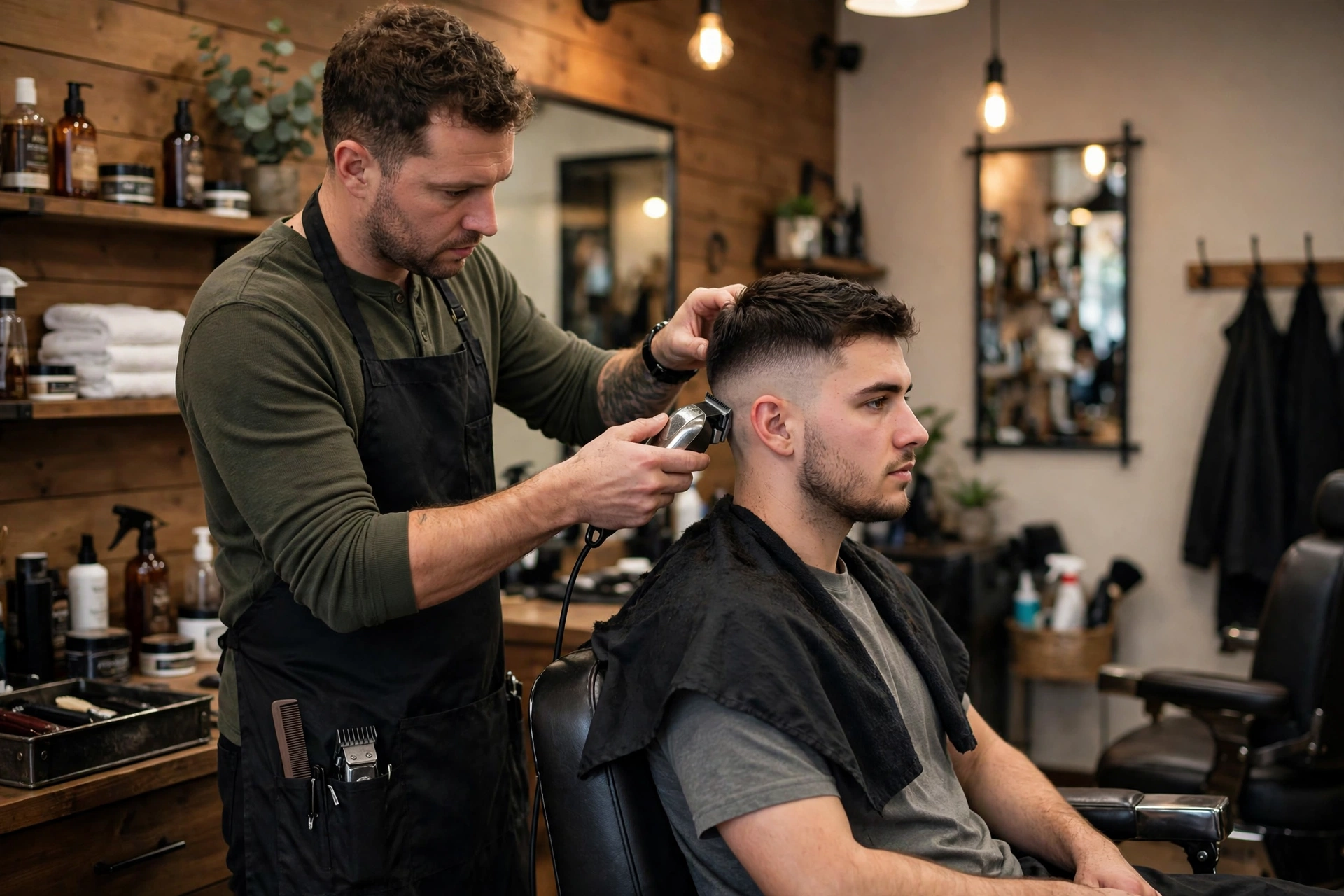
Bring a photo if you can — it removes all guesswork. If not, use this script: “Low taper fade, #1 at the shortest, keep about two to three inches on top, soft blend at the sides, and a clean neckline.” Then name your top: side part, textured crop, quiff, or pompadour. If you want a beard, ask for a short boxed beard, about 6 to 12 millimeters, with the cheek line kept clean. If you are new to barber visits, our guide on how to ask your barber for a low taper fade has the full script.
Styling and Maintenance
Most oval-face low tapers need very little daily work. A textured crop or curly top takes under a minute. A side part or pompadour takes five to ten minutes with a blow dryer. Book a touch-up every three to four weeks to keep the taper sharp. A typical low taper fade in the US costs about $25 to $45 at a standard barbershop, more in big cities, and a tip of 15 to 20 percent is standard.
FAQ
Does a low taper fade suit an oval face?
Yes. The oval face is the most versatile shape, and the low taper fade is one of the best matches for it. The low blend keeps your balanced proportions intact while the clean edges around the ears and neckline add definition.
What is the best low taper fade for an oval face?
The classic side part is the safest choice, and the textured crop is the most popular modern option. Both keep your symmetry on show. A quiff or pompadour works well too, as long as the height stays moderate. Our guides to the low taper fade with a quiff and the low taper fade pompadour cover both in detail.
Should I get a low, mid, or high fade with an oval face?
Any fade height works on an oval face, which is rare. The low taper is the best default because it grows out well, looks softer in professional settings, and needs fewer visits. A mid or high fade adds more contrast if you want a bolder look. See our low taper fade vs high taper fade comparison for the full breakdown.
How often should I get a low taper fade touched up?
Every three to four weeks is typical. The low taper grows out more gracefully than a high fade, so you can stretch it to four or five weeks if the top still looks good.
Final Word
If you have an oval face, the low taper fade is a hard cut to get wrong. Pick a top that fits your hair type and your routine, keep the taper low, and let your natural balance do the rest. Show your barber a photo, use the script above, and you will walk out with a cut that looks like it was made for you — because it was.