Last updated: October 21, 2026
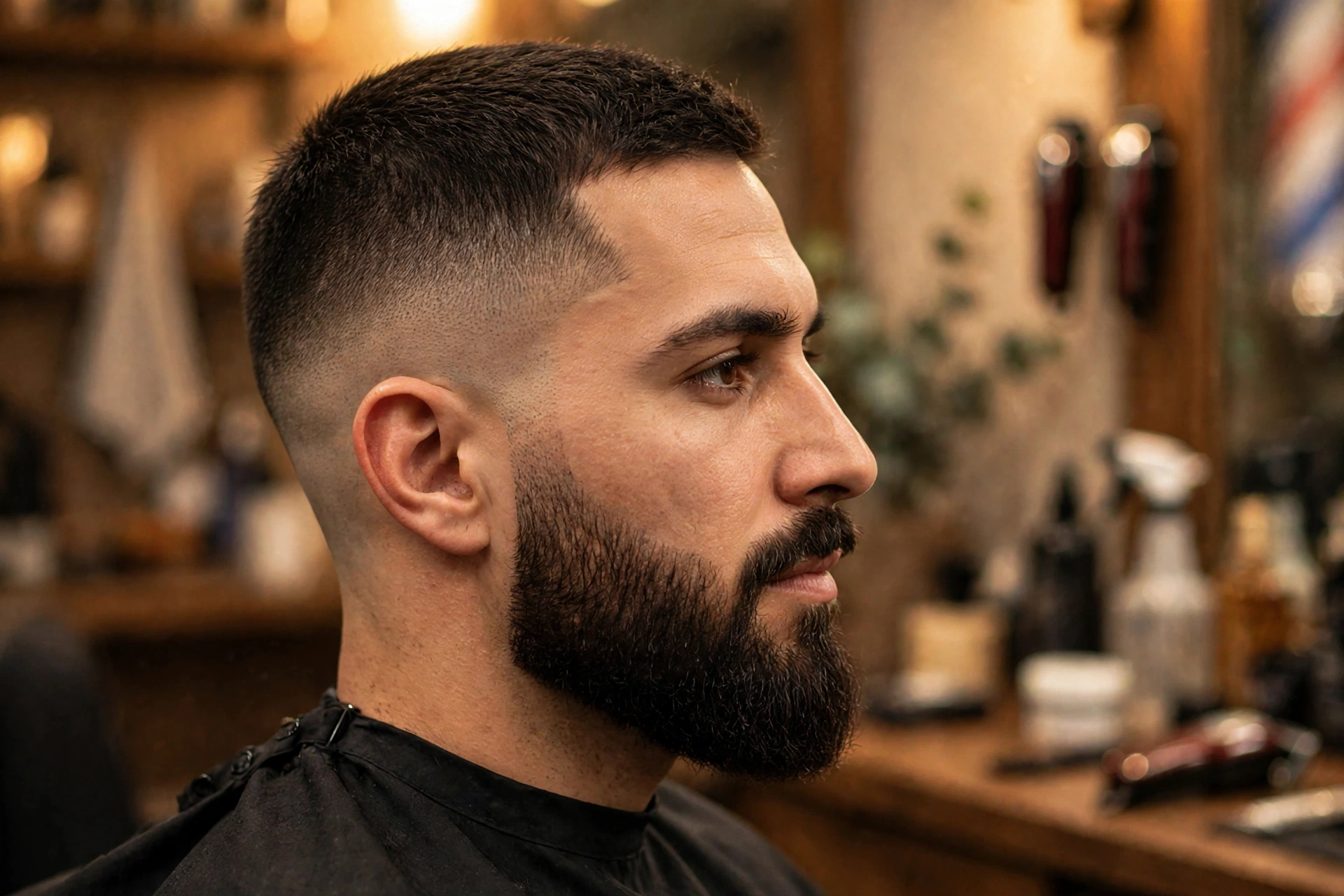
A sharp haircut and a full beard can either look like one deliberate style or two unrelated ones fighting each other. The difference is the blend: where the haircut ends and the beard begins. A low taper fade is the ideal partner for a full beard because it starts fading low — right where the sideburn meets the beard — so the barber can connect the two into one continuous shape. If you are new to the cut itself, start with the complete guide to the low taper fade, then use this guide to nail the beard connection.
Why a Low Taper Fade Pairs So Well With a Full Beard
A high fade removes most of the sideburn, which leaves the beard visually disconnected from the haircut — fine for stubble, awkward for a full beard. A low taper keeps enough hair at the sideburns to blend downward into the beard, so the whole head reads as one groomed unit. It is also the more professional option: the taper is subtle and tidy, which balances the ruggedness of a full beard for office settings.
How Beard Blending Actually Works
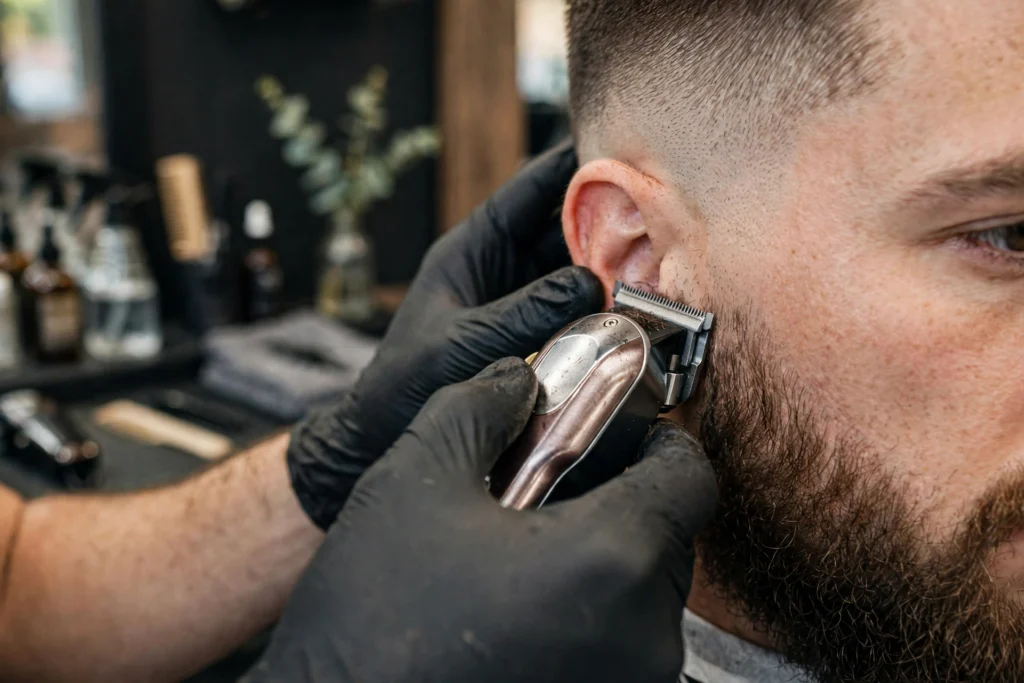
Understanding the technique helps you ask for the right thing and judge the result in the mirror.
The barber steps through clipper guard lengths from the faded sides down into the sideburn and the top of the beard. Instead of the hair stopping hard at the temple, the length decreases gradually — fade to sideburn to beard — so there is no visible line. The critical junction is the sideburn: it should never be removed entirely or cut into a thin strip. It is the bridge, and it needs to stay wide enough to carry the blend.
On the beard itself, the barber typically keeps the cheeks slightly shorter than the chin. This shapes the beard instead of letting it grow into a shapeless mass, and it makes the fade-to-beard transition look intentional.
What to Tell Your Barber
Do not just say “blend it.” Give your barber three specifics, the same way you would when you ask your barber for a low taper fade:
- Where the fade starts at the sideburn. Skin, a #0, or a #1 — match it to your haircut’s taper so the two connect.
- The guard for the beard. A #2 or #3 on the cheeks and chin is the common starting point for a full beard; go longer if you want more fullness.
- Your line preferences. Natural cheek line or sharp line-up? And where should the neckline sit — most barbers clean it just above the Adam’s apple area, which defines the beard without making it look small.
If you are getting the haircut and the beard done in the same visit, say so up front: “I want the beard faded into the haircut.” It changes the order the barber works in.
Cheek Lines and Necklines: The Details That Matter
Cheek line: A natural-but-cleaned cheek line grows out the most forgivingly. A sharply carved cheek line looks striking on day one but grows out harshly within a week. Unless you are committed to weekly touch-ups, ask your barber to clean up strays without carving a hard line.
Neckline: Clean the neckline just above the Adam’s apple area. Too high and the beard looks small and disconnected from the jaw; too low and it looks unkempt. Your barber should taper the neckline rather than shaving a hard line.
For the haircut side of the equation, our low taper fade neckline options guide covers the tapered, blocked, and rounded choices in detail.
Match the Beard to Your Face Shape
The fade sits at the sideburns on every face. What changes is where the beard keeps its length:
- Round face: Keep the cheeks tight and leave length on the chin, with a defined cheek line. This adds length to the face.
- Square face: A shorter beard or tight sides show off a strong jaw; a slightly rounded chin shape softens it.
- Oval face: Almost any beard works. Keep the cheeks a touch shorter than the chin to hold the balance.
- Long or oblong face: Keep fullness on the sides and go shorter on the chin so the face does not look longer.
- Heart-shaped face: Fuller on the chin and jaw adds width where the face narrows.
This is the same logic as choosing between a taper vs fade — the goal is always balance, not just sharpness.
At-Home Maintenance
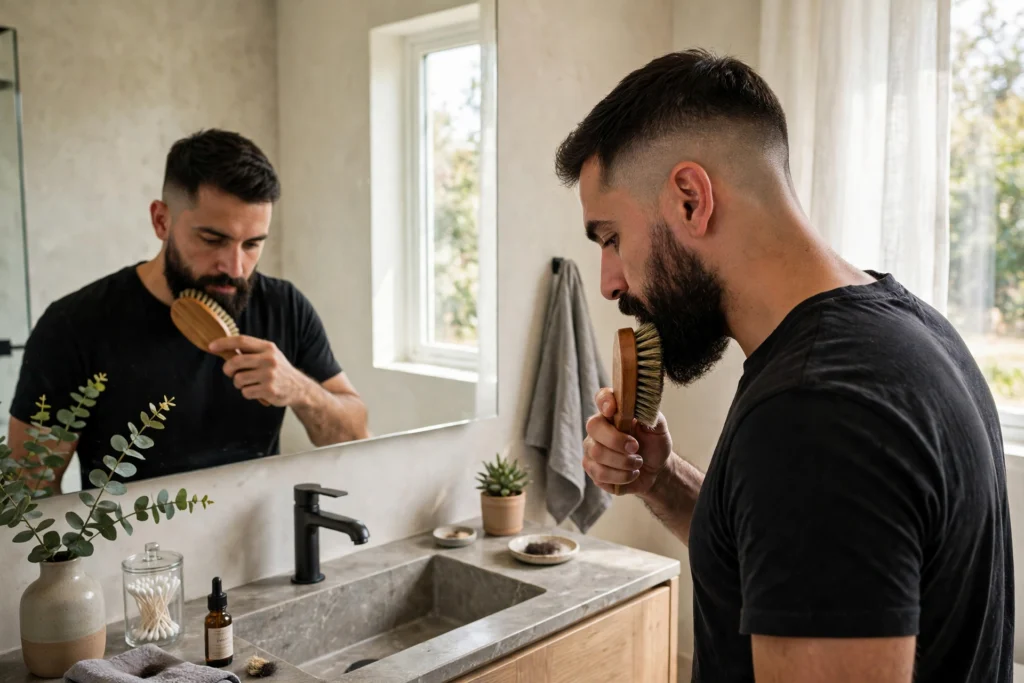
A blended beard stays sharp only if you maintain the lines between barber visits:
- Brush daily with a boar-bristle brush, downward. It trains the hair, distributes oil, and keeps the blend looking smooth.
- Clean up strays weekly on the cheeks and neckline with a trimmer — but do not chase the barber’s lines aggressively. Take off less than you think you need to.
- Trim the neckline conservatively. It is the easiest place to ruin the shape at home.
- Moisturize. Beard oil goes on the skin under the beard, not just the hair — this prevents flakes and itch. Balm adds light hold and shape.
- Book beard cleanups with your fade touch-ups. Every 2 to 3 weeks keeps both the taper and the blend crisp in a single visit.
Variations on the Combo
- Short boxed beard + low taper: The office-friendly version. Defined lines, controlled length, works with business dress codes.
- Stubble + low taper: The lowest-maintenance combo. A higher-contrast fade works here because there is less beard to connect.
- Goatee + low taper: Keeps the focus on the chin. The barber fades the sideburns softly since there is no cheek beard to blend into.
Mistakes to Avoid
- Removing the sideburn entirely. Without it, the haircut and beard look like strangers. The sideburn is the bridge — protect it.
- A hard stop at the temple. If you can see exactly where the fade ends and the beard begins, the blend failed. Ask for a gradual step-down through the guards.
- Carving the cheek line too sharp at home. It grows out harshly and is hard to fix without taking length off.
- Ignoring the neckline. A great blend up top with a scraggly neckline underneath ruins the whole effect.
- Mismatched contrast. A skin-tight fade with a very long, full beard can look top-heavy. Match the beard’s fullness to the fade’s contrast.
FAQ
Should I fade my beard if I wear a low taper fade?
Yes. Fading the beard into the haircut connects the two into one style, keeps the upper cheeks looking intentional, and stops a full beard from looking bulky at the sides.
How short should the fade go where it meets the beard?
Match it to your haircut: skin, #0, or #1 at the top of the sideburn, stepping down through the guards into the beard length. Your barber will blend it so no line shows.
Can I maintain the blend at home between visits?
You can maintain the cheek and neckline edges with a trimmer, but leave the actual blending to your barber. Home touch-ups should only clean strays — never try to re-fade the sideburn yourself.
How often should I get the beard and taper cleaned up?
Every 2 to 3 weeks, in the same visit. The taper shows regrowth fast, and the beard blend loses its crispness on the same schedule.
Final Word
The low taper fade with a full beard is one of the most reliably sharp combinations in men’s grooming — but only when the two connect. Keep the sideburn as your bridge, give your barber the three specifics, and maintain the lines at home. Do that, and the haircut and the beard stop being two separate decisions and start being one great look.