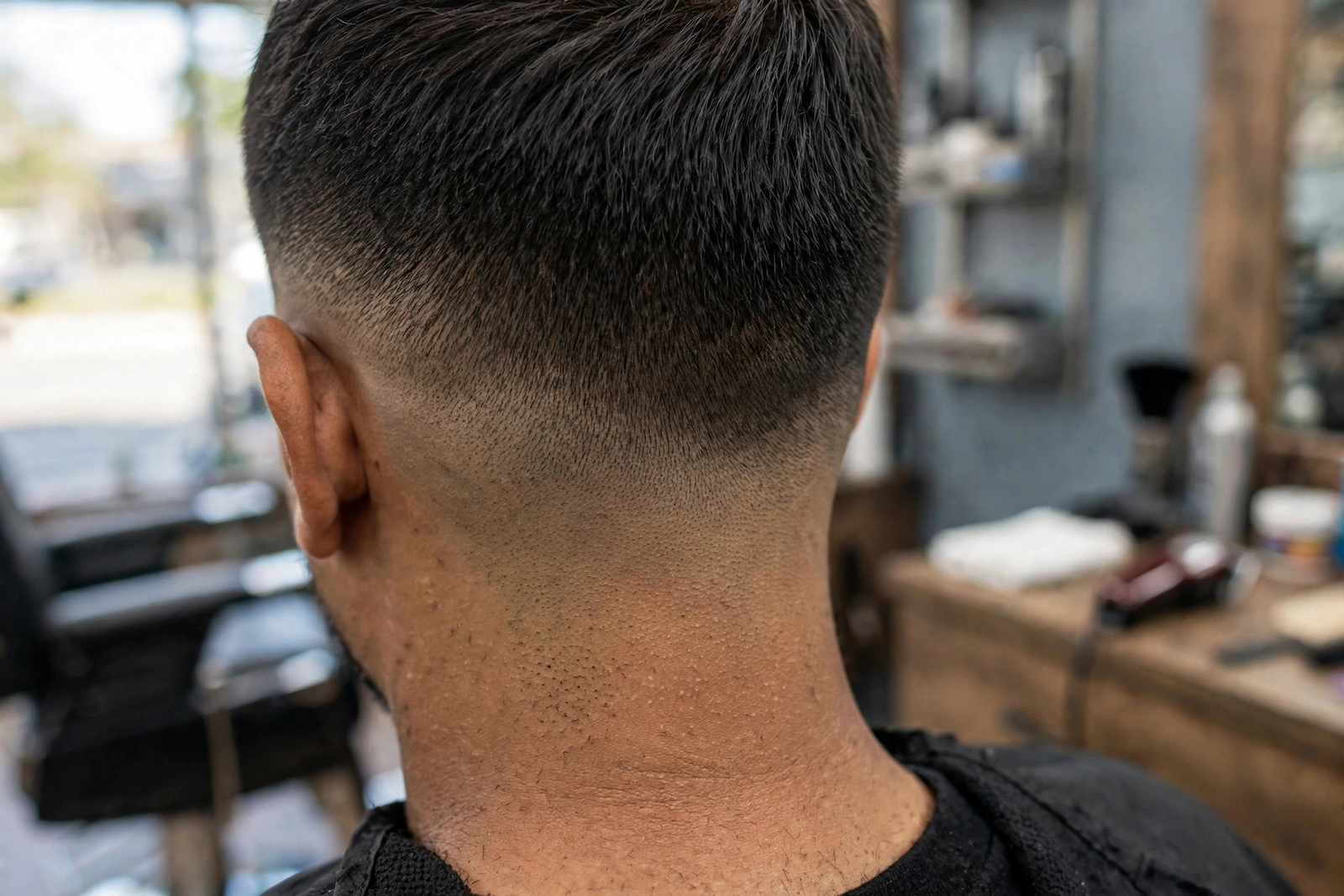
Everyone obsesses over the fade — how high it goes, how clean the blend is — and almost nobody thinks about the neckline. That is a mistake. The neckline is the outline of your haircut at the nape, the very bottom edge at the back of your neck, and it is the first thing people notice when you walk away. Get it right and the whole cut looks sharper. Get it wrong and even a perfect fade looks unfinished.
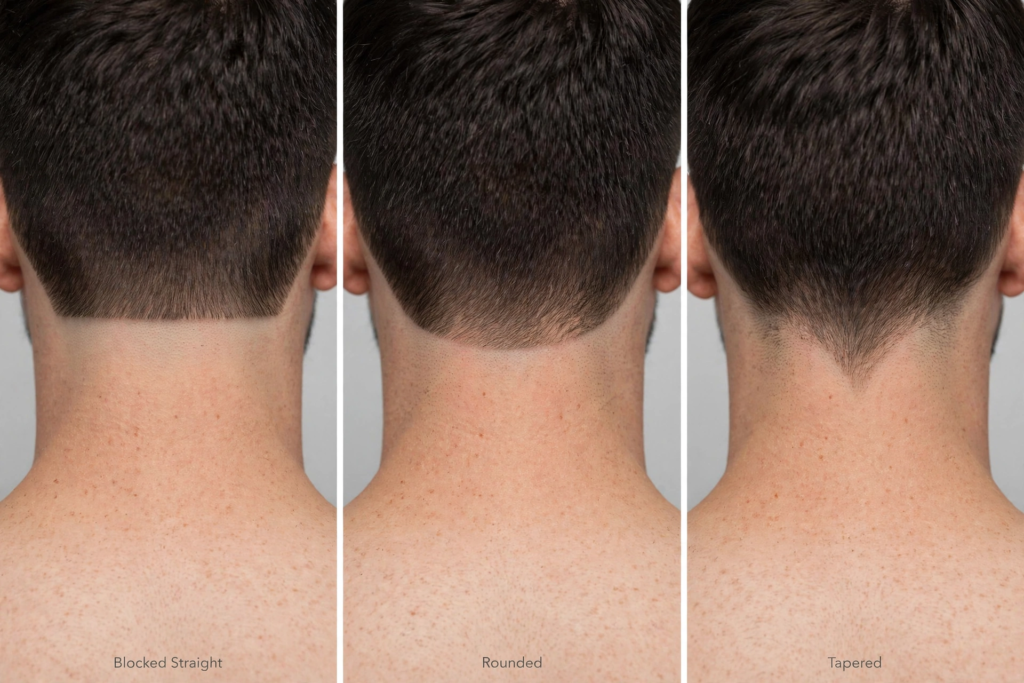
There are three basic neckline options: tapered, blocked, and rounded. Each one looks different, grows out differently, and suits different neck shapes. Here is how to pick the right one for your low taper fade.
What Is the Neckline?
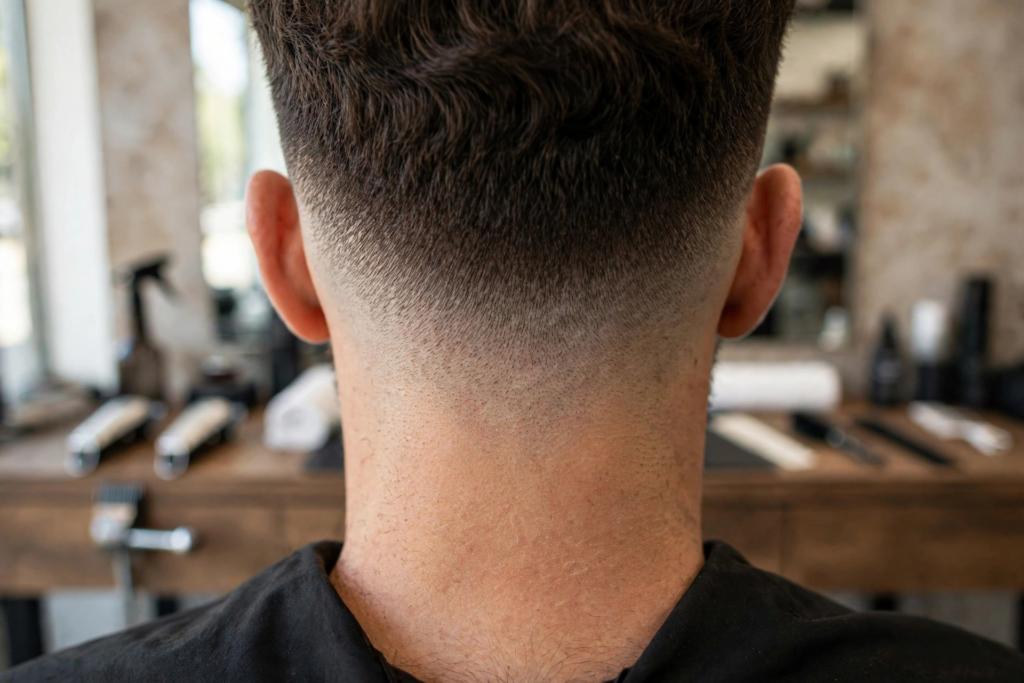
The neckline is the bottom edge of your haircut where the hair meets the neck at the nape. Your barber finishes it with clippers or a razor, shaping it into one of three forms. It is a small detail, but it changes two big things: how sharp the cut looks on day one, and how messy it looks on day twenty as it grows out.
Most barbers have a default they reach for without asking. If you have never specified a neckline, you have been getting your barber’s default this whole time. The fix takes five seconds: name the one you want before the clippers come out. Our exact script for asking your barber for a low taper fade includes the neckline line so you never forget it.
The Tapered Neckline
A tapered neckline gradually shortens the hair down toward the skin instead of cutting a hard line. The hair fades out softly, following your natural hairline, with no visible edge where the cut stops.
Best for: wider necks, guys who want a natural finish, and anyone who hates frequent barbershop visits. Because there is no hard line, regrowth blends in instead of sticking out.
Pros:
- Grows out the cleanest of the three — no harsh line appears as hair returns
- Looks natural and soft, never harsh
- Needs the fewest touch-ups between full haircuts
- Flattering on wider or thicker necks, since it does not add visual width
Cons:
- Less dramatic on day one — if you love a razor-sharp outline, this will feel too soft
- Requires a barber with good blending skills; a sloppy taper looks fuzzy instead of clean
The Blocked Neckline
A blocked neckline is a hard, straight line shaved across the nape, usually following the natural hairline as closely as possible. It is the sharpest, most defined finish — the one that makes a fresh cut photograph so well.
Best for: slim necks (it adds the appearance of width), guys who want maximum sharpness, and anyone who gets cleaned up regularly.
Pros:
- The crispest, most defined look on day one
- Can make a slim neck look wider and more balanced
- Photographs extremely well right after the cut
Cons:
- Grows out the worst of the three — within a week or two the hard line turns into obvious stubble below it
- Needs a cleanup every 1–2 weeks to stay sharp, which means more barbershop visits
- On a wide neck, the straight-across line can make the neck look even wider
If you choose blocked, plan for neckline-only touch-ups between full cuts. Many shops do them cheap — our guide on how often to get your low taper touched up covers what those in-between visits should include.
The Rounded Neckline
A rounded neckline is a middle ground: like the blocked neckline, it creates a defined edge, but the sharp square corners are rounded off. It softens the harshness of the block while keeping more definition than a taper.
Best for: guys who find the blocked look too severe but the tapered look too soft, and wider necks that need a gentler outline than a straight block.
Pros:
- Softer than blocked, more defined than tapered — a true compromise
- The rounded shape can balance a wider neck better than a straight-across block
- Grows out more gracefully than a blocked neckline
Cons:
- Still shows regrowth faster than a tapered neckline
- If rounded too aggressively it can look unnatural — the curve should be subtle
Which Neckline Should You Pick?
Match the neckline to your neck shape and your tolerance for maintenance:
| Your situation | Best choice | Why |
| Wide or thick neck, hate upkeep | Tapered | Fades out softly; longest between cuts |
| Slim neck, want sharpness | Blocked | Adds visual width; crispest day-one look |
| Want definition without harshness | Rounded | Softer than blocked, more defined than tapered |
| Unsure / first low taper | Tapered | The safest default; grows out cleanly |
| Photoshoot or event tomorrow | Blocked | Sharpest on day one; touch up before the event |
One more factor: your lifestyle. If you work somewhere conservative or meet clients face-to-face, the tapered or rounded neckline reads more polished during the grow-out phase than a blocked line going fuzzy. Blocked is great if you do not mind the maintenance — just go in eyes open.
Why the Tapered Neckline Pairs Best With a Low Taper Fade
It is not a coincidence that most low taper fades you see have a tapered neckline. The low taper is a soft, gradual cut — the hair gets shorter in small steps around the ears and nape rather than disappearing into skin all at once. A tapered neckline extends that same gradual logic to the very bottom edge, so the whole haircut reads as one continuous fade. A blocked neckline, by contrast, introduces a hard horizontal stop that fights the softness of the taper above it.
If you are still deciding how high the fade itself should go, our breakdown of low vs mid vs high fades explains where each one sits and who it suits.
What to Say to Your Barber
Use the exact words. Barbers hear vague requests all day — the more specific you are about the neckline, the better your result:
- Low taper fade, and I want a tapered neckline — fade it out, no hard line.
- Low taper fade with a blocked neckline — keep it sharp and square.
- Low taper fade, rounded neckline please — defined but soft on the corners.
Want the full breakdown of everything else to mention in the chair? Our Complete Guide to the low taper fade covers length on top, sides, and styling.
FAQ
Can I change my neckline at the next haircut?
Yes — a barber can reshape the neckline at any appointment. Switching from blocked to tapered is easy (it just means fading out the hard line). Going from tapered to blocked requires growing enough length at the nape to cut a clean line, so it may take one extra appointment.
Which neckline lasts the longest between cuts?
The tapered neckline. Because there is no hard line, regrowth blends in and the cut still looks tidy at 3–4 weeks. Blocked needs attention at 1–2 weeks, rounded sits in the middle.
Does a blocked neckline suit every hair type?
It works best on straight to wavy hair where the line stays crisp. Very curly or coily hair can make a blocked line look uneven as it grows, so a tapered or rounded neckline is usually the safer choice.
Should I shave my own neckline between cuts?
Only if you have a tapered neckline and a steady hand — and even then, just clean up stray hairs below the fade, never try to re-cut the shape. For blocked or rounded necklines, leave it to the barber; one wrong move ruins the line.