A pixie is one of the boldest style changes you can make — and one of the hardest to reverse. Many women sit in the salon chair later and wonder if they chose well.
This guide answers the real question: is a pixie cut right for you? You will learn what a pixie is, which face shapes wear it best, how different hair textures behave, what the upkeep honestly looks like, and what to tell your stylist.
What Is a Pixie Cut?
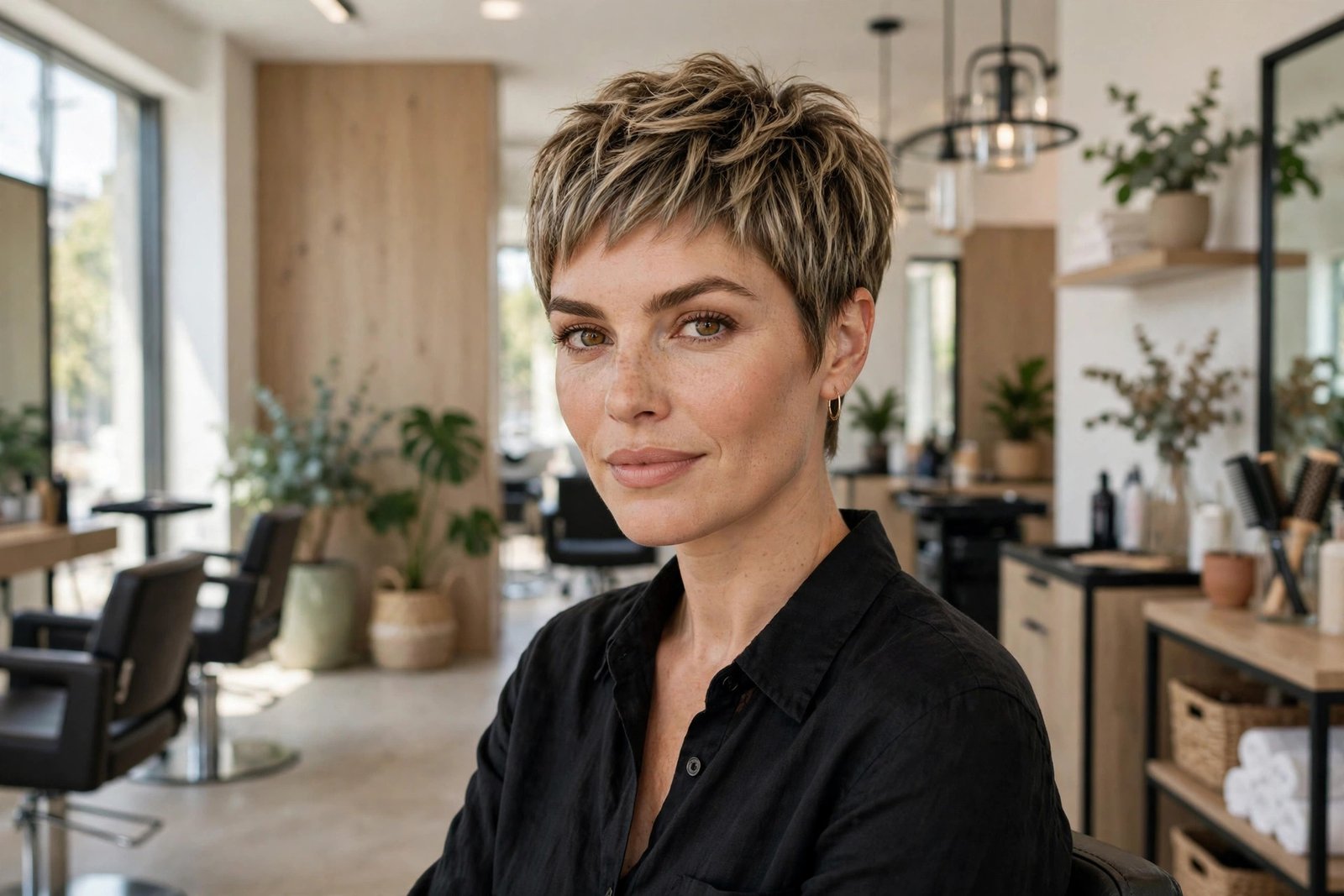
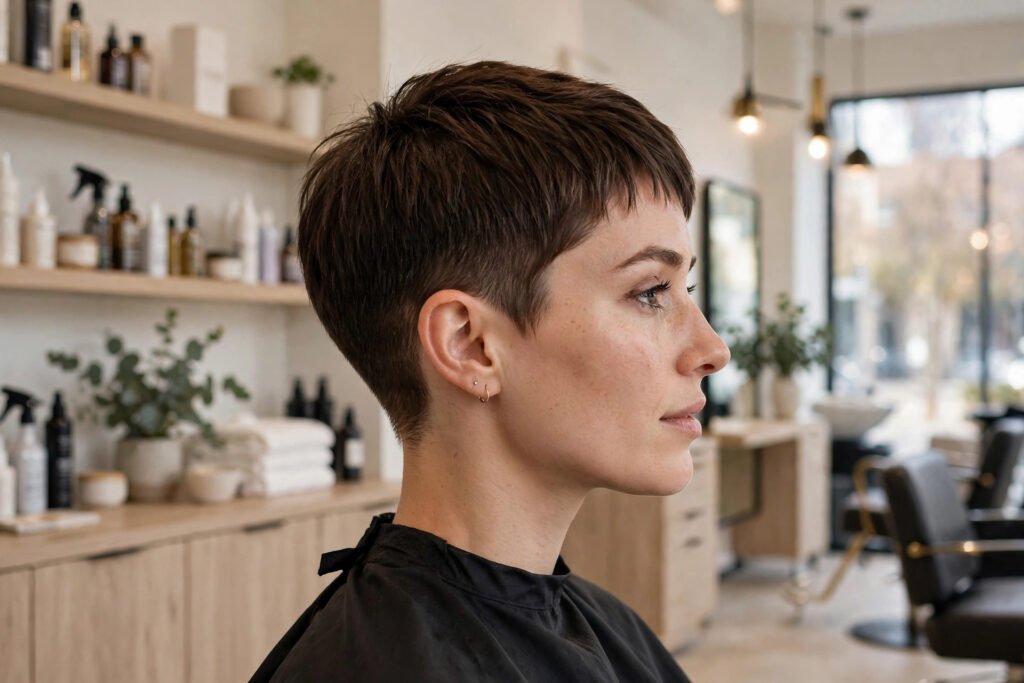
A pixie is short all over. The sides and back are tapered close, while the top is left longer with texture and movement. Some pixies are cropped tight; others keep a few inches on top that can be swept, spiked, or tousled.
How is a pixie different from a bob? A bob sits around the jawline or chin with roughly the same length all the way around. A pixie is much shorter — typically above the ears — with clearly tapered sides and back. If you want short hair but prefer a safety net, our Classic Bob guide covers the longer option.
Best Face Shapes for a Pixie Cut
The right pixie can flatter almost anyone, but the cut must be shaped for your face. Here is an honest breakdown by face shape:
- Oval: Nearly every pixie works on an oval face. Go bold: cropped sides, longer choppy tops, or asymmetric fringes.
- Round: The goal is elongation. Ask for volume on top with a side-swept fringe, and tapered sides so the face does not look wider. Avoid rounded, bowl-like shapes.
- Heart: Soften a wide forehead with soft, side-swept bangs. Keep the sides soft rather than tight, with a little fullness near the jawline to balance the chin.
- Square: Soften strong angles with texture — a longer, textured top and wispy, irregular edges beat blunt lines. Side-swept bangs also help.
- Long or oblong: Be honest here. Height on top can make a long face look longer. Choose less height on top, a side-swept fringe, and softness around the sides to add width.
Not sure of your face shape? Pull your hair back, look straight into a mirror, and trace the outline of your face with a dry-erase marker on the glass.
Hair Types and Textures
Your hair texture changes how a pixie sits and how much styling it needs.
Fine or straight hair
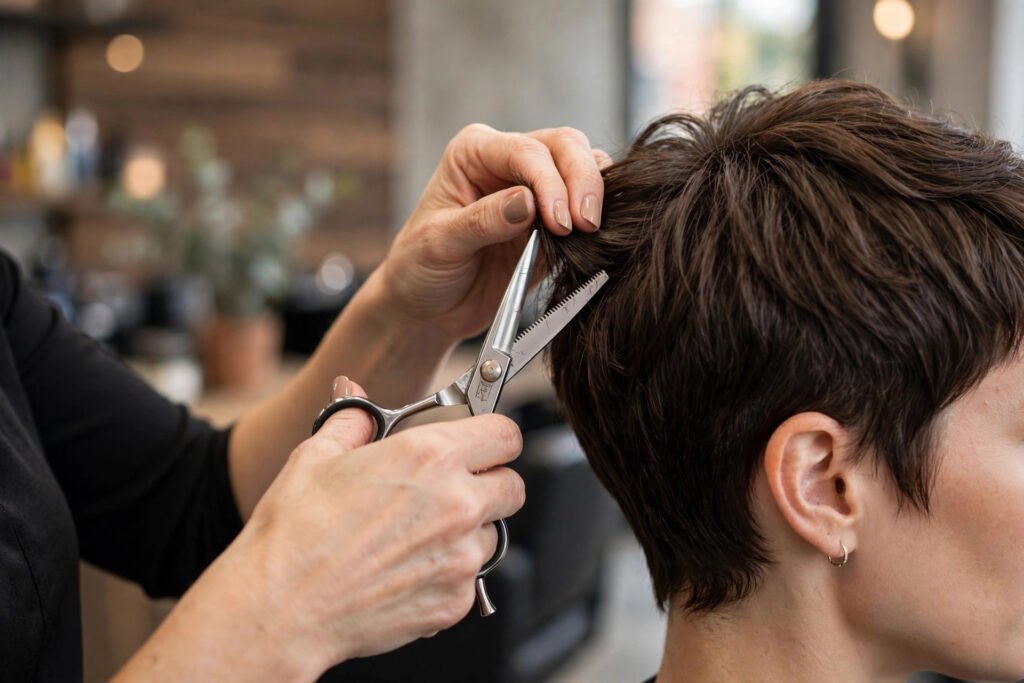
Fine hair can fall flat in a pixie, so texture is everything. Ask for choppy layers and point-cut ends that create lift. A light texturizing spray or a small amount of matte pomade at the roots adds volume. Avoid heavy products — they weigh short fine hair down.
Thick hair
Thick hair gives a pixie natural fullness, but it can puff out without shape. Your stylist may thin the interior so the cut lies the way you want. Thick hair also grows out fast and bulky, so regular trims matter even more.
Curly or wavy hair
Yes, you can get a pixie with curly hair — and it can look amazing. The key is leaving enough length on top for the curls to form. Cropping curls too tight makes them spring up and out instead of sitting in a flattering shape. Find a stylist who is comfortable cutting curly hair and understands how your curl pattern shrinks as it dries.
The Honest Truth: Commitment and Upkeep
A pixie is low-effort day to day, but high-commitment over time. Here is the honest picture:
- Trims every 4–6 weeks. A pixie loses its shape fast — when the taper grows out, the cut goes from sharp to shaggy in weeks. Budget for regular salon visits.
- Daily styling takes minutes. A bit of product, some finger-styling, and you are done. Wash-and-go is realistic for many textures.
- Growing it out is slow and awkward. Going from a pixie back to shoulder length takes many months, with in-between stages that need creative styling. Ask your stylist about the grow-out plan before you cut.
- Less styling freedom than long hair. You cannot throw a pixie into a ponytail on a bad hair day. If you love braids, updos, and heat-styled waves, be sure you are ready to give those up.
What to Ask Your Stylist For
A great pixie starts with a great consultation. Use this short script at your appointment:
I want a pixie cut. My face shape is [oval/round/heart/square/long], and my hair is [fine/thick/curly/wavy]. I have about [5 / 10 / 15] minutes for styling in the morning. Here are some photos I like — which ones would work for me? And how will this grow out?
Three rules for the consultation:
- Be honest about your routine. If you will not style daily, say so. A good stylist cuts for your real life, not your ideal life.
- Bring 3–4 photos. Include pixies on people with a similar face shape and hair texture to yours. Photos remove guesswork.
- Ask about the grow-out. Knowing what the awkward stages look like helps you commit with confidence.
How Much Does a Pixie Cost?
Pixie cuts fall into standard women’s short-hair pricing at most US salons. As an approximate guide, a short cut typically runs $40–$80 at a mid-range salon, depending on your city — higher in New York or Los Angeles, lower in smaller towns. High-end salons can charge $100 or more. These are approximate ranges, so check the salon’s menu.
Remember the trim cycle: a pixie needs a refresh every 4–6 weeks, so budget for more visits per year. Factor in standard US tipping of 15–20% per visit.
Frequently Asked Questions
Will a pixie cut make me look older?
Not necessarily — a fresh, well-shaped pixie often looks modern and youthful. What ages a pixie is usually the wrong shape: a stiff, helmet-like cut with no texture can look dated. Ask for soft texture and movement, and a pixie can look vibrant at any age.
Can I get a pixie cut with curly hair?
Absolutely. Keep enough length on top so your curls can form — cropping too tight makes curls spring outward. Find a stylist experienced with curly cuts, and bring photos of curly pixies you like so you both picture the same result.
How long does a pixie take to grow out?
Reaching chin length usually takes around 6–9 months, and the shoulders can take a year or more. The in-between stages are the hardest part. Many women schedule “grow-out trims” where the stylist reshapes the back and sides while the top catches up.
Is a pixie cut high maintenance?
Daily styling is low maintenance — a few minutes with the right product is enough. But keeping the shape is higher maintenance than long hair: you need a trim every 4–6 weeks, while longer cuts can go months between appointments. A pixie saves time each morning but costs more salon visits over the year.
Still deciding? A consultation costs little and can save you from a cut you are not ready for. And if you want short hair with a safety net, our Classic Bob guide covers a longer short style that grows out much more gracefully.