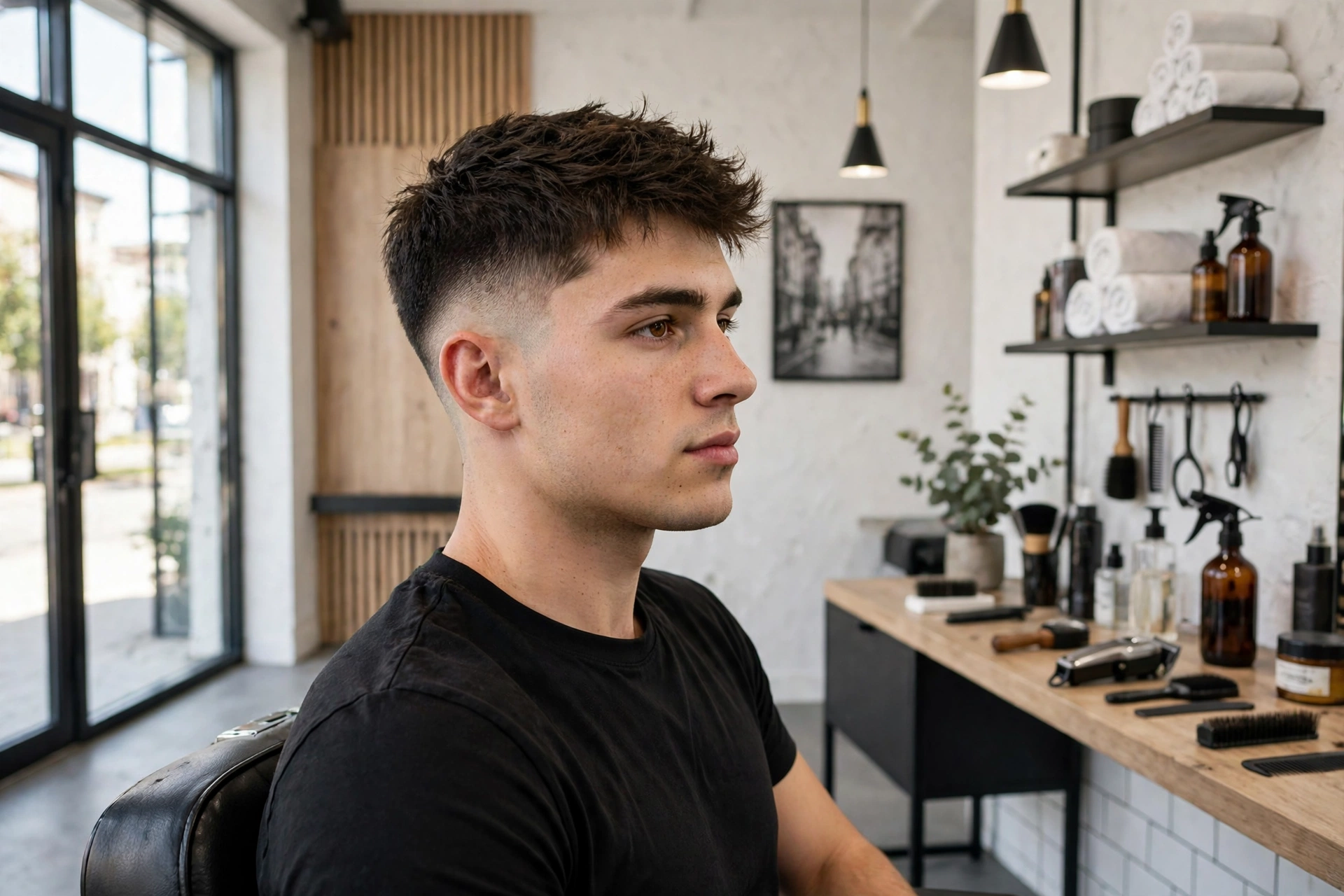
The low taper fade is the most-requested men’s haircut going into 2026, and it is not hard to see why. The cut is clean without being severe, works in an office and at the gym, and grows out better than almost any other fade. But the version men are asking for in 2026 is not the same one they asked for two years ago. The blend is softer, the tops are more textured, and the shiny, sculpted finish is giving way to something more natural.
This guide covers what is actually new in 2026, what is fading out, and exactly what to say to your barber so you leave with the current version of the cut — not last year’s.
What Is Changing in 2026
Three shifts define this year’s low taper fade. First, the fade itself is getting softer. Instead of dropping to bare skin, many barbers now stop at a #1 or #1.5 guard at the shortest point, so the hair blends into hair rather than into skin. Second, texture has replaced structure on top. Men want movement they can shape with their fingers, not a stiff style that needs a blow dryer every morning. Third, the finish is matte. Shiny pomades and heavy gels are out; matte clays and light pastes are in.
1. The Subtle Taper: Shorter Fade, More Hair
The biggest trend of 2026 is the barely-there taper. The fade only affects the sideburn area and the back of the neck, while the rest of the sides keep most of their length. From the front, the cut barely looks like a fade at all — it just looks neat.
This version suits almost everyone, and it is the best choice if you are trying a low taper fade for the first time. Ask your barber for a low taper that starts just above the ear, with a #1 guard at the shortest point and a #3 or #4 guard where the fade meets the longer hair on the sides. The grow-out is forgiving: most men get three to four weeks before it needs a touch-up.
2. Textured Crop on Top
The textured crop is the single most-requested top style of 2026, and it pairs naturally with a low taper. The top is kept one to two inches long, cut with point-cutting so the ends look piecey instead of blunt, and styled forward with a small amount of matte clay.
The appeal is simple: it takes about a minute to style. Rub a pea-sized amount of clay between your palms, push the hair forward and slightly to one side, and pinch a few pieces at the front for definition. It works best on straight to wavy hair, and it is a strong choice for men with round or square faces because the short, forward top adds structure without adding height.
3. The Fringe Is Back
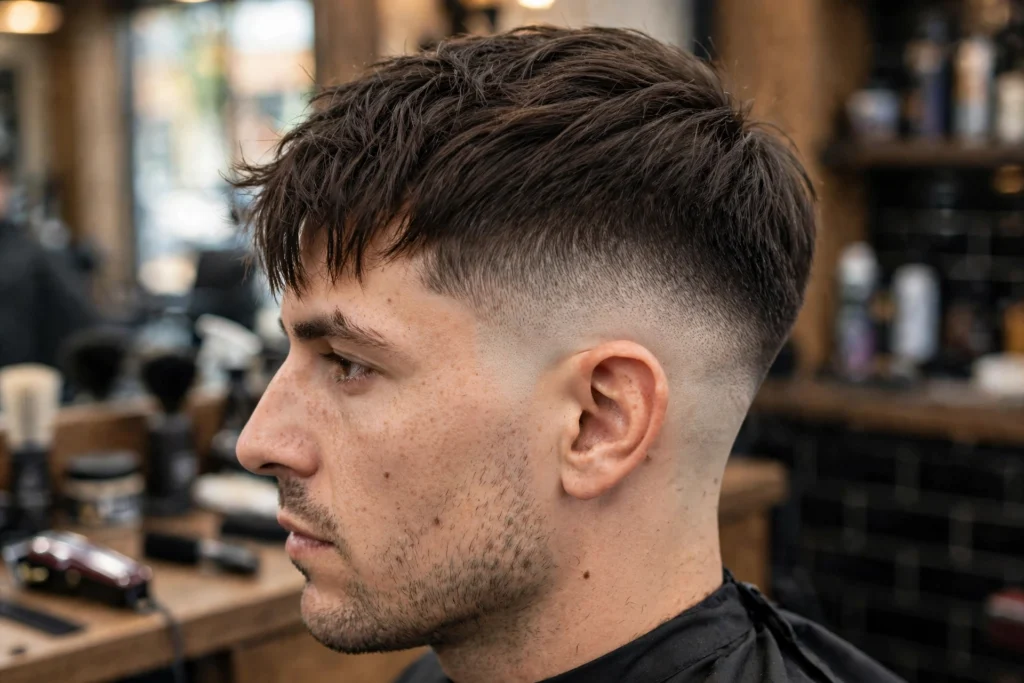
The fringe — hair worn forward over the forehead — has gone from a niche style to a mainstream request, helped by its popularity on TikTok and among younger celebrities. In 2026, the most common version is the textured fringe with a low taper fade: the front is left long enough to reach the eyebrows, textured so it does not look heavy, and paired with a clean taper around the ears.
A low taper fade with a textured fringe is a good pick if you have a longer forehead or a heart-shaped face, because the fringe shortens the look of the face. If you have curly hair, the same idea works with a curly fringe — let the curls fall naturally at the front instead of forcing them straight.
One honest warning: a fringe needs the right hairline. If your hairline is receding, a fringe can draw attention to it. In that case, a short textured crop is the better 2026 option.
4. Longer Tops and Middle Parts
Not every 2026 trend is short. Longer tops — three to five inches, worn swept back or parted in the middle — are gaining ground, especially with men in their late twenties and thirties who want a more grown-up look. The low taper keeps the sides tidy while the top stays long enough to move.
The middle part, or curtain style, is the version getting the most attention. It works best on straight or slightly wavy hair with some natural volume. Ask your barber to keep the top long, thin out the bulk if your hair is thick, and keep the taper low and subtle so the focus stays on the top. Styling takes a little more effort — a blow dryer and a round brush help — but the result looks polished without looking overdone.
5. Matte Finish Replaces Shine
Walk into a barbershop in 2026 and the product shelf tells the story. Matte clay, matte paste, and sea salt spray have pushed glossy pomades to the back. The goal is hair that looks like hair, not hair that looks styled.
For most low taper fades, a matte clay is the right product. Use a small amount — about the size of a dime — and work it through dry hair for texture, or damp hair for a little more hold. If your hair is fine, a sea salt spray before blow-drying adds volume without weight. Save the pomade for a slicked-back look on a special occasion, and use half as much as you think you need.
What Is Fading Out in 2026
A few styles are losing ground. The high skin fade, once the default bold cut, has cooled off as men move toward softer, lower fades that grow out better. Heavy, shiny gel finishes look dated next to the matte texture that defines 2026. And razor-sharp, ruler-straight hairlines are giving way to a slightly softer, more natural edge — still clean, just less severe. None of these styles are wrong, but if you want the cut that looks current in 2026, the softer low taper is the direction the trend is moving.
How to Ask Your Barber for a 2026 Low Taper Fade
The exact words matter more than the name of the cut. Try this script:
“I want a low taper fade — start the taper just above the ear, shortest at a #1 guard, blending up to a #3 or #4. Keep [two inches] on top, textured, and finish it matte. No skin showing at the sides.”
Bring a photo on your phone, ideally two: one of the top style and one of the taper from the side. Barbers work from pictures far better than from descriptions. If you want a specific 2026 top style, name it clearly: textured crop, fringe, quiff, or longer middle part.
A low taper fade with a quiff adds height without bulk, while a low taper fade pompadour gives classic volume with modern, softer edges.
How Often to Get It Touched Up
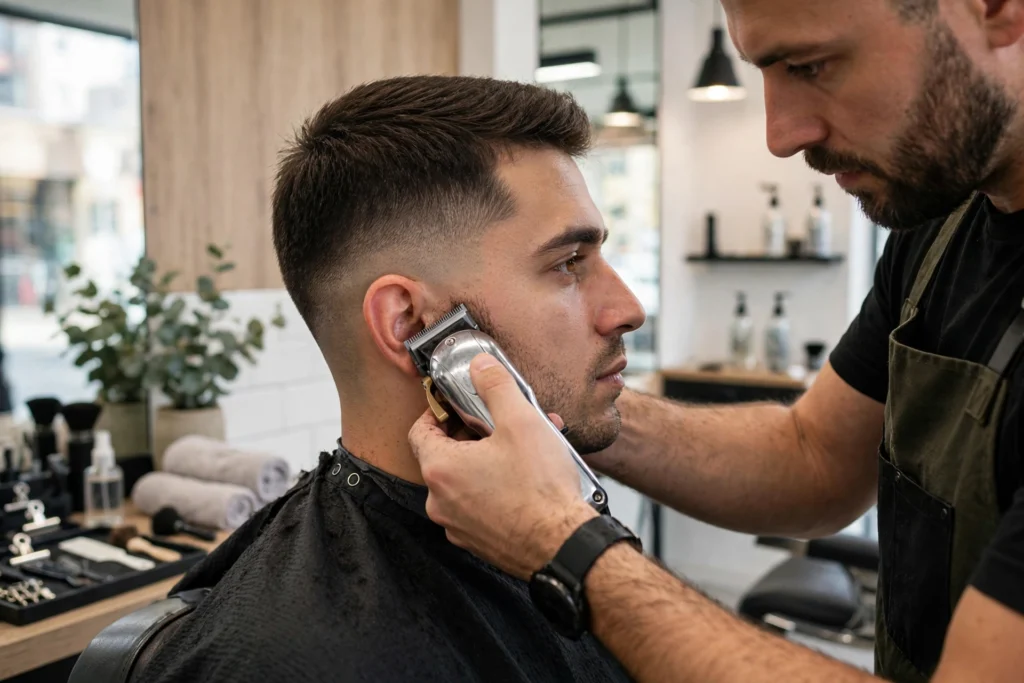
A low taper fade holds its shape for three to four weeks, which is one reason it is so popular. The subtle 2026 version lasts even longer because there is no skin line to grow out. Plan on a full cut every three to four weeks. If you want the edges to stay sharp between visits, a quick neckline and sideburn cleanup every two weeks keeps it looking fresh, and many barbershops offer this as a low-cost service.
A typical low taper fade in the US costs roughly $25 to $50 at a barbershop, depending on the city and the shop. A standard tip is 15 to 20 percent. Prices are higher in big cities like New York or Los Angeles, and lower in smaller towns.
FAQ
Is the low taper fade still in style in 2026?
Yes. It is the most-requested fade in US barbershops going into 2026, and the trend is toward softer, subtler versions with textured tops and matte finishes.
What is the most popular low taper fade style in 2026?
The textured crop with a low taper is the most-requested combination, followed by the textured fringe and the low taper with a quiff. All three are easy to style and suit most face shapes.
How is the 2026 low taper fade different from the 2024 version?
The 2026 version is softer: the shortest point is usually a #1 guard instead of bare skin, the top is more textured, and the finish is matte instead of shiny. It also grows out more gracefully.
Does a low taper fade work for a job interview?
Yes — it is one of the safest interview haircuts. The low taper looks tidy and professional, and the subtle 2026 version reads as polished without looking trendy. Keep the top neat and the finish matte.