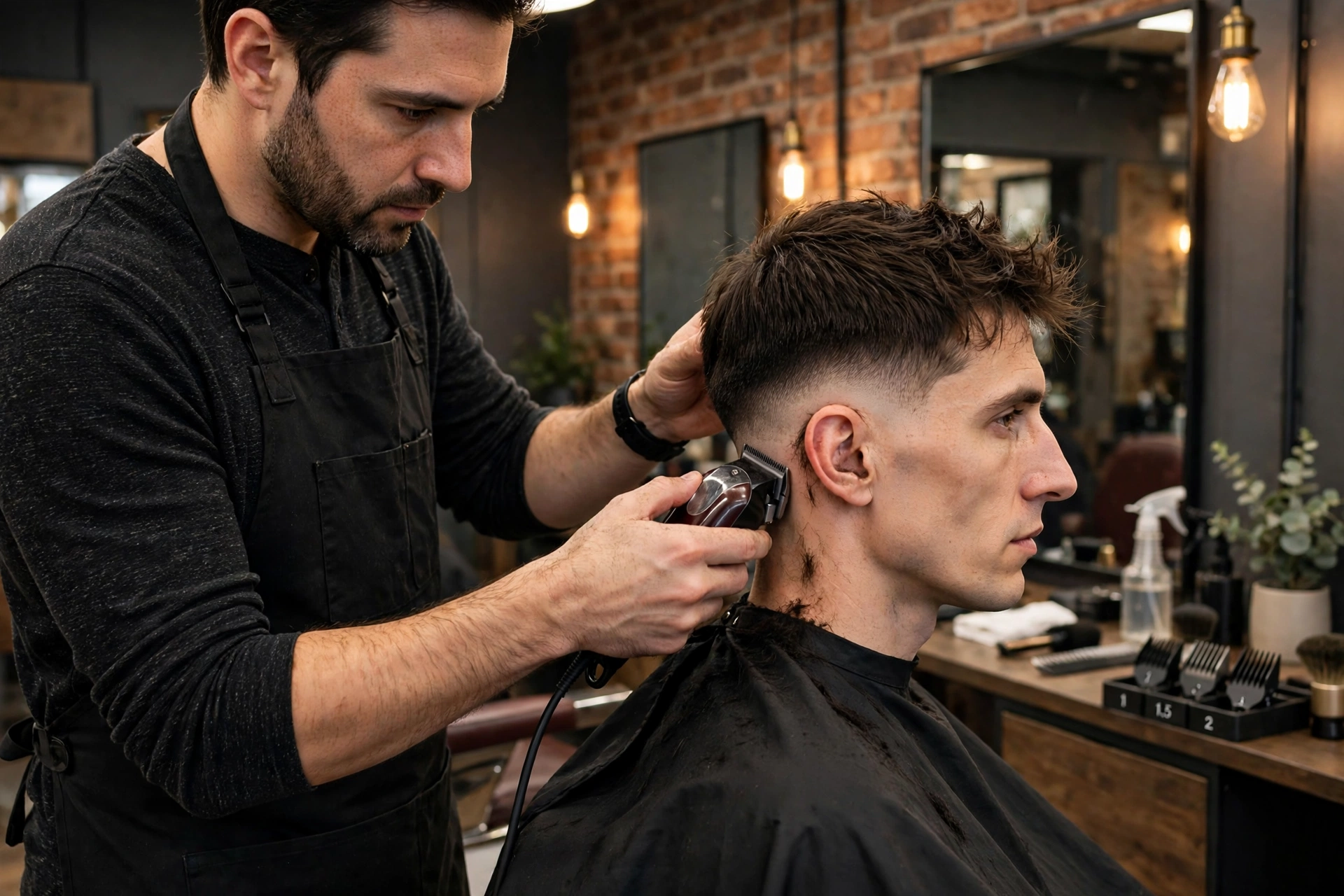
A long face is not a problem to fix — it just needs the right balance. The wrong cut adds height on top and length on the sides, and suddenly your face looks even longer than it is. The low taper fade long face combination works because it does the opposite: it keeps the sides full enough to add width, keeps the top controlled, and puts the clean detail low, around the ears and neckline.
This guide covers how to tell if you have a long face, which low taper fade styles flatter it, which styles to avoid, and exactly what to say to your barber.
How to Tell You Have a Long Face
A long face (sometimes called oblong) is noticeably longer than it is wide. The forehead, cheekbones, and jaw are roughly the same width, and the chin tends to be a little long. If your face looks longer than it looks wide in the mirror, and most hats sit high on your head, you probably have a long face.
Face shape is about balance, not rules. The goal is simple: add a little visual width at the sides and avoid adding height on top. That is the opposite of the goal for a round face, where adding height helps — so the advice for one shape does not transfer to another. If you are not sure about your shape, compare it with our guides for the oval face and the square face before your next cut.
Why the Low Taper Fade Works for a Long Face
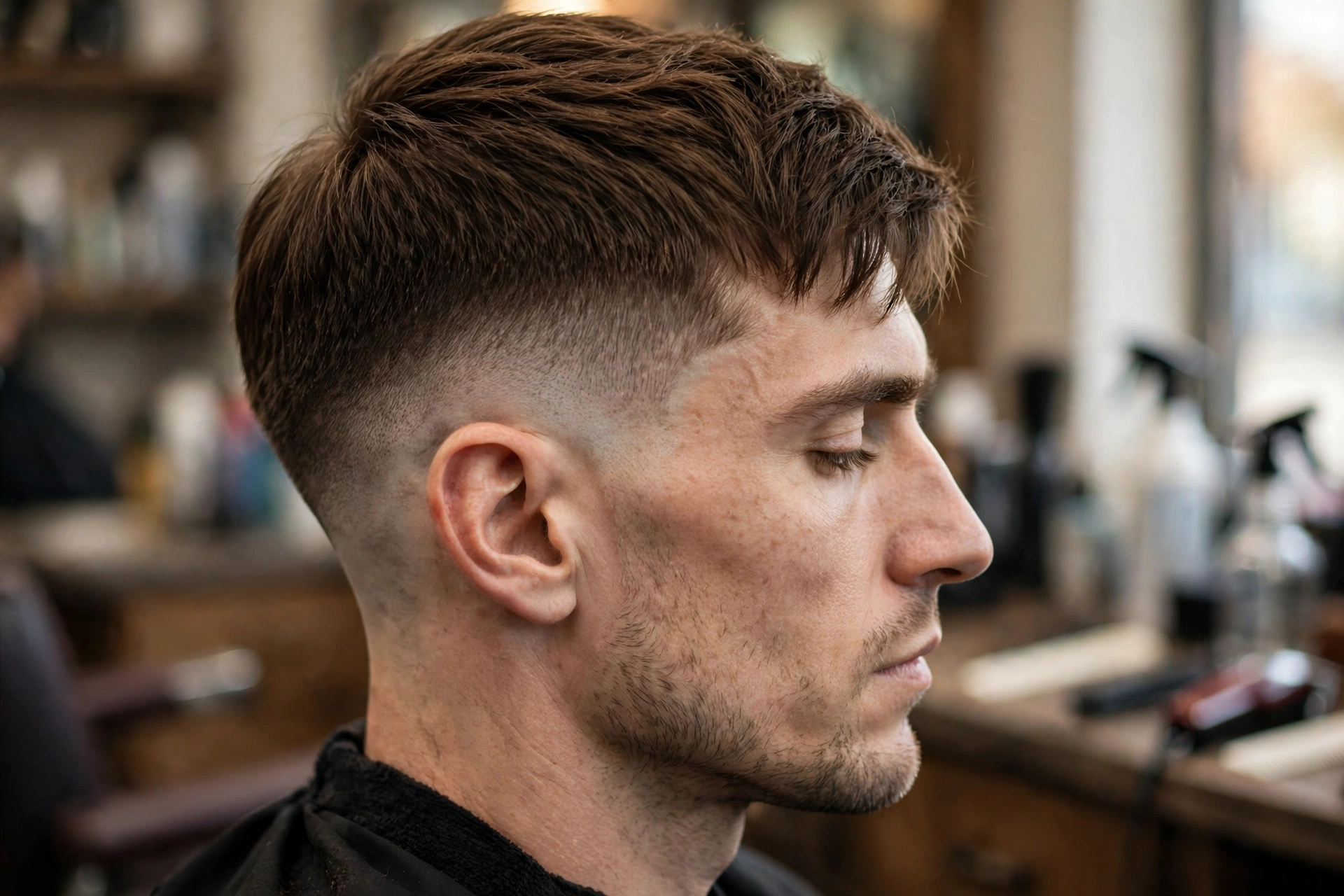
A low taper fade keeps most of the hair on the sides. The fade only happens low down, near the ears and the neckline, so the sides keep their weight and width. That width is exactly what a long face needs — it breaks up the vertical line of the face and makes it look more balanced.
Compare that with a high fade, which strips the sides bare and leaves a tall column of hair on top. On a long face, that tall, narrow shape just repeats the face shape and makes it look longer. The low taper does the reverse: short and clean at the edges, fuller through the sides, controlled on top.
5 Low Taper Fade Styles That Flatter a Long Face
1. Textured Fringe Forward
Keep 2 to 3 inches on top and push the front forward over the forehead. The fringe shortens the visible forehead, which is the single most effective trick for a long face. Ask for texture through the top so it does not sit flat like a helmet. A matte clay or paste keeps it in place without shine.
2. Side Part With a Low Taper
A classic side part sweeps hair across the forehead and adds width to the upper part of the face. Keep the top around 3 inches so there is enough length to sweep, and keep the taper low. Our comb over guide covers the same idea in detail — the sweep across the forehead is doing the same balancing work.
3. Messy Textured Top
A messy, textured top with a low taper adds width through the sides of the top instead of height. Work a small amount of matte paste through damp hair with your fingers and let it fall where it wants. The uneven texture breaks up the long vertical line of the face.
4. Curly or Wavy Top
If you have natural curls or waves, use them. Curls create width on their own, and a low taper keeps the sides neat while the texture does the balancing. Keep 2 to 4 inches on top and let the curls fall forward rather than pushing them straight up.
5. Buzz Cut With a Low Taper
A short buzz (a #2 or #3 guard on top) with a low taper around the ears is a strong option if you want almost no styling. The key is keeping the top short — a longer buzz starts to add height again. The low taper keeps the edges clean without exposing too much skin on the sides.

What to Avoid on a Long Face
- Too much height on top. A tall quiff or pompadour adds inches exactly where you do not want them. If you love volume, keep it forward or to the side, not straight up.
- High or skin fades. Taking the sides down to skin removes the width your face needs and leaves a tall, narrow silhouette.
- Slicked-back styles. Pulling everything straight back exposes the full forehead and the full length of the face.
- Very long top with short sides. The contrast makes the head look like a tall rectangle.
What to Tell Your Barber
Use this script so nothing gets lost:
“I want a low taper fade — keep the taper low around the ears and the neckline, and leave some weight on the sides. On top, about 2 to 3 inches, pushed forward or to the side, not up. I have a long face, so I want width, not height.”
If your barber suggests a mid or high fade, ask them to keep it low. Many barbers default to a mid fade, so naming the height out loud matters.
Styling and Upkeep
A low taper fade for a long face is easy to maintain. The taper needs a touch-up every 2 to 3 weeks to stay crisp, and the top can go 4 to 5 weeks between cuts. Style with a matte product — a clay, paste, or cream — and avoid high-shine pomades, which sharpen the look and draw the eye upward. In the US, a low taper fade typically costs around $25 to $45 at a barbershop, and a tip of 15 to 20 percent is standard.
At home, shampoo 2 to 3 times a week and use a small amount of product on damp hair. Push the top forward or to the side with your fingers — never blow-dry it straight up.
FAQ
Does a low taper fade suit a long face?
Yes. It is one of the best options because it keeps width on the sides and keeps the top controlled, which balances the length of the face instead of adding to it.
Should I keep my hair short or long on top with a long face?
Short to medium works best — about 2 to 3 inches. That is enough for a fringe or a side sweep, but not so much that it adds height.
Is a high fade bad for a long face?
Usually, yes. A high fade removes side width and leaves a tall, narrow shape that makes a long face look longer. A low taper is the safer choice.
How often should I get a low taper fade touched up?
Every 2 to 3 weeks for the taper. The top can wait 4 to 5 weeks, which keeps the overall cost and chair time reasonable.