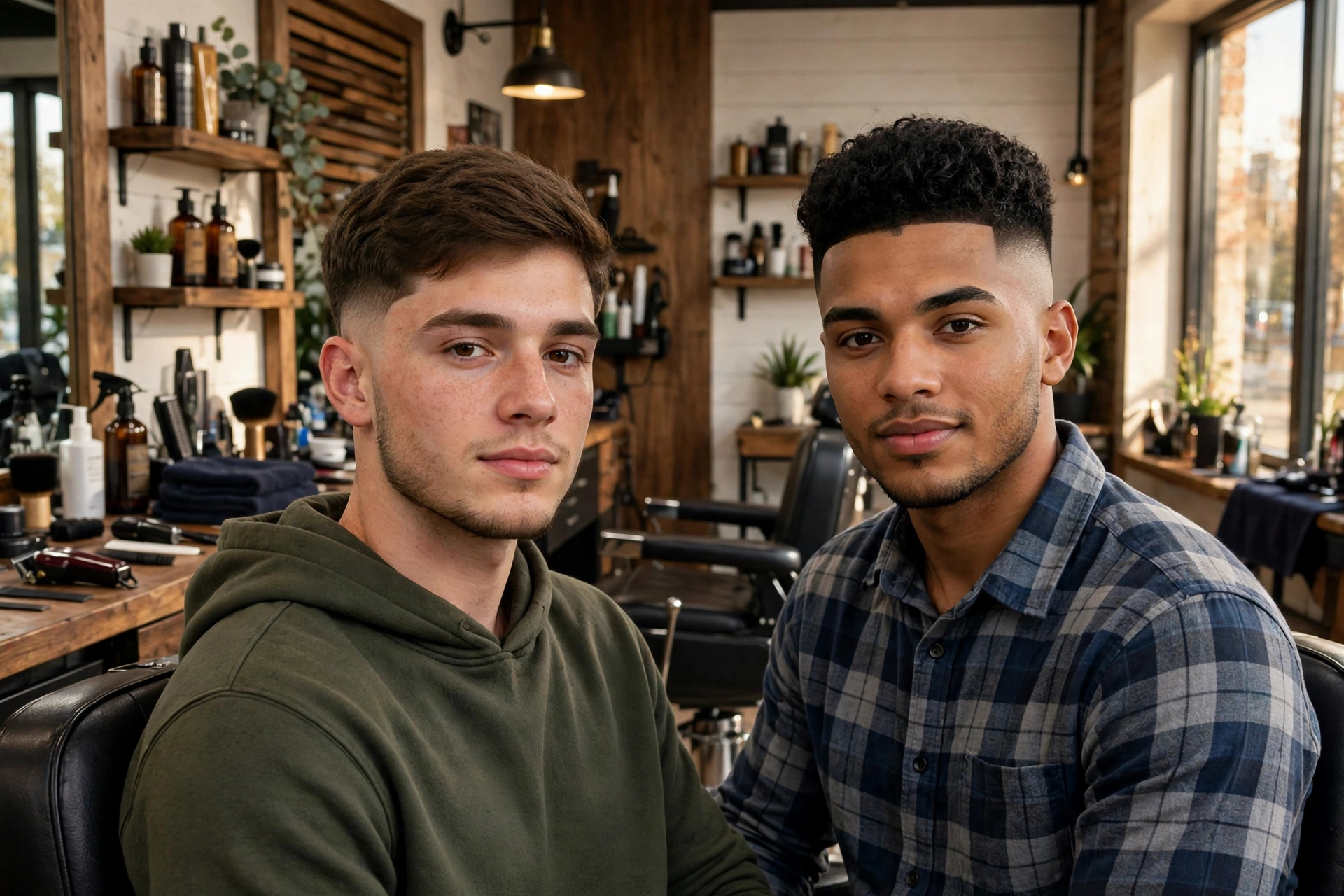
Low taper fade vs high taper fade is one of the most common questions guys ask at the barbershop — and the answer is simpler than it looks. The two cuts are the same idea at different heights. A low taper starts the blend just above the ear. A high taper starts it near the temples, a couple of inches higher. Everything else — contrast, upkeep, who it suits — follows from that one difference.
Neither cut is better in general. The right one depends on how much contrast you want, how your face is shaped, and how often you want to sit in the barber’s chair. This guide compares them side by side so you can walk in knowing exactly what to ask for.
The one difference that matters: where the fade starts
A taper fade is a gradual blend from longer hair on top to shorter hair at the edges. “Low” and “high” describe where that blending begins.
- Low taper fade: the shortest section sits around the sideburns, ears, and nape. Most of the side keeps its length, so the change from top to sides is gentle.
- High taper fade: the shortest section climbs to the temples or above. A wider band of the side is cut short, so the top stands out sharply against the sides.
One thing the height does not decide is how short the bottom goes. Both versions can end in a skin-close finish or stay at a light shadow — that is a separate choice, so say it out loud to your barber instead of assuming. If you want the full background on how tapers differ from fades, our taper vs fade haircut guide explains it.
Low taper fade vs high taper fade at a glance
Low taper fade: fade starts just above the ear; more side length kept; subtle to moderate contrast; usually less scalp showing; natural, classic, understated look; best for offices, formal settings, first-timers; touch-ups every 2 to 3 weeks.
High taper fade: fade starts at or above the temples; less side length kept; moderate to strong contrast; usually more scalp showing; bold, sharp, modern look; best for creative jobs, bold styles, hot weather; touch-ups every 2 to 3 weeks.
The low taper fade: subtle and flexible
The low taper is the quieter of the two. Because the blend stays near the hairline, the sides keep their weight and the cut grows out gracefully — the blend line is small, so regrowth is less obvious. That makes it forgiving if you stretch an extra week between visits.
It pairs well with almost any top: side parts, comb overs, textured crops, quiffs, and slicked-back styles all sit naturally on a low taper. It is also the safer pick for conservative workplaces and formal events, since the fade is there but does not demand attention. Read our low taper fade complete guide if you want the full rundown of styles that work on top of it.
Choose a low taper fade if you: work in a corporate or formal setting; prefer classic, understated looks; want a cut that grows out gently; have a round, heart-shaped, or longer face; are trying a taper fade for the first time.
The high taper fade: bold and defined
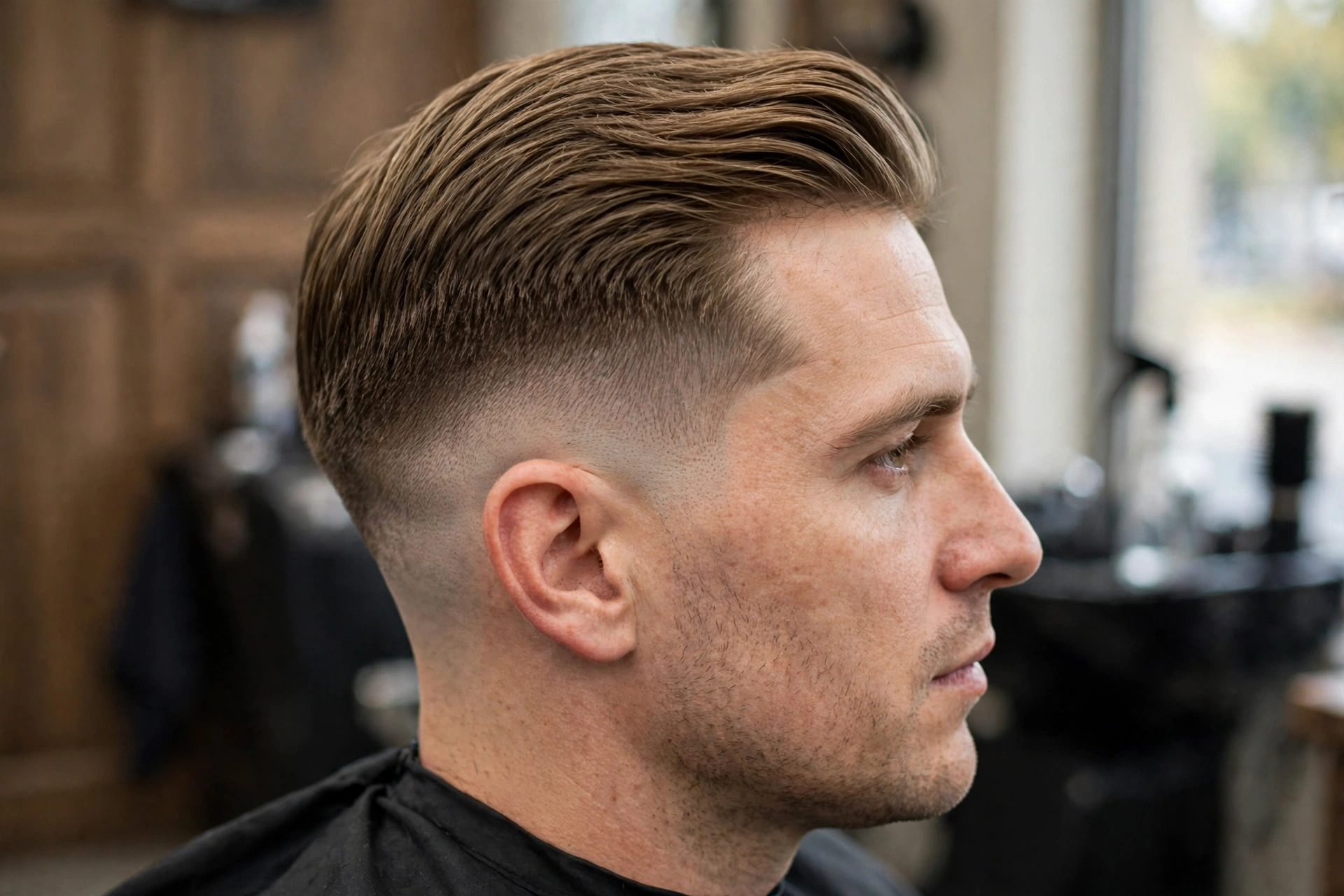
The high taper makes a statement. By lifting the blend to the temples, it removes bulk higher up the head and creates a crisp line where the top meets the sides. Thick or heavy hair feels lighter, and the top — a pompadour, quiff, or textured crop — gets more attention because the sides are out of the way.
The trade-off is exposure. A high taper shows more scalp and head shape, so scars, bumps, or an uneven hairline are more visible. It is also the least forgiving placement if you change your mind: growing a high taper down takes longer than growing a low one out. And because the contrast is strong, it reads as a deliberate style choice — great if that is what you want, less so if you need to blend in.
Choose a high taper fade if you: want bold contrast and a modern edge; have thick hair and want bulk removed higher up; have an oval, square, or diamond face shape; like dramatic top styles like pompadours and quiffs; live somewhere hot and want a cooler cut.
Which one suits your face shape?
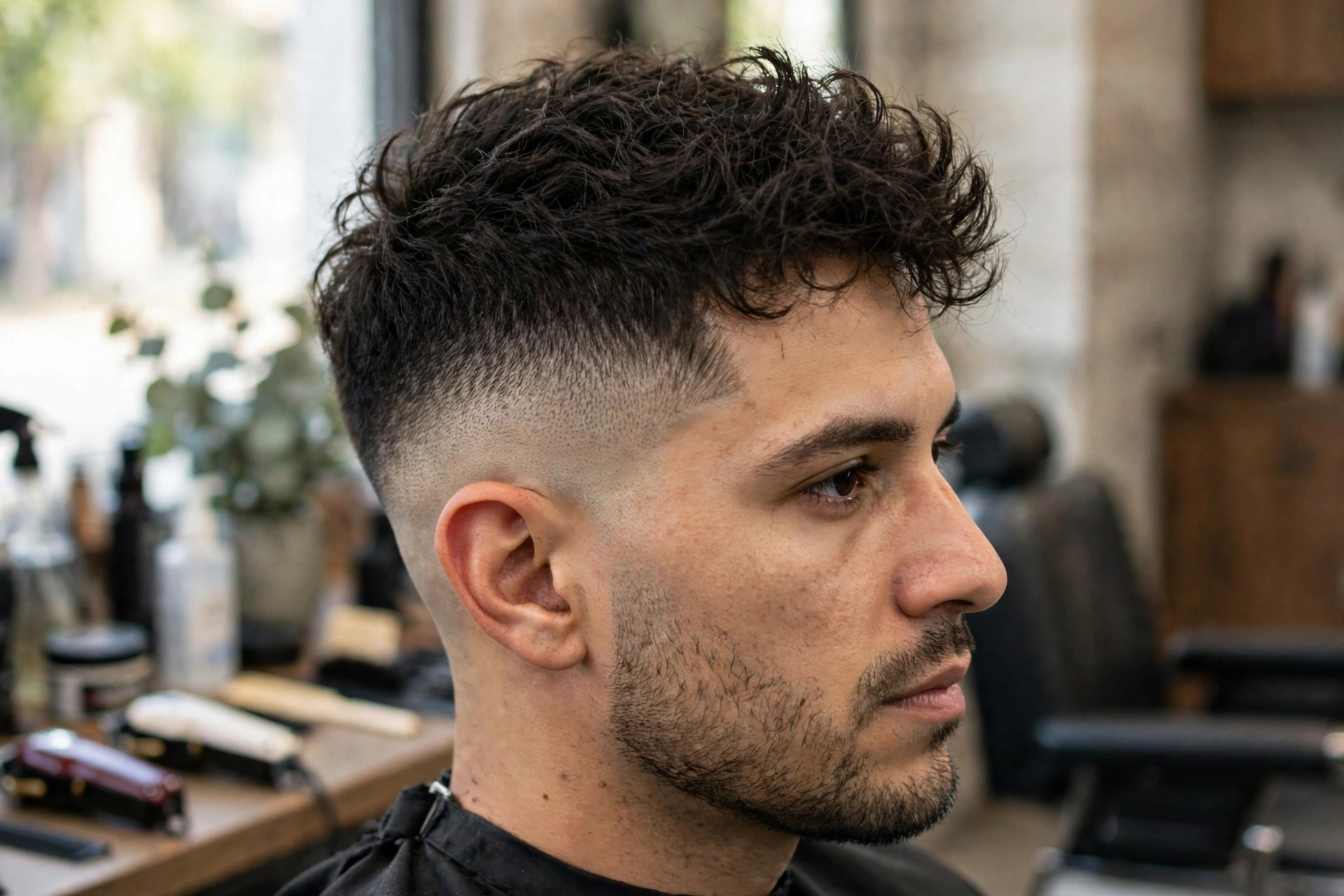
Face shape is the fastest way to choose. Round faces benefit from height on top, and a high taper can help by removing width at the temples — but a low taper with a tall quiff does the same job more quietly. Oval faces suit both, since their proportions are already balanced. Square faces look strong with a high taper, because the sharp blend matches a strong jawline. Long faces should usually go low: extra height on top would only stretch the face further. If you are still deciding, a mid taper — starting around the temple — splits the difference, and it is easy to move lower or higher at your next visit. Our low taper fade vs mid taper fade comparison covers that middle option.
Cost, maintenance, and grow-out
Both cuts cost about the same at the barbershop — in the US, a taper fade typically runs $25 to $50 at a barbershop and $50 to $80+ at a higher-end salon, with prices varying by city. The difference is in how they age. A low taper grows out softly and can stretch to 3 weeks between visits without looking messy. A high taper shows regrowth sooner, because the contrast line sits higher and the new growth stands out against the short sides — plan on every 2 weeks if you want it crisp. Neither needs much home care: a little matte paste or cream for the top, and a quick check in the mirror for the neckline.
What to say to your barber
The words matter, because “high” and “low” mean slightly different things in different shops. Use landmarks, not just labels:
- For a low taper: “Low taper fade, starting just above the ear. Blend it down to a #1 at the bottom, keep the sides full above that. Skin or shadow? I’ll take a shadow finish.”
- For a high taper: “High taper fade, starting at the temples. Take the sides down to a #0 or skin at the bottom, blend up to a #2. Keep the top long.”
Bring a photo for either one. Point at the photo and at your own head, and confirm the finish — skin or shadow — before the clippers start. If you want to understand the numbers your barber uses, our guide to low taper fade guard numbers explains guards #0 to #2 in plain terms.
The verdict
Pick the low taper fade if you want subtle, professional, and easy to grow out. Pick the high taper fade if you want bold contrast, a sharper silhouette, and a cooler cut for thick hair or hot weather. If you genuinely cannot decide, start with a low taper — you can always go higher next time, but you cannot un-cut a high taper in the same visit.
FAQ
What is the main difference between a low taper fade and a high taper fade?
Where the fade starts. A low taper begins just above the ear and keeps more length on the sides. A high taper begins at or above the temples and removes more hair, creating stronger contrast with the top.
Which fade is better for a round face?
Both can work. A high taper removes width at the temples, which slims a round face. A low taper with height on top — a quiff or pompadour — achieves a similar effect more subtly. Start with the low taper if you want the safer option.
Does a high taper fade need more maintenance?
Slightly. Both need a touch-up every 2 to 3 weeks, but a high taper shows regrowth sooner because the contrast line sits higher. A low taper grows out more softly and can stretch a few days longer.
Can I switch from a low taper to a high taper later?
Yes, easily — your barber just lifts the blend higher at your next visit. Going the other way takes longer, since a high taper has to grow out before a low blend can be cut in.