

If you search for how often women should trim their hair, you will find answers ranging from every 4 weeks to every 6 months. The truth is simpler and less dramatic: there is no single schedule that fits everyone. The right frequency depends on your haircut, your hair type, and what you are trying to achieve. This guide gives you a clear starting point, then shows you how to adjust it.
The Short Answer
Most women do well with a trim every 8 to 12 weeks. That range keeps split ends under control and preserves length without constant salon visits. But that average hides real differences. A pixie cut can lose its shape in 4 weeks, while healthy long hair can easily go 12 weeks. Structured cuts need more frequent trims than soft, layered cuts, and color-treated or heat-styled hair needs more frequent trims than untouched hair. Think of it this way: you are not trimming on a calendar, you are trimming to protect two things, the health of your ends and the shape of your cut. Whichever one breaks down first sets your schedule.
Trim Schedule by Hair Length and Cut
Short hair, like pixie cuts and bobs, usually needs a trim every 4 to 6 weeks. Short styles lose their shape fast as hair grows, and a bob that was sharp at week one can look rounded and heavy by week six. If you love the crisp line of a blunt bob, book closer to every 4 weeks. Our guide to types of bangs also notes that fringe trims often fall on this shorter cycle, since bangs grow into the eyes quickly. Medium-length hair, including lobs and layered cuts, usually needs a trim every 6 to 8 weeks. Layers grow out and lose their movement, and the ends start to thin if you wait much longer. Long hair can usually go 8 to 12 weeks between trims, as long as the ends stay healthy. Long hair shows damage more slowly, but it also carries older, weaker ends. If your ends start to feel dry, catch on each other, or split, do not wait for the calendar. Book the trim.
Trim Schedule by Hair Type
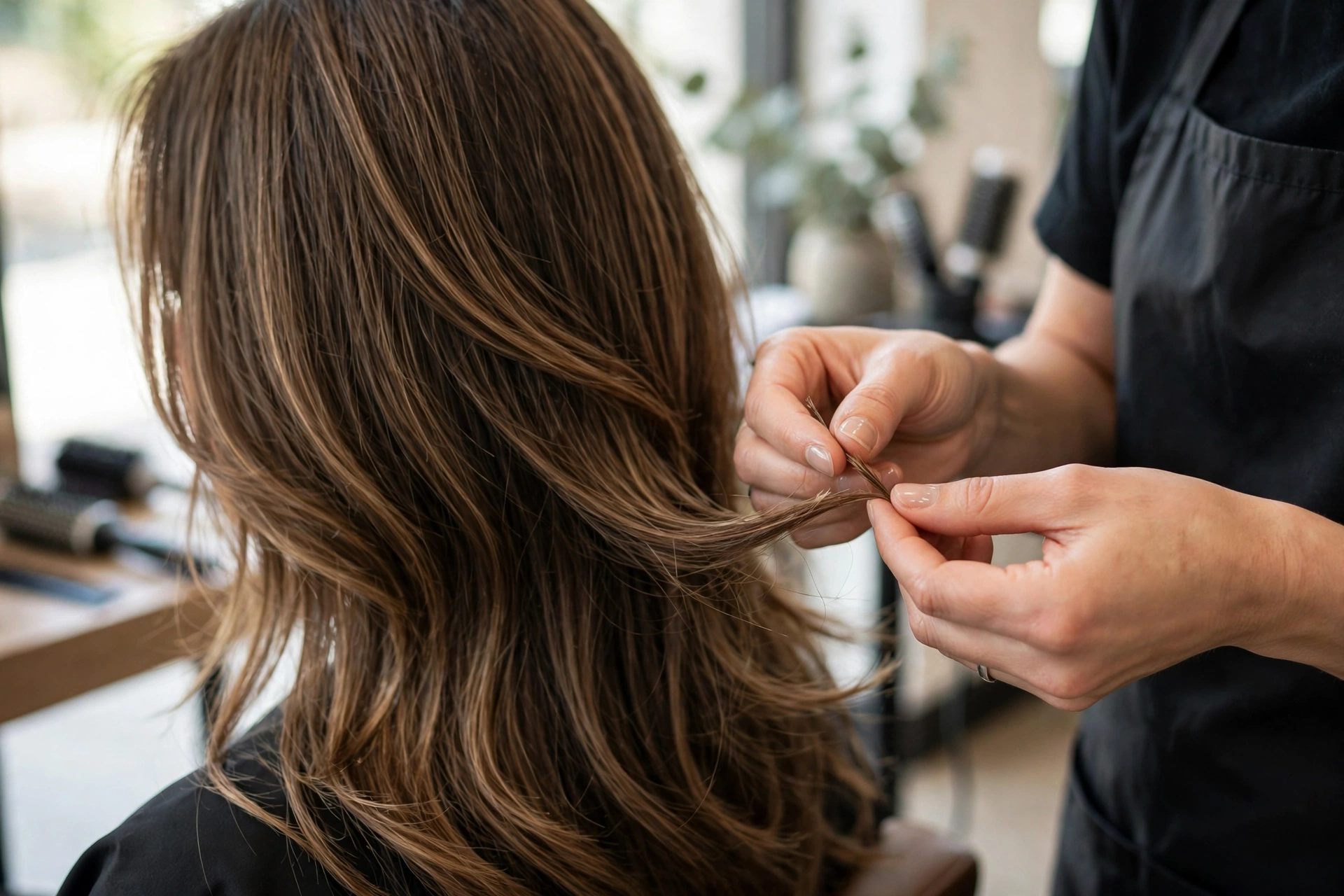
Fine hair tends to show damage faster, so it often needs trims every 6 to 8 weeks even at longer lengths. Fine ends split more easily, and split ends make fine hair look thinner. Regular small trims keep fine hair looking fuller, which is why our guide to haircuts for thin hair pairs cut choice with upkeep. Thick hair can often stretch to 8 to 10 weeks, since it hides early damage better. But thick hair also gains weight as it grows, so if your cut relies on internal layers to remove bulk, waiting too long can leave it feeling heavy. Curly and coily hair usually needs a trim every 8 to 12 weeks, depending on how defined you want the curl pattern to stay. Many stylists trim curly hair dry, so the curl pattern is visible. For cut ideas that suit curls, see our guide to the best haircuts for curly hair. Color-treated, bleached, or frequently heat-styled hair needs the shortest interval of all, usually every 6 to 8 weeks. Coordinating trims with your color appointments is an easy way to stay on track.
If You Are Growing Your Hair Out

Trimming while growing your hair sounds contradictory, but it is the fastest way to reach healthy long hair. Skipping trims does not make hair grow faster. It lets split ends break off, which costs you length anyway. A small trim every 10 to 12 weeks removes damage before it spreads, so you keep more of the length you grow. Tell your stylist you are growing your hair out and ask for a dusting, a trim of just the very ends, rather than a full cut. A good stylist will take off a quarter inch or less and show you what was removed.
Signs It Is Time for a Trim
Your hair will tell you before the calendar does. Book a trim if your ends feel rough or dry even after conditioning, if they tangle easily or catch on each other, if your cut has lost its shape and will not style the way it used to, or if you can see split ends or white dots along the ends. Bangs that fall into your eyes and layers that sit flat instead of moving are also signs. If none of those signs are present, you can wait. Trimming healthy hair on a rigid schedule wastes length and money.
How to Make Trims Last Longer
A few habits stretch the time between appointments. Use heat protectant every time you blow-dry or use hot tools, and turn the heat down when you can. Sleep on a silk or satin pillowcase to reduce friction on the ends. Be gentle with wet hair, which breaks more easily, and detangle from the ends upward with a wide-tooth comb. Get color and chemical services done by a professional, and space them out rather than stacking treatments. None of these habits replace trims, but together they can move you from the short end of your range to the long end.
What to Ask Your Stylist
At your appointment, ask three questions. First, how much do you need to take off to remove the damage? Second, how long can I go before the shape starts to break down? Third, what should I do at home to protect the ends? A stylist who has seen your hair can give you a personal schedule that beats any general guide, including this one. Book your next trim before you leave. Also be honest about your routine. If you heat-style daily, swim often, or wear your hair up tightly every day, say so. Those habits change the schedule.
FAQ
Does trimming make hair grow faster? No. Trimming does not change how fast hair grows from the root. It prevents breakage at the ends, so you keep more of the length you grow. Can I trim my own hair at home? You can dust split ends at home, but a full trim is best left to a stylist, especially for layered cuts, bobs, and curly hair. How often should I trim if I have layers? Every 6 to 8 weeks is a good starting point. Layers lose their movement as they grow out. If your layers are long and soft, you can stretch toward 10 weeks, as our comparison of long layers vs short layers explains. What if I have not trimmed in 6 months? Do not panic. Book an appointment and tell your stylist how long it has been. They will remove the damaged ends, and your hair will look and feel healthier right away.
Final Verdict
For most women, a trim every 8 to 12 weeks is the right starting point. Short and structured cuts need 4 to 6 weeks, medium and layered cuts need 6 to 8 weeks, and long, healthy hair can go up to 12 weeks. Adjust for your hair type, your color and heat routine, and whether you are growing your hair out. Watch your ends, listen to your stylist, and trim to protect health and shape, not to follow a rigid rule.