
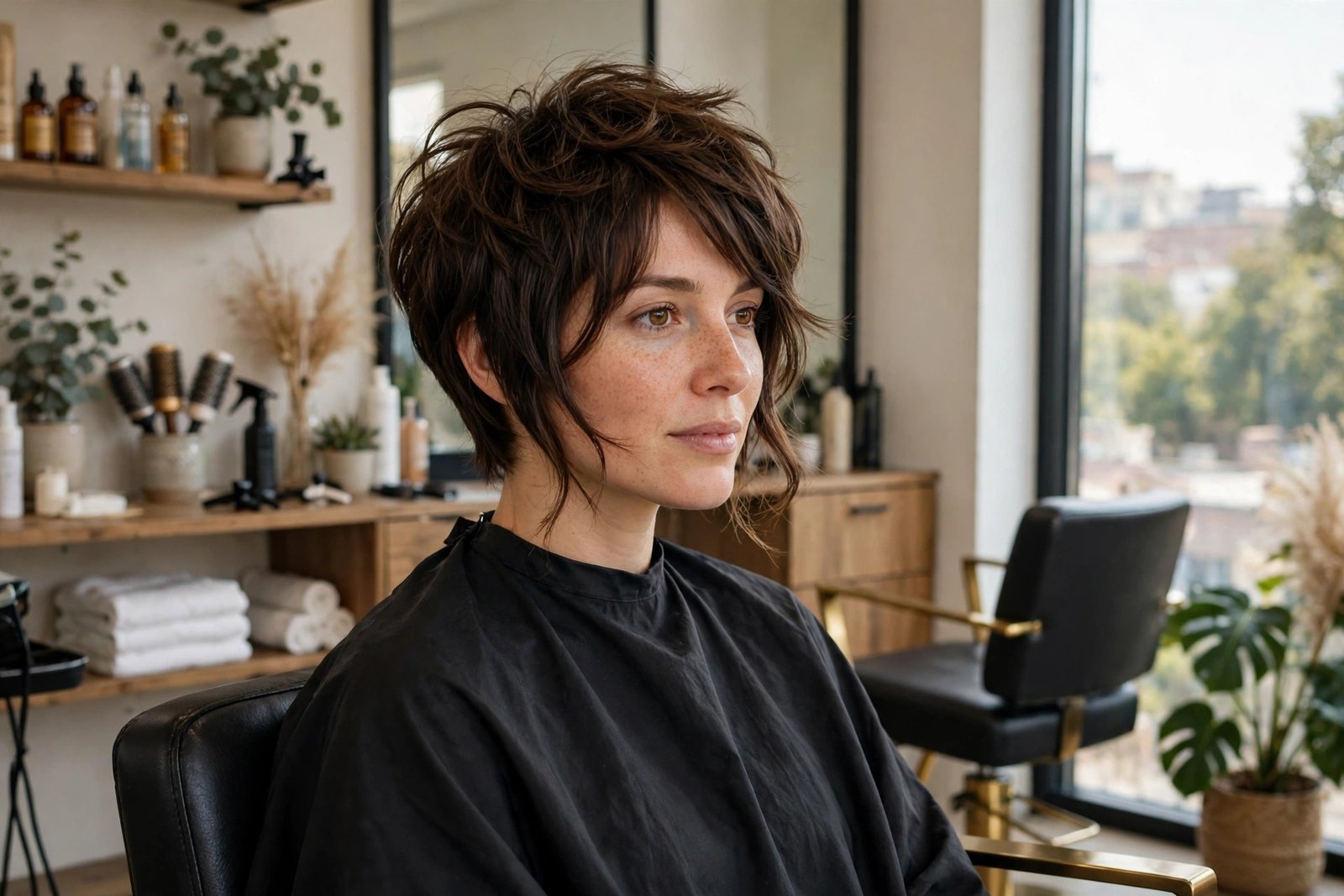
Not ready for a full pixie, but bored of your bob? The bixie — a pixie bob — is the haircut built exactly for that in-between feeling. It takes the short, choppy layers of a pixie and mixes them with the longer, face-framing length of a bob, landing somewhere between the earlobe and the chin. Here is what the cut is, who it suits, what to ask your stylist for, and how to style it at home.
What Is a Bixie Cut?
The bixie is a hybrid: shorter than a bob, longer than a pixie. The back and nape are cut short and layered like a pixie, while the front keeps longer pieces around the face like a bob. The result is a cut with the lightness and edge of a pixie but enough length to actually style — you can do a middle part or a side part, add bangs, tuck it behind your ears, or pull a little of it back, none of which a true pixie allows.
Think of it as a grown-out pixie or a choppy, heavily layered bob. The 1990s version had a grungy, undone vibe; the modern bixie is more polished, with deliberate layering that can be worn sleek, tousled, or wavy. If you are deciding between the two parents of this cut, our pixie cut guide and our classic bob guide will help you compare.
Bixie vs Pixie vs Bob: The Length Test
The difference is mostly about length and what that length lets you do:
- Pixie: cropped close at the nape. No ponytail, no real parting options, minimal styling variety — but maximum boldness and the lowest maintenance.
- Bixie: earlobe to chin length. Short interior layers for volume, longer face-framing front. Middle or side part, bangs optional, some styling flexibility.
- Bob: chin-length to shoulder-length. More coverage, more polish, heavier feel. More styling options but less edge.
If a pixie feels too drastic and a bob feels too safe, the bixie is the middle ground that actually works — not a compromise, but its own distinct cut.
Who Does the Bixie Suit?
The bixie is unusually versatile, but a few things matter:
- Face shapes: it flatters most face shapes because the layering can be adjusted. It is especially good on oval faces (accentuates cheekbones) and round faces (the height on top adds length). For square faces, ask for softer, face-framing layers rather than blunt edges.
- Fine hair: this is one of the best short cuts for fine hair. The short, stacked layers at the back create lift and volume that a one-length bob cannot. Ask your stylist to keep layers connected rather than over-thinning, so the hair keeps its density.
- Thick hair: works well too, but it needs internal layering and weight removal so the shape does not turn into a triangle. Mention your hair’s thickness at the consultation.
- Wavy and curly hair: the bixie adapts beautifully — the rounded shape works with natural texture for an effortless look. Curls can be swept to one side or left loose on top for movement.
For more face-shape-specific guidance, our lob (long bob) guide covers similar principles at a longer length.
What to Ask Your Stylist For
Walk in with a clear request and reference photos — the bixie comes in many shapes, and a photo does more than any description. Here is the script:
- The core ask: “a bob with lots of short layers and texture” — most stylists will immediately understand this as a bixie.
- Length: specify earlobe to chin length on the sides, with a shorter, layered nape at the back.
- Layers: ask for short interior layers through the crown for volume, with longer face-framing pieces in front.
- Bangs (optional): wispy bangs soften the cut; blunt bangs make it edgier. A bixie works with or without them.
- The back view: bring photos of the back of the cut, not just the front. The nape is where a bixie succeeds or fails.
- Grow-out plan: ask how the cut will grow out. A good bixie should still look intentional at five weeks, not like an accident.
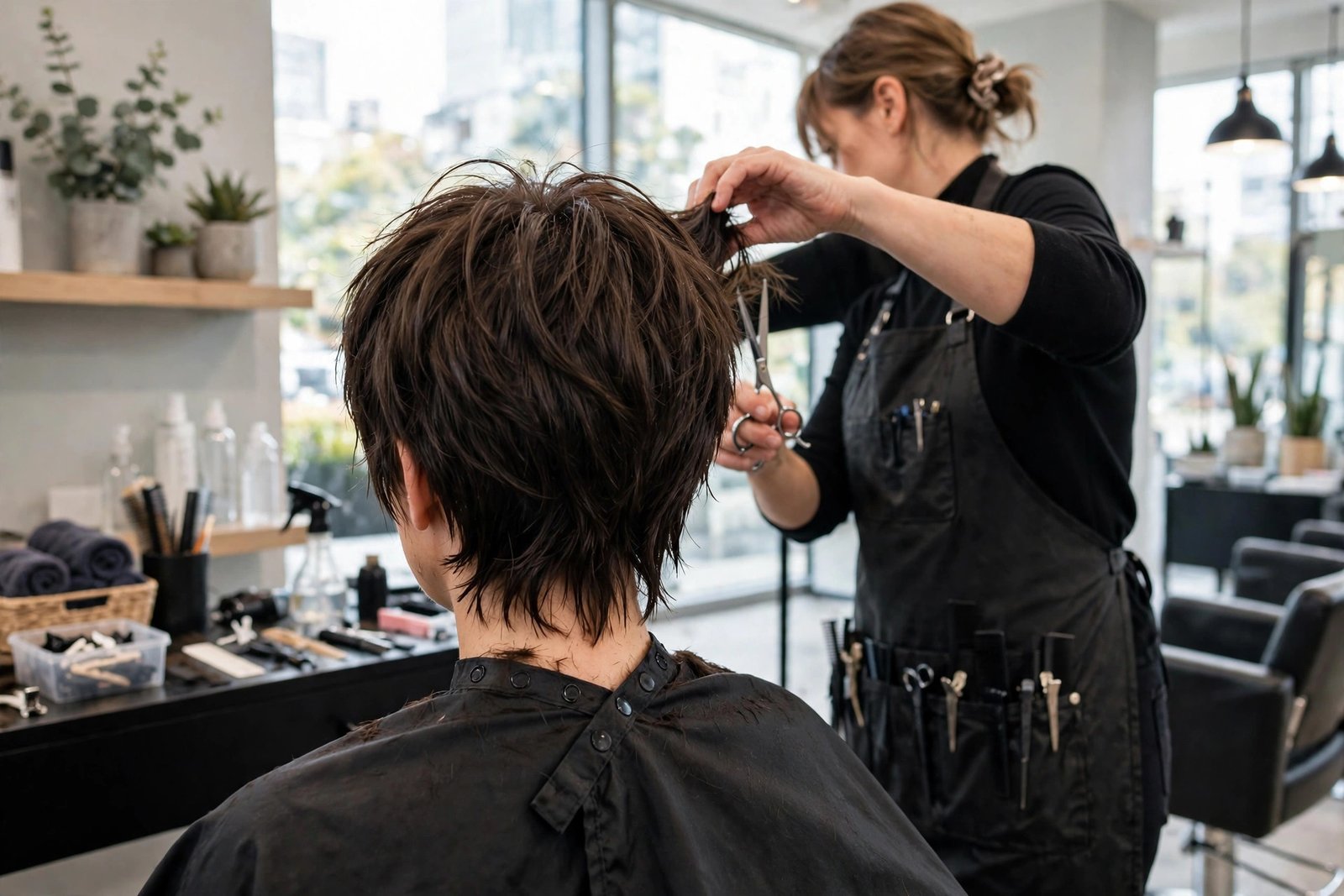
One more tip from stylists: if you tell your stylist you want “a pixie but I’m nervous about going that short,” many will suggest the bixie themselves — it is the standard answer to that exact worry.
How to Style a Bixie at Home
The sleek version (10 minutes)
Blow-dry smooth with a paddle brush, directing the front pieces forward or to the side. Finish with a pea-sized amount of smoothing cream or a light shine serum. Tuck one side behind the ear for an asymmetric, polished look.
The tousled version (5 minutes)
Work a small amount of texturizing spray or matte paste through dry hair, scrunching the crown layers upward for lift. Pull a few face-framing pieces forward. This is the wash-and-go version — the cut’s layering does most of the work.

The wavy version
If your hair has natural wave, apply a curl cream to damp hair and let it air-dry or diffuse. The bixie’s rounded shape enhances wave pattern without any real effort. For straight hair, a few bends with a flat iron through the mid-lengths create the same effect.
Across all three versions, less product is more. Heavy products collapse the layers that give the bixie its shape — a light touch keeps the volume alive.
Maintenance: How Often to Trim
Book trims every five to seven weeks. The bixie lives at an in-between length, so the maintenance window matters more than with other cuts: let it go too long and it drifts into a grown-out bob, losing the pixie-like lightness at the back. Typical US salon pricing for a short-cut trim runs roughly $40–$80 depending on the city and salon.
FAQ
Is a bixie good for thin hair?
Yes — it is one of the better short cuts for thin or fine hair. The stacked layers at the back create lift and the illusion of fullness. The key is keeping layers connected rather than over-thinning, which would remove the density you are trying to fake.
How is a bixie different from a wolf cut?
Both are heavily layered, but the wolf cut is longer with a shaggy, rock-inspired shape and curtain bangs, while the bixie is a true short cut (ear to chin) with a rounder, more polished silhouette. The bixie is also lower-maintenance day to day.
Can I grow out a bixie into a bob?
Easily — that is one of its advantages over a pixie. Growing a bixie out simply means letting the back and nape catch up to the front. You will pass through a shaggy phase around month three, but a trim that shapes the layers keeps it looking intentional until it reaches bob length.
Does the bixie work on curly hair?
Yes. The rounded shape adapts well to curls, and the layering prevents the dreaded triangle shape. Ask for a dry cut or a curl-specialist stylist if your curls are tight — cutting curly hair dry shows the true finished length.
Bottom line: the bixie is the rare “in-between” haircut that is not a compromise. It gives you pixie edge with bob versatility, suits most hair types and face shapes, and styles in under ten minutes. If you have been circling a big chop without committing, this is the cut to show your stylist.