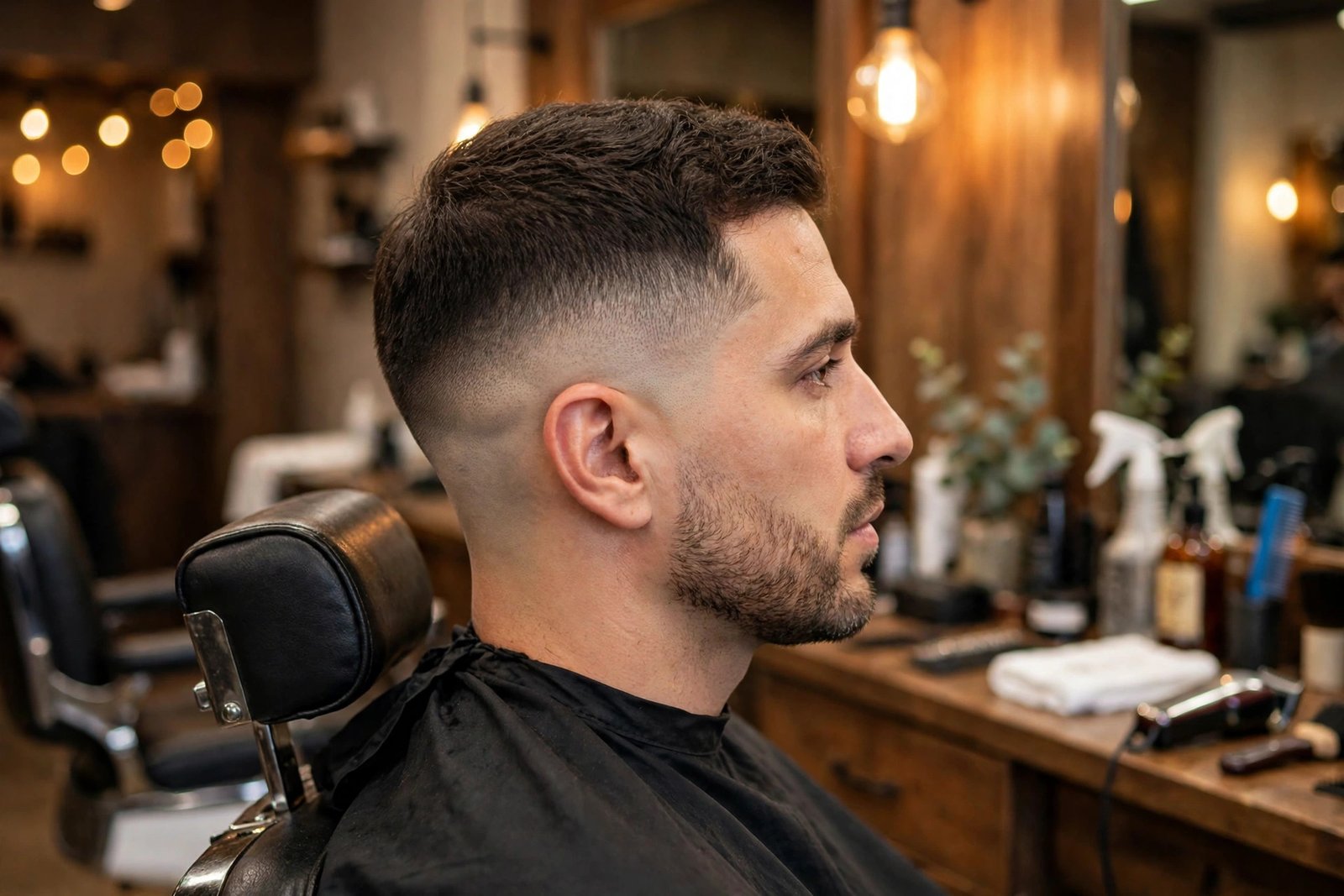
“Low or mid?” is one of the most common questions barbers hear — and one of the hardest to answer without seeing the difference. Both are taper fades, both look clean, and both work on most hair types. The entire decision comes down to where the fade starts, how much contrast you want, and how much maintenance you are willing to do. Here is the honest side-by-side breakdown.
The Core Difference: Where the Fade Starts
Everything else follows from this one fact:
- Low taper fade: the fade starts just above the ear and around the neckline. The gradient lives in the bottom inch or two of your sides.
- Mid taper fade: the fade starts around the middle of your head, roughly at temple level. The gradient covers a much larger area of the sides.
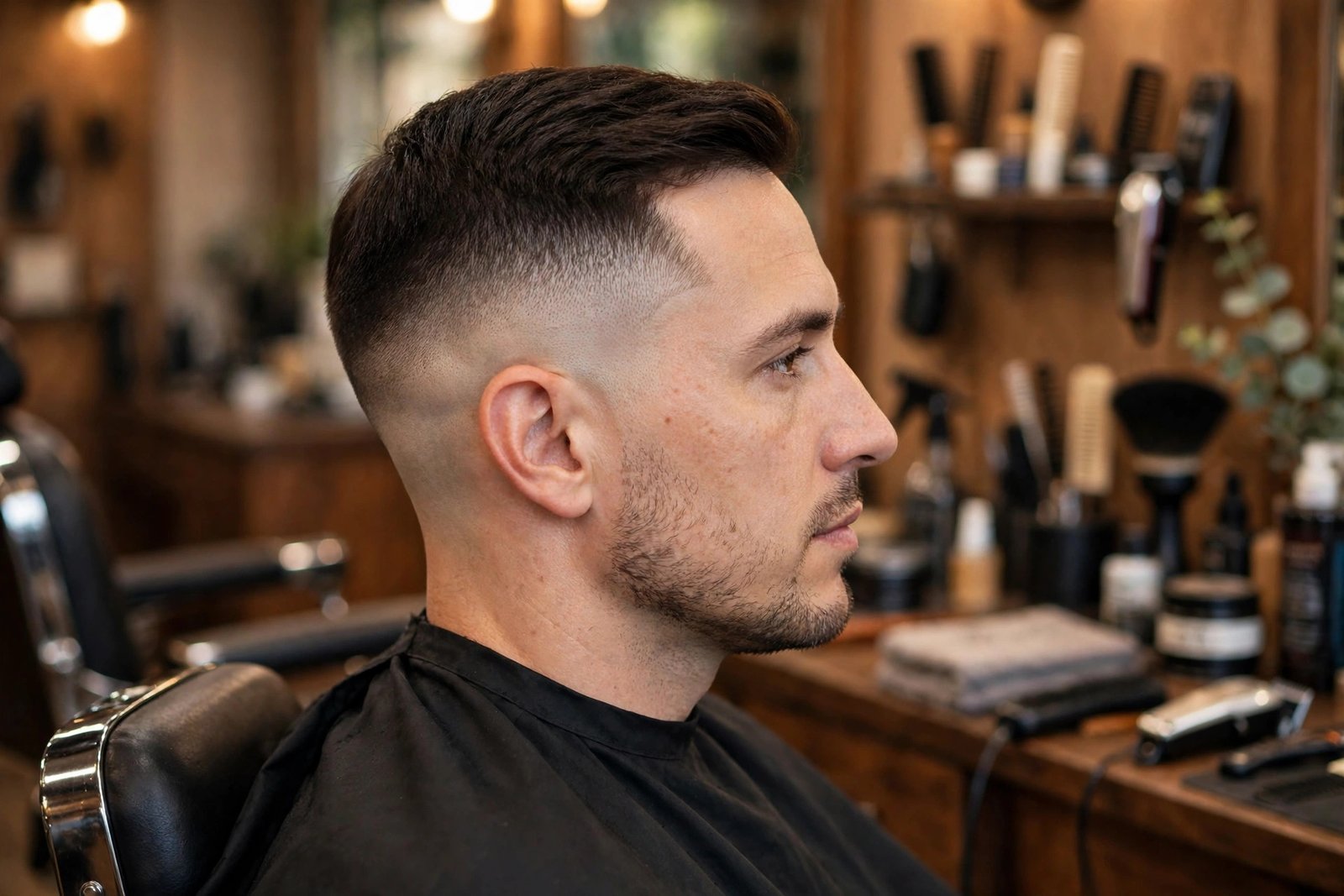
The low taper is subtle — from the front, the cut can look almost like a classic scissor cut. The mid taper is visible — the contrast between the faded sides and the longer top is obvious from every angle. Neither is better; they are different tools for different goals.
If you are still fuzzy on what a taper fade even is versus a regular fade, our taper vs fade explainer covers the fundamentals.
Side-by-Side Comparison
Where the fade starts: low — just above the ear; mid — around temple level.
Contrast: low — subtle, natural; mid — moderate, noticeable.
Skin visible: low — minimal; mid — moderate.
Best for: low — professional settings, first-time fades; mid — most settings, bolder everyday look.
Touch-up frequency: low — every 3–4 weeks; mid — every 2–3 weeks.
Grow-out: low — graceful, longer hair drapes over the fade zone; mid — noticeable, the gradient sits where everyone looks.
Contrast and Style: Subtle vs Visible
A low taper fade keeps most of the side length intact. The fade is a quiet detail near the edges — it cleans up the perimeter without changing the silhouette of the cut. This makes it the safest choice if you have never had a fade before, or if your workplace leans conservative.
A mid taper fade removes more bulk from the sides and creates real contrast. It slims the sides, adds visible shape, and draws the eye to the top of the cut. If you like your haircuts to look intentional and sharp — and you are fine with people noticing you got a cut — the mid taper delivers more of that.
Face Shape: Which Flatters You More?
Face shape is where this choice actually matters:
- Round face: the mid taper usually wins. Fading higher slims the sides and adds visual height, which elongates a round face. A low taper can work too, but pair it with height on top (quiff, brush-up).
- Oval face: both work. Oval is the most forgiving shape — pick based on lifestyle, not geometry.
- Square face: the low taper is often the better pick. It softens strong angles instead of emphasizing them, and it keeps the jawline as the star.
- Long / oblong face: lean low taper. A mid or high fade adds perceived length, which is the opposite of what a long face needs. Keeping the fade low adds width and balance.
- Diamond / heart-shaped: either works, but tell your barber about your face shape — small adjustments to where the fade starts make a big difference here.
For the full three-way breakdown including the high fade, see our low vs mid vs high fade comparison.
Maintenance: The Honest Math
This is the part most guides skip, and it is the part that affects your wallet and your calendar. Hair grows about half an inch per month, and that growth shows faster on a mid taper because the fade lives in a highly visible zone — right at the temples.
A low taper fade stays looking sharp for about three weeks and acceptable for five to six, because the longer hair above drapes over the fade zone as it grows. A mid taper starts losing its crispness around week two to three, and by week four the contrast has clearly dulled. Over a year, that is roughly 13 barber visits for a low taper versus about 17 for a mid taper. At typical US barbershop prices, that difference adds up — our touch-up frequency guide breaks down the schedule in detail.
If you travel for work, take long trips, or simply do not want haircuts running your calendar, the low taper is the lower-maintenance choice by a clear margin.
Workplace and Lifestyle Fit
In traditional professional environments — finance, law, client-facing corporate roles — the low taper fade is the safer pick. It reads as a neat, classic haircut. The mid taper is perfectly fine in most modern workplaces and creative industries. When in doubt, start low — you can always go higher next time.
How to Ask Your Barber for Each
The words matter less than the gesture. Say “low taper fade” or “mid taper fade,” then point to exactly where you want the fade to start — just above the ear for low, around the temple for mid. Bring a photo showing the height you want from the side angle; the side view is where low and mid look completely different.
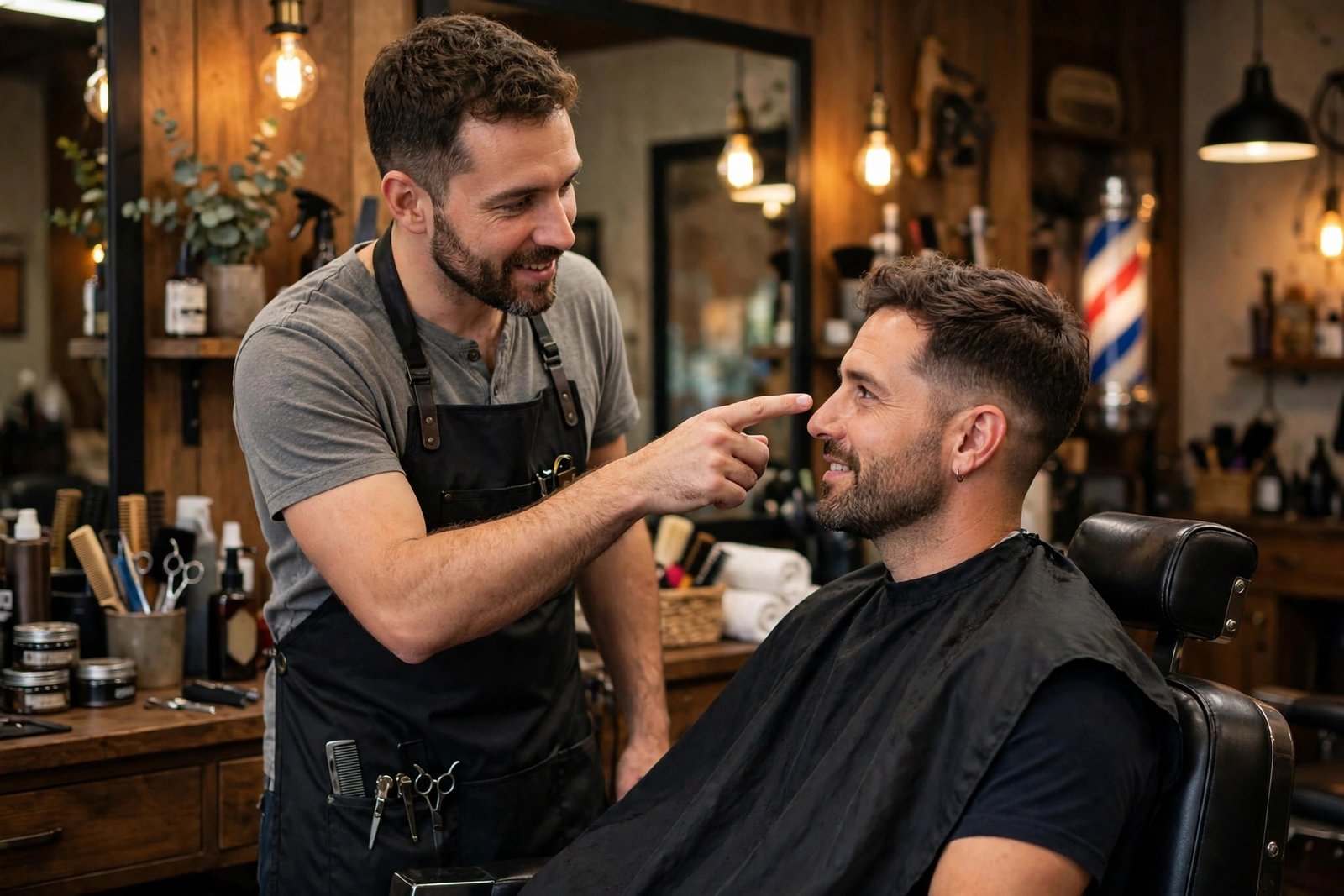
Also mention the finish: do you want it faded down to the skin, or kept at a short guard like a #1? A skin finish looks sharper but grows out faster; a guarded finish is more forgiving. Our complete low taper fade guide walks through the finish options in detail.
FAQ
Which grows out better, low taper or mid taper fade?
The low taper fade grows out better, and it is not close. Its fade zone sits low enough that longer hair covers it as the cut grows, so it still looks intentional at five weeks. A mid taper’s gradient sits at the temple where everyone looks — once the contrast dulls around week three, the whole cut looks tired.
Is a mid taper fade unprofessional?
Not in most workplaces. It is a clean, mainstream haircut. It only reads as bold in very conservative environments (traditional finance, law firms with strict dress codes). In those settings, the low taper is the safer choice.
Can I switch from a mid taper to a low taper?
Yes, but it takes one grow-out cycle. Your barber will let the mid fade grow for three to four weeks, then re-cut the taper lower. You cannot cut a mid taper “down” into a low taper in one visit without waiting for length — be patient for one cycle and you will get there.
Which is better for thick hair?
Both work, but for different reasons. A mid taper removes more bulk from the sides, which tames very thick hair. A low taper keeps more weight, which suits thick hair worn longer on top. Tell your barber your hair is thick either way — the blending technique changes.
Bottom line: choose the low taper fade if you want subtle, professional, and low-maintenance. Choose the mid taper fade if you want visible contrast, a slimmer silhouette, and you are fine with more frequent touch-ups. When truly undecided, start low — it is easier to go higher next time than to grow out a cut that was too bold.