Last updated: October 21, 2026
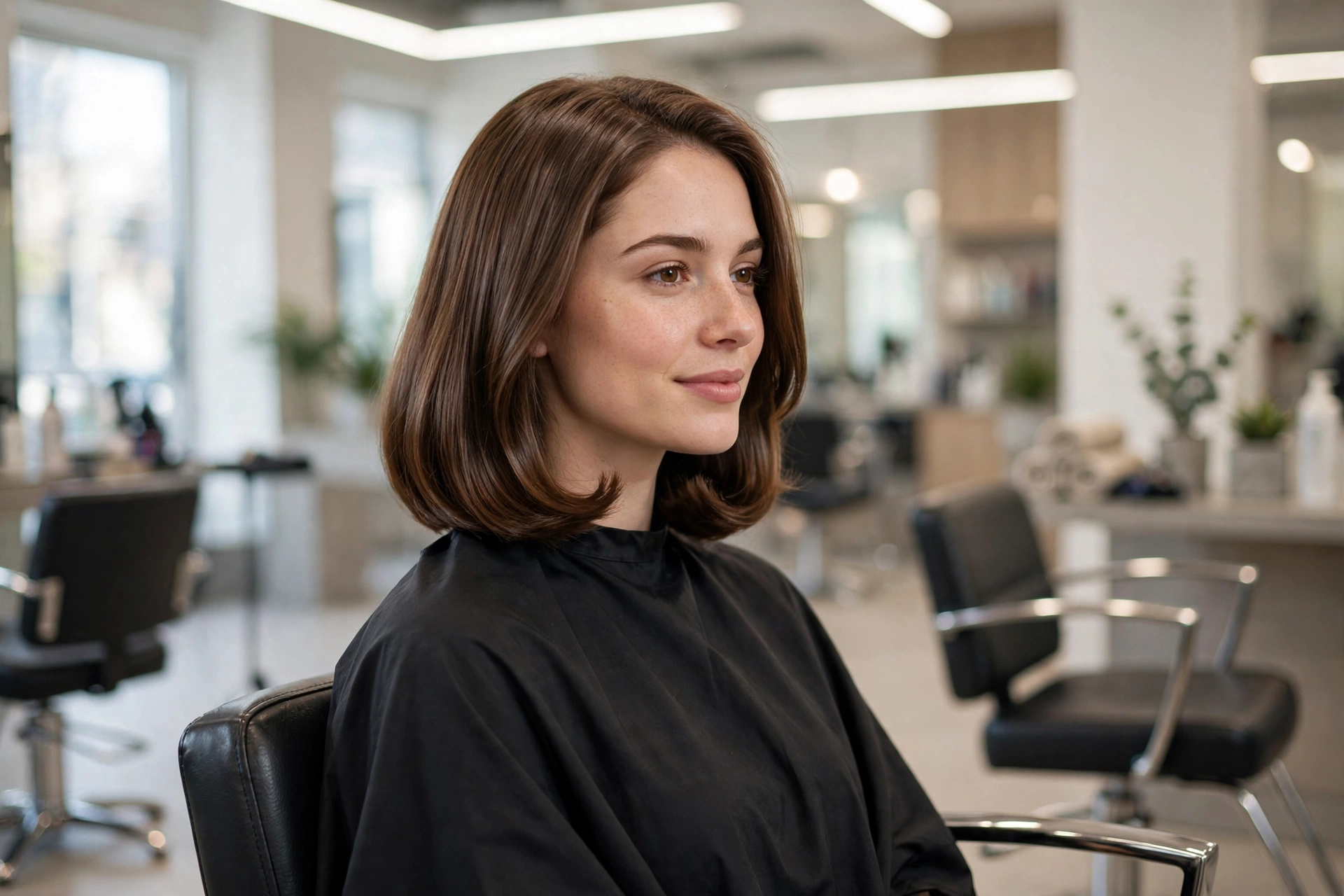
If there is one haircut that suits nearly everyone, it is the lob. Short for “long bob,” the lob falls somewhere between the chin and the shoulders — long enough to pull back, short enough to feel fresh. It has been a salon staple for years because it flatters almost every face shape and hair type, and it offers more styling options than any other cut at this length. Think of it as the grown-up evolution of our classic bob styles and face shapes guide — same polish, more versatility.
What Exactly Is a Lob?
A lob is a bob that lands between chin-length and shoulder-length. Unlike a traditional bob, which sits at or above the jawline, the lob gives you room to play: wear it straight and sleek, add loose waves, tuck it behind your ears, or pull it into a low ponytail. The cut works on straight, wavy, and curly hair, and on fine, medium, and thick textures — the stylist just adjusts the layering.
Who Does the Lob Suit? (Face Shapes)
The lob is famously democratic, but small tweaks make it perfect for your face:
- Oval face: You can wear almost any version — blunt, layered, angled, with or without bangs.
- Round face: Go slightly longer, an inch or two below the chin, to elongate the face. A middle or off-center part adds balance; keep volume lower at the sides and build height at the crown.
- Square face: Style it wavy with a side part to soften a strong jawline. Soft, face-framing pieces work better than blunt ends here.
- Heart-shaped face: Choose a lob with volume at the jaw and less at the crown to balance a wider forehead and narrower chin.
- Long or oblong face: Keep the lob closer to chin-length and consider bangs — blunt or curtain — to visually shorten the face. Waves at the sides add welcome width.
The Most Popular Lob Variations
The blunt lob: One length, sharp ends. Best for fine to medium hair — the blunt ends make hair look thicker. Style it straight for a chic, polished finish (see also our French bob guide for the shorter, Parisian version).
The layered lob: Layers add movement and remove bulk. Best for thick hair that would otherwise balloon out. Ask for light, invisible layers rather than heavy steps — our long layers vs short layers comparison explains how layering changes any cut.
The A-line (angled) lob: Slightly shorter in the back, longer in the front. The forward angle draws the eye down and has a slimming effect — especially flattering on round faces.
The textured or choppy lob: Piece-y ends cut with a razor or point-cutting. Adds edge and movement; great for wavy hair and anyone who wants a more relaxed look.
The wavy lob: Loose, beachy waves on a lob is the most-requested salon look for a reason — it suits nearly everyone and photographs well. A 1 to 1.5-inch curling iron and some texture spray are all you need.
The lob with curtain bangs: Curtain bangs frame the face on both sides and blend naturally into a lob’s length — a good choice if you want face-framing without committing to a full fringe.
How to Ask Your Stylist for a Lob
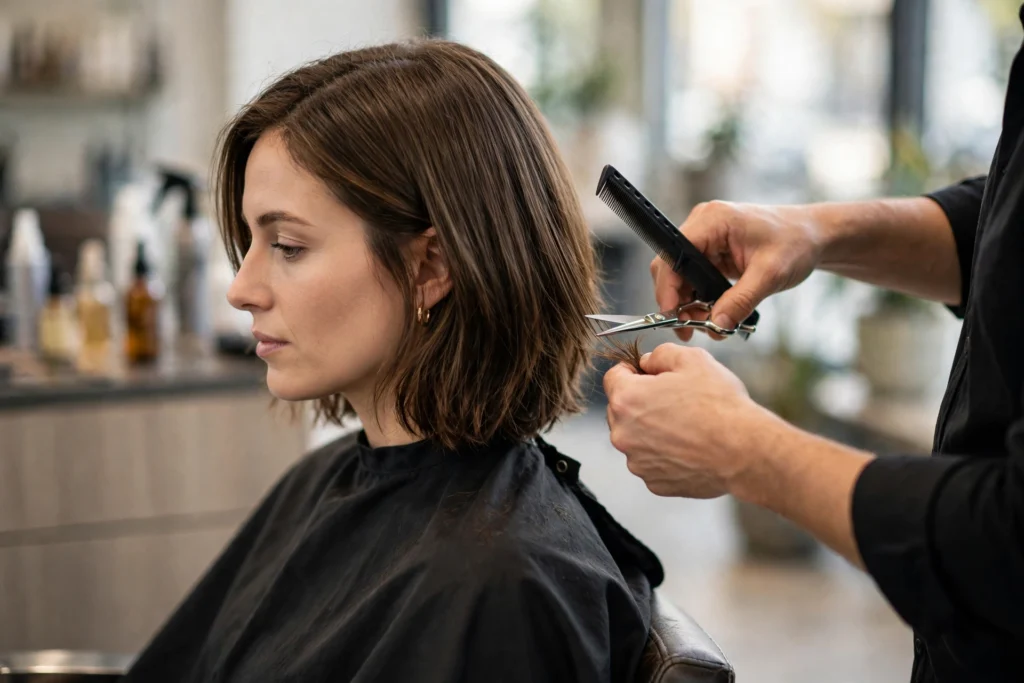
Bring 2 to 3 reference photos showing the exact length you want — “shoulder-length” means different things to different stylists. Specify:
- The length: Where should the front pieces fall — chin, collarbone, or shoulders?
- The shape: Blunt, layered, or angled? One length all around or shorter in the back?
- The texture: Do you want piece-y, textured ends or a clean, polished edge?
- Your styling reality: Tell your stylist how much daily styling you will actually do. A blunt lob needs heat styling to look sharp; a textured lob air-dries well.
How to Style a Lob at Home
Sleek and straight: Blow-dry with a round brush, tucking the ends slightly under. Finish with a flat iron on the ends and a drop of serum for shine. This is the polished, office-ready version.
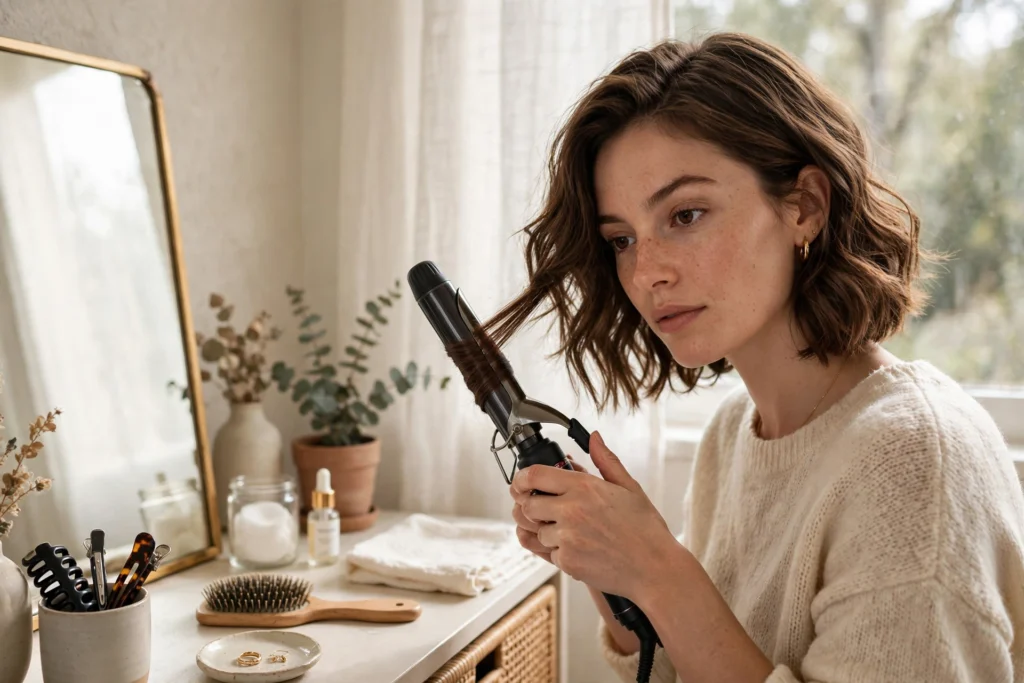
Loose waves: The everyday favourite. Wrap 1 to 1.5-inch sections around a curling iron, alternating directions, and leave the last inch of each section uncurled for a modern finish. Break up the waves with your fingers and mist with texture spray.
Air-dried texture: Work a little sea salt spray or mousse through damp hair, scrunch, and let it dry. The lob’s length keeps this from looking messy — it reads as effortless.
Tucked behind one ear: The fastest “style” there is. It shows off earrings, adds asymmetry, and instantly makes a lob look deliberate.
Maintenance
Trims every 6 to 8 weeks keep the shape clean. The lob grows out gracefully — it simply becomes a longer bob — so you can stretch appointments if needed. If you have layers, they need refreshing more often than a blunt cut to keep their shape. Deep-condition every week or two if you heat-style regularly.
Mistakes to Avoid
- Going too short for your face. A lob that lands mid-neck can look neither short nor long — commit to chin-length or below.
- Too many layers on fine hair. Heavy layering removes the very ends that make fine hair look full. Fine hair usually does better with a blunt or lightly layered lob.
- Skipping heat protectant. Regular flat-iron or curling-iron use without protectant leads to split ends that ruin the clean line.
- Choosing the wrong part for your face. A middle part elongates; a deep side part adds asymmetry and softness. Try both before you decide.
FAQ
What is the difference between a lob and a bob?
Length. A bob sits at or above the jawline; a lob falls between the chin and the shoulders. The lob offers more styling options — ponytails, waves, tucks — while keeping the bob’s polished feel.
Does a lob work for thin or fine hair?
Yes — it is one of the best cuts for fine hair. A blunt lob with minimal layering makes ends look thicker and fuller. Avoid heavy layers, which thin out the ends.
How long does a lob take to style each morning?
About 10 to 15 minutes for waves or a sleek blowout, and under 5 minutes for the air-dried or tucked versions. It is one of the lowest-maintenance cuts at this length.
Will a lob suit a round face?
Yes, with the right tweaks: keep it an inch or two below the chin, choose a middle or off-center part, and keep volume at the crown rather than the sides. The A-line version is especially flattering.
Final Word
The lob earns its reputation as the most versatile women’s haircut: it flatters nearly every face shape, works with every hair texture, and shifts from polished to relaxed with a change of styling. Decide on your length, pick your variation, and bring photos to your stylist — the lob is one cut where good communication guarantees a great result.